AI 2nd round effects

The most popular topic currently is AI.
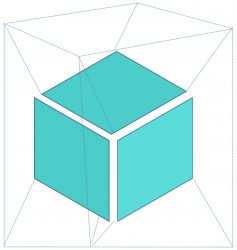
Most writers, assisted by some form of AI, will deal with the 1st round effects of AI. These consist in the immediate consequence of the use of AI in office work, medical and military applications, music and all producing or creative industries. As an economist you take the input – output matrix of the economy (OECD countries) and take AI as an additional dimension of this I/O matrix, for example. The result is an AI-augmented model of the economy. This 3-dimensional cubic view of the economy asks to reflect on the potential short-term and medium-term impact of AI.
Let’s take the example of translation and editing services. AI will in the short-term or the 1st round effects make it easier to offer mechanical translations with fast turnaround. Most likely, this will lead to less translators needed for routine translations of longer texts, which would otherwise be a very costly endeavour. The 2nd round effects, however, will make the expert knowledge of translators of texts, where every word counts, more necessary in order to provide the best version of a translation targeted on specific audiences.
In the legal domain, for example, the precision of words is primordial and errors can be very costly. Hence, the 2nd round effects of AI in this field will increase the demand for high quality translation services more than before the use of AI. The important shift consists in these 2nd round effects of AI, which give a push to multilingual societies as just one medium-term outcome.
Please use AI to read (listen) to this paragraph in your native language or even dialect using your favourite AI-tool.

Pet effects

Pets have effects, some might cancel out each other. In psychology there is a long debate about the pet effect, which claims that pets have overall a positive effect on a person’s well being. This claim has recently been debunked. Many persons have taken over the care of an animal for their own comfort and regular daily routines. The Covid crisis had spurred such behavior in many people, but the scientific evidence taking into account the responsibilities that come with ownership of a pet, can outweigh the benefits of having company. The choice of a pet should certainly not be an easy or haphazard one. There is a need to consider the full range of pleasure and responsibilities. Traveling with pets and vacation times pose additional challenges that can cause stress to owners as well. Dog sitting or pet sitting platforms have been thriving since the Covid pandemic and this is to the benefit of everyone involved.

Pervasive waste

From time to time waste from so-called highly developed countries is making headlines and then it is forgotten again. Huge amounts of plastic waste gets shipped for example from the USA to Malaysia in containers regularly (NYT 2025-7-1). The dumping of waste in other countries where it is cheaper to waste the waste is a cynical practice. Not only is the potential for reuse and a circular economy disregard, the little control that is exercised how the waste is treated afterwards is neglected. Some might just end up in our oceans later on or find its way in our food chains. The recent discovery of lots of nuclear waste at 5000 m depth in the sea in another extreme example of this practice to dump waste affecting all of is when profits have been accumulated inn the hands of a few enterprises and states. Such external effects as they are called in economic theory are part of the standard economic thinking. The challenge is to detect such behavior, persecute or better prevent it. This calls on countries who produce the waste to check for the contamination potential and treat their own waste. Fukushima has lots of barrels of nuclear waste waiting. The pervasive nature of this waste will make it last for thousands of years. “Beggar thy neighbor” with your waste is a major default of our current economic and social model. It remains an unresolved puzzle why mankind continues to work towards its own extinction. (Image: Le grisou, Constantin Meunier, MRBAB, Brussels). 

Music Lunch

The possibility to pass a lunch break with live music inspiration is, unfortunately, quite rare. The Brussels festival “midis minimes” has created a popular format for classical music to be performed in easy to reach venues in the city center. Working in the center allows to hop into a 45 minutes performance of varying artists, instruments and music styles. The “Cercle Royal Gaulois” offers enough seats. Even without a reservation it is feasible to forget about work and get inspired by musicians. and the composers and arrangements they propose. Gaëlle Solal and Juliette Hurel offered short digestible pieces by Bartok, Ravel and Piazzolla with a focus on their popular dance tunes often based on previous folk tunes. We virtually traveled from Romanian tales to La Habanera and Tango and back to work for some.

Korean Epilogue

The exhibition on the Korean Provisional Government closed with a stimulating epilogue. The call on visitors to spread the message of peace resembles religious practices. The long struggle for Korean independence and freedom for the people in South Korea leaves them wishing the same for all Korean people and beyond 75 years after the beginnings of the Korean War. From a German and Eastern European perspective this unaccomplished wish resonates a lot. The small stickers with messages from visitors propose short thought pieces like “South and North Korea shall be together” and “Peace starts with inner peace”. The wisdom in these statements lies in not giving up on ideals, however distant they may appear. There is always the possibility of small steps ahead.

Korean Independence

The independence of a country is sometimes a long struggle. At particular points in time, a window of opportunity may open up, which allows to change the course of history. In many cases the opportunity to gain independence has been prepared for several decades, at least from 1919 onwards to come to fruition only after the end of the Pacific war, shortly after the Nazi-regime was defeated. The long and relentless preparation of the Korean Provisional Government ensured that a consensual constitution was ready to be adopted and elections to be held. The resulting division of Korea into 2 parts (South and North), just like East and West Germany, is rather long lived on historical time scales. For that matter, the hope of a peaceful unification needs to be reiterated again and again. The informative exhibition of the Korean Cultural Center to Belgium and the EU highlights the continued “Dream of Peace” which continues even after more than 100 years.

History coined

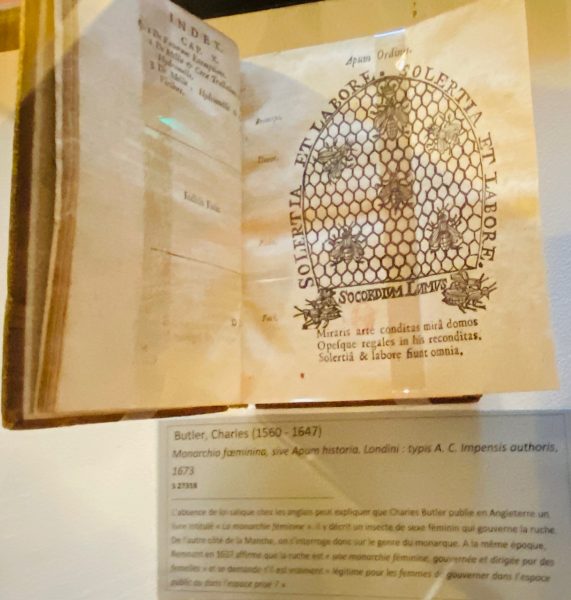
It is an ambitious project to frame history of a country or continent according to the succession of coins. In the KBR such an attempt is currently on display in 2025. The history of a country in the center of Europe is reflected sometimes through different occupying forces who imposed their currency onto the occupied territories. The Greeks and Romans had an overriding impact on the development of coins in human history and society.  Precious metals were used as basis to embody lasting value into coins. The images on coins are also a way to reiterate the dominance of a new ruler or governance. From the Roman occupation there are nice specoin the KBR collection as Julius Caesar named one part of the 4 occupied territories “Belgica” beyond what we define as borders of Belgium in the 21st century. Control of your own currency means also to be able to produce unique pieces in your own foundries. The history of coins is also a history coined by those in power to enforce their political power onto the economy. (Image: KBR, The history of Belgium illustrated through coins, 2025).

Social promise

In the beginning and middle of the 2020s the social promise to younger generations has been broken. The latest figures from the USA reveal that 2 million students (WSJ 2025-6-25 A3) who have financed their studies and potential social mobility by taking out a substantial loan are very likely to default on their credits. This observation was less a surprise to labor market analysts as the stalling of student hiring in many countries has happened for several years now. The more surprising finding is that the Wall Street Journal 2025-6-25 has been reporting on this. Banks or universities who are highly exposed to this kind of risk will themselves become downgraded for their credit rating. Higher interests for universities means higher fees and higher student loans eventually. The social promise to reach higher status and earnings through higher education as the social promise of the meritocratic society becomes an illusion. Investors in student housing might also find the sector less juicy for them. Students and their parents were taken hostage by an excessive commercialization and commodification od education. Lifelong learning is a still a promising route to revitalize the social promise.

Home financing

For most people the biggest investment decision during their entire life course is the decision how to finance their home. The calculation of the costs of a bank loan over 10, 15 or 20 years to finance the acquisition of a home is a necessary part of basic financial literacy. The contract of monthly installments over years, considering economic uncertainties like inflation and interest rate payments, necessitates some basic knowledge of calculus and maybe the use of a spreadsheet to prepare payment plans with different scenarios. According to the Wall Street Journal of 2025-6-25 many home owners in southern states “slipped under water” in recent months in the USA. In short, buying a house when they are most expensive with a high interest loan and little down payment puts you at high risk if the prices for homes decline, for example like in a recession or stagnation. You can find yourself in the situation that the mortgage you have to pay suddenly exceeds the value of your home at actual prices. It is really important to be aware of the overall economic situation and risks of changes, like interest rate or inflation spikes due to a changing policy on tariffs. Reading and learning about financial risks should really enter into the school curriculum, but not left to maths classes as this will frighten off many students to take this topic seriously enough. 

Home Leaks

When did you last think about leaks in your home?
Usually we associate leaks with water leaks, or the heating system leaking somewhere. In the 21st century leaks at home are more importantly the leaks of your home security, especially your email, digital and cloud services which are at risk. You may test your favourite AI system to advice you on your risks for digital leaks, but we know little whether these systems are yet another dangerous port of entry into your home or privacy themselves.
There is a helpful tool to find, whether your email has been hacked or distributed widely already for potential thefts of your identity. Hence, better check this from time to time using for example the “leak checker“, just like checking whether you closed your door or the water tap before leaving for vacations. As we live more and more in “virtual homes” in addition to our physical homes, checking your digital identities should become a part of our personal hygiene routine. Let’s just take a shower from time to time and change passwords regularly.

Hallucinations serious

There serious hallucinations by AI and there are funny hallucinations by AI. Do we want our various AI models, from time to time, to crack a serious or funny joke? Well, that’s a bit the spice of life. However, not knowing when the machine is joking and when it is serious, this is more likely to seriously disturb most of us. This reminds us of our school days were teachers were not amused some pupils not taking them seriously in their efforts to transmit information. Now we know that a good atmosphere is conducive for better learning progress. AI as teaching and learning assistance could well work best in a “fearless“ classroom. Repeating a lesson several times and at your own learning rhythm will help independent of the seriousness of your teacher. Self-directed learning with a little help by AI might do the trick for many to advance how and when they feel ready for it. Hallucinations rates are a standard test for AI models. They range from 1% to 25% of queries.  This is not in itself a problem. It has become tough to find out about the 1% -2% models because you no longer expect them to give wrong information. These are the 1-2 out of a hundred of cases where we are confronted with serious hallucinations, seriously.
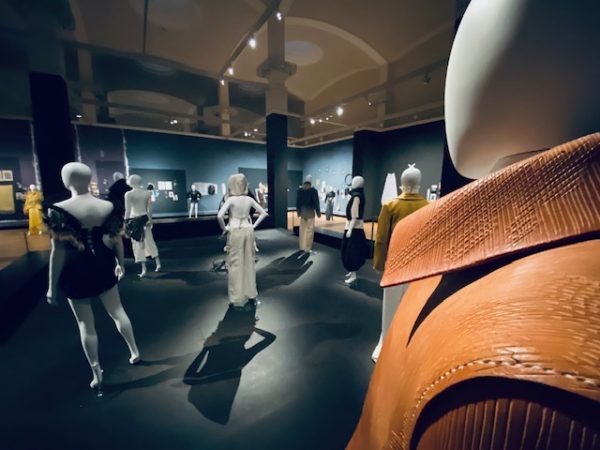
(Image: extract from „cum Polaroids“ from Eva & Adele, Hamburger Bahnhof, Berlin 2024-5-22)

Better infrastructure

It doesn’t need much explanation to advocate better infrastructure. Even if we rarely agree on what constitutes better infrastructure, the lack of infrastructure is felt quickly. Almost everything we use on a daily basis like water, food or transportation rely on large scale infrastructure to facilitate individual uses. Companies settle where they spot good locations, most of them are related to infrastructure as well. The basics about infrastructure is the public versus private provision of such infrastructure and related services. Even a country’s defense hinges on good infrastructure to be able to respond quickly at the place where the defense is most needed. Telecommunication and satellites have been recent innovations in the field of infrastructure. Security and cybersecurity in particular are a critical component of infrastructure. The topic is huge. The means to address these issues are likewise of daunting scale. Therefore, it is all the more important to address these challenges.

Contextual Vision

The attempt to define a sociology of vision has had a hard time to build on hard evidence that vision may depend on context or in a broader sense your visual heritage. A standard definition of context in vision highlights the areas around a focal point. The findings by Krupin et al. (2025) show through the comparison of persons from very different populations that our vision depends on our cultural background. It is the social background and upbringing in a specific cultural setting, which determines what we see in an image at first sight.  The so-called Coffer illusion test (Deregowski 2017) reveals what we see in an image spontaneously and maybe after some longer staring at the image or doing it repeatedly, we learn to see that there is more to see than our original impression. Depending on our cultural heritage we might focus unconsciously on rectangular or round shapes in a geometric image. This fundamental finding questions the view that there is only one universal kind of vision common to all humans. In fact, there is variance around what we see and thereby how we perceive an image. This research provides a justification to delve also into the field of a sociology of the visual. Because of the common term in informatics “WYSIWYG”, (what you see is what you get), we might  spend more efforts on research of how human vision is shaped over generations or according to social background. We know that in some images different people see different things. What appears as a splendid opportunity for some, is a very risky situation for others. Eyes are so closely wired to our brain that inscriptions of vision on the brain functioning are quite likely. The plasticity of this process over the life course remains a crucial topic to understand the process(es) of how a person’s social background shapes her/his vision.

Preventive War

The term “Preventive War” is staging a revival in international politics. The recall of the famous quote “war is the continuation of politics with other means” from Clausewitz encompasses the idea of a pre-emptive strike and entering into war to avoid an enemy to grow too powerful at a later stage. In the age of weapons of mass destruction and the non-proliferation of nuclear weapons, an intervention to limit the spread of nuclear weapons has taken the form of a preventive war. The international community has been quite unsuccessful to limit the spread of nuclear weapons so far. Research shows that democracies are less likely to go to war than authoritarian regimes and dictatorships.
The preventive war strategy (Levy, 2008), however, is a means for democracies to defend their survival against the spreading and warmongering of authoritarian regimes. However, preventive war, by definition, is a war. The preventive aspects derives from the logic to avoid a much more devastating later war. There is a longitudinal assessment at the base of the calculation to enter now into a preventive war, rather than later into a more difficult defence. In anticipation of the defense, a pre-emptive strike is undertaken. In international politics the lack of a “policing of treaties and international agreements” has initiated the return of the neoclassical concept of national interest as a guiding principle for nation states. A continued threat to the survival of a state, Israel as an example, by the Iranian dictatorship makes the application of a preventive war strategy more likely.
Historically, democracies have applied such military strategies as a continuation of politics and diplomacy with other means. In this sense the 21st century is apparently no different from previous centuries. The revival of “Realpolitik” has been spurred by Putin and his war on Ukraine territory since 2014. How and when to return to the negotiation table is the litmus test of the preventive war strategy.
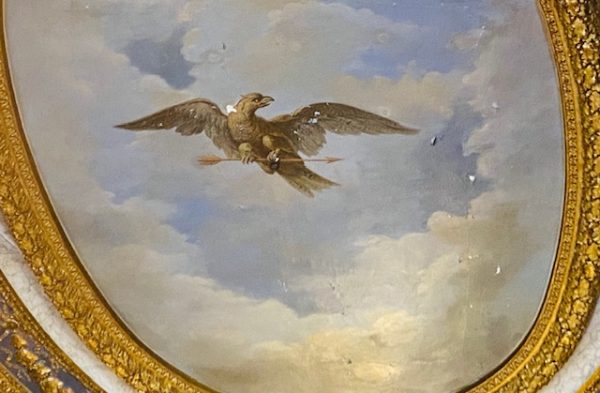
(Image: Paris, Hotel de la Marine, Le salon diplomatique 2025).

Home Cloud

Our homes have entered the process of virtualization. Not only our collections of photographs, videos of and from family and friends have been stored on cloud servers and services for some time. Homework and school materials are distributed from clouds and the size of such collections quickly reach levels beyond any hand held devices. Hence, the home cloud or your private cloud will be the next option to think about. The safe storage of information, which is intended to be shared amongst many persons, or just private backup solutions find their home on your private cloud. The technology is available at moderate costs, but allows additional safety and flexibility. Your digital home is available wherever you are. No need to carry around with you physical backup devices. Just like for keys, you have to manage access rights to the data and take care of basic security features. It is a bit like running a small enterprise. You have to make sure that users of your home cloud apply basic internet security standards like safe passwords, for example. Similar to the storage in a basement from time to time clearing out duplicates or forgotten items may help to preserve sufficient transparency of what is stored. However, digital tools may help with that task as well. We may enjoy a stroll outside and watch the clouds pass by knowing that our data are fairly safe in their very own home cloud.

Home cooling 2

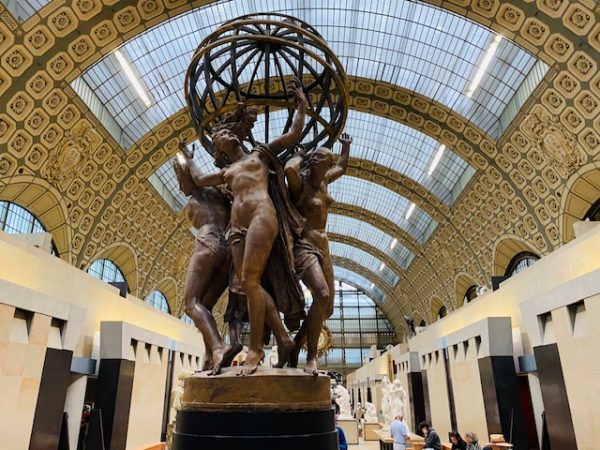
As a consequence of global warming architecture has to cater for the cooling of our homes as well. The 1st option is to keep the heat outside. Isolation is key in this respect as well. Colors outside have a long tradition in protecting against heating up due to abundant sunshine. Doors and windows ask for additional protection as well. Historically, trees have been instrumental in providing shade for homes. Greening of facades is another natural option. For a long time homeshomes have been built above an underground floor or a cellar. Originally these naturally cool rooms served as storage rooms for food and drinks. Nowadays, such basements offer additional cool space during (exceptionally) hot summer days. The distribution of cool air from basements to upper floors is an alternative way of cooling, which uses little energy. For newly built homes this is another reason to drill builders drill. Even office space has been built in this way, much appreciated during the warm seasons. (Image: Paris UNESCO headquarters office space). 

Home Energy

Energy production and consumption in a home are determined by many factors. The number of persons in a household has, of course, a considerable impact on consumption patterns. The investment in home energy production can cover the basics, but is less likely to cover peaks of consumption like friends on a visit wanting to charge their electric vehicle.
In a test with a simple small scale solar panel (fixed on a balcony for example with 860W peak) it was possible to produce a full days consumption on a sunny summer day for a 1-2 person household without use of electricity for personal mobility, but hot water through heat pump provision. The potential for an own production of electricity during summer months is within reach without major behavioral changes.
Okay, digital steering of energy consumption for hot water during hours of bright sunshine and washing machine around high noon are not for everybody to program or carry through.
Digital tools complement the energy consumption at the right time. There is a lot of power in sunshine. The usual caveats of bad weather and winter months change the calculations. The return on investment or break even point needs 300 days of about 2 kWh to recover the 500€ initial costs of the solar panels. After about 3 years the initial costs are recovered and savings begin to accrue. The bridge between energy theory and practical applications is to be found in experimental setups and tests of different scenarios for the modern “prosumer” of the 21st century.

Energetic Architecture

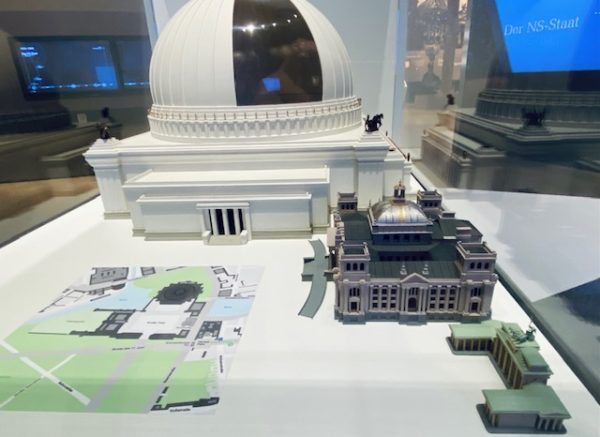
The link between energy and architecture is all to obvious. For at least a century we believed that energy had to serve architecture and could be relegated to second place. With global warming the overriding importance sits with energy concerns for some years to come. We spend billions to repair the bad architectural and fast growth architecture of the post 2WW era of architecture, especially the construction boom of the 60s and 70s. The driver of change in architecture has moved from the period of social architecture (60s, 70s) to energetic architecture. Energy in architecture has multiple dimensions. Whereas a century ago the shift consisted in the installation of central heating systems in the northern hemisphere of the globe at scale, in the 21st century the concern there shifts to isolation from heat (and cold) to more efficient, less polluting energy provision. Cooling houses and office spaces during extended periods and higher peeks of heat, ask for substantial revisions of existent architecture and the next generation of energetic architecture. Before long, we shall also think more seriously about the handling of water in architecture, a topic which is closely linked to energy consumption and design.
From a sociological point of view we are used to ask questions of social inequality related to this issue as well. We are on the way to move into a society of energy-rich versus energy poor households and enterprises. Financing of adaptations of housing and offices to the energetic challenges is likely to create severe additional inequalities, which exacerbate the already existing ones. If you have no money to spare, you will be unable to invest into energy savings with more distant returns on investment (ROI). At older age you are less resistant to heat waves and causes health disadvantages. If previous investments were impossible or the urgency for energetic architecture was neglected for too long, additional health inequalities shall arise.
The “Deutsches Architekturmuseum” has built an exhibition around this theme, which widens the perspective of architecture and energy. This highlights the additional concern for energetic architecture and people living or working in (modern) architecture.
(Image Trier Roman arena 2025)

Global warming

The annual update of the global warming indicators (source: Earth system science data 2025-6) gives more reasons to worry about the future of our climate. The objective to limit global warming to +1.5°C, established at the Paris climate agreement in 2015, is no longer achievable. This is the hard evidence based on the global network of scientific data collections and their projections. Fossil fuels are a major cause, deforestation and greenhouse gas emissions as well (Forster et al. 2025). As a consequence, human-induced warming of average surface temperatures and flows of heat into oceans continue. The first consequences, we witness in many parts of the world already. France is particularly affected (Le Monde 2025-6-20, p.7). What used to be called “natural disasters” is better described as long-term consequences of human-induced global changes like global warming. About time to take our CO2 footprint even more seriously. The “All electric society” can reduce reliance on fossil fuels considerably, as of now.

Fertility Fecundity

The scientific debate around changes in fertility has focused on social, economic and cultural factors to explain the drop in total fertility rates in OECD countries. The baby boom years of the 1950s and early 1960s had come to an end following the spread of new forms of birth control like contraception from the late 1960s onwards. The trend is very obvious and yet, the explanations of the trend might lack a more profound analysis of fecundity in addition to the socio-economic explanations. Shakkebaek et al. (2025) point for example to the little known effects of environmental (pollution) factors on the biological reproduction capability of humans (men and women).
Additionally, psycho-social factors like “the German Angst” fear about future developments in many social and economic fields might have direct effects, but also indirect effects on human biology. We know still very little about such feedback loops or feedback effects. We are more convinced, than we actually have hard evidence, that the BSP, SPB or PSB (B=Bio, S=Social, P=Psycho) spheres are interwoven, but an ambitious research agenda is called for to enlighten the issue. The big invisible elephant in the room might be environmental issues that enter into the fertility equations more than we have expected for many years. A nice working hypothesis for an ambitious and overdue research agenda.

Real dad-ication

The last few years there has been a stronger recognition of the need to get fathers more involved in caring for children. In the USA the #dadication became a symbol and an annual campaign to raise awareness to the importance of fathers to get involved in addition to mothers. The combination of fatherhood and dedication was shortened into “dadication” to reflect the combination of both elements that we not always considered to a natural part of fatherhood. It is a win-win-win situation as fathers gain emotional strength, children learn about parental styles and mothers get some relief from at times overwhelming family care.
In literature we have some great examples of caring or neglecting fathers. Famous are the letters to his father by Franz Kafka. Historically, fathers have often thought their role solely as ensuring a social status for their children, but nowadays the role patterns is much broader and much more emotional or psychological as well. As there are more “dadication” role models around, the song “Papa où te” (Dad, where are you?) will still be popular, but with more reassurance that children or adolescents have vivid memories of time spent together.

Ohm … Ohm

In the 21st century most people will interpret “Ohm … Ohm” as the exhalation in yoga  (Hatha yoga). Therefore, take a deep breath, hold it for a while (twice as long) and then exhale (thrice as long), for example. Now you are perfectly set up to read about Georg Simon Ohm (1789 – 1854), the physicist after whom Ohm’s law was named. In the “All electric society” Ohm’s law still plays a fundamental role for all households. The understanding of electric circuits is quite easy, just apply the basic relationship of Ohm’s law. In a resistor the current and voltage are proportional. The sign (SI) for resistance (R in physics) of a conductor is the Greek letter Ω. The proportionality is expressed as R = V/I where V is the Voltage and I the current through the conductor. The units are Ω, Volt V, Ampere A. All you need to know additionally is the calculation of the power P in Watt W where P = V x I for example. If you want or need to dig deeper into your home electricity just study a bit of electrical technology on the basics.
In our homes, apartments or offices we can apply this 200 years old knowledge to guide the safety and energy consumption of our electric installations. Maybe with the help of a spreadsheet programme like excel etc.

Home cooling

In the summer months, in Europe, the concern shifts from heating your home to cooling your home. For generations this has been possible without use of air conditioning. A natural way of cooling has been for centuries to dig into earth to take advantage of the rather stable and cool temperatures underground. In home building this has also been a tradition for centuries to build cellars underneath a home.
Wine growing regions have used the cellar as a natural cooling facility for long and short term storage of wine. Digging into a mountain of a valley offered a natural cool storage solution for years without additional energy consumption. Modern buildings should return to this practice and gain cold from below the surface to cool buildings in the warm or hot seasons. Good isolation combined with the cool temperatures from below the surface in summer months will substantially save energy and thereby CO2 emissions. Circulation of the cool air from below to the upper floors is the issue as well as dealing with differential humidity levels. The wisdom of previous generations in home building with no access to air conditioning (avoiding the air conditioning paradox) is likely to experience a revival in the coming years.
Coolness is the new and old wisdom.

Home extension

Most people think of home extension as some sort of extension of the roof, an additional room or the transformation of a garage into an additional room. However, the digital home requires a home extension of a different kind. In order for all rooms to be included into the digital home a range extender of your wireless might be necessary. Yes, this even includes the bathrooms, because otherwise you can no longer sing along your favourite tune under the shower if you are used to the streaming of the musical or orchestral accompaniment. Additionally, the immediate surroundings of a home with or without garden might make it necessary for your robot to mow properly or your digital letter box to send you the mail for the long awaited love letters while you out of home.
Being out of range in your home, is almost equal to not being home at all. Of course, you don’t have to automatically send an out of home message to all your contacts when you are too far away from your digital home for your digital device, but the comfort of a range extender may avoid the new “digital inequality” between adolescents in your home. Room choices are made according to wireless access points and signal strength rather than the room with the best view. Lots of new issues arise we did not even think we would have 10 years ago. Of course, we follow the suggestions of an AI chatbot that recommends the best location for us after we entered images and descriptions of the consistency of each wall into the system. Just a practical advice, install extensions out of reach of any toddler, because a sudden interruption of the connection will create very unpleasant surprises.

Warming continues

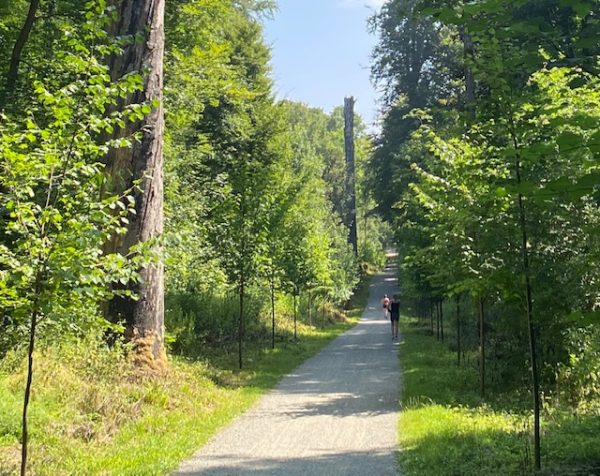
The global warming continues to change our landscapes. Heat waves, droughts and flooding become more often. Average temperatures keep rising. The evidence from meteorological data is showing this beyond doubt. Our forest take the toll and reports document the worsening situation for many trees (Germany and Switzerland). An adaptation will take years if not decades. In the region around Paris some home owners have started or been forced to adapt their gardens to the warming weather conditions. Trees that do not support the consequences of warming die and we witness the changing of the landscape. Palm trees near Paris have survive for years by now near Paris and can grow rather tall.
Like it or not, the visual landscape will change despite the many great initiatives launched by the city of Paris to stop the warming of the city.

Satie Popular

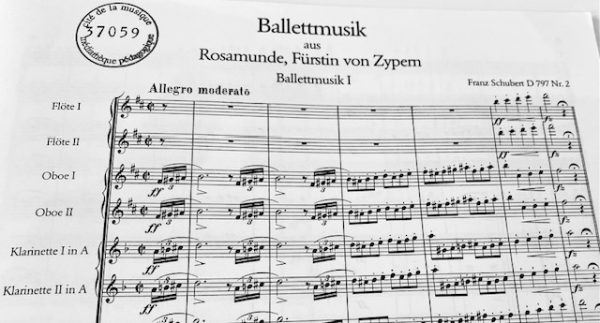
Erik Satie has been quite involved with the surrealist and Dada movement of his time. He personally knew the main proponents ranging from Breton to Magritte. He became one of the major figures applying the ideas of surrealism to music. His early compositions like the Gnossienne (extract of Nr. 1 below) are admired for their simplicity. They became popular only years later and have entered popular music repertoire through many retakes of the original tune in various styles ranging from jazz to rap. Many of Satie’s formative years he spent playing and performing popular music in the animated cafés, bars and shows of Montmartre in Paris. The making of a living based on music can be a challenge. Satie had to bear the full risk of a life in poverty at times to reserve sufficient time for his creative work.
He remained very much connected to the working class as his later membership of the Communist party after the Great War testifies. Composing for children and transmitting music to the next generation was equally close to his heart and mind, especially in his later years.
For him, popular music constituted a fountain of original tunes and a test with an intuitive audience rather than the academic circles. Maybe, with this attitude, he followed the footsteps of Flotow, Offenbach, Ravel and many others later on until pop music became the vastly dominant music in the late 20th and 21st centuries.

Erik Satie Satisfied

The collection of letters from Erik Satie contains more than 1000 letters amongst them some in exchange with the best artists of his time. The range is largely due to the circle of artists who met at Montmartre in Paris before and during the Great War. We discover letters to Maurice Ravel, Claude Debussy, Pablo Picasso or Henri Matisse. For some artists there are 100+ letters preserved like to Jean Cocteau. In the 1920s he composed music for shows at Montmartre, where the scenario was painted by Pablo Picasso and costumes designed by Coco Chanel. The sculpture by Brancusi must have been familiar to him, just as much as the cubist paintings by Georges Braques, as there are also letters or references to such letters in the impressive 1000+ pages collection. Like Ravel he was rejected by the Conservatoire de Musique de Paris in his early days as student. Montmartre allowed to live and create at the same time while living on a minimal budget. Erik Satie signed his letters with ES. In German this denotes a “neutrum”, maybe, beyond male or female differentiation, but also a tonality in music (E flat). There is no trace that this was a conscious choice. It is just another unresolved puzzle about the self-declared “Gymnopédiste” and composer of the “Parade” and the popular piano music the “Gnossienne”. 100 years after his death on 1925-7-1 he (ES) could be rather satisfied with his impact on the course of music in the 20th century and beyond.

Musician Historian

Musicians are usually perceived as “part of history” rather than being historians themselves. However, recent research on Bob Dylan has extended that view to portray Dylan in his role as historian as well. The issue here is more with the historical periods and references the musician, composer and song writer builds on and interprets historical events. Thereby, his thoughts and impressions on living through historical events enter into his work as an artist. Dylan is literally “doing history”. He puts events of past and present into perspective of his own making and reached authority through the non-conformist perspective, which connected him to as a performer to his various audiences. His approach to doing history consists in the re-presentation and re-creation of historical narratives. Nina Goss (2024) in her book review highlights the “irruptions of the past into the present unique in popular culture”. The re-arrangement of fact and fiction encourages us “to inhabit, question, and revise historical narratives and tropes” (p.399). Several musicians have specific ways of reflecting, sometimes critically, on history in their artistic work. Bob Dylan certainly is a very prominent example of this an has been honoured for this by the Nobel Prize for literature. It remains an interesting perspective to review composers and their choice of libretti for operas as a way of doing history. The shifts from royal drama to revolutions and popular scenes are in this line of interpreting musicians also as historians.

Home security

Digitalization has made it possible to step up home security at reasonable costs. The video surveillance of homes inside and the immediate surroundings are feasible through the use of connected cameras. The footage can reach sizable amounts of data, but intermittent recordings reduce or the AI-assisted detection of movements on a person’s property have become standard home security. Even for apartments the video enabled door bells and digital locks have improved the security level for those who are willing to invest in home security. A good neighborhood watch system is, of course, in most cases a superior solution. But neighbors change and social interaction is often reduced to minimal contact in most suburban regions. As with heating of homes, home security is also depending on what makes you feel comfortable at home. For some 20 degrees Celsius is enough and a solid mechanical lock is sufficient. Others have made very different experiences and want their digital devices directly linked to a professional security or police service. Like it or not, home security is part of the modern home just like many other digital devices or TV sets. 

Rainwater Use

The use of rainwater is fairly easy to realize. Most homes in Europe and beyond have a roof drainage system in place. However, for decades the only concern was to get rid of the water as soon as possible. Nowadays, we think twice about it. The recovery and storage of rainwater for a separate use in a household has become a substantial cost saving exercise. In the Paris region in France you can expect on average 650 liters of rainwater per year per square meter. For a roof size of, for example, 70 m2 this yields about 45.000 liters per year. If you take a shower using 40 liters this allows you and your household to take 1125 showers or 3 persons almost one shower every day. Average household consumption in Paris is 120L/day, which adds up to about 44.000 liters per year for washing and toilet use. On a monthly basis with a storage capacity of 4000 liters of rainwater per adult person you should be able to manage your own consumption with your own roof drainage system. It is a rather simple use case. Maybe during dry summer months the calculation is a bit too optimistic, but the potential for a water autonomy of households in Europe is an option. In addition to the dry January, the no mow May, we shall have the no shower July next.