
The acquisition of handwriting as a competence has been important for centuries. In primary schools this technique is exercised as a foundation for the performance in other cultural techniques like language writing and even calculus. Therefore, it has been beneficial to make sure children acquire basic competences in handwriting. This has not changed much, although the time devoted to perfection of the technique has been reduced over generations. We still have some memories of people who have made the handwriting or the pencils used a case of distinction. At the enlightenment period a lot of authors drafted their thoughts and manuscripts in handwriting and our museums or biographies are proud to show off handwriting of authors, artists or composers. In some of those we are able to retrieve the thought process behind the writing. The editing, crossing out, adding sentences or correcting words are traces to dive deeper into these creative processes.
Currently, we are less sure, whether in the age of AI we should still rely much on this old technique of handwriting. If we just treat it as one of many competences to be or become creative yourself, we are on the right track. The PISA studies by OECD include problem-solving as a crucial competence. Handwriting or drafting first steps of a solution might still be useful. A handwritten sketch of a solution might guide the elaboration of the more encompassing solution.
Another interesting feature of handwriting is the cross-cultural element of it. We feel easily compassion for a handwritten document. The psychomotor competence of handwriting is fascinating across continents. It has distinguished us from other species as well. The evolutionary steps are important elements of a learning process. Nostalgic feelings about handwriting do not help anybody, but children are well-advised to still keep an eye on their handwriting competence as part of or first step in problem solving, even if it is just to formulate the question they are interested in. 
Dietrich Gabin
In French cinema Jean Gabin is a much adored person. Equally, Marlene Dietrich had, probably an even more far reaching international career. Both were accomplished and successful actors long before the 2nd world war broke out. In the U.S both fell in love and had a long lasting romance together. Their war time activities and “engagement” in fighting Nazi-Germany were extraordinary. It meant that both took active roles to use their charisma to mobilize people and soldiers to fight for freedom.
Shortly after the war then, both made a last attempt to work together in a movie production, but it could not unite the couple again. The “Deutsche Kinemathek” displays currently a page from the Diary of the “Diva” to underscore to what extent “Dietrich” was depressed about the break-up of their longer lasting love affair. Some say Gabin was the only person who quit her, all (most?) other relationships were terminated by the Diva. The junctions of biographies are hard to predict. The circumstances of the 2nd world war and internalized civic obligations to fight for freedom and democracy were wholeheartedly shared by both, but eventually they grew apart nevertheless. Tough experiences even for the much adored persons on the forefront of the stages worldwide. There seem to be many instances of repetition of the same story not only in movies, but also in real life.
Image: Deutsche Kinemathek Museum 2024-5 
Image History
The archives of the history of movies and/or television show to us the multiple ways how images capture our attention and memories. Visual narratives are an own category of our personal and collective memory. The wide range of visual experiences are a powerful way to influence. Not only the movies and stories matter, but the whole range of images associated with the cinema world. Poster collections, newspapers and today the so-called social media multiply the original images. The Deutsche Kinemathek allows a special, critical understanding of image history as Germany has been using and abusing images and movies in a very manipulating manner historically. The message is: do not take images for face value. The ways and techniques to manipulate images have been widely used and are all around us today. Whereas the mass media in previous decades have dominated the collective memories we have entered into an era with many more subcultures that evolve within their own bubble of images. An original attempt to cut 65 movies of German film history into less than 4 minutes is presented in the exhibition (Milkowski and Simbeni). It focuses on gestures and “les regards”, “Blicke”, how the actresses and actors seem to look at us. Eyes capture attention, and this as soon as we open our eyes as children. Our brain works as image recorder and our memory algorithms tend to favor image recognition while processing images continuously. We do not know much about our own image sorting algorithm or algorithms yet. Research on aging of the brain gives some hints. With declining short term memory the images stored in long term memory take the upper hand. This makes an understanding of the history of images even more important.


Deutsche Kinemathek
Just in the vicinity of the Potsdamer Platz in Berlin you’ll find the Deutsche Kinemathek, the museum movies, actors, actresses, directors and the history of cinema in Germany. There is a small specialized library in the Kinemathek that allows to dive not only into journals and books, but also video material, scenarios and accessories. Of course, you will find a lot of material on all sorts of movie stars (heroines) over more than a hundred years. The “Divas” of the industry take up a large part of the exhibition. “Marlene Dietrich” much more than “Hildegard Knef“, the former born and the latter lived for a long time in Berlin-Schöneberg (Berlin-Pretty-Hill as some locals call it nowadays). The 2 Divas probably caused the funny translation. Anyway, the hall in the Kinemathek which is exclusively devoted to Marlene Dietrich impresses with a lot of glamour and mirrors around.
For those with not only a biographical, but also life course interest in cinema cherish the public access to the library. The most impressive table there is the desk with access to the Ukrainian movies and about cinema in Ukraine. A list with QR-codes allows you to readily approach the recent developments before and during the Russian aggression on Ukraine (See image below). After all Potsdamer Platz in Berlin was a hot-spot of the cold war period in the divided Berlin. A little bit of a “Metropolis-atmosphere” can still be felt. The Kinemathek explains well what this is all about. 
Attune Spheres
In Berlin it is easy to walk through the history of art to up-to-date contemporary art installations. Just walk from the Alte to the Neue and then to the Contemporary Nationalgalerie. With the installation and performance in the monumental Hamburger Bahnhof the artist Alexandra Pirici succeeds in an extraordinary way the combined impression of several art formats. I felt particularly attracted by the sound and resonance that the dancers achieved in the huge historical hall of the former train station. Embedded in a choreography that spans the whole hallway and the top of a sand dune, the ideas of „Attune“ bring in demonstrations of scientific experiments as well. We are reflecting on how structures, biological, physical or geologic processes coexist. It is another example of the intersection of biological, psychological and social phenomena. The links between science and art are more direct than what most people tend to believe. This encompassing experience catches all our senses and our mind. It is very likely that this intense experience in the museum space, which attunes our sensory perception of the artwork, sticks with us for longer than many other pieces of art. The 21st century will reveal an even more powerful language of art as it incorporates even more formats to grab our attention and imagination. The research of how patterns are formed is an important question for social scientists as well. All approaches to the subject are welcome and each one reveals our knowledge gaps despite remarkable progress. (Image: Hamburger Bahnhof, Berlin 2024-5-11, Alexandra Pirici) 
Silent Pandemic
There is a pandemic that is silently spreading across countries and continents. It only indirectly related to the Covid-19 pandemic. The medical journal “The Lancet Respiratory Health” (2024) has an editorial about the inequities of asthma as they develop over the life course. The development of asthma has pre-natal, genetic, environmental, life-style and socio-economic co-determinants. The study of respiratory disease, therefore, is a multi-factorial issue, which needs to disentangle the specific influences. Smoking as well as obesity have an impact on asthma, instantaneously or with delayed time effects of sometimes many years. Hence, it is important to take the whole life course into account, if we want to address the rising disease burden of asthma. Air pollution and heating-up of the planet are important drivers of the silent asthma pandemic across the globe. The social distribution of people working in “asthma- prone” work environments and/or living in highly polluted urban, suburban or rural areas near high frequency traffic is another latent factor causing huge costs to persons and society as a whole. Health inequity is growing over the life course. This is not easy to tackle as policy target as the onset of the disease has no single trigger, but rather a combination of influences that contribute in varying amounts to the evolution of respiratory diseases. (Image air pollution https://aqicn.org/map/germany/de/)

AI Racing
AI has entered the racing of cars after we have been racing horses, dogs and camels for many decades. The fact behind all these races is the huge market for gambling. Anything you can bet on will do for juicy profits in that industry. The recent “Abu Dhabi Autonomous Racing League” is the latest addition to the racing craze. Moving online with 600000 spectators at its peak on video and gaming platforms the investment seems promising. The only problem, AI is not yet ready to really compete with the world of real drivers. The progress, however, is astonishing. Just one lap of 2 minutes on the circuit yields 15 Terrabyte of data from 50 sensors. These are closed circuits so no person can enter or animal can get in their way. The challenge to integrate more data and faster processing as well as algorithms for fast decision making is steep. Great learning opportunities for advances in robotics. The hype has not been able to live up to the expectations as no real racing took place yet. We have replaced the gladiators of the Roman empire with Formula 1 drivers. It is only fair to retire those drivers soon and let AI race cars against each other. It feels like a computer game on screen and it is as we shall most likely watch these races on a screen as well. Hence, what is the point. Watching youth on TWITCH play racing games will probably not change the viewing behavior of the masses. The programmers have nevertheless great learning opportunities and will find their way rapidly into the job market. The other challenges of ASPIRE seem more important for humanity like human rescue and food for the growing world population. In the meantime let the boys play around with cars and learn about potentials as well as failures of AI-programmers and dealing with both.

Weight Stigma
The fashion industry has for a long time produced images of mostly women and men that did not correspond to the normal weight distribution of people. Skinny models were present across all media. The so-called social media of today amplify this trend further. The “Barbie hype” has reinforced the idea of low weight as a socially desirable norm. In scientific research the term coined for this phenomenon is “internalized weight stigma” (IWS). A study shows (Highes et al. 2024) it affects more women than men and more people who are described as socioeconomically disadvantaged adults. Pressure to lose weight originates from multiple sources and social media platforms have given rise to bullying. A major outcome of IWS is eating disorders as eating is often wrongly associated to be the only cause of higher weight. It is not. Many other factors contribute to the actual weight of a person. Even the overuse of the body mass index (BMI) as short hand version to define overweight or obesity is misleading for persons with strong muscles. Just fixing on one parameter of body shape or weight tends to reinforce weight stigma. “Keep walking” and a regular healthy diet, this avoids to internalize a weight stigma. Exercise is fun, the more you do it in a group, the easier it is to get going regularly. We ought to keep trying and eventually it will become a routine.
Science Politics
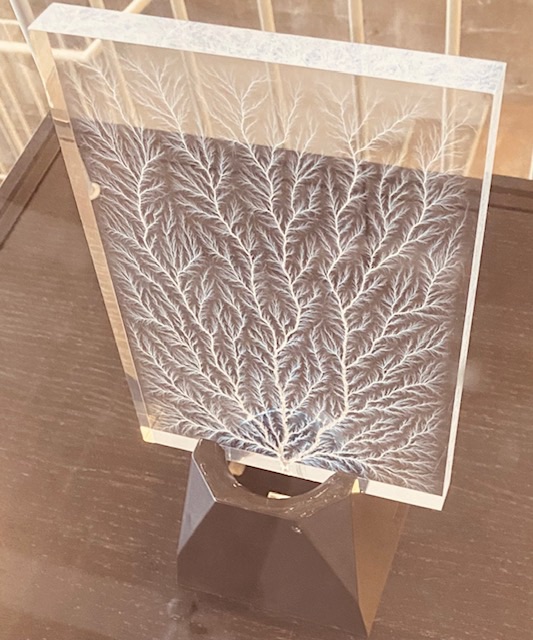
We tend to believe that science is independent of politics. Even if the individual scientist does research and studies free of immediate political influences, there are many ways in which politics has an impact on science. Sociologists refer to Max Weber as a prominent figure in the “Werturteilsstreit” that claimed the need for science to be conducted beyond political interference. Karl Popper is another reference in this respect who proposed the positive science approach which starts from theory, hypotheses and testing in the sense of identifying false statements, hypotheses and underlying theories. Modern science is also linked to publications of results. This has become an industry of its own and it is sometimes quite surprising to see the lengthy delays that scientific results get published. One example, Jackie G. Schneider and Julia Macdonald (2024) had to wait 3 years until their paper finally appeared in print in a scientific journal. This paper was received by the Journal in February 2021 and published only in 2024 in the 2nd issue of the journal but online in January 2023! Reports in Nature on difficulties of Indian, African and Chinese scientists to get their work done and published are alarming as well. Further regionalization and departmentalization work against the fundamental principles of independent science and scientists. It is a big issue of international cooperation as well.
May 1st
More people take to the streets on the 1st of May in Germany. The costs-of-living crisis with high inflation has increased the claims for pay rises for workers and adjusted wages for employees. We all have observed “greedflation”, i.e. excessive company profits in several sectors. Additionally, “shrinkflation” has affected consumers in their daily shopping experience. Political efforts to curb inflation have taken a long time to come about and most initiatives have ended already (Energy sector). This spurred a new drive for trade unions to come out in huge numbers to protest and claim adequate wage increases to cover the increased costs of living. In Germany the DGB informed on the annual 1st of May demonstrations across the country about a strong new entry movement of members of 400.000 persons. It is higher than the loss of members of the large baby boomer cohorts who retire.
Through a broad and engaged membership the pressure on higher wage settlements will persist. Companies have used the crises to generate extra profits. It is only fair that those employees who largely contribute to the success of a company will claim their share as well.
For society as a whole it is important to consider that the discrepancy between managerial pay and shop floor wages do not increase further. The social fabric of societies is in danger if perceived injustices grow. More radical forces can all to easily exploit this causing a severe danger for democracies. Meeting people on the 1st of May and joining forces across sectors and trades ensures that a society continues to build and rely on solidarity. High inflation times are a great reminder of the economic basics of societies in history as well as today. 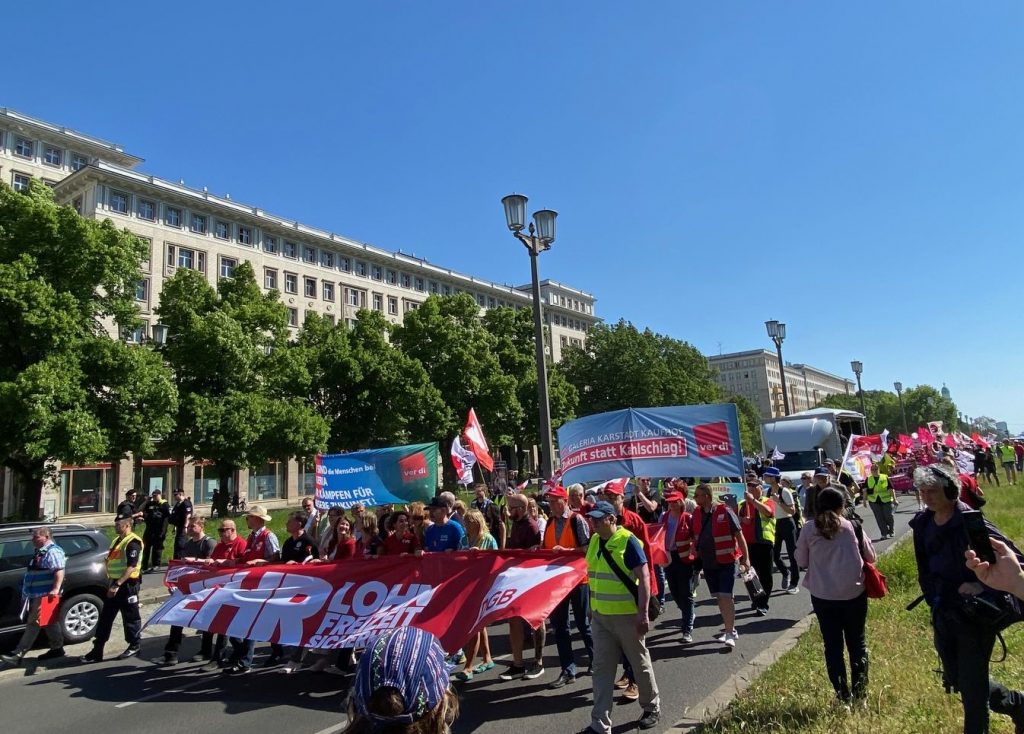
Comparative Advantage
In economics all students go through the calculus of comparative advantage. People, regions or whole countries tend to apply comparative advantage to their production systems and ensuing internal or external trade. The basic rationale developed by David Ricardo has not changed that much over 200 years. The fields of application, however, are continuously expanded. Lindsay and Gartzke (2020) have applied the comparative advantage rationale to military strategy. The paper quotes 26 times Clausewitz and demonstrates the links of strategy to the basic economic and social rationale of comparative advantage. It is the politics of production that even the presence of trade may override the rationale of comparative advantage to favour local production of “operational domains” or military equipment.
In Russia’s aggression and war against Ukraine own production and trading of weapons has returned to the forefront of the concerns. In addition to the production of ammunition, the provision of drones has dominated the international arms trade related to the Russian aggression. Resources and time for production are additional factors that have an impact on availability of weapons at the right time at the right place and with the sufficiently trained persons to operate them.
The strategies that cross domains or combine domains seem the most promising. The careful analysis of your own comparative advantages or disadvantages needs to be the basis of any strategic decisions. This has been known for 2 centuries at least and is still valid in many fields of application. Additional considerations for “home production” might add to the complexity of the issue. Sustainability has also found its way into the field of comparative advantage at last. This may alter the analysis of comparative advantage of operational domains as well. Lots of unresolved puzzles still around. It will need years to sort this out despite the urgency of the Russian aggression on Ukraine.(Image: AI Copilot.2024-4-30 2 political leaders deal weapons. One has a comparative advantage in ships. The other one has a comparative advantage in aircrafts. they deal together)

AI Disruption
Many scientists started to question the disruptive potential of AI in, for example, the military’s domain. The Journal of Strategic Studies featured 3 papers on AI and autonomous systems more generally. The major argument by Anthony King is the reliance of autonomous systems on other systems mainly human operators even in the background to get these systems off the ground and maybe back again. Not only logistic support but also satellite communication is needed to guide and protect the operations. In quoting Clausewitz, Anthony King stated that war is a “collision of two living forces”. Strategy and counter-strategy will co-evolve as will attack and defence.
Jackie G. Schneider and Julia Macdonald (2024) advocate the use of autonomous and unmanned systems for their cost effectiveness. Economic costs as well as political costs are lower for these new strategic weapons. Mass fire power from swarms of drones is much cheaper than nuclear warheads and the home electorate is assumed to be more willing to accept and support limited and more precisely targeted unmanned missions. The disruption potential of AI is huge but it is most likely an addition to the arsenals than replacing them. (Image 2 swarms of drones fly in the air above tanks, created by AI – copilot-designer 2024-4-29).
Hannover Fair
The annual science fair at Hannover is a kind of a show of things to touch and of those things that come to the public market in the near future. Most of the annual hype is about potentials of production. Rationalization, using few resources or innovative solutions of digitization are high on the agenda. Create your digital twin, save energy, make production more safe or cyber secured.
Robotics is another reason to visit the fair. Some 7 years ago I had my Sputnik experience there. The robotics company KUKA had demonstrated live the that assembling a car from pre-manufactured components takes just 10 minutes for the robots. Shortly afterwards the whole company was bought by Chinese investors. Roughly 5 years later we are swamped by cars from China. It was not that difficult to predict this at that time. Okay, we need to focus on more value added production and take our workforces (not only) in Europe along on the way. Reclaiming well-paid, unionized jobs in manufacturing, as Joe Biden does, will not be an easy task. Robots and their programming is expensive, but skilled workers, too. Hence, the solution is likely to be robot-assisted manufacturing as a kind of hybrid solution for cost-effective production systems.
Following the proceedings of the 2024 fair we are astonished to realize that visiting the fair is still a rather “physical exercise” walking through the halls. After the Covid-19 shock we expected a lot more “online content”. Instead we keep referring to webpages and newletters rather than virtual visits and tours. The preparation of the visit in advance remains a laborious adventure. However, the in-person networking activities in the industry are largely advanced by ease of exchanging virtual business cards and the “FEMWORX” activities.
This year’s Sputnik moment at Hannover is probably most likely related to the pervasive applications of AI across all areas of the industry and along the whole supply chain. Repairing and recycling have become mainstream activities (www.festo.com). Robotics for learning purposes can also be found to get you started with automating boring household tasks (www.igus.eu).
Visiting Hannover in person still involves lengthy road travel or expensive public transport (DB with ICE). Autonomous driving and ride sharing solutions might be a worthwhile topic for next year’s fair. Last year I thought we would meet in the “metaverse fair” rather than in Hannover 2024. Be prepared for another Sputnik moment next year, maybe.
(Image: Consumer’s Rest by Stiletto, Frank Schreiner, 1983) 
AI Defence
For those following the development in robotics we have been astonished by the progress of, for example, rescue robots. After an earthquake such robots could enter a building that is about to collapse and search the rooms for survivors. A recent article in “Foreign Affairs” by Michèle A. Flournoy has started its thinking about the use of AI in the military with a similar 20 year old example. A small drone flying through a building and inspecting the dangers of entering for persons or soldiers. Since then technology has advanced and the use of AI for automatic detection of dangers and “neutralising” it, is no longer science fiction. The wars of today are a testing ground for AI enhanced military strategies. It is about time that social scientists get involved as well.
Warfare left to robots and AI is unlikely to respect human values unless we implement such thoughts right from the be beginning into the new technology. An advanced comprehension of what algorithms do and what data they are trained on are crucial elements to watch out for. According to Flourney, AI will assist in planning as well as logistics of the military. Additionally, AI will allow a “better understanding of what its potential adversaries might be thinking”. Checking through hours of surveillance videos is also likely to be taken over by AI as the time consuming nature of the task binds a lot of staff, that may be put to work on other tasks. Training of people and the armed forces become a crucial part of any AI strategy. The chances to develop a “responsible AI” are high in the free world that cherishes human rights and democratic values. Raising curiosity about AI and an awareness of the dangers are two sides of the same coin or bullet. Both need to grow together.
(Image created by Dall-E Copilot Prompt: “5 Robots disguised as soldiers with dash cams on helmet encircle a small house where another robot is hiding” on 2024-4-23) 
Puppets Museum
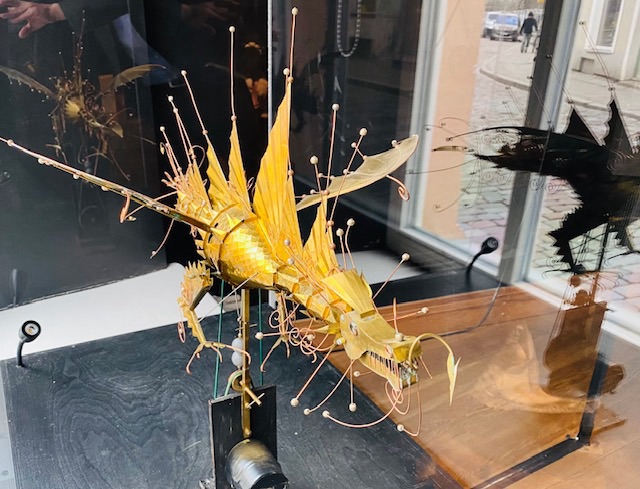
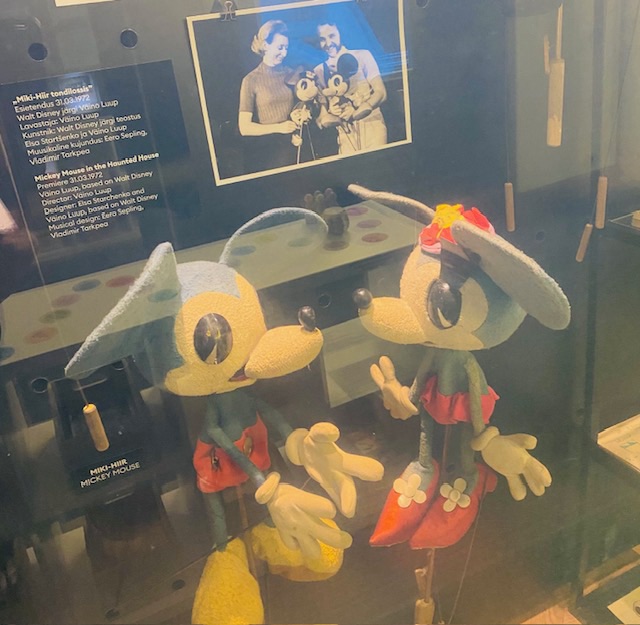
The puppet theatre is still a tiny part of the theatre world. The century old tradition has roots in all cultures across the globe. The Puppet Theatre Museum in Tallinn has a fine selection of puppets to perform theatre pieces from India, China, Indonesia and Europe. Storytelling is part of humanity and learning through narratives distinguishes us from other species. Religious traditions have appropriated these techniques just as modern performing arts. From the carnival tradition of using masks not only children adore playing with characters. The famous founder of the Estonian Puppet Theatre has his small monument outside the historic building in the old town, but a big puppet theatre with 400 seats. The adventures of Jules Verne have been played there just as most well known operas or children’s tales. Puppets comment on puppets (Mickey Mouse) just as they take on political debates. The forthcoming piece on the Ministry of Solutions sounds promising indeed. We envy the puppets that have a Ministry of Solutions rather than lots of ministries and ministers but no solutions.
Schachliteratur
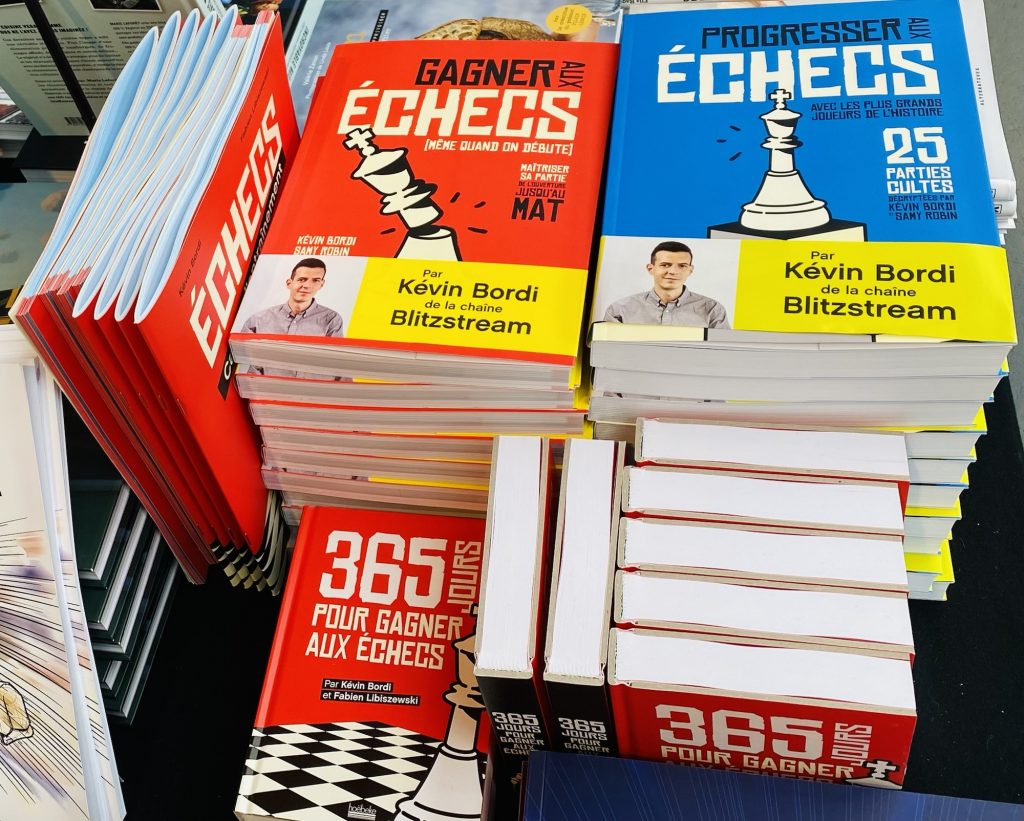
Es gibt sie noch, die Personen, die Schachbücher lesen und kaufen. In vielen Sprachen existiert die Niche der heimlichen Strategen. „Teaching old dogs new tricks“ oder ist es eher „teaching young dogs old tricks“. Das ist eine empirische Frage. Nicht nur Zeitungen für sogenannte BildungsbürgerInnen haben noch kleine Spalten zumeist mit Schachproblemen. Manchmal findet sich Schachspielen sogar als Schulfach. Lesestoff zum Schachspiel findet sich reichlich. Schach in der Literatur ist jedoch verschieden von der Schachliteratur, die sich mit Strategien und Tempi befasst.
Das Lesen von Schachliteratur mit Meisterpartien hervorragender Spielenden ist vergleichbar dem Lesen einer Partitur einer Symphonie oder Oper. Das Kino spielt sich dabei überwiegend im Kopf ab. Gelegentliche unvermittelte Gesten oder Ah-laute sollten den Spielenden ihrer Verzückung wegen entschuldigt werden. Vielleicht sollten die Schulen diese Kulturtechniken mehr vermitteln. Macron‘s Vorschlag Theaterspielen mehr in den Schulen zu vermitteln erscheint in diesem Vergleich als ein Entgegenkommen an die „Generation der sich ständig selbst inszenierenden“. Mehr Spielen ist aber schon mal ein wegweisender Vorschlag.
Transparent Publishing
New technology pushes transparency of publishing, journalism and science to new levels. Through the hyperlink structure of texts it is easy to link back to the sources of a text. What used to be long lists of references at the end of a text or in footnotes has become directly accessible through weblinks. Only paywalls may or may not restrict the fast and easy access to original sources. In writing online, this is a major additional feature of publishing in the last few years. Some online journals allow this for quite some time now, but there are lots of printed versions that stick to the read and be stuck approach of publishing.
In teaching I have been an advocate of “read the original sources” as the basic source of inspiration for authors. The transparency of the thought process and the evidence provided in whatever form should be traceable. In publishing this transparency allows to exclude the copying of thoughts or unreflected referencing.
However, the task to check for the validity of weblinks and the updating is an additional task. 500+ blog entries with an average number of 2 weblinks per blog entry makes this a job of its own. Testing of 1000 weblinks is something you need a software or plugin which alerts you to “broken links”. The maintenance of a webpage, therefore, increases substantially as the content increases. Reorganisations of webpages make the follow-up of links sometimes quite hard. Projects like the general archives of the web and webpages are very important to ensure the transparency of publishing in the short, medium and long run. The archives of today look more like machine rooms than the splendid archives or libraries of the past and present. 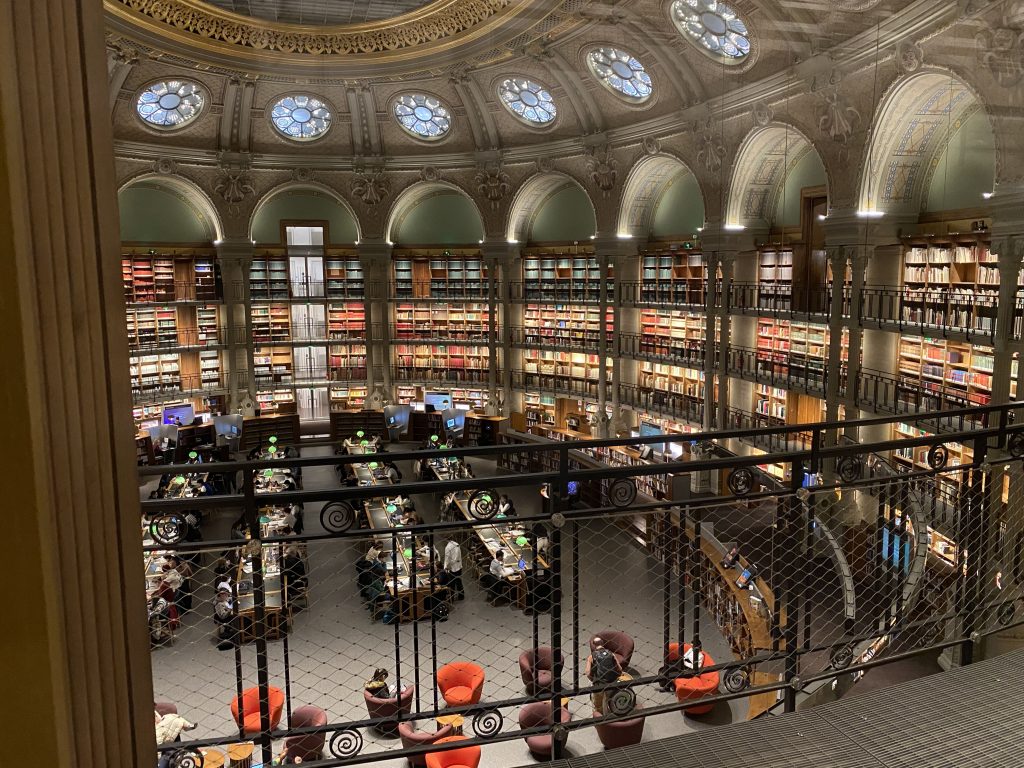
AI Reader
In the middle of the hype around AI it is useful to take stock of the reflection and evolution of AI. In my own analyses and writings on AI it evident that a narrowing of focus has taken place. Whereas before 2022 the writing dealt more with digital technologies in general. The links to the literature on the social construction of technologies was obvious. Algorithms and AI was a part of the broader topic of society and technology.
This has changed. The public debate is focused on “everything AI now”. We look at technological developments largely through the lens of AI now. Hence, my focus of assessments of technology from a societal perspective follows this trend. In a collection of blog entries on AI we try to demonstrate the far reaching changes that have started to have an impact on us. In the last few months the all encompassing concern about AI’s effect on us needs full attention of social scientists, policy makers, companies and the public at large. We can no longer leave this topic to the software engineers alone. By the way, they themselves ask us to get involved and take the latest advances in AI more seriously.
As a “flipbook” the online reading is rather comfortable (Link to flipbook publisher MPL). The pdf or epub files of the blog entries allow to directly follow the links to sources in webpages or other publications (AI and Society 2p 2024-4-18). The cycles of analyses and comments have become faster. Traditional book writing suffers from time lags that risk to make pubications outdated rather quickly. Dynamic ebook writing might bridge the gap between time to reflect and speed to publish or inform the wider public. The first update as .pdf-file is available here: AI and Society(2).

Forest Management
Responsible forest management is key. To safeguard against the loss of biodiversity the management of forests can achieve a great deal as the study in Nature of 2024-4-10 has demonstrated. Reducing hunting by humans in dense tropical forests allows bigger species to survive and thrive compared to forests with easy access by roads. FSC certification of forests helps significantly to protect wildlife. The ability to ameliorate biodiversity of forests is assisted by the Forest Stewardship Council (FSC) through the responsible management, preservation and limitation of access to wild forests. This is an important message that in fact it is still possible to preserve wildlife also of larger species if we only really commit to the cause. It is well worth to support such initiatives and monitor the progress. Of course, any such success attracts new hunters and a continuation of the FSC efforts is needed for the benefit of the whole biodiversity on our planet as there is no planet B.
Series Evaluation
The monitoring of TV series is a serious science. The evaluation of so-called binch viewing has redrawn attention to the field of media studies again. We observe a bit across Europe, following the US experience, the change of TV productions into series that may run over several years. The successful format of a TV series draws advertising to the relatively constant audience. Most series have a particular age group as their target group. Viewing behavior determines time slots allocated. Each group has its own prime time. The publisher of books had their successes with similar series of for example children’s picture books or cartoons. Asterix, Martine and similar book series have basically applied the same “serial” mechanism before. Popular success creates its own dynamics. Therefore the evaluation of such serial productions should stay on our research agenda of the social sciences as well.
In a radio discussion “France Culture” has juxtaposed the 2 currents of series evaluation in a concise way. One current of assessment holds the view that rather than high versus low culture, the debate should take popular culture seriously. It augments the set of experiences as the characters in a TV series live through a kind of “experimental setting” each time anew. The variety of experiences is catching popular attention as they are beyond the scope of the spectator’s usual life settings and thereby a learning opportunity. This highlights the value of the content in the evaluation. This requires a thorough scrutiny of that content to evaluate an emancipatory value of viewing it (Sandra Lauglier, 2023).
An opposing view is defended by Bertrand Cochard (2024) with reference to the conflict about one’ use of free time available to us and how we spend it. His criticism takes issue with the amount of time “lost” by viewers of series. Time is not spent twice. The loss of time alone or side by side rather than spending it with other persons or physically active constitutes a major risk to the social fabric of society.The jury is still out on the issue. We likely see the start of a series of entries on this topic as well.
Mehr vom Meer
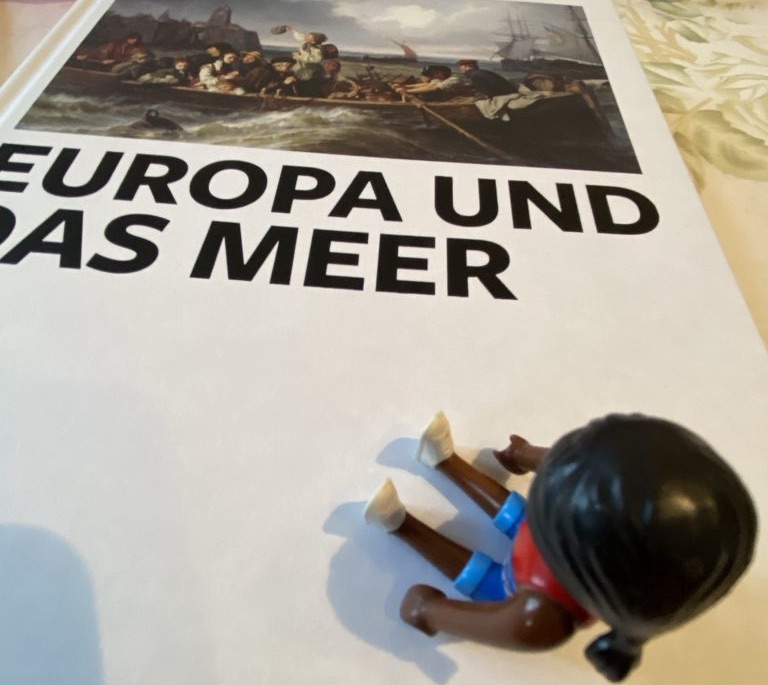
Wir sollten uns mehr um das Meer kümmern. Länder ohne Küsten finden meistens wenig Gründe, warum sie sich um das Meer bemühen sollten. Es ist doch so weit weg. Weit gefehlt. Erderwärmung erhöht die Meerestemperaturen und das wiederum beeinflusst massgeblich die Regenfälle im Inneren der Kontinente. Wir sitzen buchstäblich alle zusammen in einem Boot. Historisch betrachtet war das Meer mindestens seit der Antike Teil des machtpolitischen Kalküls der Beherrschung der Welt und der sie Bewohnenden. Wirtschaftliche Interessen waren ebenfalls Bestandteil der Erkundung und Eroberung des Meeresraums. Die Hansestädte in Europa bieten dazu noch heute gute Beispiele. Nach dem Sklavenhandel sind heute die Überseekabel und Rohstoffe des Meeres die begehrten Schätze des Meeres. Der Artenreichtum der Tiefsee wird erst seit kurzer Zeit intensiver erforscht. Externalisieren von Kosten des Umweltschutzes zu Lasten unserer Meere hat noch wenig Berücksichtigung in Wirtschaft und Gesellschaft gefunden. Tourismus- und Migrationsströme zum Meer, auf dem Meer und über das Meer stellen uns vor große Herausforderungen. Wir werden sicherlich mehr über das Meer reden müssen, und das ist keine Mär. Image aus „Europa und das Meer“ (DHM).
Das Meer
Wir haben vielfältige Beziehungen zum Meer. Diese reichen von romantisch geprägten Gefühlen zum Meer, den Wellen und den Fischen bis zur wissenschaftlichen Befassung mit den Meeren, Mangroven und dem Klimawandel. 71% der Erdoberfläche besteht aus Meeren. Das sollte den Festlandbewohnenden eigentlich klar machen, wie wichtig Meere für unseren Planeten sind. „Ocean Literacy“ nennt die UNESCO das. Neben Lesen, Schreiben und Rechnen sollte die Literalität auf unsere Ozeane ausgedehnt werden bevor es zu spät ist. Verschmutzung der Meere passiert hauptsächlich im Verborgenen. Lediglich Beobachtung aus dem Weltraum kann die weitläufigen Routen der Verschmutzenden zumindest teilweise nachverfolgen. Vielleicht hilft die Rückkehr zu der romantischen Sicht auf die Meere eines „William Turner“ zu einer höheren Wertschätzung der Meere, dem Licht und den Wellen.
Die kleine Sammlung von Gedichten „Das Meer“, erschienen im Reclam Verlag, ist eine gute Reisebegleitung für Begeisterte des Meeres. Darin findet sich eine Vielzahl von renommierten Schreibenden, die ihre Faszination des Meeres zum Ausdruck bringen. Mein momentaner Favorit ist Wolfgang Borchert darin (S.41-42) „Muscheln, Muscheln“.
Muscheln, Muscheln, blank und bunt,
findet man als Kind.
…
Muscheln, Muscheln, bunt und blank,
fand man einst als Kind! 
Zoo Visit
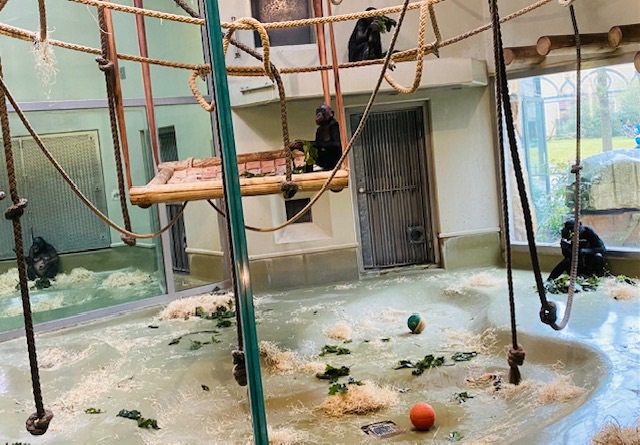
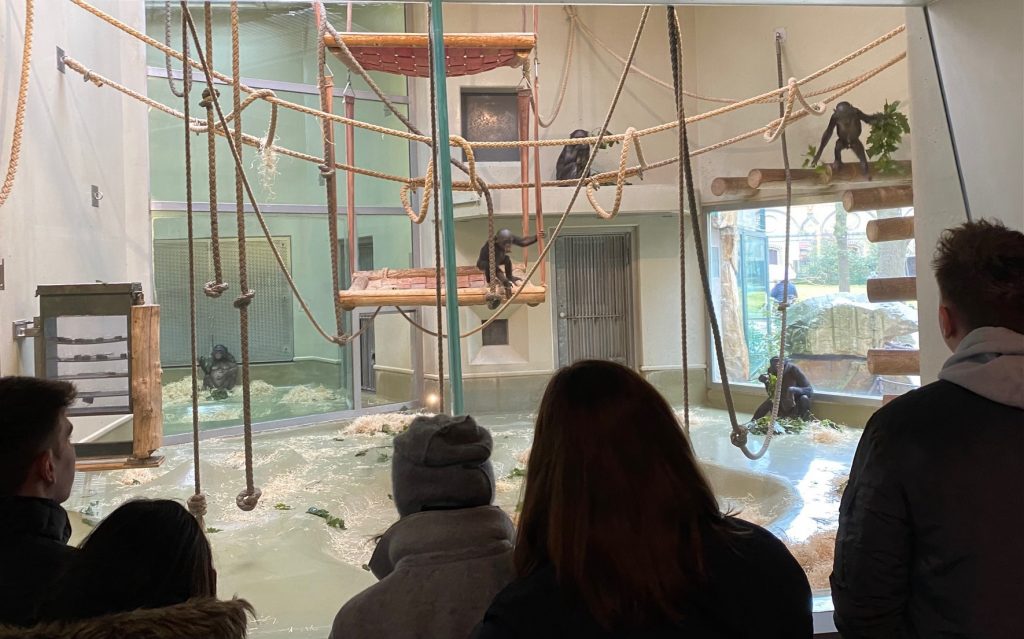
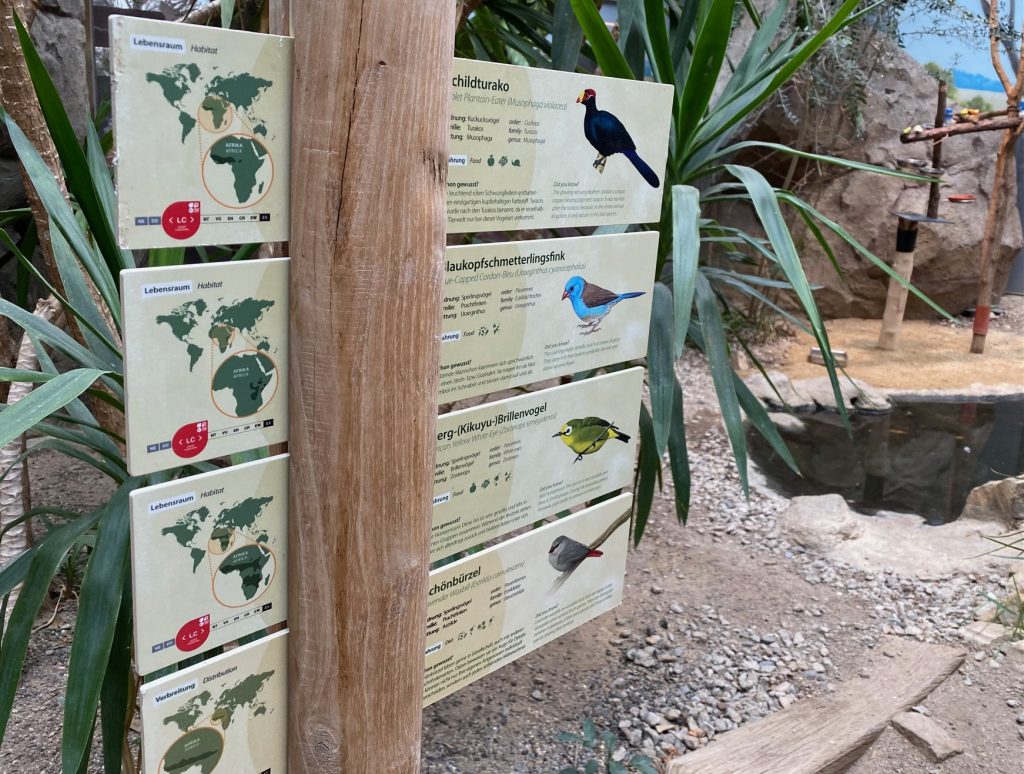
The visit of a zoo is always a great event. Accordingly the prices of a visit have reached levels that are beyond prices for a cinema entry. Usually a whole day is spent with high emotions watching animals sleeping, walking or eating. Sometimes we can watch a training session or a brief medical intervention. Learning about the beauty of biodiversity is important because we treasure more what we like. Looking into the eyes of an animal stimulates affection. Gathering support for the preservation of ecosystems was and still is a great effort. And yet, we have to move beyond preservation to the restoration of ecosystems like in the UNDP projects (Link). Animal parks can contribute to this if we encourage such cooperation and co-financing. The awareness, understanding and willingness to engage in restoration projects is largely increased after the visit of a zoo. A second round effect is the potential to reduce international travel to destinations with rich animal diversity. Restoration is a win-win situation for wildlife habitat and our planet as a whole.
Disappeared
We talk a lot in abstract terms of the loss of biodiversity. In the Museums of Natural History, like the one in Berlin, we can follow the trajectory of extinction of species. The dinosaurs are for most children the greatest attraction. No surprise, they are the biggest ones we have had on our planet. But there is a huge collection of disappeared species represented in the museums which we admire as a lost treasure or species threatened with extinction. Evolution had also created this rather big bird-like creature of the “dodo”. It couldn’t fly anymore and was inhabiting the splendid island of Mauritius. Hungry colonists passing have most likely literally eaten up this rather defenseless animal. Many other extinct species can be admired now only in museums and children feel naturally attached to some species that seem to have human expressions. Panda bears and gorillas rank high on such a list, but also some fish, especially if they smile or look at you straight into your eyes. This should help us take biodiversity and biodegradation more seriously. Children feel intuitively attracted to animals as natural companions. Something we have lost as adults and most of do not even realize this as a deficiency. The Nobel price winning author frm Mauritius has published a collection of short stories „Avers“ which captures the spirit of the island and the loss of species. J.M.G.Le Clézio seems to look at us through the eyes of children or a disappeared species. Magic moments are an escape as well as reason for hope.

AI and dialect
The training of Large Language Models (LLM) uses large data sets to learn about conventions of which words are combined with each other and which ones are less frequently employed in conjunction. Therefore, it does not really come as a surprise that training which uses standardised languages of American English might not be as valid for applications that receive input from minority languages or dialects. The study forthcoming in the field of Computer science and Language by Hofmann et al. (Link) provides evidence of the systematic bias against African American dialects in these models. Dialect prejudice remains a major concern in AI, just like in the day-to-day experiences of many people speaking a dialect. The study highlights that dialect speakers are more likely to be assigned less prestigious jobs if AI is used to sort applicants. Similarly, criminal sentences will harsher for speakers of African American. Even the more frequent attribution of death sentences for dialect speakers was evidenced.
If we translate this evidence to wide-spread applications of AI in the workplace, we realise that there are severe issues to resolve. The European Trade Union Congress (ETUC) has flagged the issue for some time (Link) and made recommendations of how to address these shortcomings. Human control and co-determination by employees are crucial in these applications to the world of work and employment. The need to justify decision-making concerning hiring and firing limit discrimination in the work place. This needs to be preserved in the 21st century collaborating with AI. The language barriers like dialects or multiple official languages in a country ask for a reconsideration of AI to avoid discrimination. Legal systems have to clarify the responsibilities of AI applications before too much harm has been caused.
There are huge potentials of AI as well in the preservation of dialects or interacting in a dialect. The cultural diversity may be preserved more easily, but discriminatory practices have to be eliminated from the basis of these models otherwise they become a severe legal risk for people, companies or public services who apply these large language models without careful scrutiny.
(Image AI BING Designer: 3 robots are in an office. 2 wear suits. 1 wears folklore dress. All speak to each other in a meeting. Cartoon-like style in futuristic setting) 
Korallenriff
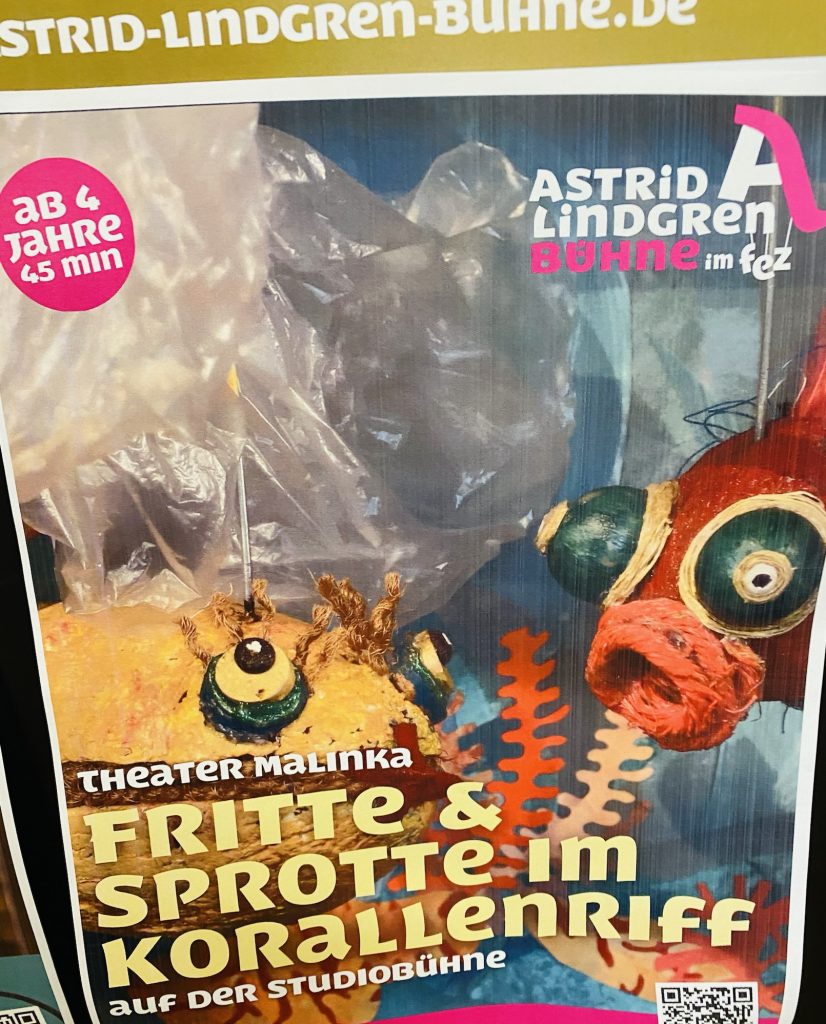
Kinder verstehen direkt, dass es sich lohnt, Korallenriffe zu erhalten. Plastikmüll in den Meeren gefährdet die Korallenriffe und die bunte Vielfalt an Fischen, die darin leben. Ein kleines Theaterstück dazu von Kathrin Brunner begeistert Kinder, weil es sie erleben lässt, wie einfach Lösungen aussehen können. Den großen Leuten zeigen, wie traurig die Welt aussieht ohne die farbenfrohe Pracht der bunten Fische, wird sie schon zu Veränderungen bringen. Das Theaterstück und Buch dazu wurde am 16.3.2024 im FEZ in Berlin aufgeführt. Das Figurenspiel mit überleitendem Refrain, das vom Publikum gleichsam der Promenade in den „Bildern einer Ausstellung“ (Mussorgsky) mitgesungen haben, bildete jeweils eine gelungene emotionale Überleitung und Aufmerksamkeitspause. Wir wünschen uns noch viele kleine und große Besuchende für diese Aufführungen. Die Kinder werden es uns schon lehren, den blauen Planeten noch zu retten.

Need of War
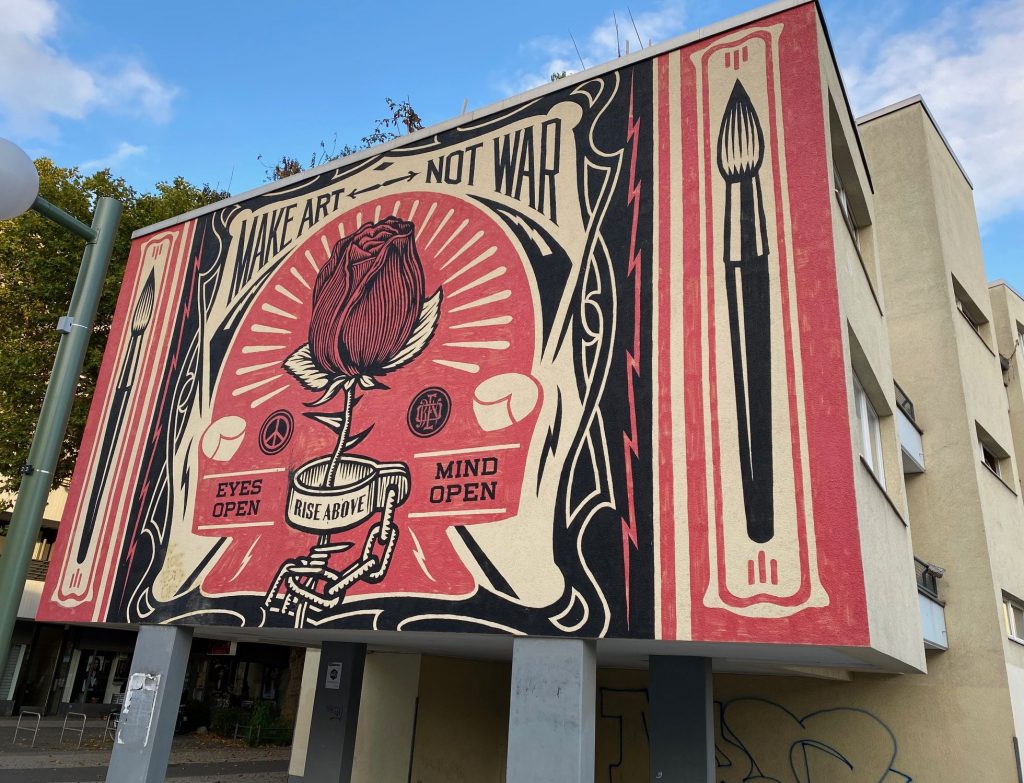
It seems like a horrific idea to talk about the need of war. We might have deemed it outdated to read about the terrible love of war or about the strategy of war. However, the time of war is back in Europe and Eastern Europe feels the real threat and Ukraine the bombs hailing from Russia. Why does Putin love war? The love of war is largely driven by domestic issues. Staying in power for unliked authoritarian leaders is easiest if they indulge in external conflicts. Dictators love war because it makes it easier for them to sustain leadership through brutal force within the country due to a proclaimed external threat or even outright engagement in war. Democratically elected leaders know that they will leave office eventually in a peaceful way (exceptions like Trump are rare). Dictators use any force or terror necessary to stay in power. The love of war is part of this.
Hence, the need of war goes without questioning, if a country in decline or at risk of decline tries to uphold an inefficient, belligerent regime. Beyond rational reasons, such regimes will abuse ideation about national pride, the national interest and anything pertaining to some supposed myths of nationhood to justify its need of war. The dictators have all failed eventually as resistance against this need of useless war is found out by enemies either within or externally. But thousands or millions of victims will suffer. The pressure against the need of war has to rise internally from opposition as well as from alliances of democracies that do not need war to motivate their people to achieve the best they are able to deliver.
Therefore, the defence of democratic rule is, at the same time, a fight against the need of war by some doomed regimes. After winning the war comes the difficult task of winning peace. This means to create a state of affairs and a state of mind that can do without the need of war. If the external threat diminishes the internal threats might rise and have to be contained as well. Lots of challenges, even for mature democracies. (Image: Berlin 2022-10)
Magritte Symbol
“People always search for symbols in my works. There are none.” For those familiar with the work of Magritte, they know that he means precisely the opposite of what he is stating there. He applies well-known symbols like the white pigeon representing peace in his paintings to represent and make us think about peace. The image becomes surreal in the sense that we go beyond the real world of violence and war to lift our attention to the other surreal version of the world as it currently appears to us.
In times of war, it is more difficult to image a peaceful world and yet, this is the time we need to believe in the possibility of peace beyond the reality of aggression. In 1966 Magritte has painted “L’oiseau de ciel”, the year the peace movements became more than a surreal dream across the world. It remains a challenge to think beyond the cold war at the time and the hot war initiated by Russia in Ukraine. Surrealism helps us to think beyond the real state of affairs.
In Magritte’s own biography the “dove of peace” occurs towards the end of his own life. Whereas at the onset of his career as painter he dealt with depression and suicide in his family, towards the end of his career he moves beyond the autobiographical topics. Globally valid symbols gain the upper hand. The life course seems to have come full circle.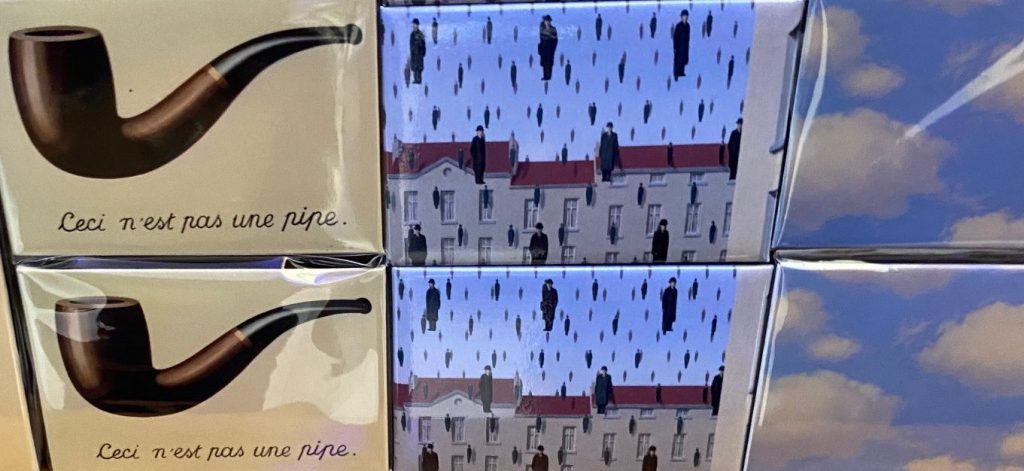
Corruption Watch
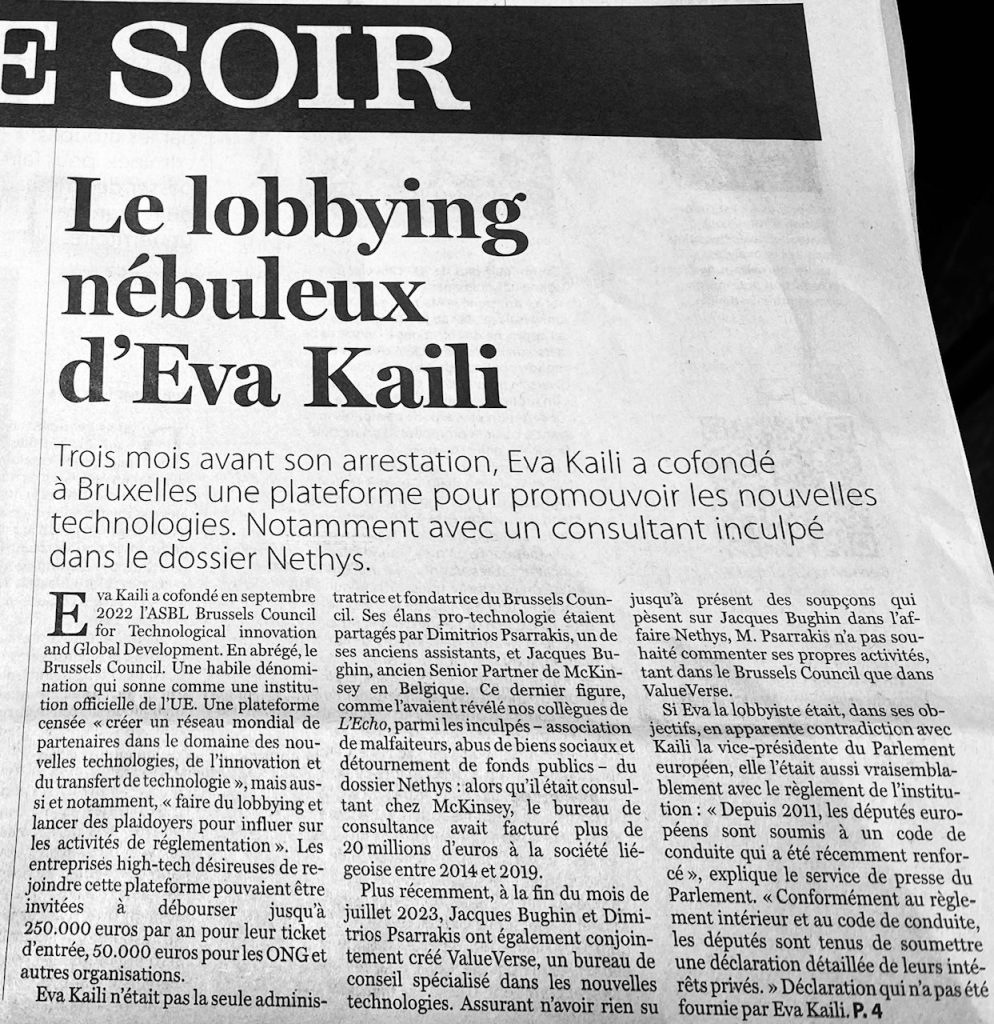
There is a persistent need to watch carefully whether corruption is involved in political as well as economic deals. Transparency Watch is doing a great job in reporting on corruption cases. In democracy we can talk openly about corruption but in authoritarian regimes it is life-threatening for yourself to talk and report on corruption. The case in Europe around the network of Eva Kaili continues to make headlines due to the ruthless abuse of rules the European Parliament. (Link to Le Soir, image below, 2024) The close monitoring of activities and lobbying of powerful industrial interests targeted on parliamentary candidates and officials will continue to be essential for the survival of democracy. The organization „Abgeordnetenwatch.de“ is doing just this. Investigative journalism needs to complement the work of NGOs in this field. Thanks to these efforts it has become much harder to cover up corruption. Only if the risk to be found out is a credible threat corruption can be contained. Let us watch out carefully and probably with the assistance of AI to uncover early any attempts of corruption.
Schachnovelle
Die Schachnovelle von Stefan Zweig gehört seit langem zu den Klassikern der deutschsprachigen Literatur. Zuletzt hat Jean-Philippe Toussaint in seinem autobiografischen Roman « L’échiquier » dieses Werk nochmals gewürdigt. Die psychische Belastung der fortgeschritten Schachspielenden macht spannende Lektüre. Bei Stefan Zweig ermöglicht das kognitive Training mittels Schachspielen die Bewahrung vor dem drohenden Wahnsinn durch Isolationsfolter. Gedankliche Fokussierung auf das Schachspiel und Spielen gegen sich selbst im Gedankenexperiment werden Rettung und Flucht in virtuelle Welten. Dennoch hinterlässt die Intensität der Erfahrung Spuren. Absorption ins Game, heute als Gaming meist verharmlost, lässt sich in vielen anderen Lebenssituationen wiederfinden. Es kann zur Sucht werden und Personen komplett absorbieren. Alleine Rauskommen oder vom Trip runter kommen ist schwer. Glück haben diejenigen, die professionelle Hilfe suchen und bekommen können.