Gentileschi Heroine

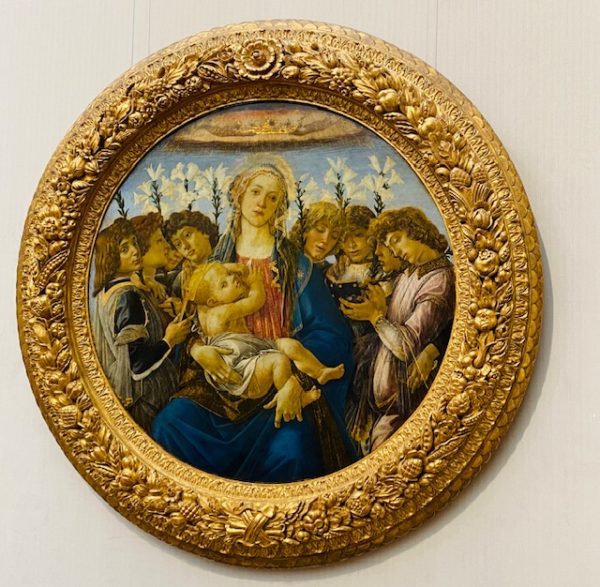
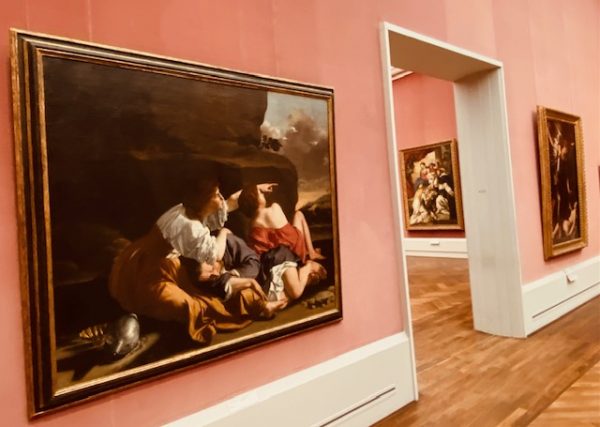
The choice of a woman as heroine in a painting beyond religious topics was innovative in the early 17th century. Artemisia Gentileschi chose Cleopatra as her character in the ultimate scene of Cleopatra‘s life. The heroic act of guiding the poisonous snake to bite her under her arm is the ultimate act of Cleopatra to have served her country and people. As history books are full of male heros Artemisia Gentileschi succeeded in drawing attention to the biased gender stereotypes in art and art history beyond the 17th century.

Gentileschi Selfie

Today the production of „selfies“ is all around us. Selfies are shot almost instantaneously and several times a day by use of modern smartphones. About 400 years ago the first woman to produce a selfie was Artemisia Gentileschi. As (one of) the first female painter in art history to have created a painted image of herself (which is transmitted today) Artemisia Gentileschi made history. Her unique biography, style and craftsmanship of the early 17th century in Italy made herself a renowned painter. Her choice to depict herself rather than somebody nobel or rich was quite unusual for the time. The audacious choice of herself as her „sujet“ became even her trademark. Later paintings by her with biblical topics were also subject to her reinterpretation based on herself as the female character in the narrative and image. In this respect her work appears so much ahead of her time that her impressive work speaks to all generations today. (Image: extract of Jael and Sisera by Artemisia Gentileschi 1620, Musée Jaquemart André“ in Paris 2025-8)

Gentileschi Iconologia

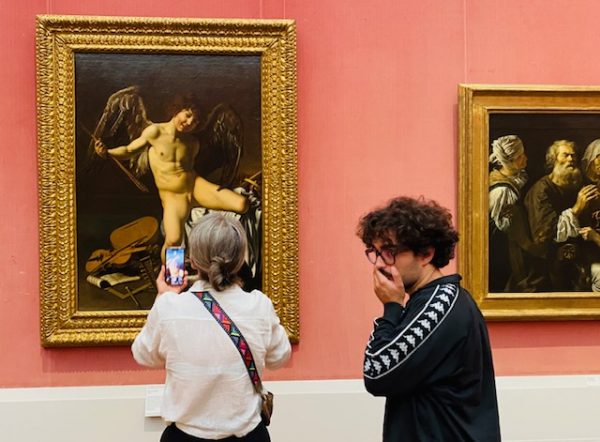
Ever since the publication of Cesare Ripa’s „Iconologia“ (1593) the codes of art had become subject of a coded production and interpretation of art. Attributes of power or wealth like palms, scepters or crowns, decorated with gold and diamonds spoke a language easily understood by onlookers irrespective of time periods. Orazio and his daughter Artemisia applied this Iconologia throughout their work. The apparently simple depiction of bad weather became a sign of trouble ahead in a person‘s life, office or reign. From the success of Caravaggio‘s paintings, the application of light and shadow became another stylistic feature of especially Artemisia‘s work. Whereas the application of these techniques is a sign of craftsmanship, the own contributions like a more emotional and emancipatory repertoire of Artemisia make her an artist of her own kind. (Image Artemisia Gentileschi, Madelaine pénitante 1625, Musée Jacquemart André“ in Paris 2025-8) 

Women artists

The history of art has been dominated in public opinion for centuries by men. However, recently art historians have drawn our attention to the numerous works of women who took Centre stage with their art during the last 500 years. Flavia Frigeri (2019, 2024) begins her history of women artists with Lavinia Fontana (1552-1614) followed by Artemisia Gentileschi (1593-1652). Both painters produced extraordinary paintings which brought their own touch to the paintings at a time when an independent expression through art was still largely reserved for men. The subjects of Gentileschi were greatly influenced by her experiences as a woman in a male dominated society in the 17th century in Europe. Her choice of subjects for her paintings added a female vision and depiction of biblical and historical narratives that were unique. The „Musée Jacquemart André“ in Paris featured a great retrospective of her art work in 2025. The catalog of the exhibition allows to enter into the art and wit of this early woman artist. 

Zadkine museum

In the middle of Paris you will find a small former atelier of Zadkine. Transformed into a museum, the place is a cosy place to learn about sculpture and the different materials used. The preparations in form of designs or smaller trials with other materials are common practice to arrive at the sometimes monumental pieces. The visit of the permanent collection is even free of charge. A splendid experience in a surprising spot of silence next to buzzing city streets. Depicting musicians and musical instruments has been Zadkine’s shared passion with Valentine Prax. Great that he managed to reach the USA in time before the Nazi persecution could reach him. However, exile often means hardship as well. 

Zadkine Prax

Ossip Zadkine and Valentine Prax once had their atelier next door to each other at art school. This established a lasting link between the 2. Whereas Zadkine became best known for his sculptures, Prax became famous as a painter. It appears that influences from one to the other are present in the works and several sculptures or preparations for sculptures were collected by Prax and found their way into the permanent exhibition of the museum. Intertwined biographies of artists are an inspiring reminder that art is not created only within a single mind, but many references or inspirations come from joint conversations or just working next to each other for some time. The social part of creating art is visible in this exceptional exhibition. Valentine Prax is honored with a presence in the Zadkine museum as well.

Image: Valentine Prax

Zadkine Van Gogh

Ossip Zadkine has been a sculptor in cubists’ art tradition. He created famous sculptures of Vincent van Gogh after the death of the renowned painter and his friend. The Zadkine museum in Paris allows to get a great impression of these artworks. These sculptures reveal an interesting life course perspective on both artists sensitivity and transformation of their impressions of others or emotions more generally. The first study depicted below by Ossip Zadkine of van Gogh shows how he carefully studied the traits of van Gogh and his personality in order to better understand the evolution and death of the fellow artist. The emotional and broader psychological aspects of a character captured both artists. Doing justice to these inner feelings and society’s judgments about art and artists at their time of creation had strong impacts on both artists. 

Roof under snow

The painter Caillebotte has captured Paris roofs under snow. Hundred years later this will be a rare event. The original painting we can still admire, the original scenario will be a rather rare event. Snow changes city life as everyone walks slowly and traffic as well as other noise is softened by snow as well. Mankind is changing the course of history through global warming while ignoring the consequences for later generations. The links between art and science are closer than we tend to believe.

Music Lunch

The possibility to pass a lunch break with live music inspiration is, unfortunately, quite rare. The Brussels festival “midis minimes” has created a popular format for classical music to be performed in easy to reach venues in the city center. Working in the center allows to hop into a 45 minutes performance of varying artists, instruments and music styles. The “Cercle Royal Gaulois” offers enough seats. Even without a reservation it is feasible to forget about work and get inspired by musicians. and the composers and arrangements they propose. Gaëlle Solal and Juliette Hurel offered short digestible pieces by Bartok, Ravel and Piazzolla with a focus on their popular dance tunes often based on previous folk tunes. We virtually traveled from Romanian tales to La Habanera and Tango and back to work for some.

Hallucinations serious

There serious hallucinations by AI and there are funny hallucinations by AI. Do we want our various AI models, from time to time, to crack a serious or funny joke? Well, that’s a bit the spice of life. However, not knowing when the machine is joking and when it is serious, this is more likely to seriously disturb most of us. This reminds us of our school days were teachers were not amused some pupils not taking them seriously in their efforts to transmit information. Now we know that a good atmosphere is conducive for better learning progress. AI as teaching and learning assistance could well work best in a “fearless“ classroom. Repeating a lesson several times and at your own learning rhythm will help independent of the seriousness of your teacher. Self-directed learning with a little help by AI might do the trick for many to advance how and when they feel ready for it. Hallucinations rates are a standard test for AI models. They range from 1% to 25% of queries.  This is not in itself a problem. It has become tough to find out about the 1% -2% models because you no longer expect them to give wrong information. These are the 1-2 out of a hundred of cases where we are confronted with serious hallucinations, seriously.
(Image: extract from „cum Polaroids“ from Eva & Adele, Hamburger Bahnhof, Berlin 2024-5-22)

Satie Popular

Erik Satie has been quite involved with the surrealist and Dada movement of his time. He personally knew the main proponents ranging from Breton to Magritte. He became one of the major figures applying the ideas of surrealism to music. His early compositions like the Gnossienne (extract of Nr. 1 below) are admired for their simplicity. They became popular only years later and have entered popular music repertoire through many retakes of the original tune in various styles ranging from jazz to rap. Many of Satie’s formative years he spent playing and performing popular music in the animated cafés, bars and shows of Montmartre in Paris. The making of a living based on music can be a challenge. Satie had to bear the full risk of a life in poverty at times to reserve sufficient time for his creative work.
He remained very much connected to the working class as his later membership of the Communist party after the Great War testifies. Composing for children and transmitting music to the next generation was equally close to his heart and mind, especially in his later years.
For him, popular music constituted a fountain of original tunes and a test with an intuitive audience rather than the academic circles. Maybe, with this attitude, he followed the footsteps of Flotow, Offenbach, Ravel and many others later on until pop music became the vastly dominant music in the late 20th and 21st centuries.

Erik Satie Satisfied

The collection of letters from Erik Satie contains more than 1000 letters amongst them some in exchange with the best artists of his time. The range is largely due to the circle of artists who met at Montmartre in Paris before and during the Great War. We discover letters to Maurice Ravel, Claude Debussy, Pablo Picasso or Henri Matisse. For some artists there are 100+ letters preserved like to Jean Cocteau. In the 1920s he composed music for shows at Montmartre, where the scenario was painted by Pablo Picasso and costumes designed by Coco Chanel. The sculpture by Brancusi must have been familiar to him, just as much as the cubist paintings by Georges Braques, as there are also letters or references to such letters in the impressive 1000+ pages collection. Like Ravel he was rejected by the Conservatoire de Musique de Paris in his early days as student. Montmartre allowed to live and create at the same time while living on a minimal budget. Erik Satie signed his letters with ES. In German this denotes a “neutrum”, maybe, beyond male or female differentiation, but also a tonality in music (E flat). There is no trace that this was a conscious choice. It is just another unresolved puzzle about the self-declared “Gymnopédiste” and composer of the “Parade” and the popular piano music the “Gnossienne”. 100 years after his death on 1925-7-1 he (ES) could be rather satisfied with his impact on the course of music in the 20th century and beyond.

Artist Development

For many artists it takes years before they find their idiosyncratic style. Testing different forms of art before zooming in on a particular style of art is the  common trajectory for most artists. Maybe the art marker and collectors of art are in search of a “defining style” for an artist so the uniqueness becomes more easily identifiable. Being part of a group of artists has been beneficial as well. The “Neue Nationalgalerie” in Berlin makes this development of an artist, in this case Lygia Clark transparent through the organization of a retrospective devoted to her evolution from abstract paintings towards participative and more organic forms of art. Berlin offers to interact with the pieces at the exhibition. You become part of the exhibition and the happening of art instantaneously. The form stays the same, the persons interacting change permanently. The piece of art is never the same. Just the idea of it thrives. In the Corpo Colletivo the performers wear an overall, all of them are linked to each other and movements happen organically as a group rather than individually. This is like a tutorial in sociology as individuals move as part of a collective body and feel the embeddedness and multiple links to other persons (Image: Corpo Collectivo 1970, exhibit in Berlin 2025)

Odessa Berlin Odessa

With a sense of partnership, it is possible to travel between Odessa and Berlin in the “Gemäldegalerie” in Berlin 2025. Due to the war of Putin in Ukraine the “Museum of Western and Eastern Art” in Odessa had to relocate its treasures to safe places. The Gemäldegalerie offers a chance to view the splendid collection nevertheless. The curators’ team in a spirit of “art intelligence” propose, in a splendid way, most oeuvres from Odessa next to an example by the same painter from the Berlin collection. The visitor leaves the exhibition enriched by an experience of “jumelage” (engl. sister cities) of partnerships between museums, cities and their people.
In fact, we have shared the same imagery or visual heritage in Europe for centuries . The collections of paintings ranges from the 16th -19th century art  or from Frans Hals to impressionist influences.
We shall cherish the return of the collection to Ukrainian Odessa as soon as possible. The image below shows the places of origin (yellow dots) of the art works of the Odessa collection across centuries (map from the exhibition).

Dépaysé in gallery

The installation ar the Neue Nationalgalerie in Berlin entitled „Fog Sculpture“ takes us from the sculpture garden of the Gallery into a tropical forest atmosphere. Just changing the humidity and visibility through the artificial production of fog transforms the perception of the artworks. A kind of Asian flair surrounds the western sculptures in the garden. The fog installs also a mystification whoch we know in art from the romantic painters like Caspar David Friedrich for example. All long-term followers shall appreciate the new perception of the artworks thanks to Fujiko Nakayo. It’s definitely more than old wine in new bottles. The artwork brings a more global twist to the preexisting sculptures and reminds us in Berlin even of the wrapping and unwrapping of the  Reichstag building by Jeanne-Claude Christo. We see the sculptures or architecture differently after they disappeared temporarily and reappear again.

Dream together

Dream together“ is the title of the exhibition of Yoko Ono at the „Neue Nationalgalerie“ in Berlin 2025. The title is an invitation or even an incitement to dream jointly with others. We need to dream of peace on all sides or parties in a war. Start with the dream and then move on to working together on it. The participatory art projects of Yoko Ono are a recurring event in Berlin and at the Neue Nationalgalerie (Cut piece). The installation „Wish Tree for Berlin“ in front of the gallery is popular with visitors who leave hundreds of written wishes to the windy spring days. Origami folding, stone assembling or a simultaneous chessboard playing with all white pieces and fields encourage to imagine a world differently, beyond the treaded belligerent paths. For more inspiration and imagination just continue to the Martin Gropiusbau for more artworks from Ono or just watch the clouds pass by changing the lighting of the olive tree carrying lots of wishes.

Lviv Ukraine

Small galleries can make a real difference. In Berlin the gallery “streulicht” has a selection of photos in an exhibition that portraits artist from Lviv in Ukraine. Hans Hugo Hoffmann manages in his photographs to depict the extraordinary resilience of Ukrainian creative persons who live through a protracted war of their country against the Russian aggressor. The persons embody the strength of resisting through their art work despite the wounds inflicted on their families or the people of Lviv and the whole of Ukraine due to the war. The persons portrayed try to continue their normal day to day work, knowing that nothing is normal anymore in Ukraine. “Bizarre Normality” characterizes our perspective on these artists, who are thrown into a world of events that we no longer thought might be possible in Europe. Bucha and other crimes by Russian soldiers in this Russian aggression leave traces in the faces of Ukrainian people and even beyond. We all wish that the people of Ukraine can return to “normality” as soon as possible, although we know that nothing will be normal as it was before the Russian invasion.

Tchaikovsky home

During the time before the “Zeitenwende” it was easy to visit the home of the composer Pyotr Ilyich Tchaikovsky in St. Petersburg. Therefore, we refer to our memory of the visit and the already 10 years ago restrained liking and appreciation of the Russian officials for the aristocratic composer, even accused to not be sufficiently Russian in his music compared other Russian composers. The composer had diverse love affairs, which were also not conform to official doctrines. The world wide success of his compositions, mostly known for his ballet music, remains popular in the 21st century. Similar to Beethoven, the biography by Malte Korff (Tschaikowsky, in German), highlights the final symphony as his masterpiece. The seems to be a reason to study “the last works” of composers specifically. The mature compositions appear to reflect on previous work and build or comment on previous work. The 6. symphony “Pathétique” was completed in his last year of his life, only at age 53. The final IV-th piece of it is entitled “Adagio lamentoso” and ends in very calm tempo and almost silence like a withering away heart beat. To my surprise I found a similarly very quiet ending in one of his early piano composition when he was only 28 years old “Romance Opus 5, Andante cantabile”. This early piece also ended “più lento” and from pp to ppp. (compare extract of image of notes below).

Beethoven Home

The home of Beethoven in Bonn is nicely preserved and full of objects related to his life and his creative work. For the musician and composer musical instruments have accompanied him throughout his life. The visit of his home of birth offers a chance to dive into the extraordinary accomplishments of this great figure of the late 18th and early 19th century. His 9th symphony is strong as ever and the European anthem has just more than 200 years since the first performance now. The visit of the museum is still the highlight of Bonn and the App of the Beethoven House offers unique insights into and listening of his manifold compositions. Handwritten notes and a pocketbook of preparations for the symphony demonstrate the all encompassing nature of music for Beethoven. From romantic letters to the romantic music pieces, the museum has it all. Even it is a rather tiny house from the outside the inner life is as huge as it can be. It is advisable to take at least half a day for the visit much more than you would usually take for visit of a museum. The link between the biographical information and listening to linked musical pieces with a chronological context are a unique experience. This spurs the interest to listen or listen again to some of the romantic masterpieces. The App is great also to listen directly to some of the music.

Intimate housing

The housing of famous persons has always attracted a lasting fascination. The “esprit des lieux” or the experience of the surroundings of an artist, composer, author or otherwise famous person, where most of the work had taken place is of general interest. In today’s language we would describe this as the context of creation. Biographical information and references to specific objects central to the process of creation play a crucial role in understanding what is behind human creation as it is district from AI. There are objects ( compare MAD Paris) and there are the social networks of creators. Modern biographies include both, some even in graphic forms similar to ancestry diagrams. 

The design of intimate living spaces for private life or the adequate environment for creativity are becoming more clear with the consciousness of the importance of dedicated designs of furniture, accessories and even scent. Our brains are multimodal and working as well as processing lots of information even beyond our conscious realizations. This black box of creativity is rather unique to the human brain and AI will probably take decades to emulate such complex processing. The MAD exhibition reveals that intimacy is also related to housing design and interior design. It doesn’t seem to be a random process, but habituation is part of the continued creative process. 

Body Soul Membrane

The 40 art works from the Pinault Collection on display at the “Bourse de Commerce Paris” deal with a depiction of the body and soul in the broadest sense. The range of works from paintings, sculptures and video installations is impressive. The link between the body and the feelings or emotions is obvious. Contexts leave deep impressions on bodies and frequently embodiments do not fit emotions. The membrane between the two instances creates an additional barrier or chance to align both instances. Racism and discrimination are recurrent topics in the exhibition. This makes the exhibition a welcome antidote against the increasing risks of violence in many societies. Artists have a subtle emotional connection to suffering of people and their art work does not shun away from confronting us with violence experienced by large groups of society. Body and soul membranes are also an internal or intimate affair, which words can only address with difficulty. Many artists therefore chose other ways than writing or drawing to express or cope with this reflexive relationship of body and emotions. We do not leave the exhibition unmoved, maybe even a bit unsettled in our emotional state of mind. Our own membrane might be moved or become unbalanced after the visit. 

Wall Membrane

Walls are meant to separate persons. In certain circumstances, however, they work more like a membrane, which allows for example sound to pass walls. We are sometimes surprised to find out that we might hear almost every word that is spoken in a neighboring apartment or home. Listening without seeing is in fact a perfect set up for a comedy to evolve around this theme. Unintentional listening might turn into noisy listening and 2 lives start to intermingle. This is predestined for a comedy to evolve as does the theatre play by Lilou Fogli “mur mure”. The turning tripartite scenario by Jérémie Lippmann makes the 2 rooms arrangement visible where listening and seeing both separated actors a delightful experience. Understanding without seeing is better than seeing without understanding. Misunderstandings are frequent with the focus on appearances of persons. It is somehow the opposite of what our social media platforms suggest with their focus on stylized images and AI-enhanced photo editing. Hearing maybe the better seeing. In that sense the theatre play is in the emancipating tradition of authors like Ibsen or Chekhov, emancipating us from the dominant and overwhelming presence of selfies and self promotion.

Art from India

Indian music, art and performances have had a difficult time in traditional western cultures. Based on the historical collections and donations in the BNF, this WEIRD bias is challenged a bit. The focus on performances and art from India of centuries old traditions of high standards could have been a major source of inspiration to wider audiences already. The narrative language of for example dance as Bharatanatyam is a sophisticated ritual of expression. It appears to us like a spiritual performance which reaches our emotions much like our modern ways of expressing and performing. It seems amazing how the western world has omitted looking and listening to other continents. 

Of course, archers have played an important role in Indian culture as well. Such depictions have been common across cultures in previous times. These images can reflect the shared human heritage and this with a global perspective on art history. Flora Willson (2024 in Die Musikforschung) refers to this Indian cultural heritage in her book review and why Italian Opera never really became popular in India. 

(Image BNF, Paris Richelieu in Rotonde 2025).

Great Petit Palais

The Petit Palais in Paris was built together with the Grand Palais for the World Exhibition in 1900. The great architecture of both buildings is complemented by great interiors. The Petit Palais has also been the home of donations to, as well as commissions by, the city of Paris since 1870. This means that a sizable collection of sculptures and paintings has accumulated since then. In spring 2025 the visit of these collections is free of charge and gives honor to the donors and artists exhibited. Over time the collections spread more than 2500 years of art history similar to the exhibition at the BNF gallery Mansard. In the 21st century the exhibition of a piece of art, which stems from the North of Syria reminds us that art is a treasure that can last even if the civilization has been lost or at interrupted for many centuries. This is an important aspect of taking a long term perspective on international politics and history. The breadth of the collection allows a stroll through art history in a splendid setting. Romanticism and impressionism receive a little bit of attention, but the architecture of the Petit Palais invites you to delve into lesser known territory. This, probably is the specific merit of the joint presentation of otherwise necessarily eclectic collections of donors across centuries.

(Image: Anse de chaudron Syrie du Nord 700 years before our time, Petit Palais Paris).

Known Unknown

Many musicians and poets remain unknown to larger audiences. “A complete unknown“, young singer, musician and songwriter Bob Dylan has reached fame and fortune with his poetry and popular songs that marked a whole generation. He became the best known unknown of country music in the USA who found sympathy for his expression of protest across the world. „How many times must the canonballs fly, before …“. At the time of renewed militarization of the Western states to defend our way of life, the protest song is oriented towards Russia to stop its war in Ukraine.
The poster in Berlin to advertise the biographical movie on a „Litfaßsäule“ (round sign posting column) dating back to the 1920s in Berlin brings us back into the historical state of mind of crucial crossroads in history. Retreat from war, preventing war and aggression remain topics for us today as well. Peace might be the happy time in between wars marking history.
Berlin is a great place to walk through more than a century of war and aftermath. Rebuilding takes decades and is part of the Berlin state of mind. as well as a sign „to overcome“ conflicts.

Democracy ART

The European Parliament co-sponsored a remarkable art exhibition in 2023 entitled „Art in Democracy“ The catalogue of the exhibition offers insights into the many preconditions of art. A democratic environment constitutes a non-negligible precondition for most of the works of art. Artists thrive within democracies. Many artists flee authoritarian regimes as their work environments rely on a real freedom of expression irrespective of the will and belief of ruling politicians.
Artists who do not flee in time for whatever reasons have suffered tremendously under Nazi terror in Germany. Authoritarian leaders don’t respect the various forms of expression by artists. Europe and the European Union provide safe havens for many artists to continue their careers in art. This has become a real value of our way of life. Many countries envy us in this respect. We take this for granted in the EU, but 70% of the world population endures authoritarian control. A reminder of this, from time to time, justifies a lot of expenses to support art and artists even beyond our borders.

The romantic setting of the image below is set against the surrealist open window (of opportunities) in an almost Magritte-style dreamland.
(Image: Rafal Olbinski, La Pologne dans l’UE, created for the occasion of adhesion to the EU)

Revealing masks

Masks can have multiple functions. During the Covid-19 pandemic from 2020 onwards we developed a hate-love relationship to wearing masks. Carnival traditions give wearing masks yet another touch. The painter James Ensor added other meanings to a mask. They do not disguise the person wearing them, but might make otherwise difficult to see features of a personality more visible. In a donation initiative and auction to raise funds to fight cancer Yves Delplace made the biggest contribution through his donation of the painting „Intrigue année 2024. Le preneur de selfie”  of which we represent only a partial extract below. In 2025 this depiction of 3 leaders of big countries has gained unexpected relevance. The US and Russia partying jointly while people still die on the  battlefield die to Russia‘s invasion of Ukraine has been turned into a cynic depiction. James Ensor and the surrealists in general would have appreciated this application of their way to deal with or foreshadow coming events. For some people you think it is about time to take off their masks or somebody to take it off. For others like Putin, the friendly looking mask has become apparently a frozen expression despite of the underlying ruthlessness.

Image taken at KBR Brussels 2024 exhibition of donations for auction and jury awards, by YvesDelplace.

Antique Drama

Modern drama and performances have their roots in antique drama. This is evident in literature from the time and some rare artefacts that have survived until today. Masks and statues give an amazing impression of the high standards already attained more than 2.000 years ago.
Many performances have been linked to mystical rituals and religious ceremonies, but beyond those instances there has also been a depiction and interpretation of for example the Greek mythology. Dionysos inspired many artists and people of that time and philosophers equally found inspiration in performances and the representations in temples, arenas and market places. The treasures of the BNF in Paris, galerie Mazarin and rooms next to it like “la salle des colonnes” (Image below), allow to travel back in time into an antique setting in the room of columns.
Taking the world as horizon is the title of the rotating exhibition from the treasures of the BNF. The beginnings of philosophy and major milestones in arts and mysticism across the world figure in this exhibition. In the spacious setting it feels like travelling back in time for a while, just to build on these foundations.

Endless Questions

The winner of the Niépce prize 2024 has been awarded to Anne-Lise Broyer and features prominently at the BNF in Paris. The exhibition of the professional photographer reflects by way of photographic “still images” on the historic fate of the mediterranean basin. Each and every image has no answers, but keeps posing questions. In the long alley of the BNF in honor of Julien Cain, we walk through history of more than 2 thousand years in photographs up until today and even beyond. Let’s keep asking the most fundamental questions again and again. The exhibition entitled “Est-ce-là que l’on habitait ?” invites us to ask ourselves about the historic origins of so-called Western culture in the mediterranean basin. Ancient philosophy and arts are the foundations even of our current ideas of democracy and freedom.
However, what has become of this in the 21st century? The original statue of freedom has suffered badly. What has become of the freedom of mobility at a time of barbed wire fences rising between countries that influences each other over thousands of years? How about nature? How about religion and freedom of expression? Where is progress? Where is regression?
For centuries we have sought answers in libraries starting from the Library of Alexandria to the treasures of art and knowledge of today across the world. Let’s make more intensive use of these treasures where we shall find answers to most of our questions of the past, to the past and of future interest.

AI Images

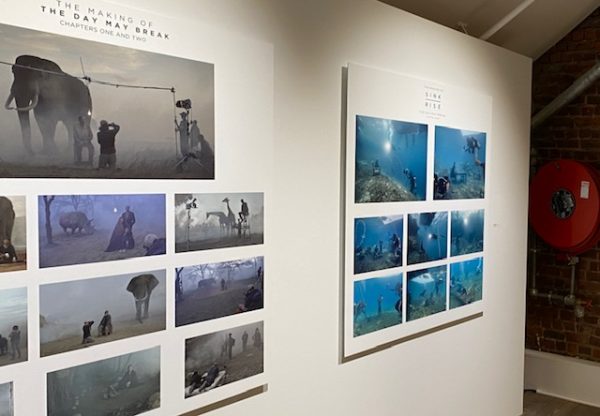
The creation of images using any AI system is fast and easy. Many people have tested the systems and experimented with the more or less explicit prompting needed for LLMs to come up with several suggestions. Through the use of AI in the creation of images you are indirectly become your own curator of these creations as you choose among many suggestions of AI for the same prompt. The next step in the process of these artifacts it to assemble several ones and submit your selection of images to a gallery for an exhibition. If you have a coherent approach or a specifically interesting creative idea you might get selected in a competition to show your AI assisted images in a gallery with a reputation to  exhibit photography.  The Brussels Photo Festival (2025) presented the submissions to a call for AI images with a broad range of AI assisted imagery. The focus of this project was on „historical events and figures“. In situations where images are absent such a newly created imagery might be helpful in re-creating narratives about undocumented wars or conflicts. Speculative fiction about other historical options or „roads not taken “ have found their way into museums of history even. Decolonizing imagery is an interesting aspect to get a grip on another way to view historical evolutions. Projecting biological growth processes into the future with pervasive bio-engineering allows is to imagine potential future scenarios. As AI in biology, pharmacy and nutrition is only about to rake off, the AI artists play an interesting role of new avantgarde in the 21st century before we shall be submerged by AI images on all social media platforms. (Image taken at Hangar.art 2025)