
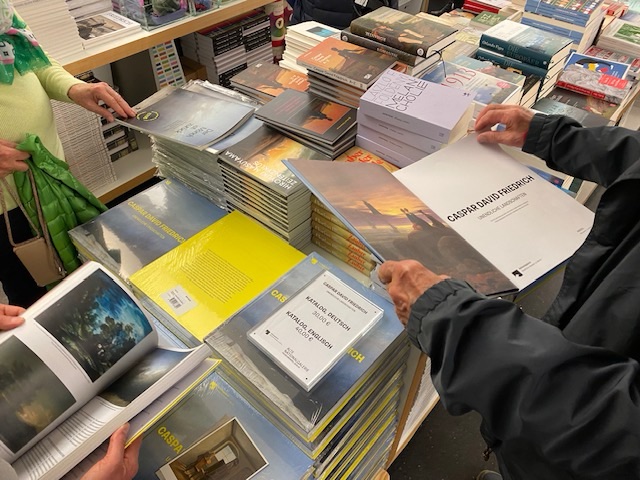
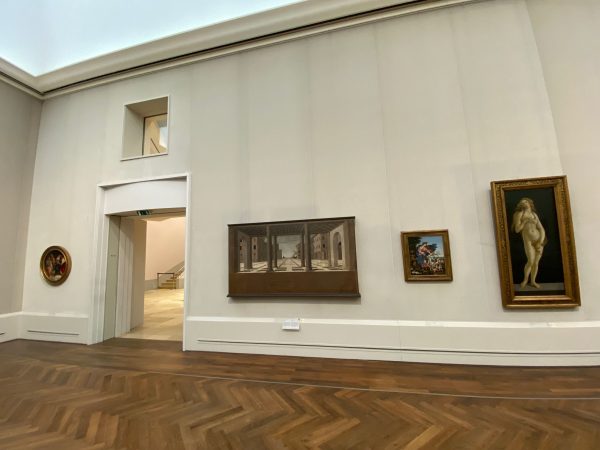
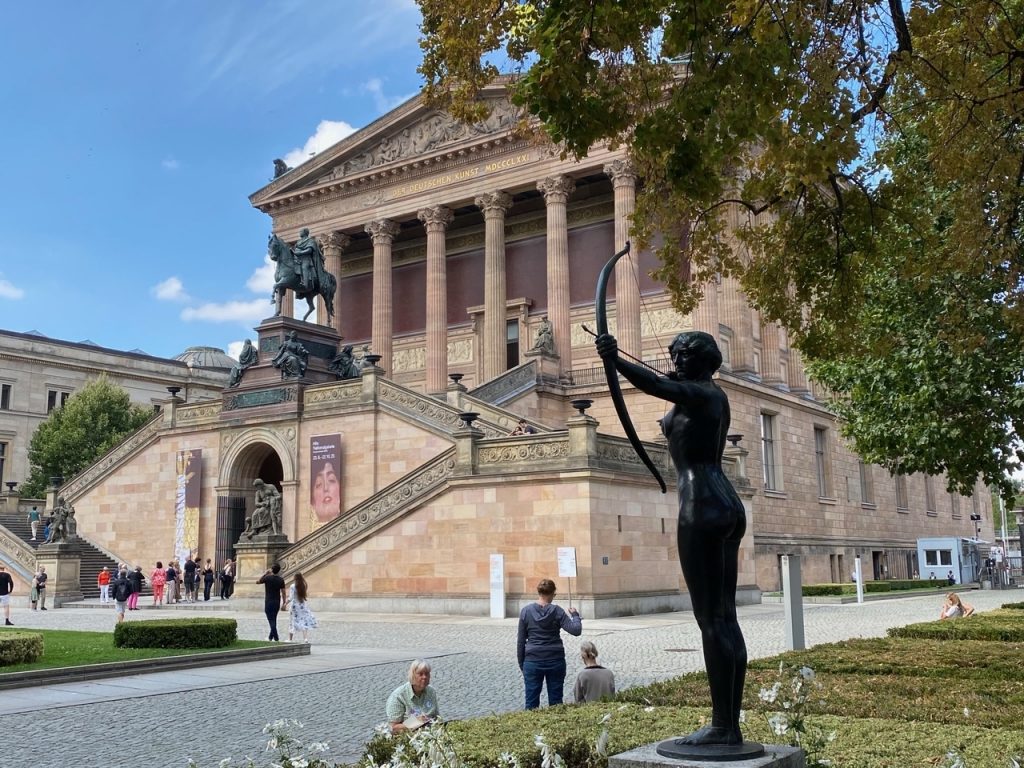
The “Alte Nationalgalerie” celebrates the 250th birthday of Caspar David Friedrich in Berlin. With a considerable effort to unite in one exhibition many paintings and drawings that stem from other collections of public and private origins. This particularly remarkable as a section of the exhibition is devoted to paintings that were intended originally to be seen next to each other (compare catalogue p. 233). Comparing 2 images from the same painter evolve into a narrative. This raises curiosity as in some instances the 2 paintings do not treat the same subject. Your very own interpretations and associations will make for an individual journey through the sheer endless spaces. The exhibition allows to grasp some of the many questions posed by the period of enlightenment not only in Germany. After “God is dead” what will happen? How is mankind defined? What is its relationship to nature? Are we just left alone or what comes after individualism? Even for painters, much like scientists, it is just as important to pose the right questions. Leaving the exhibition with more questions than answers will put you in the “Berlin state of mind” of 200 years ago. Greiswald, Dresden, Rügen and Copenhagen as well as nearby mountains were influential locations and landscapes for Caspar David Friedrich. Berlin 1906 „Jahrhundert Ausstellung“ made him famous again, despite decades of being forgotten. Yet another question to ponder and wonder about. An additional merit of the exhibition is the section on painting techniques and the use of his sketches and drawings for the preparation of the oil paintings. The final riddle to be solved is the price differential between the German and English version of the catalog in the bookshop next to the usual merchandising props.
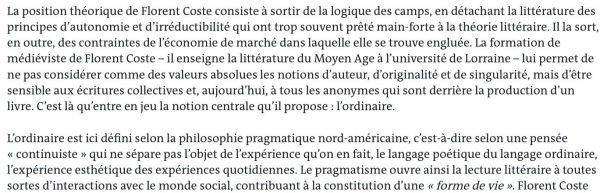
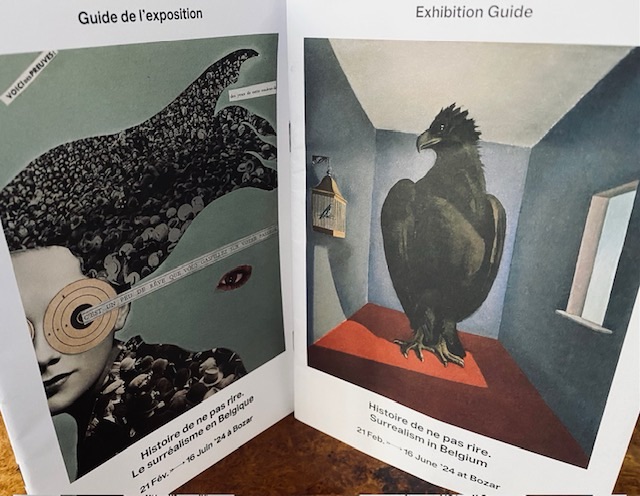
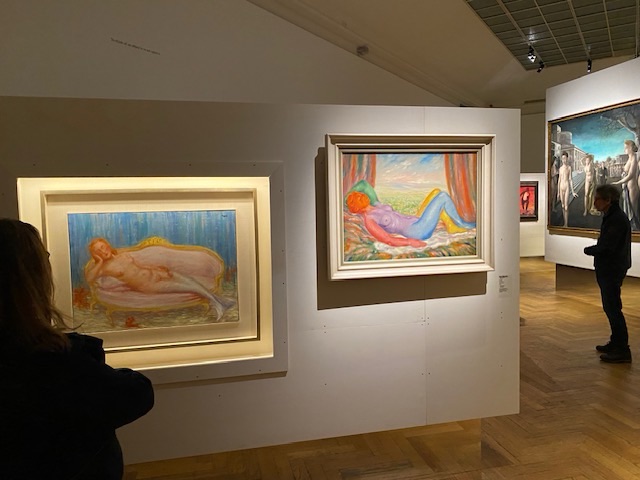

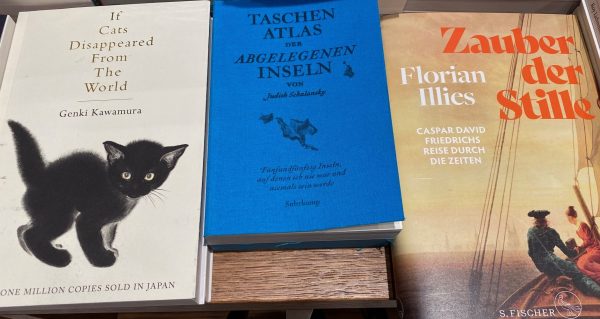
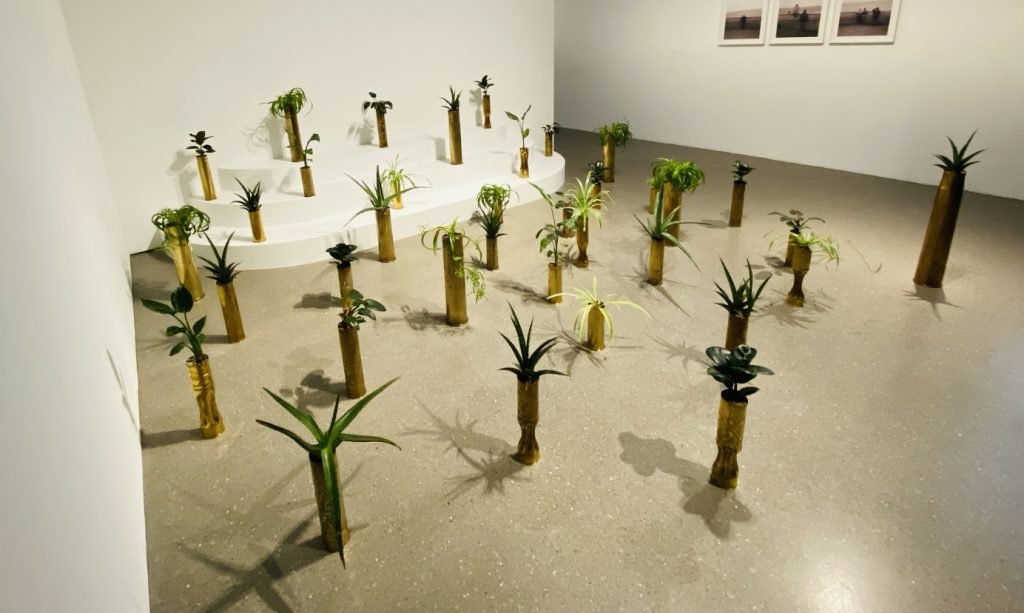
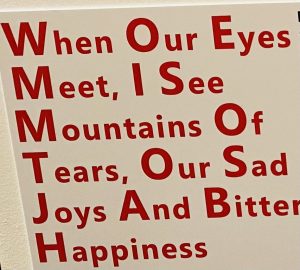 Even mastering tears or the delayed unmastered tears give rise to ample drama. Have you found a poet or author to whom you relate through the sorrows s/he expresses? Reading itself is a process of mastering tears due to the possibility to go through a wide spread of negative and positive emotions.
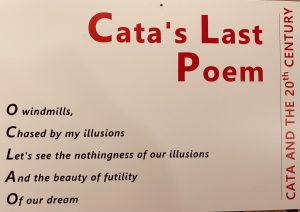 Hardly any traces in the internet of her writings in English make her even more of a local hero and an early female role model. The windmills are powered by the nothingness of our illusions. The beauty of futility is revealed in our dream. She puts it so much better. The biography and work of