
Repair Building

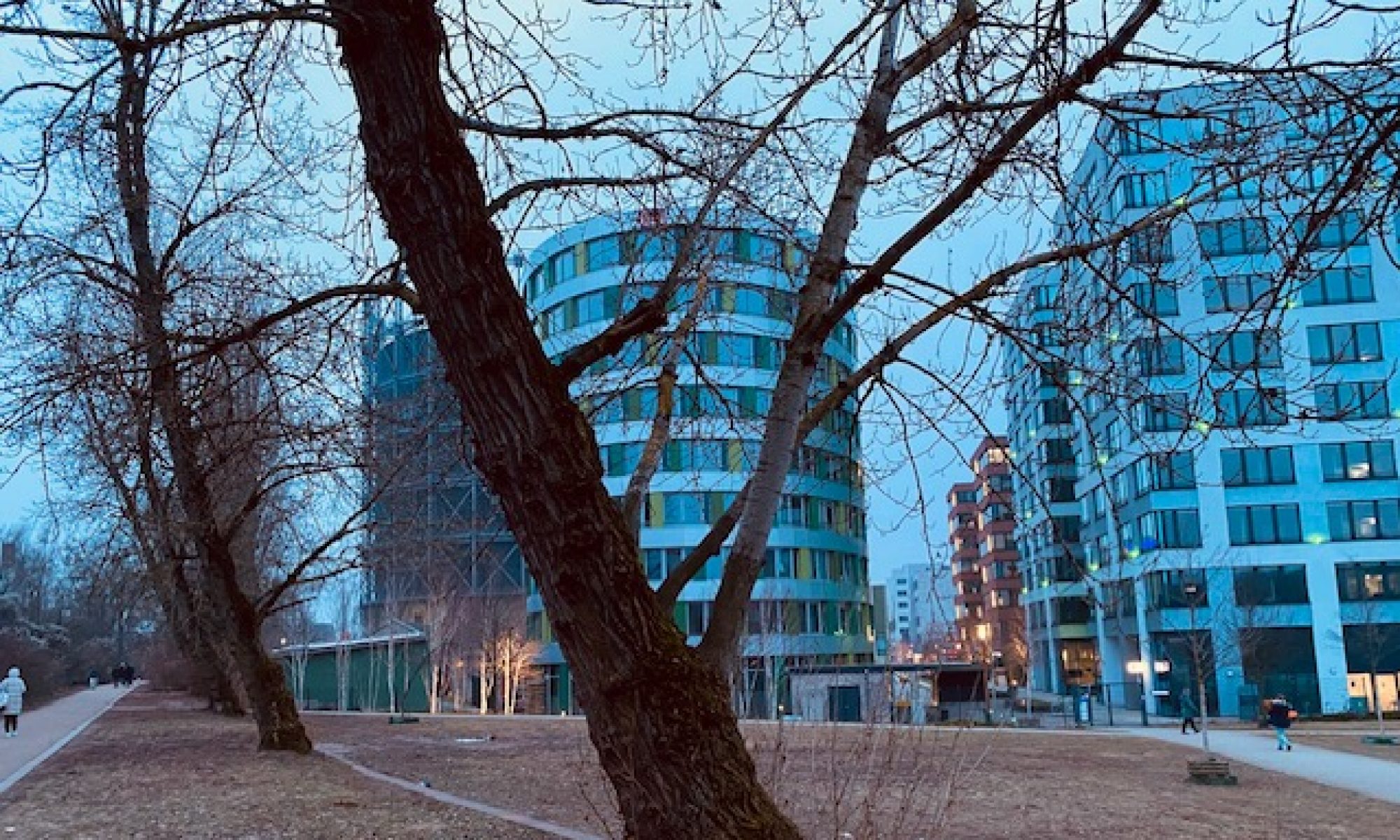
All buildings need repairs from time to time. For most of them the basic structure is solid enough so that isolation or maintenance will do. However, 100 years old buildings that have lived through 2 wars might have deep rooted deficiencies that are not visible at first glance. This can be observed in Berlin near the city center in a popular neighborhood with many visitors in „Schöneberg“ sometimes translated as „pretty hill“. The building at the crossroads seems to have been renovated only a few years ago, but the static of the building is so unstable that the city council has decided to block the whole crossing for circulation due to the danger of an imminent collapse of the building. The neighborhood has mixed feelings. It is great that the danger has been identified in time and blocking the road reduces the nuisance of traffic in the surroundings full of restaurants and cafes. The cover up of the repairs and renovation at the building is shocking as there appears to be just paint over basic structural faults. Construction work has failed to detect and prevent the static risks. An inspectorate that acts promptly to avoid bigger disasters is a societal asset.

Citizens Gardens

There are multiple ways to link citizens to gardens. Most people would link citizens to the property of their own garden. This is more the perspective of people from the countryside. The aim of citizens who can afford it have a garden, many others wish to have one and all of them enjoy public garden spaces. An intermediate version of the public versus private property of citizens’ garden is the joint ownership of groups of like-minded people to work together in the shared property or rented garden space. The recreational and health effects are well documented, if care is exercised with utensils etc. Spring is the ideal time to join projects again as the results of a little bit of gardening will be visible and enjoyable for several months afterwards. Gardens are also meeting points for people of all walks of life as in the vicinity of the European Parliament in Brussels. The Citizens’ Garden has a different function to people gardening there. When you puzzled about Europe after a visit to the Parliament or the Museum of the History of Europe, then it is time for a stroll and relax in the garden nearby.
Alternatively, the Exhibition Centre of Tour & Taxis in Brussels not too far away from the North train station has an impressive indoor garden for the times of rough weather conditions. At the time of the book fair culture in the indoor garden made a splendid combination. There is a green version of Europe. It is like a small plant. It needs a lot of time and care to grow.

Forest Management

Responsible forest management is key. To safeguard against the loss of biodiversity the management of forests can achieve a great deal as the study in Nature of 2024-4-10 has demonstrated. Reducing hunting by humans in dense tropical forests allows bigger species to survive and thrive compared to forests with easy access by roads. FSC certification of forests helps significantly to protect wildlife. The ability to ameliorate biodiversity of forests is assisted by the Forest Stewardship Council (FSC) through the responsible management, preservation and limitation of access to wild forests. This is an important message that in fact it is still possible to preserve wildlife also of larger species if we only really commit to the cause. It is well worth to support such initiatives and monitor the progress. Of course, any such success attracts new hunters and a continuation of the FSC efforts is needed for the benefit of the whole biodiversity on our planet as there is no planet B.

Berlin Zoo 2024

Causal Benefit Model

In the field of medicine we move more and more towards precision medicine. Previously, the term of personalized medicine was used which suggested to a certain degree that a personalization might be feasible. The budget constraints have forced us to change the term to avoid unrealistic, untenable promises. In the field of cardiology scientific advances advocate to shift from a risk-based model of treatment to a causal benefit model. (Kohli-Lynch et al. 2024 Link). Long-term benefits of a treatment are more promising, if the treatment addresses the causal mechanisms at work. It is wide spread practice to deal with general risk profiles as guidelines as the precision medicine based on a causal benefit model is far more laborious since to search the causal mechanism at work requires additional testing of hypotheses. This becomes immediately clear if genetic causes enter into consideration. Nevertheless, medical research advances more and more in this direction. Genetic testing has been shown to be useful in analyzing and treating issues like sudden cardiac arrest (in survivors). We are somehow aware that genetics may play a role here, but we shall need a lot of additional studies to make the causal benefit model a feasible option for widespread applications. Targeting research in this field will offer new avenues for precision medicine in the 2020s.

Ne pas rire

The exhibition of surrealism in Belgium at Bozar has the inviting title “Histoire de ne pas rire”. Even the booklet of the exhibition guide does not translate this into English assuming everybody has at least that much of interest in French and the willingness to learn about these 5 words that are a reference to the understanding of the surrealist art movement. You are explicitly invited to allow yourself to laugh when looking at the images. Reflection comes second. Caught by surprise and making new connections of seemingly unrelated images and words, that’s the essence of it. The comparison of the 2 versions of the exhibition guide teaches language and translations beyond the simple words. Sometimes it is best to not translate the text as in the title of the exhibition guide.

Series Evaluation

The monitoring of TV series is a serious science. The evaluation of so-called binch viewing has redrawn attention to the field of media studies again. We observe a bit across Europe, following the US experience, the change of TV productions into series that may run over several years. The successful format of a TV series draws advertising to the relatively constant audience. Most series have a particular age group as their target group. Viewing behavior determines time slots allocated. Each group has its own prime time. The publisher of books had their successes with similar series of for example children’s picture books or cartoons. Asterix, Martine and similar book series have basically applied the same “serial” mechanism before. Popular success creates its own dynamics. Therefore the evaluation of such serial productions should stay on our research agenda of the social sciences as well.

In a radio discussion “France Culture” has juxtaposed the 2 currents of series evaluation in a concise way. One current of assessment holds the view that rather than high versus low culture, the debate should take popular culture seriously. It augments the set of experiences as the characters in a TV series live through a kind of “experimental setting” each time anew. The variety of experiences is catching popular attention as they are beyond the scope of the spectator’s usual life settings and thereby a learning opportunity. This highlights the value of the content in the evaluation. This requires a thorough scrutiny of that content to evaluate an emancipatory value of viewing it (Sandra Lauglier, 2023).

An opposing view is defended by Bertrand Cochard (2024) with reference to the conflict about one’ use of free time available to us and how we spend it. His criticism takes issue with the amount of time “lost” by viewers of series. Time is not spent twice. The loss of time alone or side by side rather than spending it with other persons or physically active constitutes a major risk to the social fabric of society.The jury is still out on the issue. We likely see the start of a series of entries on this topic as well.

Heroines

In youth we are open for a wide range of influences. Heroines in children’s literature, picture book or cartoons look back on a long history as successful influencers. Creation, transmission and criticism of stereotypes are all part of the scientific reflection on heroines and heros. Nowadays, influencers have taken over picture books through the use of more compelling videos.
In the 1950s,1960s and 1970s picture books or cartoons dominated the influences before mass media like television became more absorbing, addictive and powerful influencers. Children’s books are passed on from one generation to next generation. The French-speaking world (and beyond BBC reference) has witnessed the success of the illustrated booklets of the young “Caroline” (Hachette) and “Martine” (Casterman) exploring the world. Parents passed on their collection to children and had their own parents read the stories to their grand children.
Well, that’s how intergenerational transmission of cultural heritage has worked for a long time. It describes the basic social mechanism. Nevertheless, new forms of influencing emerged with new technologies. Successful illustrated narratives like “Caroline” and “Martine“ were adapted as television series as well. In France you could chose your side of either explorations with Caroline and her group of animals or the adventures of Martine.
Ideally it would be an occasion for the families and friends to discuss pros and cons of each character and, thereby, become aware of what is a stereotype, at least at a later stage of the life course. Gender stereotypes have evolved and to observe 2 boys colouring Martine images in public (Brussels book fair 2024, image below) was a positive surprise. It almost felt like a real world experience of the AI-enabled Barbie explorations.

Surrealist 100

Belgium celebrates 100 years of surrealism with a special exhibition in Brussels at Bozar in 2024. The arts movement has much more to offer than just paintings from Magritte. Many other painters and intellectuals that were instrumental to create and perpetuate the movement are represented there. The French philosopher Breton as spiritus rector of the movement contributed innovative ideas and challenged the artists to do further and further on their journey to explore freedom of expression and freedom of association. The exhibition is centered around the surrealist idea to explore the association of words and images. This time the words are on the walls of the rooms and the images put up in the rooms as kind of obstacles on your journey. Keep challenging, keep questioning the sense of things and our imagination. The journey goes on and there are many artists who are still influenced by surrealism, for example Folon. The texts and images take you along on the journey into the surrealists’ world. If you want to challenge your own way to see things and the associative world, this is the place or catalog to refer to.

Bozar, 2024 100 years of surrealism

AI and languages

A big potential of AI is in the field of languages. Translations have been an expert domain and a pain for pupils at school. In professional settings translations are an expensive extra service for some or a good source of revenue. AI has shifted the translation game to a new level. In terms of speed of translating large amounts of written text AI is hard to beat. In terms of quality the battle of translaters against AI is still on. For chess players the battle against AI has been lost some years ago already. It remains an open question whether translators can still outperform AI or just adapt to using the technology themselves to improve both speed and quality of translations. The European Union with its many languages and commitment to cultural diversity can serve even more language communities with documents in their own language than before at marginally higher costs. A panel on the 9th day of translations at the „foire du livre de Bruxelles” 2024 expressed their reservations with regard to the use of AI in translation of political text or speech. Misunderstanding and misinterpretation will be the rule rather than the exception with potentially harmful consequences. Checking the correctness of translations is a permanent challenge for translators and can be very time consuming. There is room for an AI-assisted translation, but similar to other fields of application of AI, relying exclusively on AI bears high risks as well. We should not underestimate the creative part of translators to do full justice to a text or speech.

www.flb.be 2024 Translation

AI and PS

AI like in ChatGPT is guided by so-called prompts. After the entry of “what is AI” the machine returns a definition of itself. If you continue the chat with ChatGPT and enter: “Is it useful for public services” (PS), you receive an opinion of AI on its own usefulness (of course positive) and some examples in which AI in the public services have a good potential to improve the state of affairs. The AI ChatGPT is advocating AI for the PS for mainly 4 reasons: (1) efficiency purposes; (2) personalisation of services; (3) citizen engagement; (4) citizen satisfaction. (See image below). The perspective of employees of the public services is not really part of the answer by ChatGPT. This is a more ambiguous part of the answer and would probably need more space and additional explicit prompts to solicit an explicit answer on the issue. With all the know issues of concern of AI like gender bias or biased data as input, the introduction of AI in public services has to be accompanied by a thorough monitoring process. The legal limits to applications of AI are more severe in public services as the production of official documents is subject to additional security concerns.
This does certainly not preclude the use of AI in PS, but it requires more ample and rigorous testing of AI-applications in the PS. Such testing frameworks are still in development even in informatics as the sources of bias a manifold and sometimes tricky to detect even for experts in the field. Prior training with specific data sets (for example of thousands of possible prompts) has to be performed or sets of images for testing adapted to avoid bias. The task is big, but step by step building and testing promise useful results. It remains a challenge to find the right balance between the risks and the potentials of AI in PS.

AI and text

The performance of large language models (LLMs) with respect to text recognition and drafting texts is impressive. All those professions that draft a lot of texts have often decades of experience with using word-processing software. The assistance of software in the field of texts ranges from immediate typo corrections to suggestions of synonyms or grammatical corrections in previous word-processing software.
The improvement of AI stems for example from the potential to suggest alternative drafts of the text according to predefined styles. A very useful style is the “use of easy language”. This rewriting of texts simplifies texts in the sense that longer and more structured sentences are split into shorter ones, lesser-known words or acronyms are replaced by more common or simpler words. Some languages like German have a particular need to use easy language when it comes to administrative regulations and procedures. Public services that aim for inclusiveness of for example older persons or youth can become much more accessible if the use of easy language is spread more widely. Just keep in mind the large numbers of so-called “functional illiterates” (OECD study “PIAAC”) in all OCED countries.
AI can do a great job in assisting to reach a broader public with texts adapted to their level of literacy and numeracy competences. Webpage Designers have made use of Search Engine Optimization (SEO) for years now. The most common way is to use frequently searched keywords more often on your website in order to be found more often by search engines like GOOGLE et al. Additionally, AI allows to explain keywords, sentences or even jokes to you (Spriestersbach 2023 p.111). This may help in situations when cross-cultural understanding is important.
We have made use of optical character recognition (OCR) for a long time now in public services as well as firms and for private archives. AI is taking this “learning experience” to the next level by making use of the content of the recognized text. Predicting the following word or suggesting the next sentence was only the beginning of AI with respect to texts. AI can draft your speech to plead guilty or not guilty in a court. But we shall have to live with the consequences of making exclusive use of it rather than referring back to experts in the field. AI please shorten this entry, please!

AI by AI

It has become a common starting point to use electronic devices and online encyclopedias to search for definitions. Let us just do this for artificial intelligence. The open platform of Wikipedia returns on the query of “artificial intelligence” the following statement as a definition: “AI … is intelligence exhibited by machines, particularly computer systems …“. It is not like human intelligence, but tries to emulate it or even tries to improve on it. Part of any definition is also the range of applications of it in a broad range of scientific fields, economic sectors or public and private spheres of life. This shows the enormous scope of applications that keeps rapidly growing with the ease of access to software and applications of AI.
How does AI define itself? How is AI defined by AI? Putting the question to ChatGPT 3.5 in April 2024 I got the following fast return. (See image). ChatGPT provides a more careful definition as the “crowd” or networked intelligence of Wikipedia. AI only “refers to the simulation” of HI processes by machines”. Examples of such HI processes include the solving of problems and understanding of language. In doing this AI creates systems and performs tasks that usually or until now required HI. There seems to be a technological openness embedded in the definition of AI by AI that is not bound to legal restrictions of its use. The learning systems approach might or might not allow to respect the restrictions set to the systems by HI. Or, do such systems also learn how to circumvent the restrictions set by HI systems to limit AI systems? For the time being we test the boundaries of such systems in multiple fields of application from autonomous driving systems, video surveillance, marketing tools or public services. Potentials as well as risks will be defined in more detail in this process of technological development. Society has to accompany this process with high priority since fundamental human rights are at issue. Potentials for assistance of humans are equally large. The balance will be crucial.

Wage Minimum

A wage at a minimum level is frequently lower than the minimum wage. Most EU countries have a legal minimum wage that should protect against poverty risks at low levels of wages. Over decades it has not yet been possible to raise all low wages to this level. Le Monde (Béatrice Madeline et Aline Leclerc) has published on April 3rd a comprehensive analysis of sectors and people concerned with this difficulty to make a decent living while earning the minimum wage. In France (La désmicardisation), as in many other countries, it is difficult to earn just a bit more as the minimum wage because both employers and employees may lose social benefits if they just earn some hundred € more than the legal minimum wage. For all those persons who do receive only a wage even below the minimum wage getting stuck in a poverty trap is very likely. The number of working hours is then often is the only option to make ends meet your needs. Put bluntly, you work additional hours and/or take a second job to complement the lack of earning a wage at the minimum level. Public procurement that makes the application of the minimum wage compulsory and controls this application effectively benefits society as a whole. Lots of infrastructure projects, urban and rural development receive public support. The conditionality to pay the minimum wage + X should be a „conditio sine qua non“. The millions of workers at the lower end of the wage distribution have a power at the ballot box, which continues to be underestimated in many European countries. The EP elections on June 9th will probably alert us about the lack of faith in a bettering of living and working conditions of those persons coping with wage minima.

Home Delivery of everything ! Working Conditions

Architecture Berlin

The annual exhibition of completed architecture projects in Berlin attracts people beyond the narrow circles of architects. You may take a walk through Berlin to view the actual realizations in 3D or 4D with people living, working or moving in these buildings. As social scientists we like talking or interviewing these people about their experiences. Urban planning and participation in urban development is important for city development in a democratic fashion. The combination of social, ecological, economic and technological concerns find compromises in urban renewal. The range of activities is remarkable. Living spaces have the most entries in the exhibition followed by offices and trade spaces. Education as well as public open spaces raise a lot of interest and funding currently. Climate change and adaptation to limited ecological resources ask for innovative solutions as well. Most projects in Berlin or by Berlin based architects deliver in this respect. The socio-ecological change needs a lot of actors to implement such changes and meet unprecedented challenges. The 60 projects represented for 2023 are the top of the iceberg but a lot remains to be accomplished in repairing old buildings and infrastructure as well. The DA! exhibition provides a democratic transparency of projects, which allows the public to learn about innovation and to make more informed judgments about what architecture can deliver for society.

DA! Exhibition Berlin 2024

Cinema D

In terms of statistics cinemas are almost back to the pre Covid levels of spectators. The sector is worth in Germany close to 1 billion € in 2023. The price level has risen as well but many cinemas have upgraded their cinema experience as well in terms of comfort, audio and visual quality. Traditional houses provide chairs that compare well with home comfort and for a little more you can put up your feet as well after a long workday. Drinks and food may be served directly at your seats so the time to relax is guaranteed. However, this depends a lot on what type of movie you have chosen. The movie industry has adapted to modern technology and comfort. The turnover of a movie theatre is supported a lot by the consumption of beverages on site and they make huge efforts to prolong the visit beyond the screening of the movie. The competition for the time and money of the consumer is intense. The quality of the whole experience will determine the survival of the cinema. It is worth much more than a second best solution for rainy days or the cold season.

Fertility Growth

The first association of fertility and growth is likely the growing of fertility rates in a country or region. Only macro economists associate the growth or decline of fertility with the macroeconomic consequences of more or less economic growth. Countries with higher fertility rates in most cases have higher growth rates as parents spend more on food, clothes, mobility and education. Accommodations are changed, adapted and refurbished. Estimates of increased consumption per child by economists range from 500.000 to almost 1 million in the highest developed countries. Children are a country’s wealth, but they also cost a fortune in monetary terms. Good news for the economy if families keep spending independent of economic cycles. More children keeps dedicated shops running or even a whole sector of the economy. In recessions the downward pressure in this sector becomes an additional challenge not only for the families but with ripples-on effects for the whole economy and society. If you see shops closing which has sold furniture for children for the last 15 years then the realization of an economic downturn becomes also more real. Sometimes the parallels in the news of declining fertility and increases in pensions do not square well with the fitness for the future or the future orientation of a society. Democratic voting rights that give families more weight in elections could change this. It is not yet on the political agenda.

L’Albatros

Charles Baudelaire has immortalized the albatross in his poem entitled “L’Albatros”. For me it appears like a poem about the beauty of the sea and sea life. The marvelous creatures that populate the sea and its surroundings sometimes seem strange to us. The albatross with its large wings unable to move properly on earth is one of these special animals. They are threatened by human beings in their very survival up to extinction even. A dedicated website to “Les fleurs du mal” with multiple English translations of the same poem may give us the impression that all those who translated the poem wanted to feel this little moment of sublimation like a poet just forgetting for a little while the weight of our earthly existence. The gospel tells us a similar story of life up in the air. It must be so much better to be free and not to be bound to restrictions of gravity. As gods would prefer to stay away from earth just somewhere up in space. The albatross and the sea keep teaching us lessons beyond their physical appearance. (Image bird “dodo” now extinct, model in Berlin Natural History Museum 2024)

Mehr vom Meer

Wir sollten uns mehr um das Meer kümmern. Länder ohne Küsten finden meistens wenig Gründe, warum sie sich um das Meer bemühen sollten. Es ist doch so weit weg. Weit gefehlt. Erderwärmung erhöht die Meerestemperaturen und das wiederum beeinflusst massgeblich die Regenfälle im Inneren der Kontinente. Wir sitzen buchstäblich alle zusammen in einem Boot. Historisch betrachtet war das Meer mindestens seit der Antike Teil des machtpolitischen Kalküls der Beherrschung der Welt und der sie Bewohnenden. Wirtschaftliche Interessen waren ebenfalls Bestandteil der Erkundung und Eroberung des Meeresraums. Die Hansestädte in Europa bieten dazu noch heute gute Beispiele. Nach dem Sklavenhandel sind heute die Überseekabel und Rohstoffe des Meeres die begehrten Schätze des Meeres. Der Artenreichtum der Tiefsee wird erst seit kurzer Zeit intensiver erforscht. Externalisieren von Kosten des Umweltschutzes zu Lasten unserer Meere hat noch wenig Berücksichtigung in Wirtschaft und Gesellschaft gefunden. Tourismus- und Migrationsströme zum Meer, auf dem Meer und über das Meer stellen uns vor große Herausforderungen. Wir werden sicherlich mehr über das Meer reden müssen, und das ist keine Mär. Image aus „Europa und das Meer“ (DHM).

Das Meer

Wir haben vielfältige Beziehungen zum Meer. Diese reichen von romantisch geprägten Gefühlen zum Meer, den Wellen und den Fischen bis zur wissenschaftlichen Befassung mit den Meeren, Mangroven und dem Klimawandel. 71% der Erdoberfläche besteht aus Meeren. Das sollte den Festlandbewohnenden eigentlich klar machen, wie wichtig Meere für unseren Planeten sind. „Ocean Literacy“ nennt die UNESCO das. Neben Lesen, Schreiben und Rechnen sollte die Literalität auf unsere Ozeane ausgedehnt werden bevor es zu spät ist. Verschmutzung der Meere passiert hauptsächlich im Verborgenen. Lediglich Beobachtung aus dem Weltraum kann die weitläufigen Routen der Verschmutzenden zumindest teilweise nachverfolgen. Vielleicht hilft die Rückkehr zu der romantischen Sicht auf die Meere eines „William Turner“ zu einer höheren Wertschätzung der Meere, dem Licht und den Wellen.
Die kleine Sammlung von Gedichten „Das Meer“, erschienen im Reclam Verlag, ist eine gute Reisebegleitung für Begeisterte des Meeres. Darin findet sich eine Vielzahl von renommierten Schreibenden, die ihre Faszination des Meeres zum Ausdruck bringen. Mein momentaner Favorit ist Wolfgang Borchert darin (S.41-42) „Muscheln, Muscheln“.
Muscheln, Muscheln, blank und bunt,
findet man als Kind.

Muscheln, Muscheln, bunt und blank,
fand man einst als Kind!

Russian Angst

The title of a book “Russian Angst” by Thomas Franke summarizes the state of Russian society under Putin. It dates back to 2017, but the underlying process of Angst in the Russian society is increasing rather than diminishing due to the already 2 years long intensive hot war of Russia against Ukraine. The Russian Angst is a fear of a continued roll back of its authoritarian rule in Eastern parts of the world and its internal threat that its own people will claim more rights like freedom of speech, freedom of the press and effective democratic voting rights. In a dictatorship the “Angst” is a pervasive phenomenon which creeps into all spheres of live. Franke and Dornblüth (2023) describe the toxic society in Russia. Intoxication and torture of opponents are used by the Putin regime as a threat to suppress critical voices in Russia. Through this a climate of “Angst” is spread so that any internal opposition has to face very high risks to utter any discontent. The experience of a barbarian, totalitarian regime is well known. The threat to life and the presence of intimidation to any disobedient behaviour are strictly persecuted. Nevertheless, the need to think beyond the Putin regime is well under way. The more external and internal, real or imagined threats are countered with brutal force, the more the regime reveals its true kind of governance by force. This invites and leads to the strengthening of counter forces both internally and externally. It seems like box fight in the before last round of a very vulnerable, weakened and isolated boxer. Not many will bet on the likely loser and more countries who previously supported Putin will stop their erroneous policy. Russian Angst and loneliness will further increase.

Sandbox Games

Children from a very early age onwards play strategic games. Even in the sandbox we can learn from surprising talents of how to get the shovel from the other player(s). Having grown up a bit the repertoire of strategies becomes a bit more sophisticated, but most children tend to apply the same ones now and then. For example, to obtain one of the always scarce places on the swing or the balance, you may reach your goal in attracting the occupant(s) to a supposed even more exciting object on the playground or outside of it. Once the occupants leave the swing to join you somewhere else, you rush back to the swing and hope that the other child(ren)/parents are not more powerful to take back the swing. Strategies on the playground are abundant. Most children run, or get run, through the full set of tricky strategies during their youth. If you still want to learn more, study economics (typical economist’s joke). Alternatively, if you like strategies claiming that other children are not following the rules or want to know how best to fix the rules so you’re going to win anyway, study law (lawyer’s jokes). If you believe fairness is your real best argument study sociology, philosophy or theology. Make sure most other people in the playground have a similar set of strategies otherwise fists and tears will be gaining the upper hand.

Zoo Visit

The visit of a zoo is always a great event. Accordingly the prices of a visit have reached levels that are beyond prices for a cinema entry. Usually a whole day is spent with high emotions watching animals sleeping, walking or eating. Sometimes we can watch a training session or a brief medical intervention. Learning about the beauty of biodiversity is important because we treasure more what we like. Looking into the eyes of an animal stimulates affection. Gathering support for the preservation of ecosystems was and still is a great effort. And yet, we have to move beyond preservation to the restoration of ecosystems like in the UNDP projects (Link). Animal parks can contribute to this if we encourage such cooperation and co-financing. The awareness, understanding and willingness to engage in restoration projects is largely increased after the visit of a zoo. A second round effect is the potential to reduce international travel to destinations with rich animal diversity. Restoration is a win-win situation for wildlife habitat and our planet as a whole.

AI Sorting

Algorithms do the work behind AI systems. Therefore a basic understanding of how algorithms work is helpful to gauge the potential, risks and performance of such systems. The speed of computers determines the for example the amount of data you can sort at a reasonable time. Efficiency of the algorithm is an other factor. Here we go, we are already a bit absorbed into the the sorting as purely intellectual exercise. The website of Darryl Nester shows a playful programming exercise to sort numbers from 1 to 15 in a fast way (Link to play sorting). If you watch the sorting as it runs you realize that programs are much faster than us in such simple numeric tasks. Now think of applying this sorting routine or algorithm to a process of social sorting. The machine will sort social desirability scores of people’s behavior in the same simple fashion even for thousands of people. Whether proposed AI systems in human interaction or of human resource departments make use of such sorting algorithms we do not know. Sorting applicants is a computational task, but the data input of personal characteristics is derived from another more or less reliable source. Hence, the use of existing and newly available databases will create or eliminate bias. Watching sorting algorithms perform is an important learning experience to be able to critically assess what is likely to happen behind the curtains of AI.

Disappeared

We talk a lot in abstract terms of the loss of biodiversity. In the Museums of Natural History, like the one in Berlin, we can follow the trajectory of extinction of species. The dinosaurs are for most children the greatest attraction. No surprise, they are the biggest ones we have had on our planet. But there is a huge collection of disappeared species represented in the museums which we admire as a lost treasure or species threatened with extinction. Evolution had also created this rather big bird-like creature of the “dodo”. It couldn’t fly anymore and was inhabiting the splendid island of Mauritius. Hungry colonists passing have most likely literally eaten up this rather defenseless animal. Many other extinct species can be admired now only in museums and children feel naturally attached to some species that seem to have human expressions. Panda bears and gorillas rank high on such a list, but also some fish, especially if they smile or look at you straight into your eyes. This should help us take biodiversity and biodegradation more seriously. Children feel intuitively attracted to animals as natural companions. Something we have lost as adults and most of do not even realize this as a deficiency. The Nobel price winning author frm Mauritius has published a collection of short stories „Avers“ which captures the spirit of the island and the loss of species. J.M.G.Le Clézio seems to look at us through the eyes of children or a disappeared species. Magic moments are an escape as well as reason for hope.

Natural History Museum Berlin 2024

Fertility BPS-SPB

Fertility is another example of the co-determination of the biological, psychological and societal spheres of life. The latest available data for Germany and Sweden in 2023 show a remarkable decline of 10% in the seasonally adjusted Total Fertility Rate (TFR) in both countries (Bujard, Andersson 2024). The TFR was at 1.3 in Germany and 1.5 in Sweden. This means both countries are well below their population replacement rate. In both countries the populations will shrink further. There are no easy answers to the question: why?
The co-determination of the biological, psychological and societal spheres of life seems to be combined driving force. The biological clocks are ticking for women who delayed birth. Maybe pollution of drinking water or PFAS, nanoparticles of plastics disturb fertility. Psychological reasons such as increased anxieties due to the Covid-19 pandemic, lock downs or closed schools have left parents without adequate support for 2 years. Isolation or loneliness could have delayed partnerships and fertility as a consequence. The social environment has also provided additional uncertainty as the cost of living has risen and affordable housing for families is scarce in both countries.
We have probably underestimated the effects of the “Zeitenwende” on people’s mind sets. Sweden has suddenly sought to join NATO to achieve a broader military safety net for its people. In Germany the experience of damages due to war or as a consequence of Russian occupied territory is very present in people’s mind. The war of Russia in Ukraine may have increased uncertainties, anxieties beyond the immediate effects of higher living costs, interest rates or prices for energy. At best fertility might only be delayed for some years, but the consequences of shrinking populations need to be taken seriously. Making societies more welcoming for children and their parents is part of the solution.

AI and dialect

The training of Large Language Models (LLM) uses large data sets to learn about conventions of which words are combined with each other and which ones are less frequently employed in conjunction. Therefore, it does not really come as a surprise that training which uses standardised languages of American English might not be as valid for applications that receive input from minority languages or dialects. The study forthcoming in the field of Computer science and Language by Hofmann et al. (Link) provides evidence of the systematic bias against African American dialects in these models. Dialect prejudice remains a major concern in AI, just like in the day-to-day experiences of many people speaking a dialect. The study highlights that dialect speakers are more likely to be assigned less prestigious jobs if AI is used to sort applicants. Similarly, criminal sentences will harsher for speakers of African American. Even the more frequent attribution of death sentences for dialect speakers was evidenced.
If we translate this evidence to wide-spread applications of AI in the workplace, we realise that there are severe issues to resolve. The European Trade Union Congress (ETUC) has flagged the issue for some time (Link) and made recommendations of how to address these shortcomings. Human control and co-determination by employees are crucial in these applications to the world of work and employment. The need to justify decision-making concerning hiring and firing limit discrimination in the work place. This needs to be preserved in the 21st century collaborating with AI. The language barriers like dialects or multiple official languages in a country ask for a reconsideration of AI to avoid discrimination. Legal systems have to clarify the responsibilities of AI applications before too much harm has been caused.
There are huge potentials of AI as well in the preservation of dialects or interacting in a dialect. The cultural diversity may be preserved more easily, but discriminatory practices have to be eliminated from the basis of these models otherwise they become a severe legal risk for people, companies or public services who apply these large language models without careful scrutiny.
(Image AI BING Designer: 3 robots are in an office. 2 wear suits. 1 wears folklore dress. All speak to each other in a meeting. Cartoon-like style in futuristic setting)

Sleeping BPS-SPB

Sleeping is a good example of the co-determination of the biological, psychological and societal spheres of life. The environment with the daily cycles of light and dark as well as the social norms of work and rest determine the circadian cycles of hormones. Shift work or otherwise disrupted sleep patterns depend on social norms like regulation of noise or light in cities. Healthy sleep patterns, therefore, depend to a large amount on regulation and implementation of those social norms. Birthday parties are tolerated, but much less the irregular partying in shared housing with lots of neighbours. Reducing social contacts during Covid-19 led to the changes in sleep patterns as well.
The psychological determinants of sleep go well beyond the world of dreams as theorized by Freud. Nowadays, we investigate all sorts of behavioural patterns that have an impact on sleeping like “bedtime technology use” of smartphones or the ability to switch off thinking of problems. Sleeping is a particular functional state of our mind. A lot of sorting of daily impressions into memory occurs during the different phases while sleeping. Persistent disrupted or impeded sleep is recognized as torture in severe cases. Stress at work or working overtime is also a major cause of sleep disorders.
The biological indicators used to investigate sleep have revealed a lot of links of sleep and the hormones of melatonin as well as cortisol. Testing has become more accessible and provides good indicators of how the biological clocks tick within our bodies.
However, we are only at the beginning of the analysis of more complex interactions of the multiple forms of interaction of the bio->psycho->social (BPS) as well as the social->psycho->bio (SPB) co-determination of sleeping. Scientific research is faced with a steep challenge as the direction of causality is not uniform except in very controlled experimental settings. Maybe the arts have coined and popularized a useful term in this respect. “I am in a New York state of mind”.
(Image: extrait of Magritte. La clairvoyance, 1936 and The cultural context of aging, Jay Sokolovsky)

Sleep biology

Biological processes work hard during our sleep. Our immune system in particular benefits a great deal from undisturbed sleep. This is the simplest summary of the study by Kabrita et al. (2024).
We can study the temporal expression pattern of major histocompatibility complex MHC class I for example in mice. 2 groups of sleep-restricted versus normal mice reveal the biological impact of sleep restriction. In comparison to the control group sleep restriction in mice produced a bimodal pattern of Splenocytes with higher protein levels during the resting period. Such an increased protein expression during resting periods indicates a “preparedness for a potential infection”. Sleep recovery, even if short compared to the longer sleep restriction, allows to return to the baseline of protein levels. The good message is that at least mice seem to recover rather quickly from sleep deprivation with their immune response system.
The biology of repeated phases of longer sleep deprivation could inform us on the implications of sleep deprivation on aging processes. The biological responses in single event sleep deprivation seem to show a fast recovery pattern. Probably it is worth studying the same recovery process of groups of young versus aged mice.
Anecdotal evidence from myself indicates that recovery after sleep deprivation in older humans is no longer as fast as at younger ages. Behavioural responses might be less sleep deprivation (less fun) or longer recovery periods (stay in bed longer). The behavioural response of humans appears to be an obvious one. Instead of either or, we tend to go for both at the same time.
(AI Image: BING +Dall-E. one group of mice is partying in a club at night. Another group of mice is sleeping tight in another room. Cartoon-like images. 2024-3-18)

Korallenriff

Kinder verstehen direkt, dass es sich lohnt, Korallenriffe zu erhalten. Plastikmüll in den Meeren gefährdet die Korallenriffe und die bunte Vielfalt an Fischen, die darin leben. Ein kleines Theaterstück dazu von Kathrin Brunner begeistert Kinder, weil es sie erleben lässt, wie einfach Lösungen aussehen können. Den großen Leuten zeigen, wie traurig die Welt aussieht ohne die farbenfrohe Pracht der bunten Fische, wird sie schon zu Veränderungen bringen. Das Theaterstück und Buch dazu wurde am 16.3.2024 im FEZ in Berlin aufgeführt. Das Figurenspiel mit überleitendem Refrain, das vom Publikum gleichsam der Promenade in den „Bildern einer Ausstellung“ (Mussorgsky) mitgesungen haben, bildete jeweils eine gelungene emotionale Überleitung und Aufmerksamkeitspause. Wir wünschen uns noch viele kleine und große Besuchende für diese Aufführungen. Die Kinder werden es uns schon lehren, den blauen Planeten noch zu retten.

Family Music Days

Kids are queens, kings and princesses as well as princes at the family music days in Berlin at the FEZ. Kids can enjoy the full spectrum of musical experiences from just listening to playing themselves, if they feel like it or dare to risk a sound. Just making noise is okay, too. Building your very own version of a musical instrument is a great learning experience for the young. To make music it doesn’t always have to be an expensive instrument. Your own imagination assisted by persons with patience and passion creates marvelous sound experiences. Initiating kids to the endless worlds of sound is having lasting effects on them. Great to see a concert hall full of young enthusiasts. Learning is so much fun, if taught in accessible and inclusive ways. Professional instructors joined by many volunteers make the world go round for kids. Wish you we here. Let’s spread the message.

Berlin FEZ 2024-3-16