Political Economy 2025

As the global markets have moved from an international economic system based on competition to a world of protectionism based on arbitrary tariffs and restrictions, it feels strange to spot banners in Brussels in 2025-10 entitled “Competitive Europe Summit”. Participants at the conference appear to be “barking up the wrong tree”. In industries, and even more so in most services, access to markets is the necessary condition to embark on competition. No access, no competition. Tariffs or taxes are created to stifle competition.
All this has multiple reasons. One reason is to create an equal playing field among countries. Previously, we thought exchange rates of currencies and eventually purchasing power parities would shift following changes in competitiveness. This mainstream economic thinking has been disrupted through Putin’s war on Ukraine territory. The MAGA political economy narrative has impacted the competition between countries as well, (1) with its rhetoric and (2) back and forth changes in tariffs. Competition with countries which do not respect basic principles of fairness in competition can no longer be confronted with a mantra of a “competitive Europe”.
A more unified Europe could deal with the “politico-economic” fact that the global economy is much less concerned with the idea of competitiveness than in the last few decades of the last millennium (70s, 80s, 90s). Powerplay between nations maybe regarded as a kind of competition for dominance, but a sole focus on economic competition is grossly misleading nowadays after 3 years of the Russian aggression, at least with a focus on the short and middle distance run.

Unexpected effects

It is, unfortunately, a rare event in science to publish unexpected effects of an experiment. Sometimes, results even turn out to be the opposite of what to tried to show with the use of an experimental setting. The learning for the science community, however, is bigger in such cases. Why? A carefully designed experiment (Oliveira et al. 2025) to measure the effects of 2 different 12 month long yoga trainings to prevent falls in 60+ persons (mean age 67) revealed that the less challenging “seated yoga” was better in preventing seniors from falls.
Participants in the more challenging Iyengar yoga-based sessions reported more falls in the 12 months follow-up period. Due to Covid-19 the trainings took place as an online course, which might have reduced the influence of a coach in correcting positions and observe other physiological or psychological issues with participants.
However, the insights are a great lesson for experiments to produce opposite results of expectations with the lesson that human beings can be rather complex. From a health psychology perspective, it might be the case that participants in the more challenging yoga classed became also more daring in balance as well as other exercises.
Just being overly confident compared to their positive improvements, which might turn around an initially positive effect on balance and falls. From a socio-economic perspective, we would question the implicit assumption of the study that participants have a random distribution or underlying tendency towards risky behaviour. The longer the observation window (post-intervention) is, the more intervening socio-economic factors enter into the physiological-behavioural equation. Hence, expect unexpected effects.

Inclusive images

In the last 2 decades we can observe a strong concern among photographers to broaden the spectrum covered by images beyond well established imagery of non-binary gender. Diversity in imagery has taken a broader scope to extend, for example, the age range of people who are portrayed as central topic of exhibitions. The topic of mental diversity is more recent and needs a similar or even increased sensitivity to do justice to the whole spectrum of people. The photography of people with mental challenges necessitates a much more careful approach to the persons and complex personalities the photographer intends to portray. Trust and the development of trust of more vulnerable persons is a time sensitive process. The work by Charlotte Abramow “Maurice, Tristesse et rigolade” is a fine example of a photographer who portrayed over a long time of taking care of her father, previously a medical doctor, The years of the final stages of the life course of her father have been the subject over many years as the survivor of an extended medical coma had to struggle with the tough challenge of re-learning basic life skills again.
Abramow portrays her father as an actor of his “second life”, where the borders between reality, reconfigurations of his memories,   and “mise en scene” to co-produce the images. The images go far beyond the portrayal of aging and mental challenges as a deficit of persons. Yes, it is an integral part of these persons, but there is so much fun and positive emotions that derive from the intensive collaboration of actor, father and photographer that the images stick with us for a longer time. The presentation of props along with the photos creates an immersive installation, which strengthens the emotional bonding with the inclusive images of the later phase of the life course of Maurice.

Ethics in Photography

Yes, you read this correctly. This entry is about the ethics in photography, not about the much more popular discussion about the aesthetics in photography, which fills thousands of books on fashion, architecture, minerals, flowers, animals, landscapes and … you name it. Sensationalism works in photography. The more spectacular an image, the more likes you’ll get in any media, social or so-called social as well as traditional ones. Sex and crime are popular subjects, better framed as objects, as well. The basic idea of what constitutes unethical imagery or photography is broadly defined by the principle of exclusion, i.e. what is not ethical in photography. Let’s add to this inventory the conditions of production: exploitation of the subjects, be they persons or animals or even authorship like violations of intellectual property rights by AI.
Regulations and legal frameworks clarify many of those issues, enforcement of these rules are yet another element related to the ethics in photography. Global warming and the loss of biodiversity has made us aware that the respect of natural resources is also an aspect in the ethics in photography. Travelling long distances by plane just to get a few shots in the Himalaya region, if there have been thousands of (better?) images produced, printed, distributed before, is not sustainable for our planet as a whole. Invading protected areas, like natural bio-reservoirs, to take a few shots especially of rare plants and flowers maybe nice to look at, but the longer-term consequences add up to a loss of biodiversity for us all, in particular for later generations.
These considerations are different from “aniconism”, because they originate in a humanist foundation of ethics not concerned with any depiction or idolatry of images. The historical roots of any ethics in photography have long shadow into today’s practice of photography as well.
(Image: The framing of ethics of photography with reference to John Cage “Silence“)

Marc Aurel Memorials

The depiction of Marc Aurel as Emperor has become a trade mark in the history of art and politics. As an emperor with good horse riding skills, Marc Aurel was the first emperor to be portrayed as riding on a horse without saddle whilst, of course, in perfect skill to master the horse and give orders or strategic commands. Many subsequent emperors, Napoleon or Friedrich have had their power positions “immortalised” as such, which served at the same time to make them appear taller and “in command” of something.
Travelling by horse has  also been for a long time the fastest mode of transport, yet another symbol of social status used in media campaigns of those times. The memorials in honour of Marc Aurel had already during the ancient time the function to transmit an image, the emperor wanted history to keep in mind, rather than the view of ordinary people in the Roman empire. Memorials of political leaders have been a demonstration of power for centuries before and for centuries to come.
(Image: Trier Marc Aurel exhibitions 2025-9)

Marc Aurel critics

In the literature on and about Marc Aurel (Brenan 1882, pp. 484) the end of the ancient world is mentioned frequently. This refers to the beginning of the end of the Roman empire and the rise of Christianity to be become more influential. What caused the decline? The nepotism in the governance structure through the placement of family members to influential positions and as successor alienated many followers who previously believed in the high moral standards advocated by Marc Aurel.
Justifications of superiority by social origin are standard at the time of writing, but Marc Aurel did not see the potential of a more equitable distribution of offices. Women were relegated to subordinate or no public positions and are not mentioned with respect to  the importance of reasoning or social competence either, none but one in his acknowledgements (Book 1). The discrepancy between the formulation of virtues as well as ideal standards versus own practices of hierarchical leadership, recourse to slavery and brutal upholding of the empire should not go unmentioned.

Marc Aurel Advice

The study of Marc Aurel’s Meditations offers advice on how to conduct one’s private and public life. The role as advisor or teacher is an important part of his writings, albeit quite indirect. In going back to Book 1 and his acknowledgements of his own advisors, teachers and good examples indicate the motivation and intention to write down his meditations. “People exist for one another. You can instruct, or endure, them” (Book 8, paragraph 59, see also Barrientos 2020). Marc Aurel does not shrug away from the treatment of general concepts of humanity like justice. In his view “… justice entails the exercise of wisdom, kindness, and fairness in our relationships with others both individually and collectively.” This includes already tolerance as a part of justice as in Book 4 paragraph 2, according to Robertson (2020). The idealistic view of humanity, following Platon’s philosophy and other Stoic authors, still serves as a benchmark against which many leaders are measured today (compare Le Monde 2025-9-25 p. 26).

Marc Aurel Book 11

Throughout the Meditations, Marc Aurel concerns himself with the idea and importance of the common good. Based on his experience as Consul and Roman Emperor, the common good is of primary concern. At least in his thinking and writing these concerns play a very prominent role just like the “social“. In order to ensure his own successor, as described by Katherine Kennedy (2020 through www.classicalwisdom.com) he was only the 2nd Roman Emperor  to appoint a biological heir as his successor, which met a lot of criticism already at that time. Nevertheless, in his philosophical thinking and leadership guidelines he cherished the common good above all. “Have I done something for the common good? Then I too have benefited. Have this thought always ready to hand: and no stopping.” (Book 11 paragraph 4, Penguin Classics edition). This is in contrast to the predominant utilitarian thoughts many centuries later where the pursuit of your own benefit will further the benefit for society. The reversal of the logical sequence in later thoughts is particularly remarkable as well. The process of individualisation seems to be another additional factor in the lack of concern for the common good in the 21st century. Raising the awareness to further the common good is a continued challenged in most societies.

Marc Aurel Book 10

Book 10 offers some referrals to previous books and topics: Marc Aurel defends a wholistic vision as in book 10 paragraph 17: “Keep constantly in your mind an impression of the whole of time (χρόνον) and the whole of existence (οὐσίαν)…” (Penguin Classics version, also in Greek original/French translation). In the same vein, he wants all this knowledge and considerations to be “actionable”. This reads in his words: “No more roundabout discussion of what makes a good man. Be one!” (book 10, paragraph 16 in the same two editions). As the late Marc Aurel’s writings progress, he becomes even more “exigent” in the sense of demanding ever higher standards (of himself). “Whole-ism” paired with a request to, nevertheless, be ready for action at any time is not only a high cognitive demand, but also a reminder to leave procrastination behind. The virtue of a stoic leadership style remains an ambitious challenge.
(Image: Trier Exhibitions on Marc Aurel, 2025-9)

Marc Aurel Book 8-9

In book 7 paragraph 38 the stoic wisdom is exemplified in the the the short phrase „If you have sharp sight, use it: but, as the poet says, add wise judgment“. Being sharp in your reasoning or data collection is only part of the human endeavor. A wise judgement is, however, an ambitious aim as judgments have different short term and long term consequences. Intergenerational considerations as for climate change ask for respect of other species, biodiversity and to take into account very long time horizons.  The quote from book 8 paragraph 5 appears very modern or post-modern in this context. „There can often be wrongs of omission as well as commission.“ (both citations from Penguin Classics edition) Not acting on behalf of future generations and disappearing species is the most crying omission of our time.

Marc Aurel Book 7

In paragraph 63 Marc Aurel refers to Plato as one of his sources: “No soul”, says Plato, “likes to be robbed of truth” ( and continues himself) “– and the same holds of justice, moderation, kindness, and all such virtues. Essential that you should keep this constantly in your mind: this will make you more gentle to all.” The remarkable reasoning is to transform the own generalized experience into a behavioural recommendation. It may be argued that Marc Aurel starts from a kind of Aristotelian empirical study of persons in different life domains to derive an empirical fact. Based on this he develops a more Plato inspired “idealistic picture of mankind”. He is very much preoccupied with the philosophical question, how is a good life for all possible. In a previous paragraph (55) he outlined his 3 guiding fundamentals: (1) “The main principles in a man’s constitution is the social; (2)… resistance to the promptings of the flesh, like impulses; (3) judgement unhurried and undeceived”.
With such a claim for a “rational constitution” of man, he puts himself into the footsteps of previous philosophers of the ancient Greek tradition and, therefore, his writing in Greek rather than Latin is also a homage to this philosophical heritage.
(Image: parts of Installation by Fujiko Nakaya in Neue Nationalgalerie Berlin 2025)

Marc Aurel Book 6

Some passages of Book 6 can be understood like quotes of much later works, even like writings of the enlightenment period. Take this one: “If someone can prove me wrong and show me my mistake in any thought or action, I shall gladly change. I seek the truth, which never harmed anyone: the harm is to persist in one’s own self-deception and ignorance.” (para 21 in Penguin Classics version, also in Greek original and French translation).
The same passage in historic English: “If anybody shall reprove me, and shall make it apparent unto me, that in any either opinion or action of mine I do err, I will most gladly retract. For it is the truth that I seek after, by which I am sure that never any man was hurt; and as sure, that he is hurt that continueth in any error, or ignorance whatsoever.” (Para XX in Gutenberg.org online reader).
Why is this already an enlightened vision of truth? In the search for truth, he is open to criticism or doubt by others (maybe even irrespective of societal standing) and, moreover, ready to change his conviction and action. Religious doctrines of the time and many centuries after his writings would not have accepted such a doubtful mind who might change due to (scientific) reasons. Long before “Cogito ergo sum” (René Descartes, (1637), I think, therefore I am, of the early enlightenment, Marc Aurel might be summarized in this paragraph as “Cogito, ergo dubio”, I think, therefore I doubt – and I may change accordingly.
(Image: Ossip Zadkine, Forêt humaine, Musée Zadkine Paris)

Marc Aurel Book 2-5

There are several translations of Marc Aurel. In the Shakespeare English translation from the Greek original of the Meditations a passage (Book 5 paragraph XXIII) describes or idealises humans as a “reasonable and sociable creature, regulated and directed.” The same short quote of this paragraph in the English translation by Martin Hammond (Penguin Classics p.43) reads: “…my wish is to follow the nature of a rational and social being.” Of course, both translations are pretty similar at first glance, but the difference of “reasonable” versus “rational” and “sociable” versus social” mark very important differences that had and have different impacts throughout the following centuries up to today. As in many other instances going back to the original version in Greek (book link) might clarify the issue, however, the entry barrier is access to the bilingual version and use of an ancient Greek dictionary.
With almost 2000 years of advances in rational approaches and its tools like mathematics, the scope of the rational is huge and the behavioural turn in the social sciences demonstrates the limitations of human’s use of rationality (λογικός) in decision-making. Reasonable seems to come closer in today’s “post-enlightenment” world.
There is also quite a divergent connotation in the simply “sociable” (κοινωνικός) being or the “social” being, which has a wider scope attached to it. Hence, lets be aware of the implicit interpretations of translations. For a start the parallel reading of translation and original (Link) might enhance our understanding and spur even new translations and interpretations, which speak with the classic originals to today’s audiences (with or without AI).
A witty joinder of both previous translations is “And my will is the will of a reasonable and social being”. (Link Book V, paragraph 29 bottom).
From the Greek to French in book V (Link)  with an even broader understanding of the social as “la société universelle”.

(Image: Camille Claudel 1905: “Persée et la Gorgone, Lucile Audouy collection Paris, exhibited in Berlin 2025, Alte Nationalgalerie)

Marc Aurel Book 1

The reading of Marc Aurel’s Meditations in its Book 1 offers first of all his acknowledgments of people who had a lasting impact on him or offered learnings to him. He presented these learnings or take-home lessons as we call this nowadays in a style of “positive psychology”. This means writes about the positive influences and which kinds of positive behaviors he saw in living examples of others and which he felt were particularly worthy of general consideration. In philosophical retrospect we might read the book 1 as a list of “categorical imperatives” which would make a decent life feasible for all. His acknowledgments start with 1 line on his grandfather (decency and mild temper), 2 lines on his biological father (integrity and manliness), 3 lines on his mother (piety, generosity, avoidance of wrongdoing and simplicity of living), but 4 lines on his tutor, even more on other advisers, 20+ on his adoptive father, which is more than on “the gods”.  All these experiences impregnated him with a sense for a “ruler’s responsibility for the common good”. (p.8). The stoic virtue lies in the extensive list of positive contributions from others to make him the rather unique philosopher and emperor.

Video Doku by AI

Based on my own blog on this webpage “schoemann.org” Google NotebookLM creates a video of about 7 minutes. Using Microsoft Clipchamp automatic subtitles with a slightly different storyline are produced based on the video data. In the end, the blog entries are re-modelled into something like a lecture on “AI in a wider social context” (see and play below). No voice layover so far, read by yourselves. A podcast format is another option.
It feels like walking across landscapes in my own mind. Content creators of today or the past never imagined the impact they might have through the powerful tools of AI. The only caveat, jokes I incorporated into the texts cannot really be handled by AI tools unless they are explicitly designated as such. These AI tools take me much more seriously as I do myself. This is serious.

Own AI related entries

The digital drafting of blog posts facilitates the publishing of volumes based on a selection of entries. Pdf-files, or EPUB formats are quite common. The choice of a flipbook is more suitable for larger screens of tablets or notebooks. It also serves as a rapid stock taking of entries and missing topics to cover a broader field. In some fields AI is not yet popular, for example in agentic home applications, whereas in other fields text, translation or image production AI has grown into a threat to professional fields. Even computer languages are a major field of application with substantial negative employment effects.
Hence, enjoy the latest comments on AI towards the end of my latest Flipbook.
Just click here.

ChatGPT provides a summary of my AI-reader as follows:

From the uploaded text AI from a Social Science Perspective (Dr. Klaus Schoemann), social science concerns with AI focus on potentials and limitations of how AI interacts with society:

  • Labour and employment: AI impacts jobs, but adjustment processes are slow. For example, there’s a shortage of engineers and care workers, while robots are still limited to simple assistant tasks. This raises concerns about who benefits and who is left behind.
  • Bias and fairness: The book highlights issues of biased results in research and decision-making. When AI systems rely on incomplete or selective samples, results can be misleading — a challenge also familiar to social scientists.
  • Democracy and accountability: Journalists and scientists are framed as part of a “checks and balances” system. AI adds complexity here, as the fast spread of information without accountability can weaken democratic processes.
  • Human–machine relations: Topics like intimacy, housing, and memory are re-thought in the context of AI and digitalization, raising questions about privacy, social norms, and cultural heritage.
  • War and security: AI-driven technologies like drones change the nature of warfare, raising ethical and political questions.

On his blog, Schoemann also stresses the energy and resource costs of large AI models and how reinforcement learning offers a more efficient alternative. He warns that AI should be understood not just technically, but as part of an “all-electric society” where social sciences help assess risks, inequalities, and long-term consequences.

👉 In short: AI raises social science concerns about equity, bias, democracy, labour, cultural shifts, and global risks.

Marc Aurel AI

In the 21st century it is possible to chat with Marcus Aurelius. Part of the exhibition at the Simeonstift is a chatbot you may freely consult and questions with or about Marc Aurel. Based on your questions the animated screen image of Marc Aurel will reply based on his own writings like the Meditations and (probably) other secondary literature on Marc Aurel. Questions about feminism or slavery are answered based on the original texts. Some of these answers  appeared rather modern like the basic equality of all including women or slaves. The Meditations are an idealistic vision of mankind in the stoic tradition. In practice such ideals have proven very ambitious for the many and growing temptations in the day-to-day lives of ordinary people including their political, religious, business and military leaders. The AI is confronted with the issue to give answers to ethical questions which refer to the time of the author, but not all can apply to today’s ethical standards and basic human rights. Reading the original source, therefore, remains the preferred choice. 

Marc Aurel Philosopher

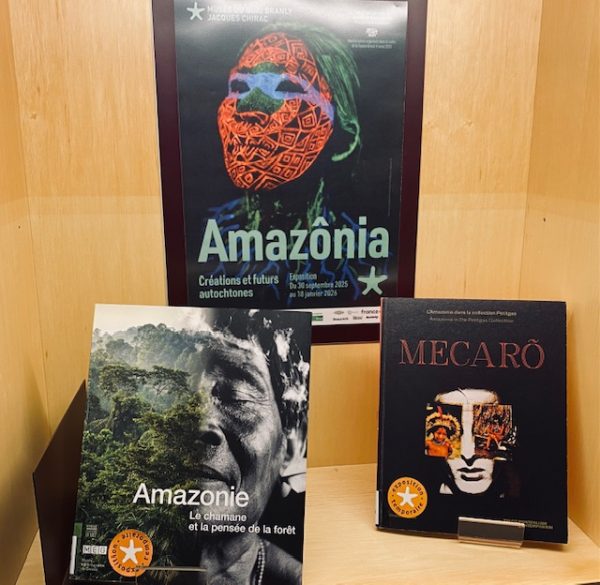
2025-9 marks an additional landmark in the achievements of the late Marc Aurel. In the Roman built city of Trier, 3 museums offer exhibitions on the life, ideas and imperial governance style of Marc Aurel. Libraries and bookshops around the city portray a wealth of books and studies by and about Marc Aurel as well in many languages (image below 2025-9). The stoic author and practitioner has served as an example of a leadership style which became for many subsequent leaders a hard-to-achieve precedent. The writing style of Marc Aurel in short paragraphs and aphorisms proved highly accessible, although his readership swell only after a Latin translation of his Greek original appeared in the 16th century. The title “Meditations” in English, “Pensées pou moi-même” in French or “Selbstbetrachtungen” in German demonstrate the difficulty to get to grips with the author’s intention and objectives in writing down these reflections on life, ethics, humanity and good governance. Through the use of Greek rather than Latin he puts himself in the line of Greek philosophers rather than the succession of Roman emperors. As the numbers of bad leaders still outnumber the good governance style advocated by Marc Aurel, these exhibitions in the Simeonstift, the Landesmuseum and the Stadtbibliothek are a perfect opportunity to demonstrate that good governance is something that can be studied and learned even in the distant Roman history.  

Individual and Cosmos

The major work by Ernst Cassirer “Individual and Cosmos” can be read from a perspective of the history of ideas (Schneider, 2024 in Coincidentia). The work of Cassirer refers back to Nikolaus Cusanus in the way that the worldly ideas concerning the sciences and everyday life of the individual are embedded into the perspective of the cosmos. The latter (cosmology) is of course at the time of the 15th century dominated by religious doctrines. Schneider highlighted the merits of Cusanus as a major contribution to the Italian  “Rinascimento” due to his ability and willingness to draw on all the best knowledge available at his time. A frequent travel to Italy and Rome including the library of the Vatican was a precondition to gather such an overview. Schneider opens up another interesting debate about the competence of Cusanus to read and write Latin and Greek. Contrary to previous statements he highlighted the fact that Cusanus created new words or notions that were unfamiliar or new at his time. Nowadays such creations are very common to express new ideas or combinations of concepts. At his time this was interpreted rather as a lack of clarity or imprecise language.  

AI in Central Banks

Yes of course, Central Banks will use AI, and some do so already (Kazinnik and Brynjolfsson, 2025). Beyond the standard application of AI by its employees, there are many potentials to use AI to analyse and publish data at a faster rate or in order to detect financial crimes. Similarly, data collection based on webpage harvesting might yield new indicators of inflation, expenditure for environmental risks (heat waves, flooding etc.) earlier and in addition to the normal set of indicators. Hence, Central banks might be better and faster in forecasting inflationary tendencies using more AI tools in their daily routines. Of course, it is difficult to predict a disruptive tariffs policy of a major economic player in the world economy, but the calculation of more, even hallucinatory scenarios become more feasible. It is feasible to weigh overall risks of different scenarios to the economy.
(Image: Celtic coins, Museum of the Belgian National Bank)

AI earnings effects

In the first few years of wider adoption of AI in an economy, there is the expectation that this might lead to substantial productivity gains for enterprises which use it as well as for employees who are early adopters of the relatively new technology. The study by the Stanford Digital Economy Lab by  Chen, Chandar and Brynjolfsson (2025) showed that so far there are no significant earnings effects for employees. Based on millions of recent payroll data from US companies productivity gains have not trickled through to the paycheck in terms of monthly salaries. Participation of staff in a company’s overall turnover or profit might change this as time evolves. For civil servants the adoption of AI might mean increases in cases dealt with as some tasks can be executes faster than before with the use of AI.
The evidence points to employment effects of AI rather than earnings effects so far. A hypothesis is yet unresolved: senior employees using AI might employ fewer junior workers at entry positions, if these “hallucinating” young professionals can be replaced by hallucinating AI. In science the hallucination has sometimes lead to disruptive new approaches and findings. It is a tough choice to pick the young entrants with high productivity potential and eventually high remuneration for this in terms of labor earnings.

AI employment effects

The first robust empirical evidence about employment effects of AI in the USA has been published by the Stanford Digital Economy Lab by  Chen, Chandar and Brynjolfsson (2025). A previous paper by Wang and Wang (2025) highlighted the comparative advantage of persons who use AI in their work compared to others and the authors coined the term “learning by using technology”.  The prediction of the model was that there might be job losses of more than 20% in the long run and half of this already in the first 5 years of the introduction of the technology. The Stanford economists have estimated with real world data these effects in the USA and find quite surprisingly that the negative employment effects of AI have the strongest impact on young labor market entrants with few years of labor market experience. Middle-aged and more senior employees seem to benefit from “tacit knowledge” about the work, which is more difficult to replace with AI, at least for the time being of the early days of AI. This evidence is based on recent payroll data from the largest payroll processing firm “ADP” in the USA which has firms overrepresented from the manufacturing and services industries as reported in another paper  (Firm size maybe another source of bias).  However, the effect that youth 22-25 years of age suffered the most calls into question the common belief that older workers are more likely to suffer the consequences as during in the rise of the digital economy around the year 2000. (AI Image created with Canva)

Vacation or Workation

Vacation or Workation, that is the question. Remote work and outsourcing of work have  created the opportunity for more people to work from distant places. Logging into the firm’s or the administration’s secured intranet enabled to work from where you prefer to work rather than on the premises of the firm. After the technological shift to enable secure remote work, the acceptability of remote work is a societal issue. Whereas bosses worked or had to work while on travel for many decades, the same has become feasible due to reduced costs for many other employees as well. The Covid-19 pandemic has forced another shift in the need to accept and advance remote work as well. Taken together the option of a “workation” instead of a vacation became equally more feasible. The borderline between remote work, “workation” and vacation has become more and more blurred. It remains to be seen, whether these options enhance an outsourcing trend by firms or whether  more “back-sourcing” or “in-sourcing” will be the consequence.
Employers with their associations and employees with their trade union representatives have a need to include such topics in their bargaining agenda in addition to pay, health and safety, as well as working time adaptations.
(Image created with Canva 2025-9)


Vacation time

According to statistics from INSEE about 20% of the French population reported in 2024 that they could not not go on vacation due to financial reasons. Another additional 20% did not go on vacation for other reasons based on another survey mentioning other reasons, like psychological or logistical issues as being of overriding importance.
Openness to new experiences is a well researched concept of psychology and vacations can be a challenging time for established convictions. Meeting people from other cultures particularly allows to reflect on one’s own values and behavior. Some people may just want to avoid being challenged or even potentially destabilized. Destination time and place involve choices and decision making often within families or with friends.
The topic of vacation is much like an evolutionary process. Towards the end or some time after the vacation time, there is” evaluation time” and the preparation of the next experience. 

Raffael Madonna

„Mary and the child“ has been the success painting of Raffael around the years of 1500. 3 variants on this topic are presented at the Gemäldegalerie Berlin. Each pose varies only slightly, but each tells a very different story. The Madonna changes the regard from beyond the child, on the child, then to another child. An interesting sequence as such, which puts the relationship with the child also in perspective. The child develops over the sequence from the fast learner into the person with „power grip“ to the one that is spreading benevolence. The different stages of the life course are somehow taking place within a short period of the child. (Image: Raffael, Mary with Child, Gemäldegalerie Berlin)

Gentileschi Gentileschi

There are 2 Gentileschis that entered the history of art. Orazio the father and his daughter Artemisia. Orazio painted many scenarios based on the bible. The incestuous relationship between Lot and his daughters is difficult one to portray and to do justice to the moral concerns involved. Artemisia, similarly, did not shun away from difficult stories of the bible and added a personal twist to these stories in putting her face into the biblical depiction. The cruelty of the stories become more explicit this way and maybe also her deviant position to the biblical narrative. (Image: Orazio Gentileschi‘ (1622/23) „Lot with his daughters“ Gemäldegalerie Berlin)

Age of maturity

The bronze statue by Camille Claudel „L‘âge mûr“ is her most famous works. It is part of the exhibition Claudel & Hoetger in the “Alte Nationalgalerie“ in Berlin. Usually the statue is part of the permanent exhibition in the „Musée d‘Orsay“. With the depiction of different stages of the life course and somehow revealing the emotional trajectories of the persons the scene of human joy and tragedy becomes tangible beyond her personal fate. The scenario and arrangement in the Alte Nationalgalerie allows to focus on this particular work with an emphasis on the trajectory and the evolutionary path. A unique arrangement does better justice to the particular message of the artist than being surrounded by too many other works of art. (Image: extract of Camille Claudel‘s „L‘âge mûr“ in showroom Alte Nationalgalerie, 2025-8)

Claudel & Hoetger

It is well known that artists joined other artists and groups to get inspired. The entangled relationship between Camille Claudel and Auguste Rodin has become a special example of the tricky relationship between learning and co-creation or inspiration. The role of galerists in building a reputation for artists is less well understood. The “Alte Nationalgalerie“ in Berlin opens up this black box a bit through juxtaposition of Camille Claudel, Bernhard Hoetger as disciples of Auguste Rodin. The influences are rather obvious, yet each disciple developed her/his unique style. The emancipation was not without frictions. The galerist Eugène Blot organized a joint exposition of both disciples in 1905 in Paris, which is partly reproduced in Berlin 2025. Great work by the curators of the exhibition Yvette Deseyve and Sintje Guericke who managed to bring together unique sculptures from 3+ museums and a great explanation of the links between the artists as well as the proximity of ateliers. (Image: view of showroom in Alte Nationalgalerie Berlin, Claudel & Hoetger 2025)

Jewish Heritage

In the Germany of the 21st century, we have to dig deeper into history to understand the Jewish heritage due to the horrific terror of the Nazi-regime and it’s millions of supporters. The traces can be found in some historic photographs even in the countryside. Marie-Louise Conen and Hilde Weirich (2010) have thoroughly studied such documents for the Moselle village of Lösnich. The little annex to a house served as a Synagogue (image below). The village has a history of Jewish settlements which extended to neighboring villages as well. Interestingly, the heritage of Napoleon’s occupation of the Rhine and Moselle regions brought equally for all men (not yet women) and the separation of the state and religion making Jewish life, property acquisition more easy. The tolerance of the 19th century was then reversed by Nazi Germany again. History is present in many places, where we do not seem to expect it nowadays. 

Napoleon legacy

It is huge historical project to try to summarize the legacy of Napoleon Bonaparte. AI is by design less hesitant to come up with any length of a summary statement some with good references on which the statement is based. In combination with a visit at Fontainebleau and a first hand impression of the environment of the autocratic ruler, the remainders like the introduction of a Civil Code to guide also administrations to lawful conduct, we still see influences of this legal innovation in many other countries across the globe. The recognition of Jews as equal citizens and to allow equal access to property and many professions have been influential across Europe mostly in occupied territories. Military service for Jews in Napoleon’s army was another consequence, which spread into the Prussian army and the 1st world war. It is in the 21st century that we see shifts towards more authoritarian governance styles spreading again, we did not want to see this happen until Russia‘s war in Ukraine. (Image: La Chair de la forêt, Frénésie des Géants by  Wang Keping Fontainebleau 2025-8)