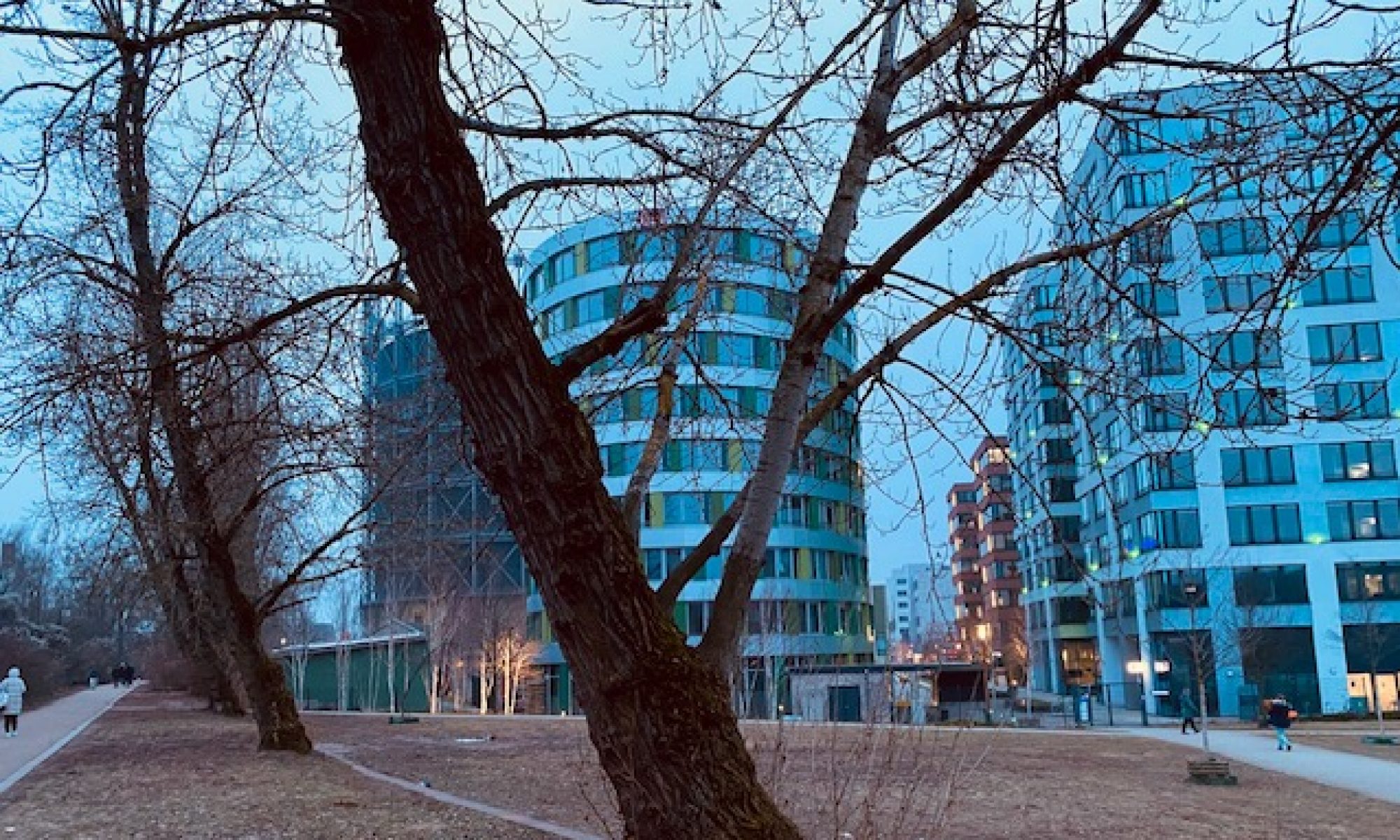

Sociologists study and teach a lot about social capital. James Coleman and Pierre Bourdieu each have coined social capital as a major foundation of societies. Therefore, the exhibition of the artist Rirkrit Tiravanija “happiness is not always fun” in the Martin Gropius Bau (Image below) is interesting beyond a justification art for art’s sake.
What does Tiravanija tell us about happiness and social capital we did not know before? The artist went to a Chicago based art school, hence, it is likely that he has been confronted with the concept of “social capital” by Chicago sociologist James Coleman. The Berlin exhibition of Tiravanija can be walked along and experienced through the lens of the creation of social capital as a form of art. Art raises awareness to the importance of social capital for the ways we live together and form communities. The Berlin exhibition, meeting place or play ground is worth multiple visits as the participatory experience changes each time. In each of the rooms we reflect on our cultural practices like sports, music, printing or cooking as forms to create community. Each time we take home a little bit of social capital as well. “Happiness is not always fun”, but for sure You’ll have many happy moments throughout the visit of the exhibition. The guided tour by curator Yasmil Raymond (2024-12-19) added yet another little bit of spice to the exhibits. For a few moments we felt like a strong link between Chicago and Berlin, just like those sociologists in Berlin who studied and continue to study James Colemen’s foundations of social theory.

Kids Space
Political claims to reserve more space for kids in cities have a tough time. Kindergardens or child care in general are scarce and the lobby for kids is often limited in time and extent, since it is the parents that usually are the ones to advocate while their children are small. Jointly parents and children of young age experience the tough atmosphere to find, preserve or extend the space for kids.
The Gropius Bau in Berlin has opened up an exhibition space reserved to children 3+ as part of an art project “BauBau” designed by Kertin Brätsch 2024. A colorful room and installations as “loose parts” are the starting point to delve into a real/fantastic world were kids reign. There are a few so-called “playworkers”, who accompany the endeavours, if need be. At the end of the day the room was still in pretty good shape I would say assuming that “children set the tone and decide what happens in this place”. Safe and supportive environments for children are scarce and parents are always challenges in their attention to watch out for risks of all sorts in public city spaces.
Even if the “play space” is free of charge, it takes parents or kindergarden managers to reserve the space.
An early experience of a museum from the inside is likely to have lasting effects on children and the parents. They might have fond memories of a museum as an exciting space also for them. It constitutes a nice continuation of the outdoor “radical playground” project during summer 2024.

Health data
2025 will be a crucial year for health data across the EU. Germany introduced the electronic patient card, which can store basic information to then access data in the health insurance cloud for medical doctors, hospitals and other related health services. Potentially this is a great step ahead as some tests do not have to be repeated if they had been completed recently before already.
In pseudomised form, research may draw samples from such databases to enhance our science based understanding of disease. The evaluation of public health interventions becomes easier and medium and long term efficiency of measures can be assessed in many instances.
The Belgian research using health data has met to discuss the potential and limitations to link health data to other data sources to allow more complete and more complex analyses of health and disease processes. Another extensive data source sits on our smartphone. Collection of steps walked, sleep patterns or heart beats give valuable insights into a person’s own contribution and care about personal health. Although data are frequently incomplete, researchers are used to estimate missing data on the basis of existing or comparable person’s data. The basis for improving health for all are quite promising, data handling and linking them will be a challenge to the competence of all stakeholders and everyone involved in better health. It will be stressful before it becomes a routine. 
String Quartets
There is a plural form of Quartet. Philip Glass has composed a piece for 3 string quartets. Thanks to the Kronos Quartet performing and celebrating in Brussels, modern compositions are continuously added to the repertoire written for and performed by string quartets. Contrary to received wisdom the tradition of string quartets is still alive and kicking. At Bozar (Brussels) the marathon performance of 27 quartets, not all at once, but spread over a day and several locations, afforded a great free-of-charge opportunity to wipe off the dust from the sometimes rather introverted form of string quartets. Despite the high share of young musicians who performed well at the occasion, the afternoon focused more on new compositions. Concerning the audience, however, there is still an older age bias in listeners, more the standard Bozar clientele so far.
The afternoon reminded me on listening CDs entitled: “I don’t like classic music, but this one I do”. Many people came for art exhibitions at Bozar, but then (re-)discovered on the sideline the atmosphere of chamber music at this occasion. Closing the age and social gap in classical music is quite a challenge. It is surely more like a marathon than just a few sprints here and there. The new format at Bozar in cooperation with the Kronos Fifty for the Future Marathon will sooner or later find extended audiences beyond the happy few this time. I would recommend listening to string quartet music more often until the “Transcranial direct current stimulation (tDCS)” will be the new hype. 
Book Value
What is the value of a book? For the author of a book each book s/he has written or sweated the value of the accomplishment is pretty high. From the publisher’s perspective a book is an investment and sometimes a very risky one. The book store makes choices and takes the risk to devote time and effort to select the bestselling books or the best one suited to the local or passing audiences. Next in line are librarians who either stock everything published in a specific language or country (legal deposit) or select from the offer according to perceived interests of their subscribers. On the way to their audience many mistakes may occur. Books miss their targets or librarians go wild in their efforts to guard or discard books. In any case, many books do not find their audience. Some sit on shelves for years and will never be touched by anybody. Other ones pass from one hand to the other rapidly with long waiting lists.
Even if many conservationists don’t like it, it is the use of books that honors books and authors. Pocket books play a specific role in this link of readers and writer. Use rather than conservation, is the prime role of these lighter versions of books. They also have to endure heavy weather, scratches and folding of persons focused on content rather than precious form.
Last but not least in line comes the market for recycled books. Re-use of read or unread books has increased over years and some readers are happy to discover a discarded book from a previous owner (public or private). The value of a book lies in most cases in the eye of the reader. This then makes it an object of competitive marketing and continuous auctioneering.
(Image: pocket books at display of Popular heritage Lost and Found at the Royal library of Belgium 2024.

Degré zéro
As all of us use GPS systems to navigate across the world or just in your city, “degré zéro” might nowadays be associated first of all with the prime meridian 0° longitude, which runs through Greenwich near London and around the globe.
In « Le degré zéro de l’écriture », Roland Barthes (1953) challenges the bourgeois kind of writing of literature. He introduced the pertinent distinction of the verticality of writing styles in the sense of social classes as well as the horizontal form of spoken language He further distinguished écriture as a person’s style which is embedded into the historical and social context of her/his time. As a radical change, Barthes proposed to use scriptor instead of writer as the latter expression is too much loaded with the historical package of the person. Barthes inserts the scriptor as écrivain into her/his time and insists on the intellectual and social context of writing or the author.
As the scriptor (p. 26) does not escape to become a writer « écrivain «, the degree zero de l’écriture postulates a homogeneous society, which obviously is an ill-conceived vision of reality. Language and texts, therefore, are not universal in kind, but bound to situations, which are defined in historical time and space (p. 67). Semiotics was a major field of his analyses of literature and language.
Whereas in a talk you might focus on the person you are talking to, in a written text the other person is « the many » readers, wherever they are and maybe at a much later time as well. There is a qualitative difference and yet modern “voice to text” transcription makes all spoken words immediately available as written document or “compte rendu”. (Source: Roland Barthes: De la parole à l’écriture. in Le grain de la voix, Entretien 1962-1980. p. 12).
Let’s watch our language as we follow the longitude or latitude around the globe and even small deviations from degree zero matter a lot. 
Legal devices
In the 1st chapter of “The code of capital”, Pistor (2019, p.3) specifies the 6 major modules of the code that creates a lot of wealth, but is also eager to keep it to a few privileged persons in society. In order of appearance and not exclusively they are: “contract law, property rights, collateral law, trust, corporate, and bankruptcy law. In these modules 4 major attributes of assets are defined for the holder and later exercised courts as well as other state institutions: (1) priority, (2) durability, (3) universality, and (4) convertibility. In other words, the legal devices rank claims in a qualitative sorted order and guarantee the value of such claims over time and space. The fatal vice of the device is the convertibility of private claims in to one against the state as the ultimate insurance against a risk of credit default by other parties. Similar to bitcoins today, the financial derivatives make it possible to “create money” out of nothing, just like a “deus ex machina”. The states had and still have no control over this “artificial creation of money without being linked to a kind of reserve value.
Such intangible assets may contribute to wealth creation as tools that facilitate a faster turnover of goods and services in an economy or between countries and thereby create corresponding real value. The control of trade and currencies, however, becomes also subject of additional possibilities of fraud and crime. Here again it is the legal system that is challenged to protect the application and efficient functioning of the 6 major modules of the code of capital. The concerns of inequality in and through law are relegated to politics and policies within single states.
The final chapter 9 states rather bluntly: “capital rules by law” (p.205), but it enumerates several ways, how to curtail this code of capital. Tax sheltering in other countries or taxation by choice of country should be made more difficult. Blacklisting is efficient in most cases (p. 225). Arbitration might work if somehow an equality of power is achievable. Internalization of externalities is easier said than done, but needs to be considered right from the beginning of changing laws. Purely speculative contracts should be referred to “casinos” and betting instances and no longer be eligible for business contracts. The revision of the education of lawyers is another part of the counter measures. The autopoiesis of the legal system and its profession has been highlighted by Niklas Luhmann before. A great deal of the difficulties we face with the code of capital appears to be due to the self-referential exclusionary practice of legal devices. We have to bring society back into the discourse of law in order to preserve democratic structures and the equality of chances in society.
The strength of “collective rights” in labour law, of cooperatives or the share economy allow for potential remedies to the hijack of law through capital and exchange markets. Open source movements as in software creation are forward-looking models that the creative commons licensing for security, but also equality purposes. Employees’ input in the process of capital creation should be rewarded and codified accordingly. Last, but not least, countries will have to reclaim legal authority in parts of law that affects “the wealth of a nation” and its distribution. Similar to “no taxation without representation” we should claim “no legislation on us, without us”. The role of legal advisory firms to draft laws outside of parliament has probably gone too far already. The task of politicians to understand the consequences of what they vote for in parliament has become more and more difficult, yet there is no way around a drastic increase in competences, legal and otherwise. 
Juridification
Law has entered almost all domains of life. This has a lot of positive effects. Law in general, we tend to believe, has an intrinsic link to justice. If you go to court after failed attempts of mediation you will get a judgement(s) from several instances at times and with substantial delays. Justice, however, is a much more complex issue. Ethical concerns enter the stage as well as the ability and willingness to devote substantial resources to support a legitimate or legal claim. A kind of balance of power appears to be a necessary precondition for justice to be achieved. Of course, jurisdification is a process, where time plays to the advantage of one or the other side of contestants. The book by Katharina Pistor, “The code of capital. How the law creates wealth and inequality” has highlighted the importance of the legal intermediaries in the juridification and codification of modern societies. The basis of today’s capitalism relies on an expansive definition of what constitutes capital. The transformation of debt into a product, which can be traded by a “second hand” rather than the “invisible hand”, had created a warning to societies that the extension of rights and volumes led to a financial crash of the most powerful economies. The states, i.e. taxpayers, had to step in to guarantee credits taken out by banks and other financial institutions and ensure the solvability of underwritten debt. The state guaranteed for losses of capital and enforced the rule that deficits had to be shared among all. A well calculated bankruptcy of the system was then managed by lawyers and bankers rather than the politically elected representatives of the people.
The juridification has been extended to intellectual property rights as well. This made the fruits of intellectual property tradeable. It is rarely the authors that negotiate translation rights or the use of a novel as a screenplay. You better rely on a specialised lawyer to assist you in the national or transnational defence of intellectual property rights.
Artificial intelligence relies on huge data inputs. It is not an easy task to define ownership of data, especially of what we believe are “your own” data. Juridification means that a process of narrowing down definitions or the opposite, absence of a proper definition, creates market opportunities to trade data and the right to collect or use those data for specific or encompassing purposes.
Are we still all equal in front of the law? Or do the better informed have a significant advantage over the rest of society? Financial resources play a vital in the legal system as well. Collective solutions, like associations of consumers or trade unions, have demonstrated that they may operate as a societal antidote in the biased codification of capital. Democracies are well advised to open their eyes to the blind spots in the “regard” of justitia.
(Image: Auguste Rodin, Cariatide à la pierre, enlarged bronze statue in Paris) 
Sexual harassment
Under the broader topic of violence against women, we count gender-based harassment at work. The recent report of a survey based on more than 100.000 persons in the European Union in 2021 shows the shocking amount of violence in the last 12 months as well as violence experienced over a lifetime. (Source Eurostat Link to pdf report) These data have to be interpreted with care since it is a well known statistical phenomenon that in some countries such misbehavior is reported and talked about more easily and openly than in other countries. Therefore, the countries with the highest figures, for example in Nordic countries, there it is safe to talk about the issue (Nordic paradox), whereas in other countries violence against women and sexual harassment at work are still much less talked about and addressed in public. Italy even deviated from the joint EU data collection.
It is important to address the topic in the media and lift the cover-up attempts in many societies. This is a process over time, but it is important to continuously raise awareness about the problem. We have made a lot of progress on more equal treatment of women in recent years in most European societies. However, the is need for a “zero tolerance” of violence against women and the sexual harassment at work, which prevents women to take equal shares across all professions. Monitoring the process is an important step, which is necessary to target safety measures in a better way. Further details of the statistics are needed as well to address intersectionality as well. Young women tend to suffer more than older ones. Maybe the latter ones have learned to be more careful to avoid or evade critical situations. It is, however, men who have to reconsider their behaviour towards women at every age, at work as well as at home. 
On Keys
Keys may open multiple doors. Even a single key can open many locks, if constructed in the appropriate way. The obverse of key is also key, at least in the function of keys to lock doors. Hence the trick of the key is its dialectic function (open/close) of access. We practice the functioning of this binary thinking (1= open, 0= closed) several times a day. Even binary thinking can become very complex in case you consider a bunch of keys or organized as a ring of keys. With a plurality of locations or rooms (home, work, leisure) the uncertainty to have the fitting key to the lock in question at your disposable becomes a bit of a puzzle. Here we are, trial and error enter the stage for most of us. Don’t worry, there are digital tools to solve the problem for you, but then the whole issue of trust comes into play more forcefully. Sharing is not only caring, but also daring. Transponders replace keys and passwords have become the new “passe partout”. This leads to the brave new world of encryption as the keyfactor for security. Encryption is key. Are you already encrypting or still turning keys?
Keys are key to understanding as well. Artists in Berlin-Schöneberg combined the portraits of persons and their bundles of keys next to each other. Keys seem to reveal key personality traits of a person. Life course researchers may investigate the “first ownership” of a key to a room, an apartment or the family home as a factor of independence, even freedom to move. Handing over the keys of a car or your home to a significant other may mark looming restrictions due to health issues.
Anyway, what is your favourite key in music? More a fan of serial music or 12-tone music? 
On Woke-ability
The past particle of “to awake” is “woke“. As early as the 1960s the term woke has appeared in a New York Times article to reflect the idea that in the African-American History movement you woke up to a new movement, leaving behind discriminatory practice and rhetoric. The definition of woke in dictionaries refers to an awareness of social facts and injustices. Additionally, the use of woke has implied a need to act upon injustices due to social and/or ethnic origin. Elements of the woke movement were the use of more general non-discriminatory terms like people of color (POC) in official documents and revisions of textbooks for pupils. Subsequently, the application of the term woke spread to other social concerns like the discrimination of LGTBQ+ people in many societies.
The underlying concern was and still is (1) to recognize the discrimination and disadvantages faced by many groups in society and (2) a call for changing the way we talk about it and (3) a shift of policies to counter social injustices. Societies differ in the capacity of “woke-ability”, i.e. the capability to address social inequalities of various types including intersectionality. Societies have never simply been only homogenous. Heterogeneity, plurality and complexity are much better suited to represent societies, regions or countries. It is our willingness to deal with these complexities in an open way which includes the “woke-ability” of social phenomena. Acknowdge a social problem and act upon it. Change the way we talk about a problem and the discoursive practice in general are important steps to address old and new social problems. For example, over the last 50years the discourse with respect to handicapped persons has evolved and the Paris 2024 Paralympics have made this clear to the public on a global scale.
(Image: Installation of Daniel Boyd in the Martin Gropius Bau, Berlin 2023)

On Dosage
- Dosage is key. We all know it from everyday expériences. Certainly from drinking alcohol we know the tricks that dosage can have on us. Consumption in small doses is fine and enjoyable, but larger amounts cause all sorts of trouble. In pharmacology the effect of dosage is applied with particular virtue. Small doses even of a poison can have beneficial effects. More of rhe same might well kill you. The same rationale applies to other fields as well. Physiological training effects depend a lot on the right amount of training and the timings or intervals between training sessions. In managerial, economic or social applications the question is not only about what is the right remedy, but also how much of it. The interest rate decisions of central bankers are mostly concerned with dosage rather than « whatever it takes ». A minimum wage increase is equally about dosage and we all have additional examples.
Even in art, take painting or music, dose and pose, that is the question. It is quite surprising that such an overarching issue has received rather little attention, comparatively or only among specialists in each field.
It appears strange, but it is possible to have only a little bit of war, as opposed to comprehensive conflict. The applications of dosage are manifold.
Learning about dosage might prevent binge learning at first and binge viewing later on. In the age of tiktok and social media, dosage has become a key competence. (Image Extract of Gustave Courbet Die Welle 1870, Alte Nationalgalerie Berlin).
On Intersectionality
Society deals with individualization or individualism in various forms. One way is to take each social group as a specific singular case. This is reasonable and justified in many instances. There are cases where this form of dealing with specific social groups comes to limits. Following the rationale of plurality and individualism it has become common practice to address each target group in a specific manner. Intersectionality, however, acknowledges the overlapping of target groups, which necessitates a more specialized approach to intersecting (social) phenomena. Gender might not be the single most important factor to describe a person, just as age is a concept of various intersections. Chronological age versus age defined through biomarkers demonstrate the variety and potential for intersectionality. The Paralympics 2024 in Paris gave another positive example of intersectionality as extraordinary persons achieved previously unimaginable world records in specicialized disciplines. Individualization and classification is only a first step in the scientific endeavour, the analysis of intersectionality is an additional step to consider in a broad range of fields beyond the social sciences.
(Image: Exposition Isa Genzken 75/75 in Neue Nationalgalerie 2023) 
Commemoration
In The month of November we commemorate those who died and particularly all those who died in the combat for freedom and democracy. The Russian aggression does not show many signs of ending the killing of soldiers and civilians on both sides. Ukrainian forces struggle to resist the Russian occupation of its territory as Russia is sacrificing thousands of lives for small gains of territory it is unlikely to defend in the coming months if Ukraine possesses longer reach weapons. A new spiral of an apocalypse is most probably the result of the Russian insistence on external aggression to cover up more internal problems. A lost generation of young soldiers who died in combat or suffered mutilation will be the outcome of these atrocities. The inflationary effects of wheat and energy prices globally have caused additional casualties in countries that had absolutely no stakes in this war. Russia is to blame for those additional casualties as well as the adverse effects on the world‘s climate due to the fighting and destroyed materials that need replacing later on. The young Russian generation will have to stand up against Putin‘s call to war and put down their weapons. This is one way to end the spiral toward yet another apocalyptic experience in Europe and the silent killing through hunger beyond Europe. (Image: BNF Paris, Apocalypses 2024)

Theatre Artists
Performances in the theatre are called pieces. The artists performing are actors of a play. The « Théâtre de la Madelaine », which celebrates its 100th anniversary in 2024 puts on a new production in celebration of the biography of the famous painter Claude Monet.
«Dans les Yeux de Monet » is the inspirational title of the play written by Cyril Gely and scenario by Tristan Petitgirard. Looking through the eyes of Monet puts you into the sometimes tormented head of the great artist. The challenge Monet faces is his very own perspective on a new vision for painting. In order to capture the impression of the cathedral of Rouen on him, he experiments with colours and lighting to capture just the right moment in time. Interesting to remember, there is not just one single moment he paints, but many versions of it with each realization offering a special insight or impression. Just on the sideline we learn about the importance of plurality rather than the one and only unique moment in time.
His own personal difficulties of sufficient funding for his art work and the depression he struggled with are well represented in the script and by the actors.
Galerists as well as donors (Mäzene) encourage artists, but somehow may also contribute to the pressure on artists to produce more creative work. Precariousness of living and living conditions are often a corollary of creativity or the creative process. This is a usually forgotten part of the biography of many past and present artists. Artists have and still contribute so much to humanity, but in most countries the public or private support for artists is sketchy. This remains a societal challenge particularly during times of employment and skill shortages in OECD countries.

Paris Vision
You got to have a vision in urban planning. Long term visions are best to then realize them step by step. The center of Paris has been restructured since the time of Haussmann at several places. The previous commercial center of Paris with « Les Halles » and the building of the commodities exchange « La Bourse de Commerce « have been turned into a pedestrian area long ago. This axis runs nowadays from the home of the Pinault Collection to Les Halles almost to the Centre Pompidou (in the background of the image below). Whereas Les Halles is usually very popular and crowded with people the art museums are a bit less busy. Walking around in the area is offering amenities for people of all walks of life. It is an area, better called a pedestrian boulevard, where the wealthy and the poor may meet or at least pass by. Social urban planning is in high need to be considered as a vision not only for Paris, but many places and cities again. Inclusive societies also begin with a rather simple vision of togetherness putting people first.

Language Tech
Inclusive societies can build on many tools including AI to lower language barriers. It is not only a question of translation, but many other forms of language come to mind. Sign language or easy language are necessary to facilitate broader access to public services. Reading out texts on webpages or Braille translation for the blind to interact through keyboards are additional forms that are available in digital communication as well. The audio description of videos and images is well advanced (reverse engineered through AI) and allows people with limited vision to fully participate in society. Audio messaging and transcription are used by almost everyone by now. Public services will open up to these channels of communication as well. The technology around languages is much more than just translation and AI-assisted learning of languages (talkpal for example). The new lingua franca is language technology, because it enables us to speak many languages at the same time even dialects or lost languages and in many voices. (Image: Extract of Josef Scharl, the newspaper reader, 1935, Neue Nationalgalerie Berlin)

Ed Tech
Education Technology is much more than the use of tablets and Internet access in schools or in each classroom. Some schools revert to ban mobile phones access during classes or introduce specialized social media breaks during the school day. At the other end of the intelligent use of digital technology is the digital classroom with digital whiteboards in each classroom or the first fun hands-on experience with coding for primary school pupils through, for example, the “Scratch” platform. Once you are used to the power of the whiteboard to use web-based information in teaching systematically, most teachers and pupils will no longer want to miss these tools. Public libraries become important access points for those who have no speedy access at home to assist in learning. Digital tools and e-learning are an empowerment of learners to benefit from the millions of useful learning tools and platforms on the web. A first understanding of easy coding allows children to figure themselves as producer of games rather than only a consumer of fantasy games. Create your own story instead of following the stories of others is empowerment. Scratch it, if you like. The role of the teacher in classrooms is evolving fast as well beyond the 40-60 minutes slots in class. Play the games of your pupils, is a bit like a flipped classroom.
(Image: SCCON Berlin 2024 connected classroom simulation) 
Gov Tech
For many years we have believed that technology is something for experts and a special sector of the economy. Private sector companies have taken the lead and innovative applications of e-solutions or web-based applications have moved online to attract huge crowds. Some 20 years later, the scope to move public services online are on top of the agenda as well. Not only in security, defence, infrastructure management and health e-solutions are drivers of innovation and improve the reach out to persons in remote places, where it is hard to keep up equal provision of services otherwise. This is where “Gov Tech” comes into play. Government Technologies I would define as all technolgies that are needed to service your current citizens, past and future citizens as well as “want to be citizens”. This needs a whole of government approach, since there are many cross-cutting issues involved like cyber security and data protection. “Gov Tech” is no longer just nice to have. It has become a “sine qua non” condition of government. The expectations of people have been shaped by private use and habituation to online access and amenities that government and public services have to follow suit in order to be perceived as similarly close and accessible for people. Besides the technological aspects of hardware and software solutions for gov tech there is the huge issue of taking people with you on that e-journey. Even social policies and social inequality are subject to the e-volution of gov tech. There is a potential to reach more people with the same number of administrators by use of new gov tech solutions. At the same time, the risks to loose people who choose to remain off-line or have no access to online services increases as well. Gov Tech poses multiple challenges as well as interesting solutions. Great to see many regions and states taking these issues very seriously.
(Image: SCCON, Berlin 2024-10). 
Digital Zebra
It is a difficult task in all countries to bridge the digital divide in a society. On the one hand, there are so-called digital natives, those who have grown up with smartphones and notebooks all around them all the time. On the other hand, there are many persons who have not kept track of the digital turn and feel rather lost or are afraid of making mistakes using digital tools. As public services are also moving online, the need for a society-wide comprehensive mastering of digital information and tools have become a sheer necessity. It is much more than just nice to have.
As public services move online like registrations, payments or tax declarations, the need for training and/or assistance of millions of people in a country become a real challenge. This is where the innovative project “digital zebra” in Berlin comes into play. Through the network of public libraries you can get support in person to master your digital challenges.
The name of the project refers to the “zebra crossing” of a road, which assists persons to move from one side to the other side, just like crossing the digital divide. We shall need a lot of those guides and other multiplyers who can assist people to move safely online. Only through this form of taking people with you on the move towards online public services we shall close the gap of the digital divide. It is probably going to widen before we can narrow it again, unless we breeding digital zebras in a rapid way.
(Image: SCCON 2024-10, Berlin) 
Digital public management
Countries with large public sectors also have specialized research called administrative science. More than 25 years ago the whole discipline has been hooked on the idea of so-called “new public management”, which introduced “management by objectives” and “benchmarking” as new tools into the field of public sector management. In Germany Naschold and Bogumil (2000) have been publishing extensively on the topic. In 2024 the new public management is well established and the now new challenge is “digital public management”. Berlin just hosted a fair on this topic (SCCON 2024). This allows to speed up administrative procedures, increase the reach of public administration into remote areas and creates new challenges to counter the digital divide of society. The modern public sector may shift from being pushed by private sector companies in terms of digitalization to being a forerunner of digital provision of services. Tax declarations in Germany are a good example, where for many years it is a widespread practice to rely on digital forms of declaration and communication between the tax office and its clients.
Other countries, like Estonia, have taken already many more far reaching forms of digital public management and digital provision of services. The scope of such reforms is huge and the administration of persons in remote areas and aging societies give additional reasons to push ahead with digital public management.
At the time when even emails become outdated among youth, some administrations are proud to feature their latest innovation in digitalization. A machine is opening physical letters and scans the documents automatically and stores them in a secured cloud for example. It is indeed an important “bridging technology” for administrations dealing with a generation of older persons who are used to this form of communicationd by (snail)mail.
Many interesting new digital solutions (hard and software) were on display at the SCCON 2024 and many more are in the pipeline or pilots have been implemented already, well worth studying in more detail. 
Forced Living Space
The „Topography of Terror“ hosted the book launch of the research project on „Zwangsräume“ (forced living space or forced homes). The cooperation of an impressive network of organizations (Aktives Museum Faschismus und Widerstand in Berlin e.V., Koordinierungsstelle Stolpersteine Berlin, Alfred Landecker Foundation, Metropol Verlag) has achieved to uncover the forced relocations of thousands of German jewish people from rented place to another one, thereby regrouping and cramping Jews into ever smaller living spaces in predetermined houses within Berlin. Through this horrible step by step expropriation and extermination terror was present and visible all over Berlin. The online documentation and data access allowed citizen science projects to accompany the research and actively contribute to enlarge the data investigated, analysis and dissemination of the findings. The continuation and extension of the project is already in preparation and seeks additional funding and volunteers. The traditional book publication helps to provide an insight into the thorough historical research which started with a more adequate definition „Zwangsräume“ than the previously used term of so-called „Judenhäuser“, since the houses had and kept a mixed population sharing the living spaces until deportations of the jewish persons forced into ever smaller living spaces before. The property of the deported persons was recovered by officials from sealed apartments and sold mostly as bargains on auctions or just redistributed among officials in need or with special merit for the Nazi-movement. This adds an intergenerational dimension to the project that is also worth looking into in the next phase of this extremely valuable project based on large online archives from original register information and other documents. (Image: The map shown below in the presentation has blue signs that have already been traced and hundreds of red signs where the histories are not yet retrieved).

Risk Takers
We are all risk takers of one form or the another. Those of us who ride motorbikes or enjoy rock climbing have an above average taste for risk taking. Since the publication of „The risk society“ we are aware that collectively as a society we have taken on additional risks like nuclear energy, atomic weapons or the risk associated with silent climate change with the persistent reliance on fossil fuels to a large extent. Holman W. Jenkins (WSJ) has added an additional perspective on risk takers which originates from government policies to encourage building homes in places subject to high risks of flooding. Several policies come to mind that encourage individuals to take high risks and construct and repair buildings in flood prone areas. Government grants, insurance policies and relocation subsidies are at issue here. Regulations like driving licenses try to build on competences to ensure „more rational risk taking“ in people. Teaching about nutrition might alleviate the obesity pandemic as much as awareness of an active lifestyle can avoid a large number of cardiovascular diseases. Risk taking should be to a large extent an individual’s choice with the consequence to live up to the consequences of the risks taken also more an individual’s responsibility. Collective solutions are a powerful way to encourage additional risk taking. The consequences of those well-defined solutions have to be funded collectively as well. A society-wide discussion and voting process on such issues has to be organized and updated from time to time. (Image Skateboard high and long jumps Brussels 2024-10)

Ranking Enterprises
The Spanish economic newspaper has published on its front page an updated ranking of the top 10 Spanish companies using environmental, social and governance (ESG) criteria (see below). elEconomista.es on 2024-10-12 shows through this updated ranking that ESG criteria continue to be relevant information for investors. It is not just a nice to have information but gives important information on the sustainability record of a company. Continuous monitoring is key to show and reward the efforts and investments companies have made to improve sustainability. This information needs large distribution in order to keep up the awareness that there is more to a balance sheet than just turnover, profit margins, debts and investment. Churning of employees creates costs to society as a whole as well. Any early information on ESG indicators, therefore, allows a much broader assessment of the full impact of enterprises, 360 degrees and over time. Certainly a good example to follow up on.

Study Wages
There is a remarkable study of sectoral minimum wages in California. It deals with minimum wages that have been raised set to start from a floor of $20 per hour in the fast food sector. The first indications after 6 months show that the wage increases due to the regional and sectoral minimum wage in California were about 18% per hour. The wage rises did not have a negative effect on employment so far and are not expected to happen. The first indications suggest that price rises absorbed 2/3 of the wage increases. Consumers of the fast food chains and on special event locations do not react strongly on the price increases to reduce demand. As overall the turnover achieved in the restaurants increased even franchising chains were able to increase their profits. It is an interesting example that an increase in minimum wages can create a win-win-win situation starting with a substantial pay rise. A second round effect not mentioned in the study could consist in the narrowing of the price differential between healthy food and fast food. The option of a healthy meal might no longer appear to be so much more expensive.

Of or about
There exists a fundamental difference between taking a picture of something or someone as opposed to taking a picture about someone or something. With the term about we denote or refer to a more abstract category of trees, animals or human beings. The use of of, however, refers to a specific realization within a specific category. Painters or photographers have applied this distinction for a long time. It is similar to social scientists who consider persons or relationships as belonging to more general categories. Gender is such a category which has preoccupied us for years before concluding that just 2 gender categories are not enough to come up with reasonable descriptions and predictions of behavior. The realizations of gender are manifold and not necessarily or only binary in nature as well appearances. Eventually social categories are enlarged to fit empirical patterns in more adequate ways. The image of someone/something therefore is something very different from an image about someone/something. (Image of: Children’s corner at Musée Rodin Paris. Image about: Pedagogic approaches to art, here sculptures « Le penseur », Rodin 19th century)

Happy Employee
The research on happiness, subjective well-being or overall satisfaction with your life is also an empirical question. Analyses of being happy donot only focus of overall happiness, but look much more into the details of happiness. Beyond the tricky longitudinal observations of happiness it is common scientific practice to deal with subdomains of happiness like satisfaction of employees with their job, satisfaction with one’s job beyond the honeymoon and hangover effect, best known from family studies.
Each of those subdomains has a significant effect on overall happiness. The novel “Happy Life” by David Foenkinos is an interesting example which focuses mainly on the subdomains of job satisfaction, satisfaction with private and romantic partners as the major domains of a happy life. As developed in the novel, people make job changes to re-orientate professional careers or reset their private life. A low point on the happiness scale in one domain might be compensated by higher levels in another domain. These impact from one domaine to another might have substantial time lags involved as well. More drastic resets (à la Foenkinos) can be avoided through focus on other subdomains of overall happiness as well.
How happy are you with your housing situation, neighborhood, your pet, your physical health? There a multiple +/-spill-over effects to overall happiness. Reading a novel might be one as well, just take time reserved to yourself.(Image BnF expo “women in sport”, 20024)

Happy Maths
The link of maths and happiness is not straightforward. Individual accounts of a happy (euphoric) or unhappy (dismal) life are mostly referred to psychologists for treatment. The biografies (documentaries) or fictional biografies told in novels or cinema allow to trace the changing moods of the personalities over time. This resembles life course research. In happiness research social scientist ask questions like “Overall, how satisfied are you with your life“. Measured over time or coded from biografies this allows to reconstruct happiness trajectories. At this point the maths of happiness enter the stage. Long periods of observations yield interesting patterns of curved lines, rarely simple linear trajectories. Social scientist speak of within person variability in contrast to between persons variability. After all, the (short-term superior) happiness of your neighbor might simply be due to the fact that they are doing drugs.
Whatever, try to remember a bit of your high school maths and the bore to deal with “curve discussions or sketching” beyond the manifold shapes of your classmates. Lots of interesting information derives from growth or decline rates, tangent lines, stationary or inflection points. Different starting points or so-called intercepts vary between individuals as well as he potential to cross the Zero-line on one of the axes. Additionally, in geometry you would compare syncronicity of curved lines as well as forms of symmetry for the curve(s). This will simplify or comlexify your perspective on the happiness trajectories of people or characters in a novel.
We are so used to narratives or videoss with a happy end, yet we appreciate the complex trajectories and (multiple) troughs main characters have to pass. Novels teach us about tricky inflection points and subsequent trajectories as well. The maths of happiness, however, is rather simple in comparison.
(Image from Toronto District Christian High School -pdf p.207). 
Own Insulin
People who suffer from type 1 diabetes do not produce enough insulin themselves. The World Health organization estimated that „in 2017 there were 9 million people with type 1 diabetes; the majority of them live in high-income countries“ (WHO 2023). The report on successful reprogramming of stem cells of a person to produce insulin again and subsequently transplanting these cells into the same person allowed to produce own insulin again for that same person (Mallapaty, 2024). The hope for millions of people with type 1 diabetes is high that eventually there will be a cure to the disease. Scientists caution that there are no data yet for how long the transplanted own stem cells will produce insulin. Hence, the hope is driving research forward on a promising way forward. The case of type 2 diabetes is very different as additionally the absorption of insulin in the body causes problems. We keep walking and building muscles to facilitate the insulin absorption in the body to guard against the onset of type 2 diabetes. Interaction of diabetes and aging is another topic that needs our attention as rapidly aging societies are at higher risks to face many more people with various forms of diabetes.

Russian Demographics
Dictators prepare their countries long before for upcoming wars. One indicator of such strategies is the pursuit of “natalist” policies. These are demographic policies that aim to increase a country’s population so that the human losses endured during war maybe recovered faster. Russia has had such a policy doctrine in place for quite many years. Only, it didn’t work. Alain Blum and Sergei Zakharov (2023) have shown this in their paper on “L’obsession nataliste de Poutine“. Rather than achieving a growth in the population, at best, the further rather rapid decline of fertility and the population size before the war is reflected in the data (until 2022). The recent objection of youth and women to bear more children is subject of massive opposition of Putin’s forces inside the country. So-called total fertility of 1.5 per woman before the war is as low as or lower than in many other European countries. However, on the other end of aging is mortality or life expectancy. The data show a rather bleak picture of Russia already before the invasion of Ukraine. Based on data published from INED in France Russia has about 1.000.000 more people dying in 2022 than babies born. Bad handling of the Covid-19 pandemic (inefficient vaccines) is also a reason for this dent in population size. Adding outmigration of youth that does not want to stay in a country that goes to war with peaceful neighbors, this bleak population outlook is the disastrous heritage of the Putin years of Russia in the 21st century for generations to come as well. 