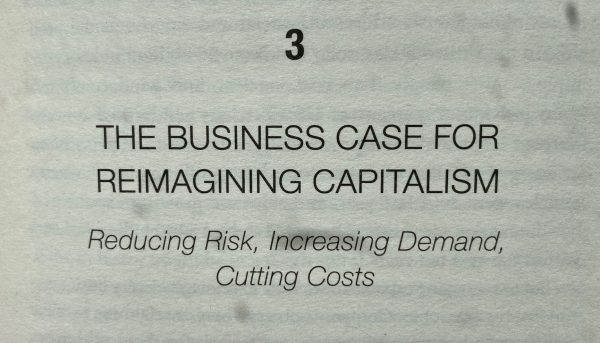
Risks are all around us. Risk is the spice of life. True, but this might be an elitist concept of life or business. Survival of the fittest or the best equipped to take risks might be the consequence. After the 3 crises, financial, covid, energy, we have a new impetus to thrive for de-risking. Certainly, concerning our health, we are aware that prevention is key to fight a pandemic. In order to stem an energy crisis, most countries start to rethink their energy mix and achieving more energy autonomy is a major step to shield against risks of delayed delivery or commerce with belligerent states like Russia. De-risking is key in supply chains for industries (automotive production, microprocessors) as well as service providers (cloud services, care givers) just as well. Mariana Mazzucato (UC London) urges us to develop a new narrative to accompany the transformation of our production and service provision models. Mazzucato advocates to learn from lessons from the ground of how to proceed in the best way. Copenhagen is a good starting point to observe how a metropolitan city manages the greening and decarbonisation of a city. It is important to not only target single policies but the coherence of several policies and approaches. In my view de-risking means for Germany and the EU to shield energy systems from foreign, malignant interference. Only local production of energy and nearby consumption of it will ensure the de-risking of energy provision and consumption. Let us start with massive investments in rooftop solar or small wind turbines. Nobody complained about millions of ugly television antenna all around us. Solar cells on balconies contribute to a basic local electricity supply, difficult to target millions of solar cells instead of a single huge and horrifically dangerous nuclear power plant. At the same time ,we reduce dependency on monopoly or oligopoly structures that develop their own agenda (Too big to fail, remember those?). I prefer the reverse statement. Because they are so big, they are doomed to fail and, therefore, fail us sooner or later. The Forum New Economy offered an open and accessible platform for exchange of ideas. That’s a good starting point to address de-risking. Reducing Risk is in the subtitle of Rebecca Henderson’s Chapter 3 on “Reimagining Capitalism” (short Review), but I would like to add the business case for household production of energy for de-risking supply failure and exploitation of consumers through excessive profit margins as a prosumer business case. 
Priming
Nicht nur PsychologInnen müssen über den „Priming Effekt“ Bescheid wissen. Ein vorhergehendes Wort, Bild oder eine kurze Geschichte oder eben ein Blog-eintrag können in der Erinnerung Assoziationen hervorrufen, die das Verständnis oder die Einordnung der neu hinzukommenden Information (Wort oder Bild etc. ) wesentlich beeinflussen.
Bei dem Blog-eintrag zu „Barbie“ kann das relativ einfach nachvollzogen werden. Mit einem Bezug auf die Zeit des Nationalsozialismus, über Täter und Opfer sowie Strafverfolgung und Gerichtsbarkeit als Vorgeschichte oder Vorlektüre wird bei dem Wort „Barbie“ schnell die Assoziation Klaus Barbie in Erinnerung gerufen.
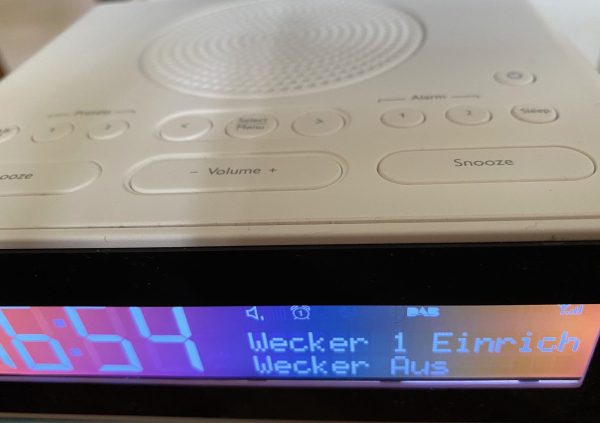
Ein anderes Priming im Kontext von Geschichten zu Geschlechterrollen, Kinderspielzeug, Kleider anziehen, Schönheitsideale sowie Mode erzeugen mit dem nachfolgenden Wort „Barbie“ unmittelbar Assoziationen mit dem Konsumartikel der Barbie als weiblicher Spielfigur bei den meisten Personen. Unser Gedächtnis oder vorherige Informationen lassen uns nicht mehr unabhängig oder unvorbereitet neue Information aufnehmen. Dieser psychologische Effekt auf unsere Meinungs- und Informationsfreiheit kann rhetorisch oder strategisch zum Beispiel in Zeitungen genutzt werden. Wird Ökologie im Politikteil, Wirtschaftsteil oder dem Wissenschaftsteil einer Zeitung aufgeführt, wird bereits eine vorher bestimmte Erwartungshaltung der Lesenden erzeugt, der dann einfach entsprochen wird. Die transdisziplinäre Natur des Begriffs geht dabei schon weitestgehend verloren. Priming ist überall, das fängt wohl schon mit dem Wecker morgens an. Wie gut, dass die Snooze-Taste schon erfunden wurde. Zumindest kurz können wir uns der Illusion hingeben, noch für eine kurze Weile, dem allgegenwärtigen, alltäglichen Priming zu entkommen. 
Barbie
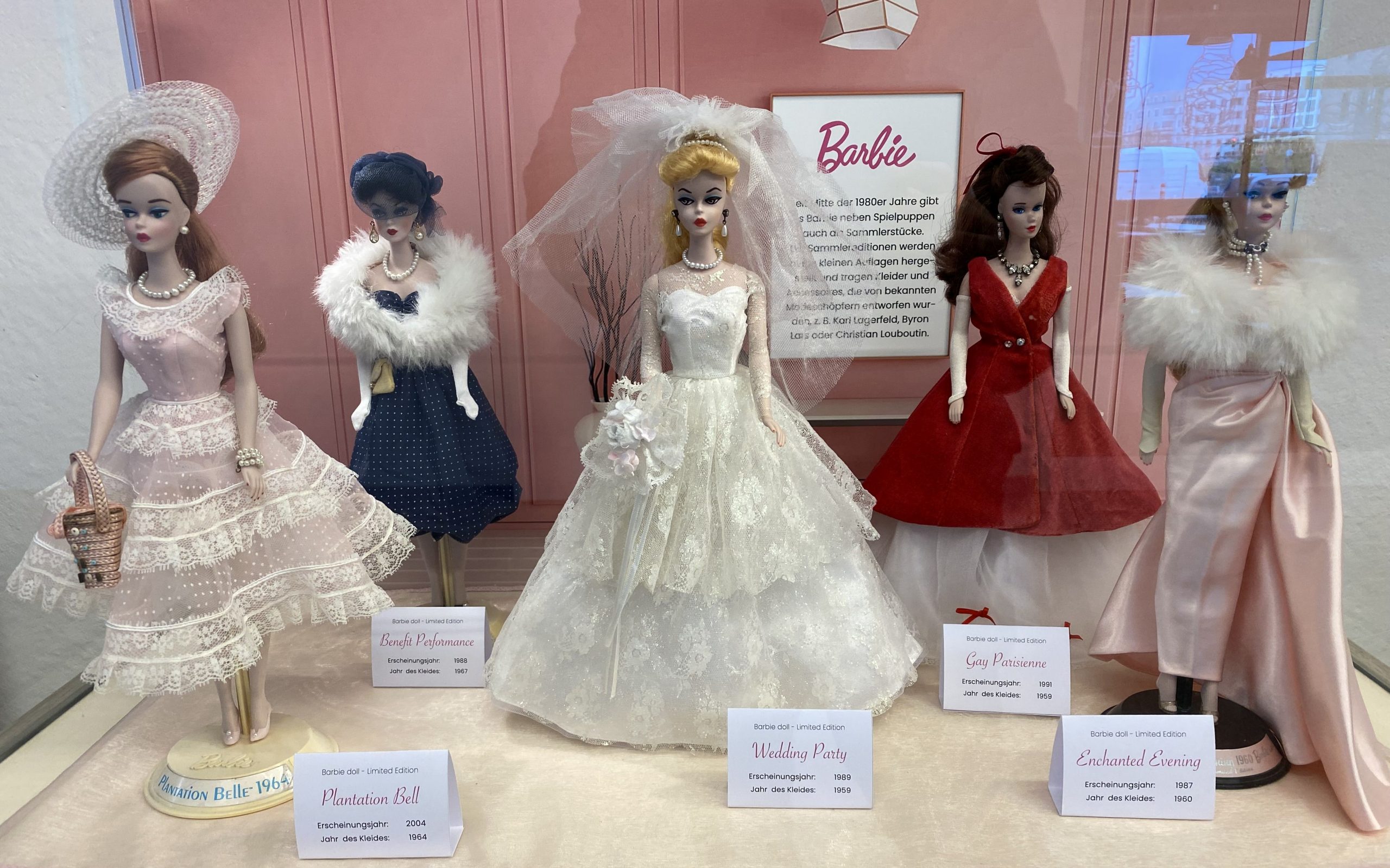
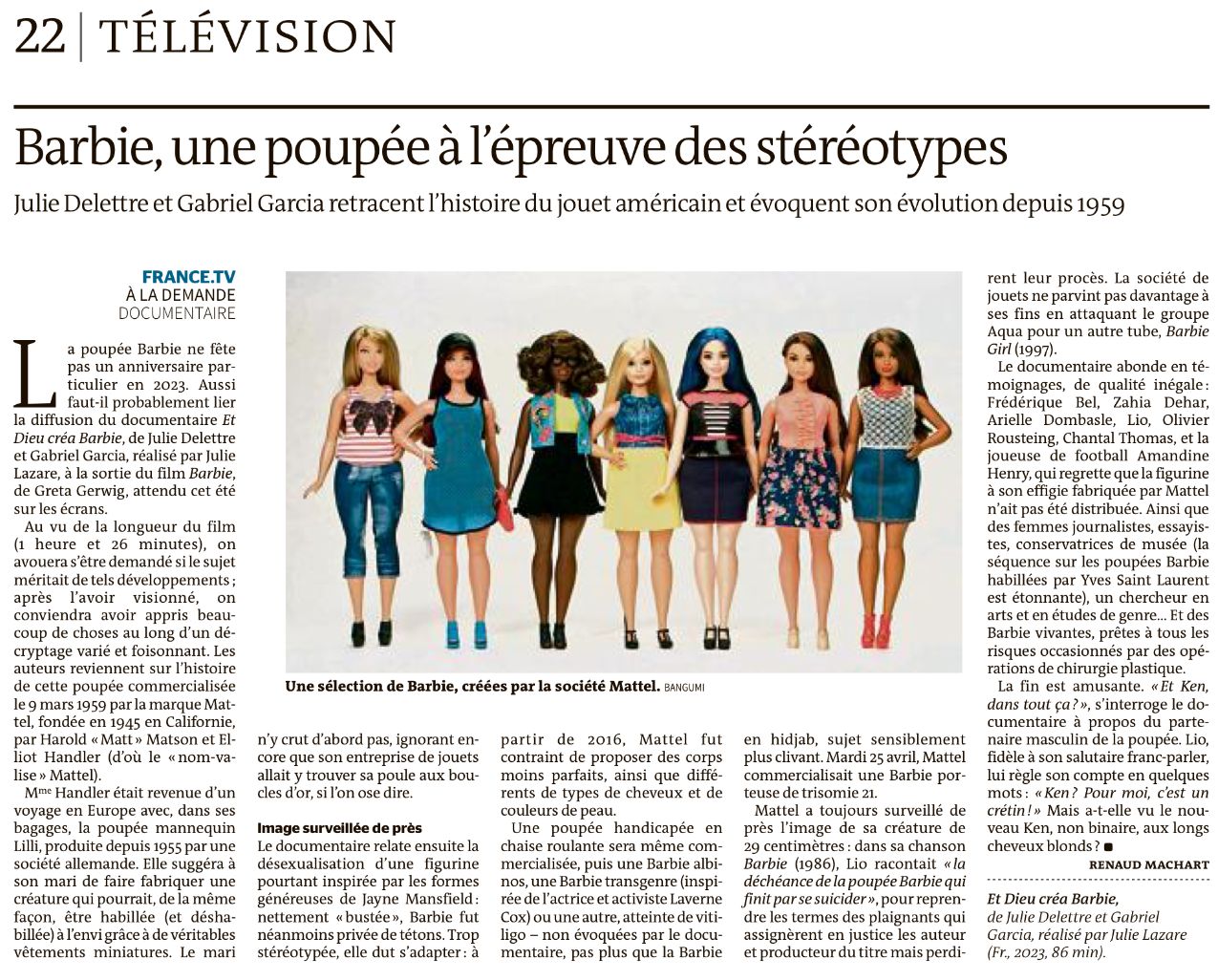
Jede einzelne Person hat Assoziationen mit dem Wort Barbie. Eingehen möchte ich jetzt nicht auf Klaus Barbie. Die Barbie war und ist als Puppe zu einer Kultfigur als Spielfigur mehrerer Generationen geworden. Dadurch hat die erfolgreiche Kommerzialisierung seit 1959 eine wirkmächtige Erfolgsgeschichte in den 60er und 70er Jahren erzielt. Zuletzt hat die kulturelle Öffnung hin zu „people of colour“, transgender und außergewöhnliche Charaktere den Gleichstellungsgedanken figürlich und spielerisch umgesetzt. Wenige Spielsachen erlauben eine solche Öffnung und Modernisierung über ihren „Lebensverlauf“. Die Barbie oder Der Barbie, wie auch immer, ermöglichen spielerisch Diversität zu erleben oder zu simulieren. So kann früh Stereotypen entgegengewirkt werden, wenn denn der Wille der Eltern oder Mitspielenden das ermöglichen wollen. Barbies sind schon längst ebenso zu Sammlerobjekten mutiert. Im Eingang zu IDENA (u.a. Spielwarengroßhändler) fand ich eine Würdigung dieses Bestsellers mit „Vintage Kleidern und Accessoires“ samt Hinweis auf Designer Entwürfe à la Karl Lagerfeld. Lernen sich zu kleiden, Stereotype erkennen und damit überwindend spielen können, das alles kann auch Barbie-spielen sein. Wo Sexismus nicht weit ist, kann aber Empowerment gewinnen. Und die Barbie hat Ken immer in die Tasche gesteckt. Das kann Hoffnung vermitteln. Die sogenannten sozialen Medien haben viel stärkere Stereotype geprägt und haben ihre Anhängenden viel fester im Griff als es eine Barbie je erreicht hat. Le Monde 2023-5-4 hat die Doku zur Geschichte der Barbie wohlwollend kommentiert.

Royal
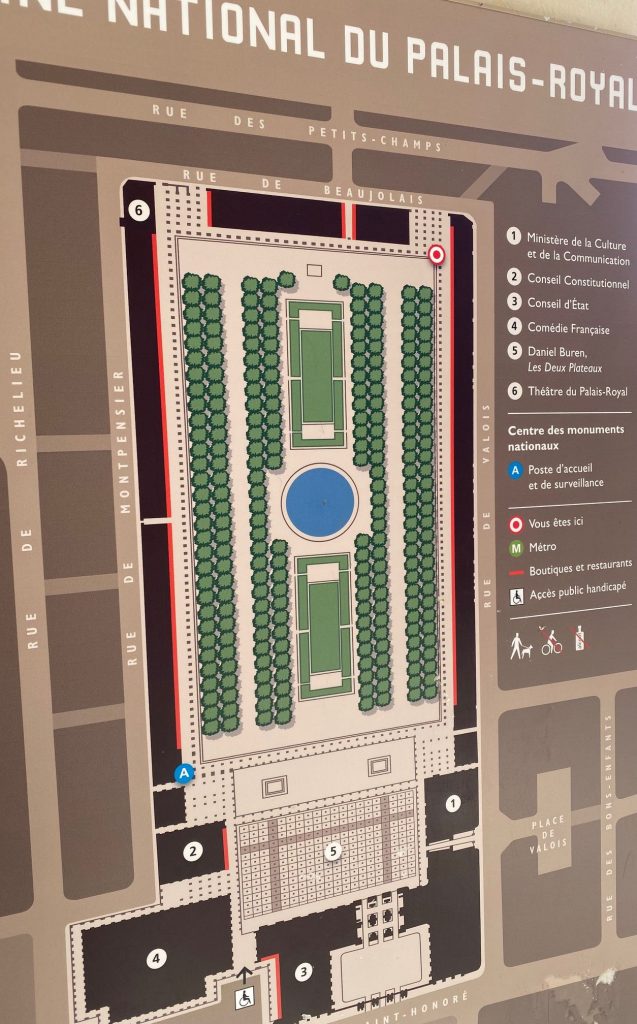
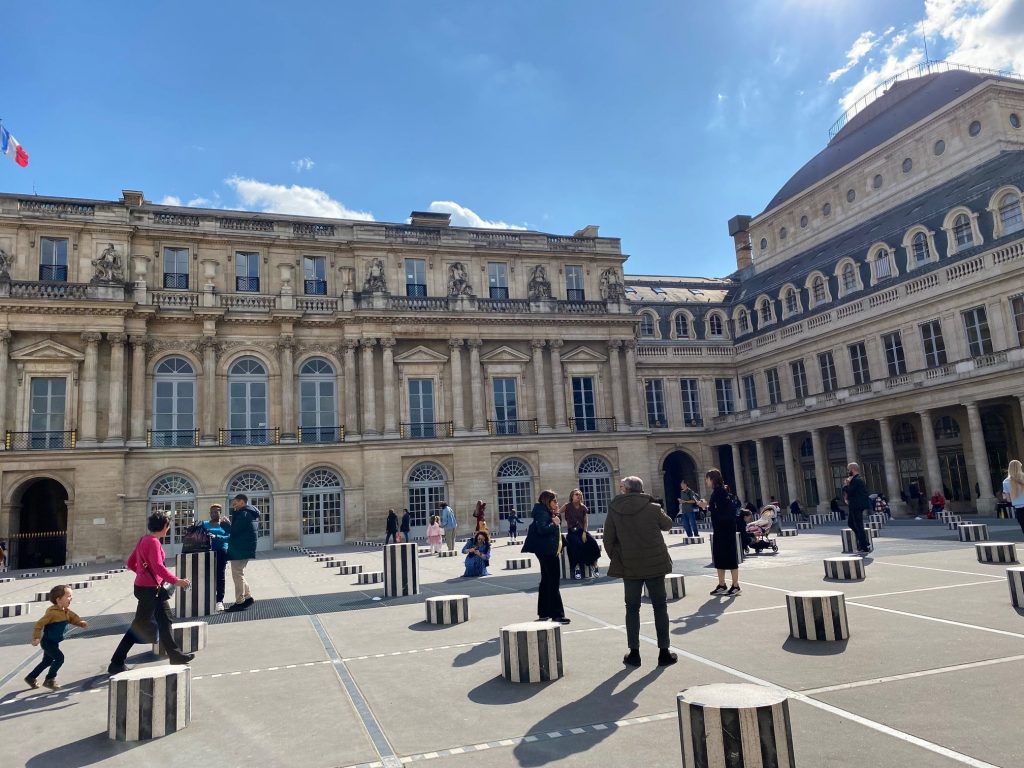
Im Palais-Royal, könnte man sagen, geht es noch immer recht „royal“ zu. Unweit vom Louvre lässt sich mitten in Paris fast noch etwas königliches Flair atmen. Unter den Arkaden oder im Garten weht Sommer wie Winter ein kühles Lüftchen und „Over-tourism“ ist noch nicht wirklich ein Problem. Auf engstem Raum findet sich viel Geschichte und Zeitgeschichte ein. Wie der Plan zeigt, haben sich dort einige prominente Institutionen angesiedelt. Neben dem Théâtre du Palais-Royal, ist die Comédie Francaise und das Ministère de la Culture et de la Communication dort angesiedelt. Conseil d’État und Conseil Constitutionnel ebenso. Viel Prominenz, dennoch ist eine überschaubare Polizeipräsenz vor Ort. Das war nur kurzzeitig anders, als der Conseil Constitutionnel über die Reform des Rentensystems zu urteilen hatte. Ein Schelm, wer denkt, dass sich die Theater der Nachbarschaft kurzerhand in den ehrwürdigen Räumen des Conseils verlegt hatten, oder umgekehrt?
Moliére, Hugo stehen noch oft auf dem Programm der Comédie francaise, aktuell jedoch wird Danton’s Tod von Georg Büchner gespielt. Passend zu aktuellen politischen Reaktionen auf den Straßen von Paris und darüber hinaus wird Revolution geprobt. Demokratie ist die politische Form, die Legalität, aber auch Legitimität von Politik am besten ermöglicht. Beides braucht Institutionen und Verfahren, die den Willen des Volkes entsprechend berücksichtigen. Lesen von Jean Jacques Rousseau und sein Konzept des „volonté générale“ bleibt dazu weiterhin erfrischend. Dann am besten wieder zurück in die Bibliothek BnF Richelieu gleich um die Ecke.
Bauhaus Haus
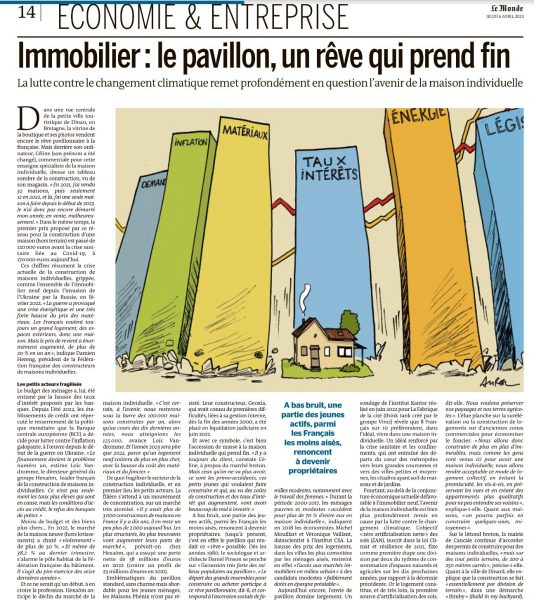
Zu den Ursprüngen des “Bauhaus” in Weimar gehört das Haus, welches die Feder von Georg Muche entworfen hat. Auch wenn das Bauhaus überwiegend mit Walter Gropius assoziiert wird, ist die Parallele von Georg Muche zu dem französischen Maler und Architekten Le Corbusier frappierend. Beide waren geprägt durch die eigene Malerei und Zeichenkunst. Die Entwürfe für Häuser oder Villen folgten Zeichnungen, die wiederum einer “cognitive map” mit Prinzipen der Konzeption und der Konstruktion folgten. Treu den Ansätzen des Bauhauses verwirklichte Muche bereits in 1923 sein Musterhaus. Modulare Bauweise, preisgünstige Erstellung, aktuelle Technologie, perspektivische Blickwinkel und Lichtspiel. Eine gewisse Parallelität zu der Villa La Roche und Jeanneret von Le Corbusier besteht nicht nur in der zeitlichen Dimension, sondern auch in dem Einfluß von kubistischem Spiel mit Perspektiven in Haus und auf das Haus. Die von der Malerei herkommenden Architekten entwerfen ihre Räume mit “The painter’s eye“. Vielleicht kommt nicht zuletzt daher der Traum vom Eigenheim, der so prägend bleibt in ganz Europa und der westlichen Welt. Geprägt von den 1910er und frühen 1920er Jahren war kostengünstiges Bauen eine wichtige Rahmenbedingung. Relativ kleine Grundrisse, modular erweiterungsfähig, preiswerte Baustoffe sorgten trotz Schwierigkeiten für rasche Realisierungsmöglichkeiten. Eine gewisse deutsch-französische Parallelität drängt sich auf. LeMonde vom 6.4.2023 beschreibt ausführlich das Dilemma des 21. Jahrhunderts. Der Traum vom eigenen Haus wird für die nächsten Generationen schwieriger zu realisieren sein. Rohstoffpreise, Grundstückspreise, Arbeitslöhne, Kreditzinsen schnellen in die Höhe. Der Traum vom Eigenheim bleibt ein Traum älterer Generationen oder der glücklichen Erben solcher Häuser, fast unerreichbar für Durchschnittsverdienende. “Gemeinsam statt Einsam” ist die noch gültige Schlussfolgerung, die bereits Henning Scherf formuliert hat. Die neue Herausforderung für den Bau war, ist und bleibt die soziale Frage, der wachsenden Ungleichheit entgegen zu wirken. 
Corbusier
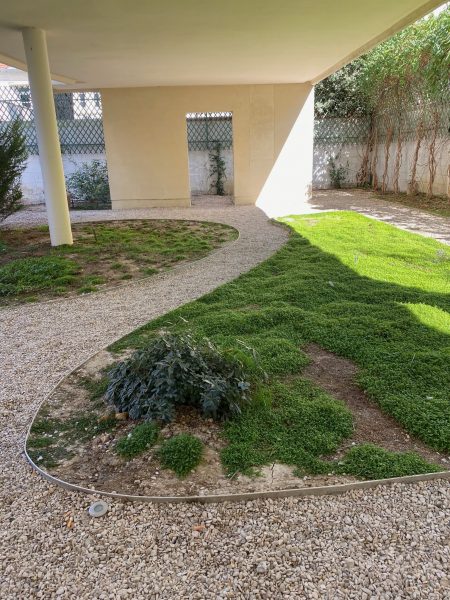
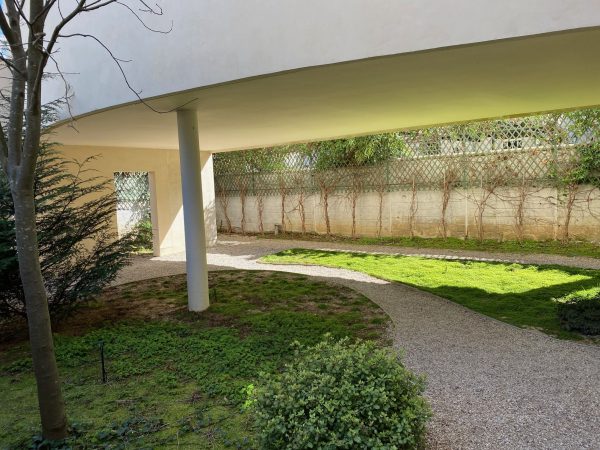
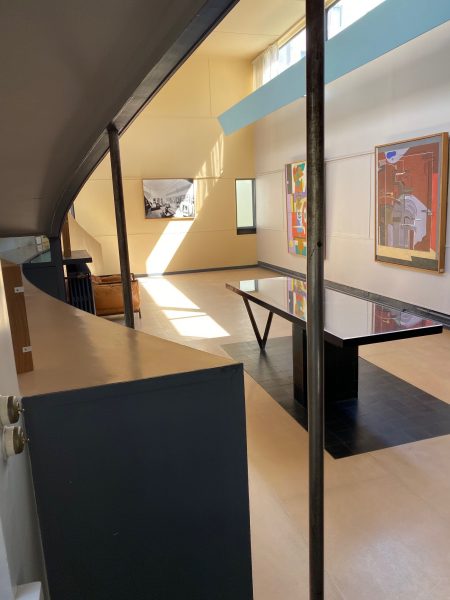
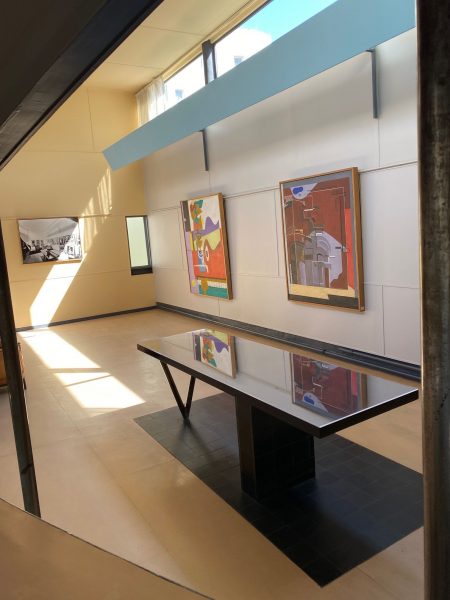
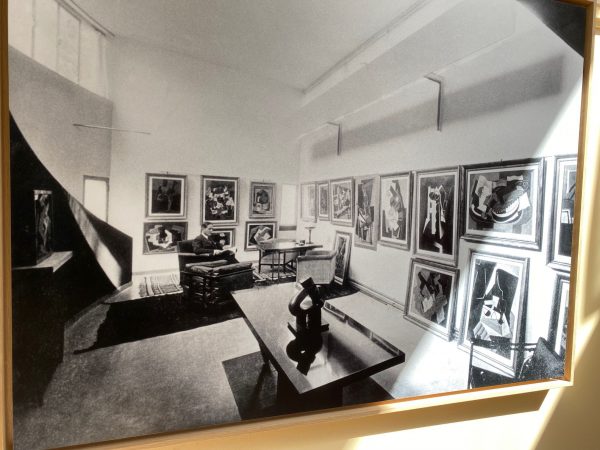
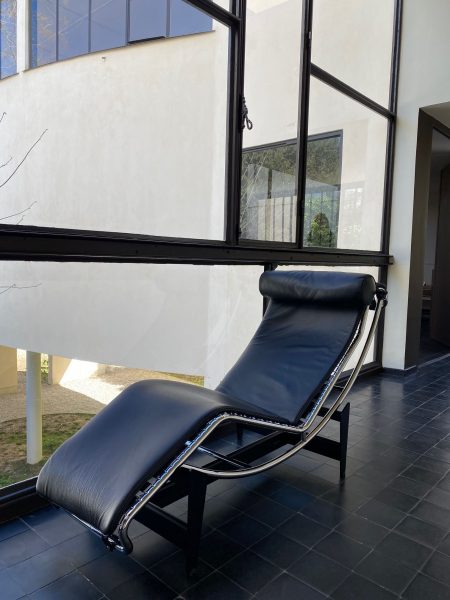
Le Corbusier (1887-1965) chose his artist’s name instead of his lengthy original name of Charles-Édouard Jeanneret at the age of 33 (in 1920) after having moved from Switzerland to Paris in 1917. He established a theory of modern architecture often summarised in his 5 major principles of modern architecture: 1. Pilotis as grid of pillars, 2. freeing ground floor design, 3. more open facades, 4. windows stretch horizontally, 5. garden, terrace on the roof. All these principles allow a more healthy living environment due to more light, less humidity in buildings and ease of circulation. The house Le Corbusier designed features surprising effects of light and lightness of living. “Les maisons La Roche et Jeanneret” date from 1923 and was completed in 1925. These purists Villas breathe thanks to the impression of abundant empty spaces despite relatively small surfaces. One Villa is designed for a small family, the second for a single person (Raoul La Roche) with a collection of paintings to be exposed in a small gallery. The focus on essentials of living, health, light, water, air and art combine to a relaxing and inspiring atmosphere. Despite many of his convictions to build affordable housing for many people, which received mixed success, his “maisons bourgeoises” in Paris and elsewhere remain masterpieces beyond the 1920s and the 20th century. Le Corbusier was concerned about tuberculosis. Today the corona-crisis has reached comparable health concerns. Architecture might react to the latter crisis in re-considering the lessons from the former. Relaxing in a Le Corbusier Chaise longue and meditating in front of a Picasso, Braque or Léger painting is indeed more than a little bit elitist. But copies of such images or your very own slide show or museum VR-clip in this surrounding make this experience more affordable and compatible with living arrangements for millions of people of the middle class as well.
Architecture
Architecture is all around us. However, we rarely consider the build environment as “conditioning” feature of our life. Architecture is contributing extensively to our perception of “social space” (Bourdieu). Inner cities, suburbs or spacious residential areas have diverse impacts on our perception of, for example, security, modernity, health or sanitary sensations. The corona-crisis has made it clear to most people that a healthy environment is a very essential part of our perception of comfort. Here the psycho-social perception of living and/or working space enters into the co-creation of housing people. Technology is a big driver of change in housing, urban spaces and rural imagination. In order to avoid corona infections a new culture of working from home for the masses become a health-driven imperative. Payment without contact, home delivery of meals, food, books, medicine have changed the living style of many people. Too little movement for our bodies has caused another silent pandemic of obesity. Enough reasons to rethink architecture from a sociological perspective on it. This probably starts with speaking of architecture as architectures. By this we mean to think of architecture from its social origins, functions, impacts and perceptions. Great historical examples of architects have implicitly or explicitly formulated a social theory of architecture or space as the basis of their “concrete” realisations. The sociology of professions of architects and the many construction-related professions needs empirical foundation beyond the cliché of socialisation as artist versus technician. Still recent forms of participatory democracy as part of urban and rural planning as well as realisations. Participatory individual or community housing are likely to stay with us. People want to get involved in co-creating their living and working space as their social environment. Architecture as social process and specific layer of the network society will be the new mantra. It has always been there, implicitly. Up to us to strengthen the social discourse on architecture.

Bundesarchiv
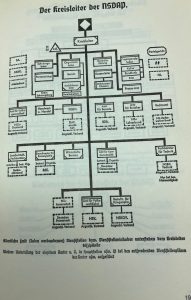
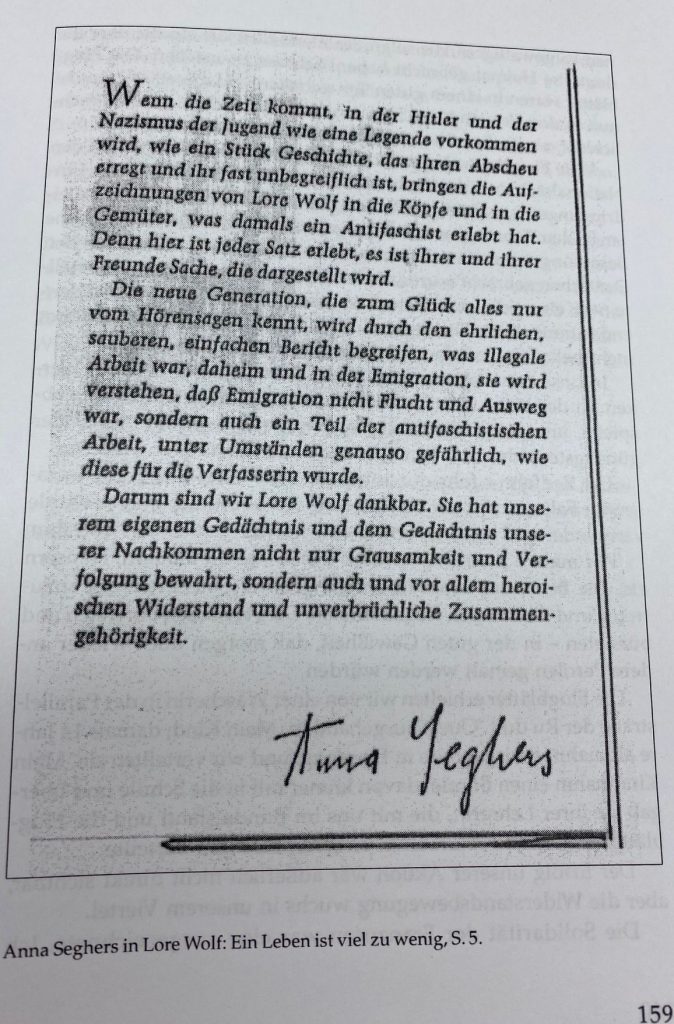
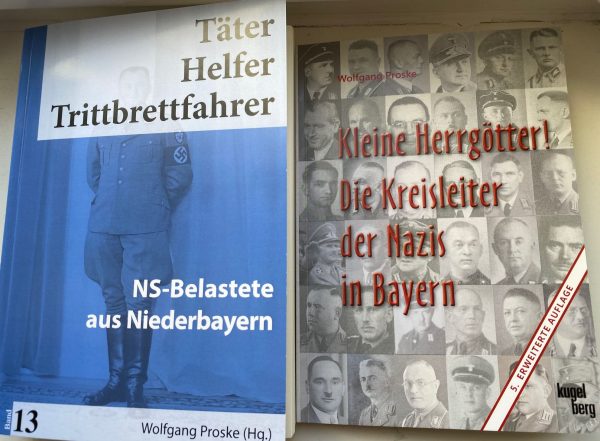
Bundesarchive gibt es kilometerweise. Auffinden und Zurechtfinden in Archiven ist eine Vorliebe von historisch Interessierten. Eine Soziologie des Berufs „Historian“ muss wohl noch geschrieben werden. Die Pforte, das Gelände und die Eingangshalle des Bundesarchivs in Berlin-Lichterfelde sind für einige einladend, für andere naja, belastend oder gar belastet. Architektonisch an eine Kaserne der 1930er Jahre erinnernd, ist ein gewisses historisches Umfeld eventuell eine Einstimmung auf eine bevorstehende Recherche. Das freundliche Personal hilft unterstützend über die Registrierung und die Orientierung zu den Beständen hinweg. Sofort ist, wie beim wissenschaftlichen Nachwuchs, die Eingrenzung der Forschungsfrage von Nöten. Die Findbücher, die sortierte Ausdrucke der elektronischen Datenbank „Invenio“ darstellen, lassen einen die Vielfalt der Archive erahnen. Eine einfache soziologische Fragestellung „Homogamie in der NS-Zeit“, also die Praxis von Heirat von Personen mit vergleichbarem sozialem Status, vor während und unmittelbar im Anschluss an die NS-Zeit, verlangt mehrere Datenzugänge. Konstruktion des Zugangs von Männer- oder Frauenseite. Zentraler Zugang geht zunächst über die Bestandsdatei NS 1 „Reichsschatzmeister der NSDAP“. Aus den nationalsozialistischen Frauengruppen entstand am 1.10.1931 die NS-Frauenschaft. Seit dem 29.3.1935 genoss die NS-Frauenschaft den Status einer Gliederung der Partei unter der Leitung von Gertrud Scholtz-Klink. Der Bestand umfasst 3,5 Millionen Aufnahmeanträge und ist in Berlin-Lichterfelde einsehbar. Neben den Mitgliedschaften sind auch besondere Vermerke zu den Gebäuden und Grundstücken der NS-Frauenschaft (BArch/NS 1 5.2.6.4) bspw. im Gau Berlin dokumentiert (BArch/NS 1 2504 und 724). Eine Lebensverlaufsstudie ist da schwierig zu konstruieren. Ein Geburtskohortenansatz dennoch eine interessante Möglichkeit, eventuell auf die Muster von Netzwerken hinzuweisen. Parteimitgliedschaften, Vereine, Verbünde und ihre Rituale wurden scheinbar der Propaganda untergeordnet. Eine These, die es zu beweisen gilt. Die interreligiöse Andrews Chapel auf dem Gelände (im Hintergrund) lässt dann vielleicht wieder zur Ruhe kommen. 
Goals SDGs
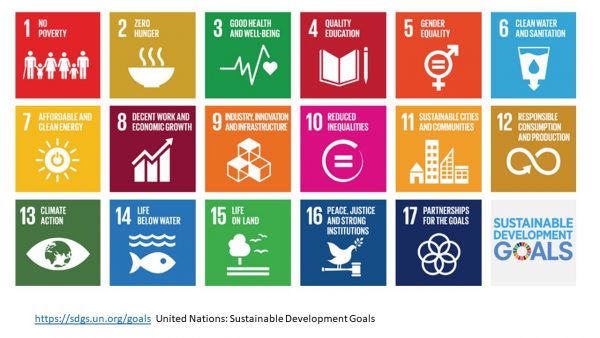
The Strategic Development Goals (SDGs) date back to 2015 for their enactment. The goal setting is a routine procedure for the UN and its subsidiary international organisations. This makes a lot of sense, because if you do not name the problems, you are unlikely to address them in a systematic fashion. Quantifying the goals is then a much more difficult task and that then already part of the ensuing discussion about idealist, illusive or realist goals. Most diplomatic exchanges focus on this goal setting and scheduled monitoring as well as more comprehensive evaluations of goal achievement. The SDGs comprise another strategic twist. Rather than concentrating on national governments, non-governmental organisations and businesses were encourages to actively participate in the implementation of the goals. After more than 7 years the achievements of intended improvements should become visible. Well, goal setting and monitoring over the last seven years is likely to reveal failure on several of the 17 indicators. Covid-19, disruption of supply chains, wars causing recessions and high inflation are major factors to explain failure. However, knowing the reasons of failure is a substantial part of improving in the next coming years. Returning to cooperation rather than confrontation could do the trick. Even after wars cooperation to organise relief is the only way forward to come closer to achieving the SDGs.
Bold initiatives like the Marshall-Plan for Europe in the 20th century made it possible to rise from the ashes. Countries that have been in ruins at that time, now have important roles as financial contributors to support other regions. The goals remain the same, the challenges as well. 
On Noise
The 3 authors Daniel Kahneman, Olivier Sibony, Cass R. Sunstein have published in 2021 the impressive attempt to sell statistics to non-statisticians. The grip on the topic: “Noise. A Flaw in Human Judgment” is a bit misleading. Even the German translation (“Was unsere Entscheidungen verzerrt”), in my opinion, is grossly misleading. The work deals with judgment, or arriving at a sensible judgment. Decision-making is only the next step with a lot of other intervening processes. The German philosophical term since the enlightenment period has been “Urteilskraft“. We are all more or less familiar with the notion “bias” in judgment. Me, originating from the Moselle, will always be biased in favor of a Riesling compared to other vines. In addition to this naive bias I may apply a more professional judgment on wine. Testing several wines even from the same small area from the Moselle valley and then repeating the tasting I might make a noisy judgment. “When wine experts at a major US wine competition tasted the same wines twice, they scored only 18% of the wines identically (usually, the very worst ones).” (p. 80). In addition to the previously defined form of “level noise, pattern noise and system noise” (p.77), we have occasion noise, when judgments vary from an overall statistical perspective.
Having received a second dose of a vaccination yesterday and having spent an unpleasant night my judgment for this review might be biased, because of impatience. So in order to reduce bias and variants of noise I shall repeat the review at a later stage. Let’s see what this returns. But for today, the Epilogue “A less noisy world” (p.377) appears rather odd to me. It is probably an illusion to believe that we can create a less noisy world, even with the best of wishes. The authors abstract from any strategic use of noise to influence judgments. The political form of choosing judges for Constitutional Courts in the U.S. needs to be dealt with. Noise in judgments is an important element, but strategic use of bias might be more influential to impact outcomes. Noise, when faced with a judge who has a reputation to be very tough in sentences might be overturned in an appeal court decision. There are plenty of procedural ways to overcome noise in judgments. I agree with the authors that you better know about the noise in judgments than ignore it. Awareness of random errors and noise involved in grading exams and recruitment decisions have determined many excellent “failures” to leave historic contributions to our world. In music, maths or literature some splendid talents probably have been impeeded at earlier stages of their life to make average or normal careers. Some of them left us with fantastic pieces thanks to the noise in judgment of others.
There seems to be an age bias in the tolerance of noise in the acoustic sense. Noise in the statistical sense has left a strong mark on me when I learned about white noise as error or stochastic process.
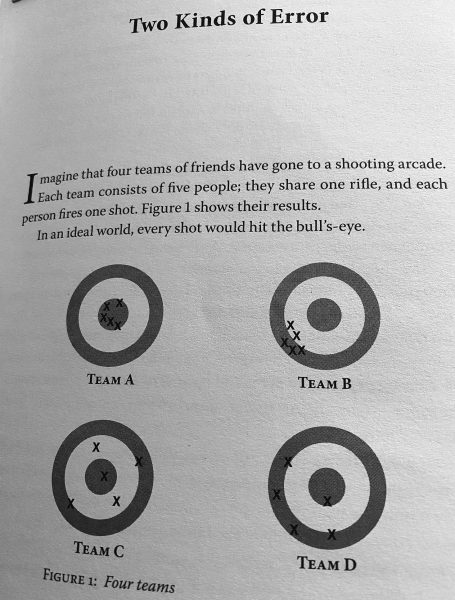
Image Kahneman, Sibony, Sunstein 2021. p3.
Patient
The pandorra’s box is wide open. With ChatGPT applications the discussion has started to use it for more medical applications. As for much research having assistants to support you in routine tasks in your research is a standard procedure. Now the medical profession is also discussing the use of ChatGPT for the boring and time-consuming task to draft reports. The first study, published in the Lancet Digital Health, evaluates in a preliminary form the patient-sensitive form of communication between clinics and patients. Beyond chatbots, which organise information from calling persons, the obvious application is the use of ChatGPT to draft patient clinic letters. The example in the study is the skin cancer reporting. Lengthy reporting back to patients of lots of “hot and cold spots” might be done by AI with sufficient reliability. All depends on the correctness of the data base, the screening and samples taken. The communication between clinic and patient can then focus on other issues. ChatGPT just like neuroflash has its strength in being able to control for the “level” of the language. In addition to the choice of the output language it is possible to use, as it is required in the U.S., an average understanding level of patients. In other words, easy language rather than medical expert language is an option or even a requirement. Anecdotal evidence and the PISA for adults studies show how difficult it can be to talk the same language even if you talk the same language. There is ample scope for improvement and ChatGPT or neuroflash for German applications of AI are prime candidates to fill this gap in clinic patient communication. Considering that our mobile phones (can) do already most of the scanning of skin cancer dots and AI is used in pre-scanning the images and recommends to consult medical expertise, the next step to improve health delivery seems feasible. Whereas the statistical analysis explains 62% of “median humanness”, the score of 37% of explained variance of median correctness is a surprise as the basis of the model to explain deviation from correctness should be as low as possible. Medical data, like many other data, is not simply binary. The way forward is most likely relying on a “human-in-the-loop” approach for some time. A limited human input might reassure many patients as well.
Source: Stephen R Ali, Thomas D Dobbs, Hayley A Hutchings, Iain S Whitaker (2003). Using ChatGPT to write patient clinic letters. Lancet Digit Health 2023 https://doi.org/10.1016/S2589-7500(23)00048-1 
Fukushima 12
12 Jahre nach der Kernschmelze im Atomkraftwerk der technologiebegeisterten Japaner stellt sich immer noch die Frage nach der Entsorgung der verstrahlten Reste und Kühlwassers. Laut eines Berichts und den veröffentlichten Bildern zu dem Kernkraftwerk Fukushima staunen wir über das weite verseuchte Umfeld und die riesigen Lagerstätten für den verstrahlten Abfall. Geothermie, Wasserkraft, Windkraft und Solarenergie könnten auf der Fläche sicherlich riesige Mengen von nachhaltigem Strom produzieren. Das hatte bis vor 13 Jahren niemand denken oder aussprechen dürfen. Heute nach 18.000 Toten und vielen Folgeschäden durch Krebs und geschädigtes Erbgut wird der Unsinn weitergehen. Da sind sehr starke Interessen am Werk, denen es nicht um Menschenleben geht. Atomkraft, koste es was es wolle. Die Einleitung eines Teils des verseuchten Wassers ins Meer ist wohl bereits erfolgt. Noch mehr wird folgen müssen. Über die Fische als Teil der Nahrungskette werden Menschen dann mehr Radioaktivität aufnehmen. Das war schon so mit den Pilzen nach Tschernobyl. Fukushima bleibt ein abschreckendes Beispiel weltweit, da helfen jetzt zum 12. Jahrestag ein paar Solarzellen als Trostpflaster wenig. (Bilder aus ARD Tagesschau 11.3.2023. Auch bei uns ist es leider schmal Glück gewesen, dass nichts Schlimmeres passiert ist (Link Radiobeitrag DLF 2023-4-17)
White
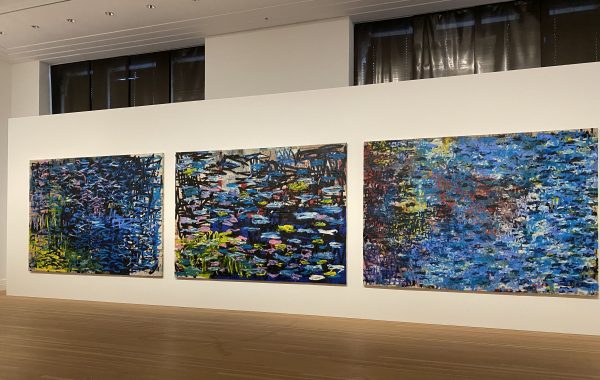
White is white, we may say, just like in the song of the mid 1980s “Live is life”. Raimund Girke focused his paintings around the notion of white. White is pure energy he writes on his webpage summarising somehow his activity between 1986 and 1999 before he turned 70 years old. The energy of white can be experienced at the gallery and arts centre of Alex Vervoordt near Antwerp. Set in abundant white and otherwise empty space the paintings of white reflect Girke’s idea that white is rest and movement. The developmental process of white in the work of Raimund Girke reflects for me a conceptual proximity to the artists’ group of “zero”. Light and shadows are parts of the same coin. White is the sum of all colours, not only in the physical definition of it. Hence, white can serve as reflection of space and transposition of movement.
The experience in the gallery of Vervoordt allows to come to grips with our own perception of white. It needs a huge white space around the paintings to get into the mood of, maybe, purity. It is by putting colours together that white comes into existence in the spectators view. In seeing white, we see many additions of other colours. That creates the impression of energy. Up to you to test it, maybe, virtually live. 
30s
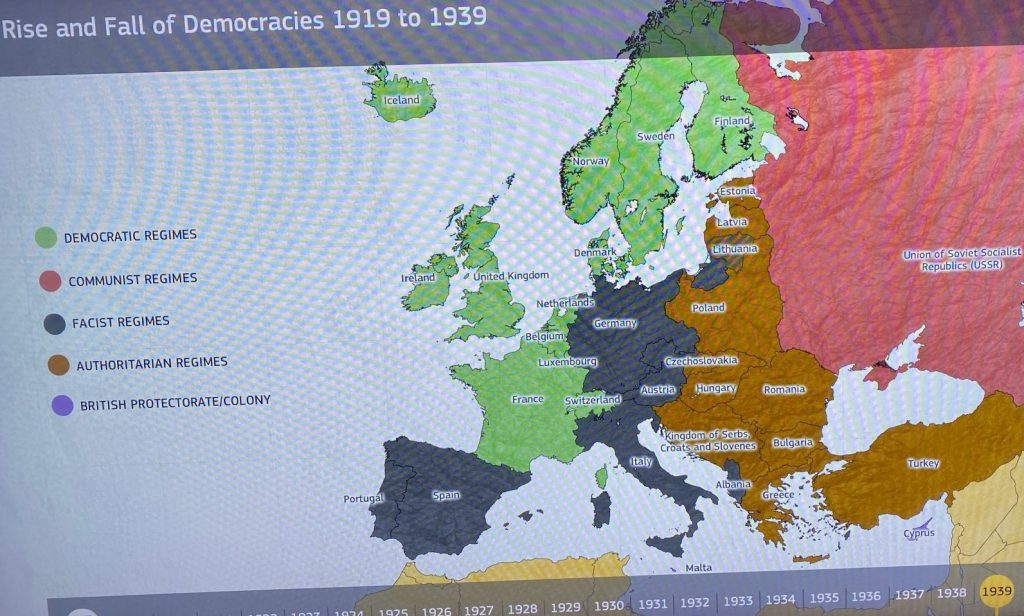
In retrospect the 1930s would deserve well the label of the disastrous 30s. In terms of human tragedy the 40s were worse, but the foundations for the millions of deaths through the Shoah and the second world war were enacted throughout the 1930s. My reading of the decade is dominated by the rising tide of hate throughout the 30s. The fascist movements in Italy and Germany were growing rapidly. From the entry number 185.729 (later committed war crimes in Ukraine) at the 1st of January 1930 the German NSDAP membership grew to 7.352.197 (Reichsakademie für Leibesübungen) on the 1.1.1940. This is still about 3 million persons less than at around the peak in 1944/45 of for example entry number 10.123.636 (later Foreign Secretary of Germany). The House of European History of the European Parliament in Brussels provides a good depiction of the spread of Fascism and dictatorships in Europe in the 1930s. Whereas Italy had turned Fascist already before 1930. Hungary was also under dictatorship already at the beginning of 1930. The rise of the German Nazi political party NSDAP turned out to be the most disastrous and devastating fascist movement and dictatorship throughout the 30s. The maps with timelines represented in the permanent exhibition in the House of European History reflect the spreading disaster for millions of persons. Many writers and social scientist had the correct apprehension and “apocalyptic imagination” (Pearce, 1971) to seek refuge early. But this turned out to be a not generalisable exit option for most persons concerned. Only few countries managed through early decisive action against the spread of fascism to escape from, better shield themselves, or fight against the rising tide. In the late 60s and the 70s youth at the time started to question the role of their parents in the rise of nationalist movements in Europe. An interesting reference for Canada is the teaching reform that materialised in the “box of the 30s” (Weinland and Roberts, 1972). The 1930s Multi Media Kit for teaching history contained photos (Guernica), radio clips, extracts from novels, but also recipes or recorded interviews. Make history speak and start with a “personal touch” to it. Avoiding the economic failures of the 1930s and the rising tide of fascists throughout the 30s are high on the political agenda 90 years later in the 2020s again.
Aphorismen L3
“Was für Aussichten würden wir bekommen, wenn wir unser Kapital von Wahrheiten einmal von demjenigen entblößen könnten, was ihnen nicht sowohl wesentlich ist, als vielmehr aus der öfteren Wiederholung zuwächst.“ (Lichtenberg S. 50). Die Wiederholung ist eine starke Lernmethode. Sie wird seit Jahrtausenden erfolgreich eingesetzt. Alle Religionen bedienen sich am liebsten täglich dieser Methode, um sich der Treue der Anbetenden zu vergewissern. Der Glaube im Glauben ist: Oft genug wiederholt ist gut verinnerlicht. Dabei bleibt ein Glaube ein Glaube, selbst bei ständiger Wiederholung. Lediglich so manchem Mensch erscheint durch regelmäßiges Wiederholen die Botschaft als verinnerlichte Selbstverständlichkeit. Wahrscheinlich ist es beruhigender, sich nicht täglich zu fragen, ob das 1x,2x,3x mal tägliche Einmassieren von Chemikalien auf Zähne und Zahnfleisch wirklich nachhaltig gesundheitsfördernd ist. Alleine dem Markt wollen wir das Thema nun auch nicht überantworten. Warten wir weiterhin auf die nächste entblößende, hoffentlich wirklich unabhängige, wissenschaftliche Studie dazu. Mit den Pestiziden in der Ernährung hat das bekanntlich nur sehr bedingt funktioniert. Wie schön, dass alle Jahre wieder Frühling kommt und die finsteren Tage hinter uns lässt. Wiederholungen lassen Routinen entstehen, die uns das ständige Hinterfragen ersparen. Rasch gehen wir über Fragen von Kindern hinweg: Muss ich heute in die Schule gehen? Dabei ist Hinterfragen von Wiederholungen ein wichtiges Lernen, dem Mitläufertum entgegen zu wirken. 
Art Un-Fair
The Brussels Art Fair (Brafa 2023) with its long tradition is certainly a major highlight in the world of art in Brussels. In view of the languages spoken at the fair, mainly French and Dutch, some English with here and there a word in Spanish or German, the international reach is probably still not at the level of before the corona crisis.
The availability of established, internationally recognized art over many centuries on the art market is remarkable. Whereas before the crisis speculators bought art to shield their fortunes from a high inflation and/or politically instable period, nowadays it seems to me, that some art is returning to the market due to the need for liquidity of speculators or risks of confiscation in case of dubious previous acquisitions or ownerships. Renowned galleries, of course, provide impeccable certificates or information on them, a tricky business in itself. Anyway, the tour on the fair is a “parcour” through the history of art, mainly through the Western or European arts across centuries rather than decades. Most persons will find splendid examples according to their preferences of art ranging from paintings, sculpture, prints or other artefacts. Beyond the impressive individual art work, the arrangements and “mise en scene” of art is another learning experience at the fair. Whereas most public museums are happy to make accessible as much as they can of their collections and archives, the private art market has another objective. Effective and convincing presentation of the artefact is likely to “enrich” the value of art work as well as the seller and the dealer. Technology allows great lighting and some otherwise “sombre” artwork becomes a shiny little piece catching eyes, hearts and wallets. For some visitors it works probably the other way round.
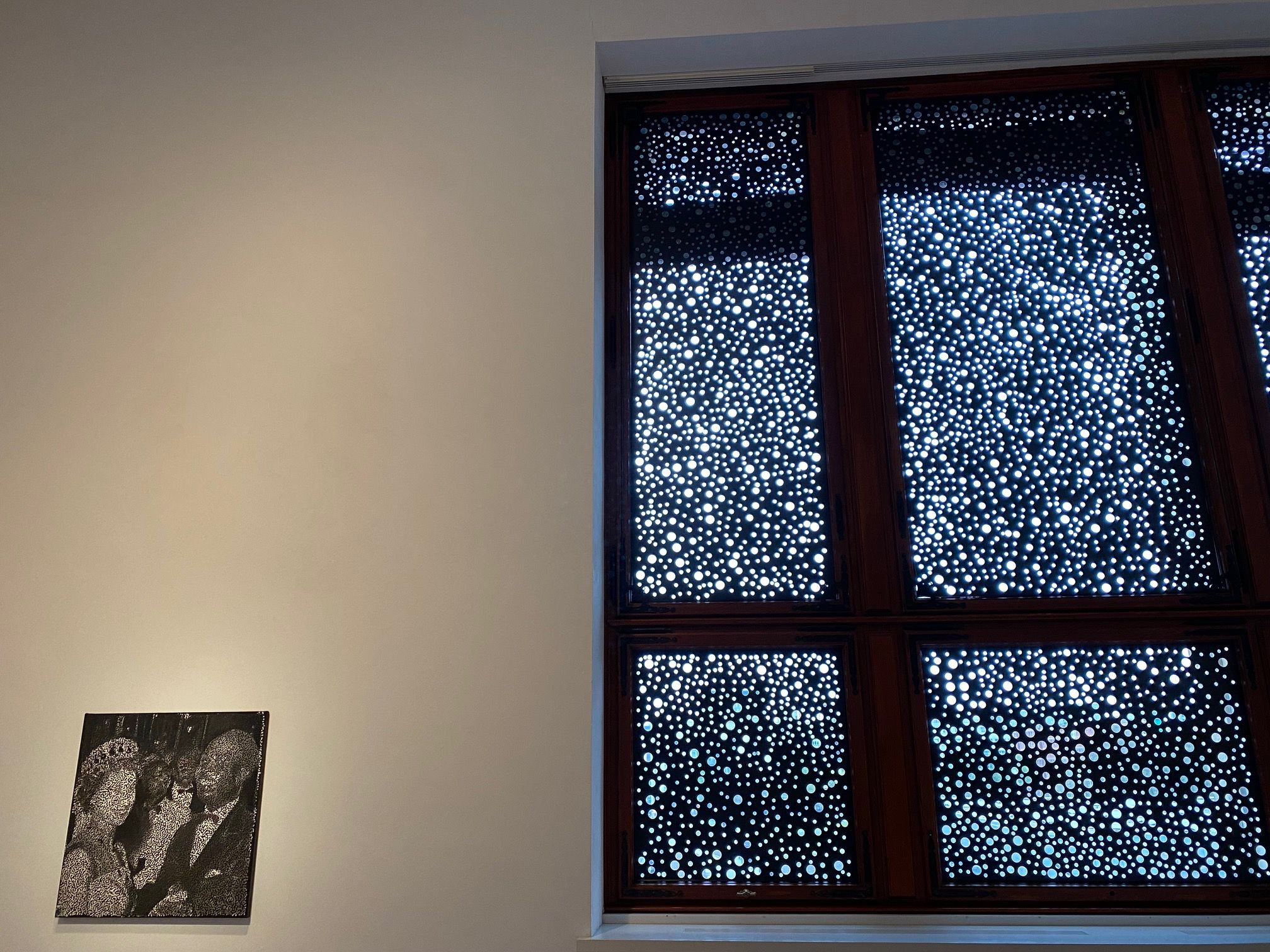
For persons overly stimulated by art, I recommend to close the actual or virtual visit with a look at the little bit cheeky artwork presenting Belgian chocolate next to royalty (Gallery Delaive, showing Peter Anton’s “Paradise Variety” next to Andy Warhal’s depiction of a Queen, see below or their Instagram presentation). A sublime moment to repeat the experience at home at moderate prices with your very own box of chocolates. At a price of 10€ each box you can enjoy roughly 2000 of them for the price of the art work. The question is: What is more healthy? Think about mental health as well. Alternative question: Art on a Fair is fair, unfair or fair traide? 
Linguistics2
Languages are simple once you understood the making of them. Take children, they learn the alphabet first, and use notions or images in alphabetical order, which you associate with this list of short words from A to Z in western cultures. From short words like “Cat” and “Dog” the learner moves on to longer ones like “Bird”, just 4 letters now. More advanced learners then use more letter words like “supercalifragilisticexpialidocious” invented for amusement in the Disney-film Mary Poppins. It sounds a bit like one of those never-ending long German words with lots of nouns just added on. This is exactly what we shall do in the following. A bit like in computational linguistics when ChatGPT is predicting the next word, we use algorithmic thining to form new combinations of an alphabetical list of notions. We start in the table below with column 1, then tell our spreadsheet to copy cells A1-01 to Z1-26 list and insert it in the second column just one cell below and insert Z2-27 at the place on the top of the list of column 2, which is A2-01. Then take this column 2 and repeat. Stop after, lets say the repeat counter is N=25.
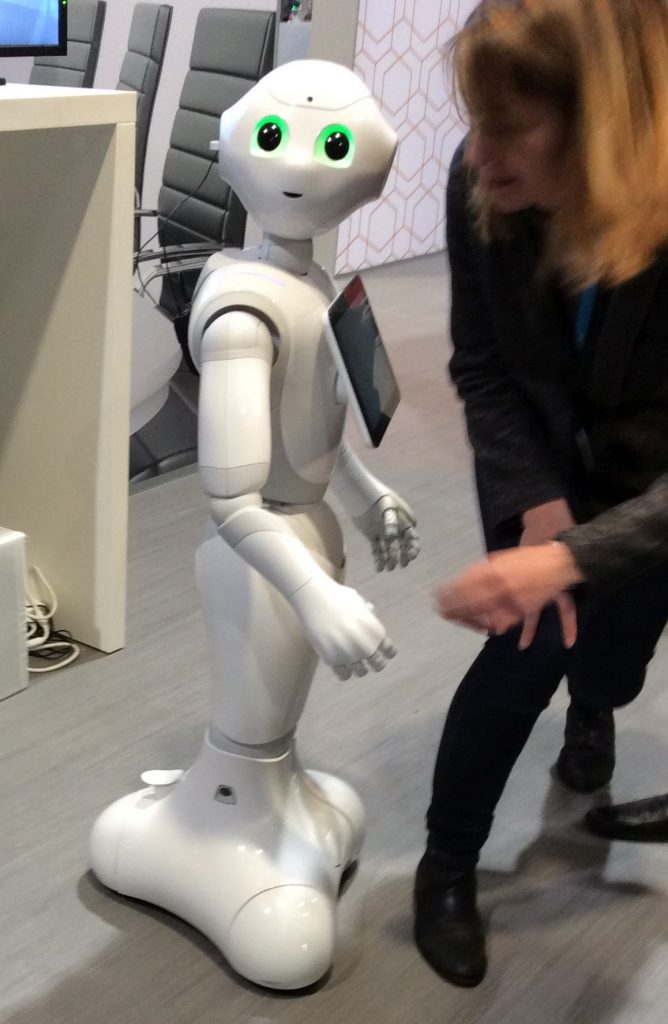
The first 2 words combination then is “Action Zero”. Take this, enter it into Computer Search and take the top entry. “ActionZero” is an actual company name proposing actions to achieve net-zero emissions. Following this, we produce a whole encyclopedia of pretty up-to-date knowledge from the WWW with hardly any humans involved anymore. We only need to cut out duplicates and nonsense entries. That’s what most editors or teachers are used to do. Knowledge creation might no longer be reserved to the human species. Oh my God – but the machine might eventually sort this word out as nonsense concept, too. The new mantra could be ZeroGod or let us try the reset like in GodZero. In other words we move from HamletMachine to our own KnowledgeMachine. 
knowledgeable
It is the role of scientists to ask questions. “The New Scientist” asked in one of its recent editions the fundamental question of what are the limits to knowledge? Nice, they provide 5 parts of an answer to the question. (1) According to Karl Popper, the falsification guy, knowledge is only valid as long as it has not yet been falsified. Hence, a limit to knowledge exists where we cannot falsify a hypothesis or theory, i.e. for example when empirical measurement is impossible. (2) Mary Douglas’s messy problems have been claimed as another limit, or as the New Scientist puts it, “when things are outrageously complicated”. Chaos theory, applied in climate modelling leads us to learn about the potentially huge impact of tiny, little things. (3) Our tools to look into the sky have improved since Ticho Brahe‘s time before the telescope was invented. Most of our knowledge about the universe has only be as accurate as the tools to capture radiation or to observe planetary movements. Therefore, the next limit arises from the fact, “when our best tool to describe the universe may be unreliable”. (4) “When we can’t directly experience something”, we might be unable to understand the concept of colour another person or animal is experiencing. Listening to colours is possible for some, but generally we would not accept such experiences without recourse to drugs, maybe. Bats use ultrasound frequencies, especially trained blind persons use “click sounds” for orientation. Dialetheism is another branch of the philosophy of science and knowledge, a bit hard to digest, as empirical evidence may lose its importance. Its all dialectic or what? (5) If “logic itself is fatally flawed”, what are we left with to construct as knowledge, beyond logical sequences or even causality itself is in question. The Condorcet paradoxon or the impossibility theorem shown by Ken Arrow is an example where it is impossible or very tricky to arrive at a logically consistent solution to a social choice issue. Our tree of science and knowledge grows, undeniably, every second even. Where are we located in this forest now? Thinking of a tree up-side-down shows some have roots even bigger than the visible branches.
Does the Panda bear in the Berlin Zoo have a cognitive map of the cage in his mind? Do they care? Only recently they even had a baby Panda bear there. 
Photo
Photography has captured our imagination for years already.
It is now a daily activity of many people to “capture their experience”, if not even their existence in some photographed way. Susan Sontag (1977) coined the phrase that photography “feels like knowledge – and, therefore, like power”. You are in a relation to the world. Taking the photograph in my view is the Mephistopheles moment. You are in control of the object taken by the camera. Arranging the scenery, waiting for the perfect moment, expression, light or colours is like mastering a situation, an atmosphere, an emotion. Photographs have the power to work as a document. Editing has become easy and pervasive with digital tools. However, it was always present in the traditional technical parts of shooting and developing subsequently in the dark room.
“to be taken” on a photograph is more like the Faustian moment of realising that you are manipulated, or at risk of being made use of, for some purpose, unknown to you at that moment.
Beware, a photograph is always just an image of an image. The photographer is the intermediate person using a specific technology to transform his perception or vision of (her/his) reality into another image of it, creating some form of virtual reality.
In addition to this twofold transformation, the third transformation is historically the technical development of the negative into the print (see below). Nowadays, this is the compression and editing into a specific format. Despite these transformations, a photograph is admitted in court cases as providing evidence of guilt or to identify an illicit act (excess of speed limit). Infringements on privacy are the rule rather than the exception. Who is that person sitting next to you, and at what time of the day?
I, personally, apply photographs often like note-taking for research to capture spontaneous ideas or associations, which await further interpretation or may serve (served) as inspiration.
Compared to photography, painting has been a more elite artistic practice for many years. Taking photographs has democratised the image-taking art forms. Instead of originals, many of us have collections of photos from museums around the world. We take “photos of photos” to reveal the world around us and reflect on values. The social construction of the world is directly visible through the process of taking, collecting and curating photographs. Construct your own world or the world will construct or deconstruct you instead.
Politicians (e.g. Angela Merkel), John F. Kennedy or historical figures, all had their defining moment condensed into one or several photographs, what have been famous paintings in art history before. Susan Sontag wrote 50 years ago: “… a photograph can be treated as a narrowly selective transparency”. The third transformation of developing and/editing, shown in the images below, explains what we might learn from this citation in a technical sense. Just as courts have to evaluate, whether a proof is admittable and contributing to finding the truth; viewing photographs is a balancing act between art and truth.
“Even when photographers are most concerned with mirroring reality, they are still haunted by tacit imperatives of taste and conscience.” (Sontag, p.6). Photographs document sequences of consumption. We should frame this as CO2 footprints in the 21st century. Restricting print to a few “best of” was and is necessary to reduce the dirty footprint of photography, particularly since photos have become a mass media as much as the preferred media of masses.
With photographs we certify our own certificates, for example in case of job applications or passports. We encounter “cosmopolitans accumulating photograph-trophies” in all instagram-able locations.
Taking photos is like a “friendly imitation of work” (p.9), you do something useful in documenting the images of a world in danger of being lost. We can give importance to otherwise forgotten realities, attach importance even immortality to something or someone of our choice. We make history through it or try to make it at least. “When we are afraid, we shoot. But when we are nostalgic, we take pictures.” (p.9) Sontag defines photographs as part of the repertoire of surrealism (p.77 ff), “to finding beautiful what other people found ugly or without interest and relevance …”). We are at risk to mistake photographs as reality and experience the original as “letdown” (p.147). The return to polaroid instant photography brings us back to a proclaimed authenticity of the orginal, unique moments, with supposed unfiltered not-edited images. The true moment of having had fun or joint experience without use of photoshop to add the missing member.
“I take photos, therefore I am”, has become the mantra of modern societies. We tend to ignore that we are taken on photos a million more times than we take some ourselves (video surveillance). It is a question of power in the end. Edit yourself or you become edited.
(Image: Prix du Tirage photographique BnF 2022 Laurent Lafolie, photo below). 
Writing
“Are you writing or what?”
New research on the fabrication of writing allows to debunk some of the received ideas about writers as living and drafting in a solitary space. However, the facts frequently show something different. In the journal of the BnF (images 2022), (Chroniques des la BnF Nr. 95 p.9 pdf-file) the BnF makes transparent the creative cosmos of Marcel Proust (Exhibition closed). From correspondence and other influential images, we learn about the “fabrique de l’oeuvre”. Far from writing his books from front to end in a linear fashion, Proust drafts “isolated sequences which he mounts, demounts and regroups sometimes even years later. These clippings of text are arranged by him like a patchwork, a collage rather than following a linear progression. Just peeping into the writer’s studio, drafting style and “paperoles” is fascinating. What a mess, some would say. What a huge imaginative space he has been living in, despite being reported to draft most of his work while actually being in his bed (Lire Magazine 12-2022). Beds are not always for sleeping, only. Today’s start-up enterprises frequently start from home, a century ago Proust demonstrated a lot can result from a very tiny physical space, but an enormous space in mind. 
Syntax
Syntax is just one of the categories of linguistics. Carl Lee Baker (1989) wrote a whole book 500 pages on just English syntax, can you imagine. I like his modesty in the introduction stating that English syntax is just a subfield of linguistics (p.12). Other languages have different structures, some might be very different from our ways to communicate even. The ways how animals or plants communicate is an exciting subfield of linguistics, psychology and biology (Carrie Fidgor, Pieces of Mind). The SPO structure of sentences is only one simple way of constructing sentences. Syntax is much more complex. The sociological aspect of linguistics and syntax lies in the “acceptability judgements”, which are present once we establish rules and sort phrases into correct or incorrect sentence structures. Norms and standardisation as well as authority to decide on correctness becomes an issue. Countries used to many dialects or multilingual populations are confronted with these issues on a daily basis. Linguistics as basis of communication is continuously present even in the mental structure. Bilingualism, tri-lingualism and their effects on minds, competences, behaviour, culture and societies are own thriving research fields. Building a sentence or a phrase, following Baker, is built around a head and their complements. Such minimal phrases are comparable to what we coin in a simplified manner the subject-predicate-object structure of a sentence. The definition of the nucleus of the structure of a sentence is also about conventions and acceptability. Staccato speech and rap-music are examples of forms of speech, which are often considered beyond the normal. Computer voices are becoming more normal as we are faced with chat bots all around us now. The image below reflects the simplified “representation of syntactic structure” (p.48 The Cambridge grammar of the English language 2002 review here). To play around with “Clause”, let us analyse the clause: I bought a shirt; I wonder what I bought. You know what I mean Klaus, it is a clause, or is it Dady gone gaga = DADA? 
Giselle
Once upon a time, not at the Opera de la Bastille, but next it, in a small theatre called Théâtre de la Bastille, the fairy tale of “Giselle…” was performed. The world-famous ballet Giselle (Karlsruhe Programmheft) is still amongst the most frequently performed magic piece of classical ballet. What is it about? In short: sex and crime. Yes, and it sells well.
Francois Gremaud tells the classic story of excitement, love, deception, death, regret, haunting and memory in a concise and witty fashion. The exemplary dancer is at the same time the narrator of the story as well as the critic and art historian accompanied by a 4 musicians strong orchestra. The educational piece with a “womanxplainer” on stage is great entertainment, full of references, why it is still okay to like the piece in spite of its fantasy-loaded content. Modern dance (Cunningham, De Keersmaeker) has decoupled or emancipated movement from music. In classical ballet, at least, you still know what comes next and this is aesthetically appealing for most people. Besides Wilfried, no he is not part of the “Wilis” (could be an interesting variant), but in the ballet there figures “Hilarion”. He is not hilarious at all. Splendid entries are from Myrtha (close to Martha, but not quite the same) and, of course, Giselle, when she leaves her tomb and turned into a “Wili”. Then there is Albrecht in a pas de deux with Giselle, swirling between earth and space. Aldi dances like mad on impulse from Myrtha, but Giselle vanishes nevertheless. End of story, or is it? Giselle is a Wili and Aldi is the wally. Maybe the story could be retold like in the film “Billy Elliot – I will dance”, which is an emancipatory tale where dance is the liberation rather than part of the dooming fate.
Francois Gremaud with the astonishing performer and choreographer Samantha van Wissen have created a version of Giselle that is musical, aesthetic, funny and critic. For those who enjoy an epic theatre version of Giselle including its “alienation effects”, referring back to Berthold Brecht, will want to read the script as well, kindly distributed as a gift after the show. 
Relation
Several inputs from logic will assist us to establish relations between 2 objects, 2 subjects or 1 subject and 1 object as in simple relationships to form sentences. The most obvious is A = B. The most common, depending on definitions, A is not equal to B, hence A >B or B>A. Medieval logic adds the consideration of consequences and suppositions to relationships. A determines or leads B. We might suppose that A is a precondition for B. Logical arguments often attempt to explain. Mathematical proofs chose ways to deduce or induce, whether a statement is true or false. To reduce the number of lines to explain a theorem is a mathematical virtue, just like in a game of chess to find a check and mate in fewer moves.
Leibniz increased the repertoire considerably. In geometry objects are parallel or in the infinitesimal calculus they approach each other without ever reaching each other. With the art of combinations he describes a language than contains groups and elements. The binary revolution, to express numbers, letters, images in form of pixels as multiple assemblies of 0 and 1, has revolutionized our potentials. Beyond these determined relationships there are stochastic relationships, they happen more or less likely. The centre of logic relationships remains deductability = to deduce, consistency = to consist of and completeness = to complete (Encyclopedia Universalis 14, p.653). Time adds another dimension to our concern to exemplify relations. A pre-empts B, or B follows A in time, but not in respect of deterministic logic. Additionally, locations in space of 2 objects allows us to imagine additional abstract forms of relationships, artists play around with this continuously. Some artefacts have created fantastic new ways to challenge our learned ways to consider relations. Last but not least, sound has contributed to how we perceive relations. To superpose, transpose or dissociate relations leaves different emotions. Relations are all around us. They certainly link subject and object in a sentence in multiple ways, copying or imitating nature. For further reading: HERBERT HOCHBERG; KEVIN MULLIGAN. Relations and Predicates. Frankfurt: De Gruyter, 2004. ISBN 9783110326536. Disponível em: https://search-ebscohost-com.kbr.idm.oclc.org/login.aspx?direct=true&db=nlebk&AN=603683&site=ehost-live&scope=site. Acesso em: 23 jan. 2023.
Deconstruction
Deconstruction is a powerful tool or even method. Beyond imagineering, deconstruction in the literal sense means take to pieces. In most cases a physical object consists of several objects or parts. By deconstruction we attempt to understand the whole object as the sum of its parts. Before a new product or design is created, many scientists, engineers and artists start to deconstruct existing artefacts. Understanding how the object is assembled, for example, allows you to play around with pieces and maybe come up with an alternative way of constructing the object. The architecture of “deconstructivsm” has left us fantastic buildings. In furniture design there are also nice examples of deconstruction. Paris is a good place to study deconstruction (Explained), perhaps many still read Derrida there. It is a fruitful method beyond its engineering sense for example in law, literature or many other social science disciplines. If you are not mad yet, visit the MAD in Paris to see examples of deconstruction or construct your own deconstruction. Both have a dialectic relationship to each other anyway.
Subject/Object
The 26 notions in alphabetical order may determine a subject and/or an object in a sentence. This is just the simple grammar of a language. Add a verb and we have a full sentence subject predicate object (SPO) as they say in English. In the philosophical sense the subject-object relationship is a bit more complicated. Beyond Aristotle’s objectum and subjectum, we think of Descartes “Cogito ergo sum” as the definition of the self as subject, rather than being an object of God’s will and creation. Kant then forms the couple of object and subject in the sense of objectivity and subjectivity. Pure reasoning is the abstraction of subjectivity to achieve an interpersonal objectivity. The master of dialectic thinking, Hegel, conceives an object as objective conscience and a subject as particular subjectivity. Having defined the extreme points of the spectrum makes you think about a joinder or the synthesis. Freud adds the object as result of sexual impulse. Wittgenstein then introduces a kind of hierarchy into the S/O-relationship. Objects become ultimate elements and indescribable in content as kind of basic notions. This follows the mathematical view of objects as indirect description of a mathematical object through axioms stating the basic principles governing the object and then deduce the logical consequences. Gödel’s incompleteness theorem , however, rejects this claim. This is the basis of, for example, algorithmic testing whether deductions are true or false. Condensed mathematics has relied on this testing approach as well.
A pragmatic perspective is added by Marie Gautier (p.719 “Notions”). If we want to reach an objective, we shall need others to realize it. By way of this imagination the S/O-relationship turns into an interactive relationship. Following Habermas, we might claim that the S/O-relationship is also a part of communicative action and therefore the discourse ethics. The definition of who or what is object and/or subject needs open discourse. The arena is not only the parliament, but larger audiences or the world wide web. Beware of the Luhmann systems theory, whereby for example the definition of what is a technical object is, is left to technicians, who then ponder in their self-reflective, reflexive circles amongst themselves. Techniciens in their circles tend to neglect the prime importance of society and laws to determine technological choices. Language with its constituent elements of subject, predicate and object (SPO) is one example of a knowledge system build on axioms or negotiated conventions for grasping and exchanging about phenomena. Nice, now we play around with it.
SPO => OPS. 
Invent
The nice thing about mathematics is that it asks you to invent new ways of thinking. Numbers, percentages, Venn-Diagramms, infinite series etc. have accompanied us at school. The story is far from finished. Under www.spektrum.de there is a nice introduction to the new theory of numbers, called “condensed mathematics“. Their lecture notes (pdf-file) are a tough read. My take home message simply is, the invention of new approaches to old problems, providing more general answers and/or unifying different fields are particularly rewarding. Maths is a fascinating discipline. You study abstract problems, hardly anybody else has had so far, but you are not considered strange as for example some artists at times. Imagine your new world in music, painting or the arts in more general terms or try to become a mathematician. Finding ways to communicate about your predilection and invention is the next challenge. Many scientist, inventors or artists found very few people to talk to about their new stuff. The internet and social media have changed this. Persons with interests or findings beyond the mainstream find colleagues in other parts of the world. Lighthouses from far away become visible through this. Navigation of other possible worlds turns into reality. These specialisations might turn out to be generalisations. The stretch between indepth knowledge and the polymath approach shall accompany us for a long time. Unified theories in several fields are indeed a step to be able to have an oversight about several, but not all fields. Polymaths probably start with condensed maths to move on to other fields of imagination. There is always a risk to get stuck somewhere on the road in a topological space. 
Sound
Each society has its sound. Each person lives in her/his sound cloud or bubble. Cities are generally noisy places, Lots of traffic, mobility and moves leave sound bytes all over the place. Each city though has its own sound and spectrum of frequencies. Libraries, museums, places of worship, all build their special atmosphere due to specific sound design. The Singing Project by Ayumi Paul (Gropiusbau Berlin) created its own sound environment. Reminding us to consciously design our exposure to and experience of sound is welcome. John Cage started to build his very own language of music, similar to Schoenberg, from scratch. His writings Empty Mind explain his view and techniques a bit. Starting with silence and the time between sounds we recreate our own sound experience. Notation of it comes second in place. only for the potential to repeat the experience notation is useful. But it is only one form of conservation for posterity. Noise canceling is the amazing tool from sound physics which allows you to neutralize noise by adding specific frequencies to noise which cancel out each other. Design your personal sound experience beyond noise if you like. Nature recordings or familiar person voices allow you immersive experiences when and where we want. your home sound can be everywhere nowadays. 
ABC Overview
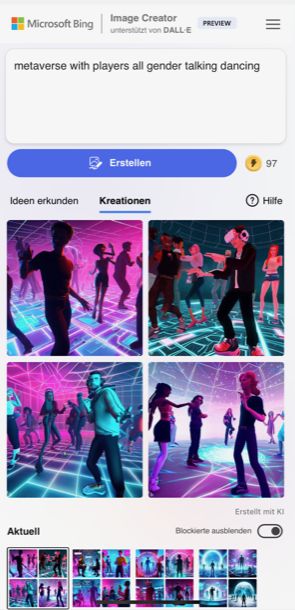
Digital formats allow flexible organization of lists like alphabetical lists. Opening several pages, at the same time, of the same dictionary is easily feasible. In science the proceeding in this way is coined the inductive method. The entries of each letter stand on their own, but jointly they form a whole set of topics. Random choice is facilitated this way. New sequences or preferences of topics are the way forward. Alphabetical order or chronological order are only one out of many variants of possible sequences. Chose your own 3 favourite topics, maybe. On a big computer screen you might even organize your own poster – beam it on the wall – walk in the virtual exhibition of the metaverse with it. It could feel like you are strolling within parts of my brain. Frightening? For whom? The universe is within us.
| action | health | optimism | value |
| balance | imagination | policy | war |
| corruption | joy | question | xeno |
| democracy | knowledge | repairing | yinyang |
| enterprise | law | society | zero |
| freedom | memory | time | |
| god | nature | union |

L for Law
Contrary to a popular misunderstanding. Law is not boring. The history of ideas is full of exiting projects based on laws. Starting with the foundation of empiricism, i.e. the comparison of laws governing the different Greek city states pioneered by Aristotle. Considering law from the perspective of legislation gives it an actionable touch and makes it more exciting to many persons. Contrary to a static perception of law, laws can be changed and are subject to interpretation continuously by courts and judges. The fascination with law might start with the philosophers of the French enlightenment like Montesquieu. “De l’esprit des lois” – explains already the need to look behind the literal text of law. What is the spirit of law, becomes the driving question. Not only the categories of countries like republic, monarchy and despotism were argued by him, but also the separation of powers into an executive, legislative and judicial power is his original contribution. These principles govern the German “Grundgesetz” and are a common understanding of the founding states of the European Union as well as a potential breaking point.
A sociological perspective on law is formulated by Niklas Luhmann (short intro in D) and highlights the danger of laws as a self-referential system. This dominated by experts who develop the system further independent of the concerns and understandings of wider society. In order to understand this concern, it is probably useful to think of climate change as an urgent problem. Bio-diversity has for much too long not been of much relevance for legal founding principles of our constitutions. In the same vein, women judges or diversity in the legal profession is a point of concern. Majorities versus minority rights create intrinsic tensions in law, legislation, execution and interpretation. Analysing the half-life of laws is interesting, i.e. how fast do they really change or get abandoned altogether. Equality in front of the law remains a thorny issue. It is a huge issue when moving from law to justice as primary concern. The most interesting point is the view of law as a changing matter, hopefully for the better, but this is another question altogether. Reveillons-nous l’esprit des lois ! (pas seulement au Reveillon). 
K for Knowledge
Readers of the sociology and/or the philosophy of science or knowledge have a hard time. Each discipline is evolving at such a high speed that is terribly hard for humans to follow more than 1 or 2 fields. Perhaps the choice of Karma instead of knowledge would have made it easier here. Alternatively, in German it is easy to find many nouns starting with a capital K. Kapital, Krieg, Kritik or Käsekuchen would have been popular, I guess. Soon I shall open the comments for suggestions for additional nouns, as part of the empirical “swarm knowledge strategy” rather than the theory-driven deductive method applied in knowledge generation on my side so far.
But wait, we are already in the middle of the unsatiable quest for knowledge. On a meta-level we would deal with the multiple ways to acquire knowledge and create new knowledge. Artifical intelligence is certainly one of the hypes at the moment. New data and new combinations of data drive us forward in the expanding universe and knowledge space. We have witnessed the disappearance of the thick printed encyclopedia in most households, replaced by specilised digital dictionaries or the network society’s shared knowledge base of “wikipedia“. Knowledge is linked to the history of ideas and Peter Burke is a prominent figure to rely on as a reference in this field. 20 years after “A social history of knowledge: From Gutenberg to Diderot” he published the much acclaimed: “The Polymath. A cultural history from Leonardo da Vinci to Susan Sontag” in 2020. To synthesise across the many “monsters of knowledge” over centuries is a daunting task. I like quotes like the one from Leibniz (p.77) “the horrible heap of books that is constantly increasing” and then his own continuation: “Printing, once viewed as a solution to the problem, had become a problem itself”. The whole section is devoted to information overload. Fragmentation of knowledge into disciplines and, much worse, the manufacturing of false knowledge create new challenges to knowledge. Maybe transforming the term to “knowledges” rather than knowledge is likely to capture better the differences between artificial knowledge, created by artificial intelligence and specialised algorithms, and human based knowledge. In knowledge storage we have lost the race with computers, but in deciding what are promising combinations between different fields of knowledge, we are still a wee bit ahead of the machines. Klara tell me, where is the exit, or your synthesis of the whole lot. Meanwhile I continue to read – what? books and the like.