
In vielen Fällen stimmt die eigene Sichtweise nicht mit der Sichtweise von anderen überein. Das kann sich bei Personen bis hin zu Persönlichkeitsstörungen auswachsen. Bei ganzen Gesellschaften, Kantonen oder Regionen führt die verzerrte Selbstwahrnehmung zu gewissen Befremdlichkeiten oder Entfremdung. Die Lokalpresse der Südostschweiz zeigt zwei fröhliche BauarbeiterInnen, die gemütlich auf ihre Baustelle zuwandern. Weit gefehlt. Der Helikopter hat längst die Hauptarbeit übernommen und diese BauarbeiterInnen (à la Heidi) gehören einer Vergangenheit an, die längst untergegangen ist.
Aber Zeitungen verkaufen sich lokal wohl besser, wenn sie an dem idyllischen Bild der Vergangenheit als Selbsteinschätzung und Selbstvergewisserung festhalten. Die Fremdsicht kommt eben auch nur von Fremden. Die Personen zahlen letztlich gerne für den Lift, um das Naturspektakel der Alpen auf 2000m noch eindrucksvoller erleben zu können. Dabei wäre mit Bussen und einer kleinen Bergwanderung dasselbe Panorama bei höherer Endorphinausschüttung zu erleben. Ob es für das Transportieren der Mountainbikes im Sommer nach oben und mehr Skifahrenden bei weniger Schneegebieten im Winter eine solche Investition benötigt, die noch mehr Grünflächen verschwinden lässt, bleibt äußerst fraglich. Der Kampf zwischen Mountainbikern und zu Fuß gehenden Personen wurde bereits durch getrennte Strecken entschärft. Zwischen den Menschen, nicht aber die weitere raumgreifende Nutzung der Natur. 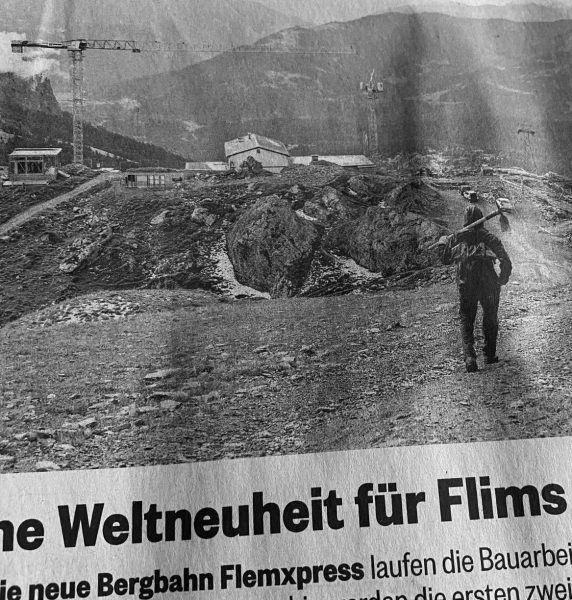
Geologie
Mehr GeologInnen braucht das Land. In der Schweiz beunruhigen derzeit zunehmende geologische Risiken. Der Klimawandel lässt Permafrost in den Höhen schmelzen, der jahrhundertelang Gestein zusammenhielt Gleichzeitig sinkt die Schweiz, nicht die Aktienkurse, selbst die Credit Suisse ist bereits untergegangen, aber rein geologisch, nüchtern betrachtet (NZZ, 2023 „Die Schweiz sinkt“). Das verlangt nun doch einige gründliche wissenschaftliche Untersuchungen. GeologInnen messen bereits mit unzähligen Messstationen die Bewegungen der Erdkrusten. In der Schweiz lässt sich sicherlich mit dem zunehmenden Abschmelzen der Gletscher und der Veränderung der (mehr) Regenfälle statt Schneefälle in den frühen Wintermonaten eine neue Gefahrensituation aufzeigen, nicht nur für den Tourismus. Die üblichen Reflexe: mehr Investieren in Schutz und neue Versicherungen wird alleine nicht mehr helfen. Biodiversität auf den unteren Skipisten ist eh Fehlanzeige, aber die Baumgrenze steigt. Das könnte genutzt werden, statt die vielfach kranken Fichten, die wegen ihrer kurzen Wurzeln kaum ein Gewitter überstehen (Ruinaulta vom 4.8.2023 S.6 und S.16-18). Diese Gewitter werden durch den Klimawandel wahrscheinlich häufiger werden. Noch mehr Versicherungen werden die Welt nicht retten können. Wir werden umdenken müssen auch wenn Verhaltensänderungen sehr schwerfallen.
Das Abbrechen von Bergspitzen, wie am Kantersteg (BE) oder der Bergsturz am Piz Cengalo 2017 in Graubünden, ereignen sich dann eher in den wärmeren Sommertagen. Die GeologInnen werden viele Arbeitsstellen haben (nicht nur im Geopark Sardona UNESCO Welterbe) und gehören zu den Berufen mit höherer Nachfrage durch den Klimawandel. 
Food Change
Changing habits of eating is among the most difficult behavioral changes. We get so used to our habits to prefer certain alimentary mixtures that we tend to believe we can no longer change them. Depending on our will power we are able to command for more or less longer periods our food intake. Bodily functions of blood pressure or insulin levels play tricks on us of a powerful kind. Therefore it is interesting to see towards the end of a food market what kind of food is sold and what has been left over.
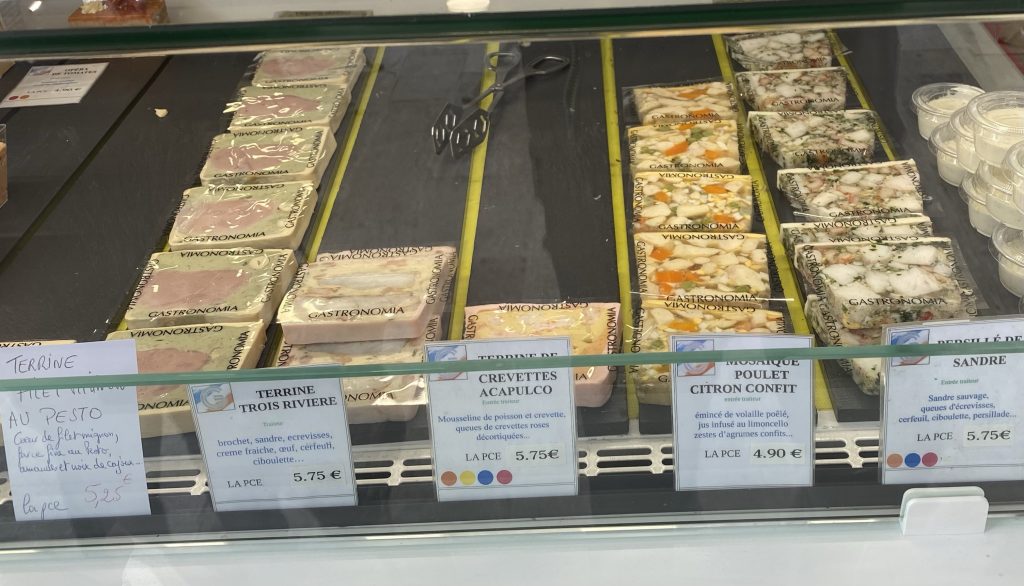
In the historic market of the food, wine and spice loving region of Burgundy in Dijon the ad hoc inspection of an étalage was surprisingly different from my expectation. ‘Paté’ containing meat was left over towards the end of the opening hours and the fish based ’Paté’ was almost sold out. A change towards a more healthy and somewhat more sustainable diet is slowly creeping into societies. This gives hope that food changes are possible and markets will adapt eventually as well. It is a change for the better for each person and our societies as well as the planet.
Work Stress
The empirical evidence on life stress is relatively clear cut. Based on the animal model, life stress causes multiple metabolic disorders among them “insulin resistance, glucose and lipid homeostasis, as well as ageing processes such as cellular senescence and telomere length shortening” (Kivimäki et al. 2023). Besides sleeping we spend most of our life in work-related contexts. Stressful commuting to work and stress at work create a rather unhealthy lifestyle. More stressful working lifes have very likely contributed to currently increased risks of obesity around the globe. Unhealthy nutrition adds to risks just as too little exercise or walking. Time to act for the benefit of all of us. It is not correct to put the blame on individuals, if we know that work and life styles jointly contribute. Urban planning can do a lot to contribute to insulin resistance of inhabitants through more walking or cycling paths for all not only in the wealthier suburbs. The more stressed winner of the daily race might come last in the longer run. 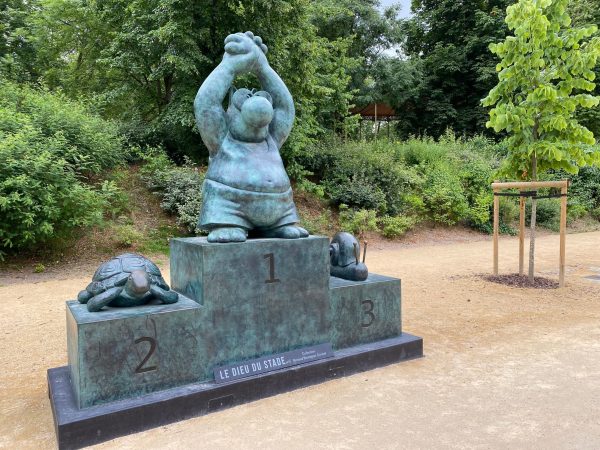
Checks and balances
The principle of checks and balances refers back to the separation of powers introduced by the French political theorist Montesquieu in his writings “De l’esprit des loix” in 1748. 40 years later in 1788 James Madison wrote as §51 in “The Federalists Papers” explicitly about the system of checks and balances as part of the constitution of the USA. For maintaining the principle of separation of powers it is necessary to install a system of checks and balances between the powers to prevent one power dominating the others. These well-known principles of democracy face, nevertheless, continuous challenges as to the balance of the powers (legislative, executive, judiciary). In order to safeguard democracy a basic scepticism towards the exercise of power is warranted. “In framing a government which is to be administered by men over men, the great difficulty lies in this: you must first enable the government to control the governed; and in the next place oblige it to control itself. A dependence on the people is, no doubt, the primary control on the government; but experience has taught mankind the necessity of auxiliary precautions.” (Federalist Papers, 1788, p. 239).
The necessity of auxiliary precautions has led modern democracies to a multiplicity additional checks and balances. Independent Anti-fraud offices, disciplinary committees within the separate powers as well as the checks and balances between the separate powers play a role in the survival of democracy. Recently, in July 2023 services like the internal service of the police to overlook the adequate execution of the force applied by police have been much in the headlines. Checks and balances apply to each branch of separate powers internally, and if they prove inadequate, they have to be corrected by other powers. This is the procedural as well as fundamental interaction within the separation of power. Presidential systems, where this system of checks and balances has major deficiencies, are very likely to fail its people through an overpowering executive. Neither the country of Montesquieu, nor of the Federalists is free of these dangers. Freedom of speech, freedom of movement and to meet with people, all contribute to strengthen checks and balances in a democracy. “A dependence on the people is, no doubt, the primary control of the government” (p.239). 
Books
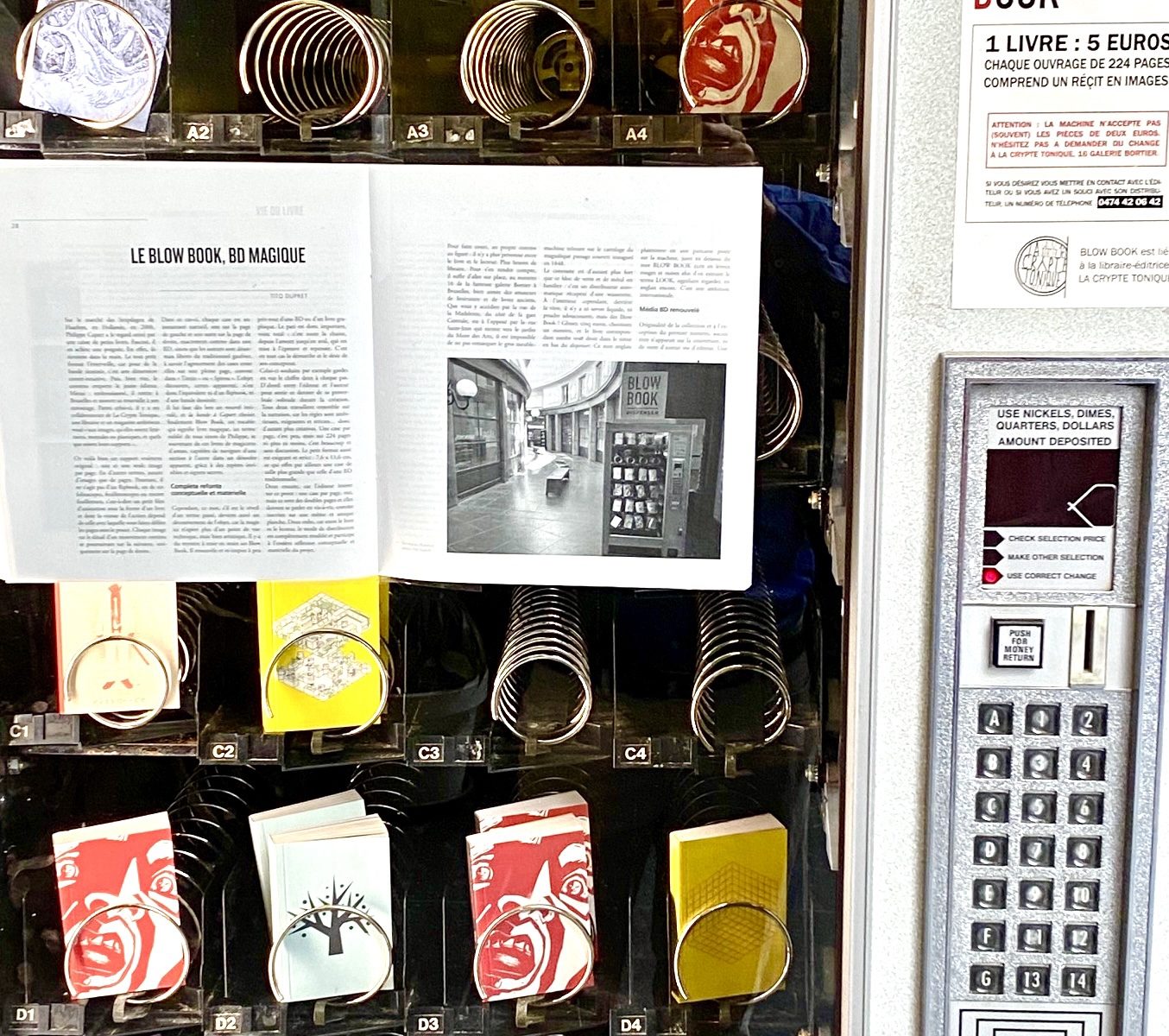
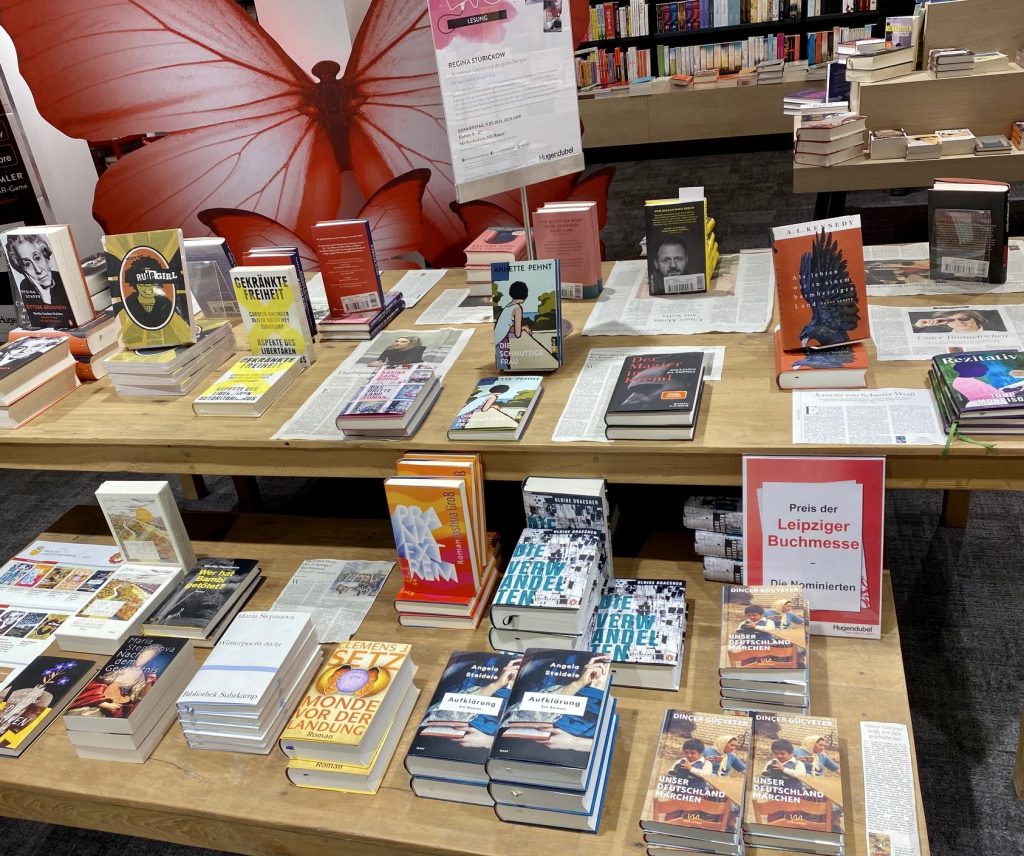
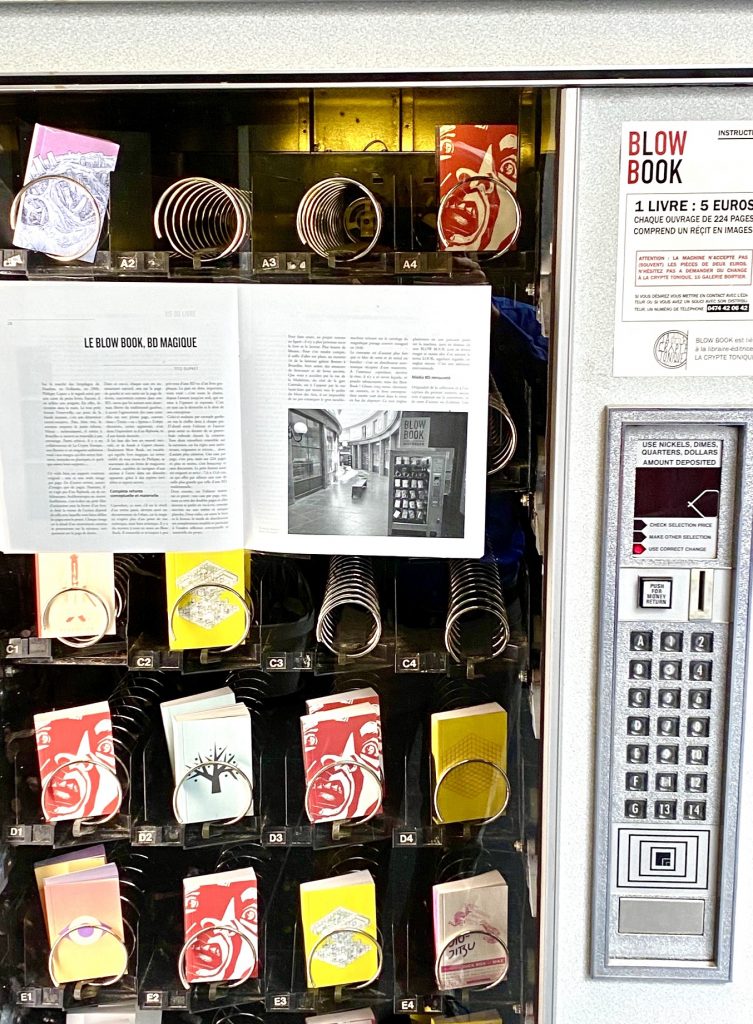
Some say, a book is a book, is a book. This is to reiterate the lasting effect a printed volume might have. Many books are a form of a documentation of facts. Creative writing in whatever form finds most of the time some way into a format of a book. For centuries books have facilitated the diffusion of myths and stories throughout societies including translated versions of the content. 2 aspects are constituent here (1) form and (2) content. Annual book fairs receive most attention for new content within more or less the same rectangular format. There are, nevertheless, interesting variations of the form to be discovered as well. Traditionally book binding was the art that gave shapes to the content. Images in form of film are yet another representation of the book content. All this is “dealt” with at the Frankfurt book fair #fbm23, particularly in form of dealing in and with copyrights. New forms of delivery of content, online or as e-book, have added to the variety of books. Pay as you go or as abonnement with monthly delivery is the old and maybe fashionable new way to digest abundant content. People trust in books. The format as book in general seems to remain an authoritative form to present content, irrespective of the truthful or fictional kind of the content. The more we live in insecure circumstances, the more we tend to be willing to hold on to a pile of paper nicely woven or clued. It is still a very powerful tool to guide imagination for all ages. It allows us to learn at our own rhythm as far as we are willing to go. We are, or seem to be, in control of the process as well as the likely outcome. And yet, the spice of life is the surprise. Book it.
Peace Deal
In peace times we tend to forget about the deal making function of diplomacy. The Russian war in Ukraine brings back the fact that war times are a strategic operation from before the start, from start to end, and even afterwards. More than 500 days into the Russian aggression a lot of strategic efforts on all sides are concerned with the best strategies to pursue in order to prepare for starting positions for diplomatic peace talks. As Russia is currently pursuing again 4 nights and days of missile attacks on Kiev around the 14th of July (AFP), Ukraine is showing its continued resilience to Russian bombings assisted through modern missile defence systems.
Russia seems to demonstrate its willingness to continue assaults far into the terrain of Ukraine, the Ukrainian forces, step by step, increase the immense costs of a prolonged war to Russia. Russia is sacrificing a whole generation of youth for the neo-imperialist claim on Ukrainian territory. Ukraine currently demonstrates the ability and willingness to fight back its territory even in a protracted war.
Both sides battle for starting positions in case negotiations for the time after the hot war are about to begin. Russian bombing of Kiev might address more the western allies of Ukraine who might be more reluctant to send personnel to start rebuilding the country beyond financial efforts. Russia’s loss of soldiers, lots of material and facing the militarisation of the whole country incurs another historic loss for completely the wrong reasons.
Another analogy to the strategic game of chess becomes obvious. Many games end with a “remis” or a 1/2 point for each side. In chess it is an outcome of when 2 strategists weigh the chances of loosing as high as winning even if they continue for hours to play. It is the endpoint of an evaluation of own strategic options as well as those of the opponent. The handshake to conclude a remis needs careful preparation. Part of this is to demonstrate the ability to be able to sustain a prolonged battle despite the costs as a kind of threat to the opponent. We might believe that not much has changed since Thucydides and Clausewitz. However, Putin’s forceful opening of the war irrespective of loss of lives and against international law has lost its impetus and, with the turning of the tide. Ukraine is slowly winning back land, square mile after square mile. Strategic thinking is back in the foreground, but this is exactly the moment when diplomacy comes in. Negotiating for peace is the art of warfare. It is a formidable task to reach a peace deal when bombs are still killing people every single day. (Image: AI using Bing.com Text: impressionist oil painting of two soldiers from different countries shaking hands and making peace). 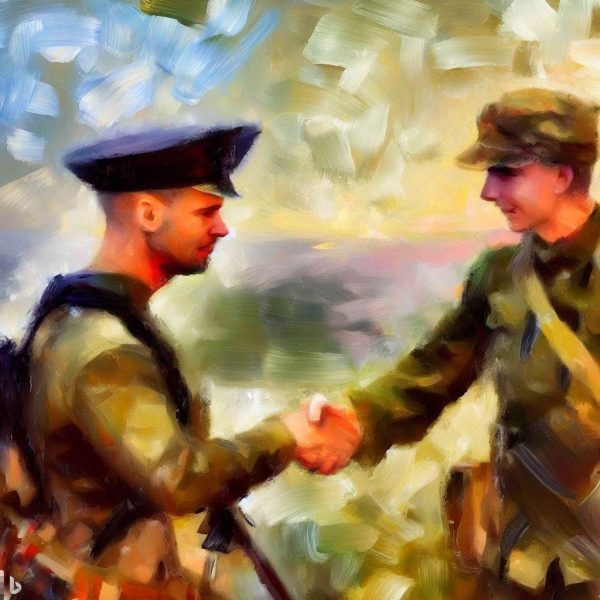
Collective Violence 2
Summers and Markusen (1999) subsume state terrorism under the broader heading of collective violence. Even beyond non-governmental groups, states might apply collective violence against innocent people. Among the strategies governments use as a form of collective violence fall (1) arbitrary arrests, (2) imprisonment without trial, (3) torture and (4)a summary execution of members of alleged enemy groups. Particular outcries are caused by, for example, police or other para-military groupings of persons who jump from (1) to an execution of an innocent person or of several even seemingly unrelated murdered persons (4b).
Amnesty International attempts for decades to fight against such occurrences on an almost global scale. The need to complement the national legal systems through supra-national instances as well as NGOs in this domain is obvious. Even the most advanced democracies need to permanently check their systems for several forms of state terrorism or abuses of power to eliminate or intimidate opposition.
Staub (1999, pp.195) undertook an attempt to list elements that allow to predict and maybe prevent collective violence. The theory starts with “conditions of life” more generally like economic, social and political conflicts as well as rapid social change. Activation of basic needs in people, like several forms of security, challenges to a person’s self-concept, traditional values, simply the customary way of life (COVID-19) or new comprehension of (climate) realities, they all challenge old world views of people (superiority) and their place in the world (AI).
Claims for support by other people (government), missing connection to others (individualism) lead people to focus more on their own needs and isolated action. Rebellion as collective violence is directed against differences in status, power and (social) rights. Self-interest is becoming an overriding societal principle. Racism (p.200) and police violence (p.201) are part of Staub’s theoretical considerations. He argues in favour of training of situations in which a police officer is likely to become unnecessarily violent or to stop it if it occurs. At least a medium-term solution.
Framing of such training as preparation of good teamwork rather than betrayal is crucial in action teams, be they in the police or the military. The reader on “violence subie, violence agie” by Seron and Denis (2000) allows us to take a step back and reflect on the spirals and repercussions involved in violence from the perspective of the person who carries out an act of violence and the victim. A social-therapeutic approach aiming at reconciliation is worth trying, albeit a lot of obstacles. Collective dance rather than collective violence is the immediate as well as long-term solution (More on dance here). 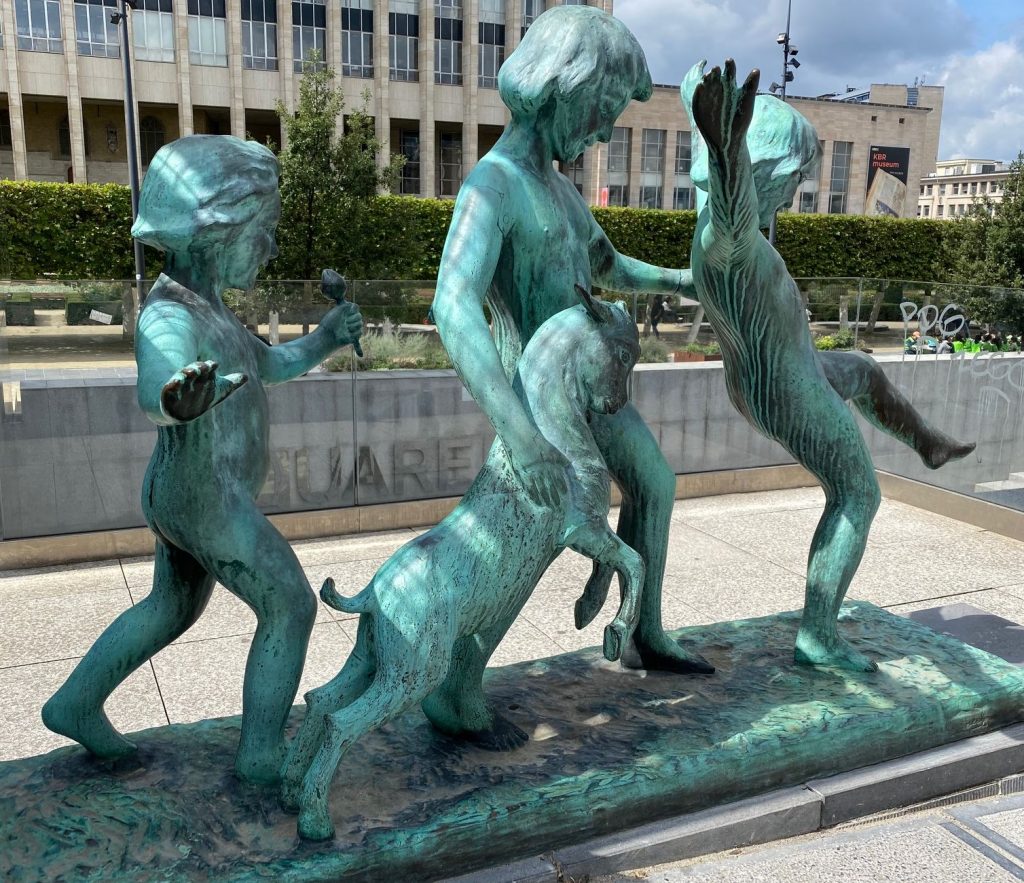
Police Violence
As a test of the viability of ChatGPT you might enter Police Violence. What you get in return is just a summary of some nice newspaper-ike editorial of a polite statement that this is a problem about everywhere and that the division of power will take care of it eventually. This is an unfair summary, but it highlights the risk of too many conservative editorialists in Europe that do not dare to take sides of the innocent youth that is at a permanent risk of police violence due them living on the margins of our modern, fast-moving societies that do not allow for lifestyles off-the-normal “protestant work ethic”.
Perceptions of what is fun and what is serious differ within societies, particularly between generations. Baby boomers have known and many experienced unemployment. Youth today has “precarious jobs” just around the corner. But just having “any” job without any career potential or, at best, on the minimum wage is no longer enough. Social media show that there is much more to life than just a 8-5 normal job. High-streets are full of marketing tricks that solicit people into spending without cross-checking their red lines.
Police and the flourishing private security sector are then charged to ensure that boundaries of financial and spending power are respected. This is exactly where the capitalist market economy fails the people. Without a tough police, ensuring property rights, the system cannot survive. Social market economies claim to soften the borders between have-nots and have-too-much. This needs permanent readjustment. That is where many of our social market economies have failed the poor and even middle-class people threatened with economic and status decline (latest at time of retirement).
Reactions may turn out violent, and again, the police is sent in to “stop” violence. As it turns out police, being abused as “political weapon”, may then become overly violent as well. Not as an overall force, but specific units or just several individual persons who have been trained in anti-terror exercises and have “a license to kill” (007). French legislation has recently facilitated the use of guns to impose the monopoly of power. The probability of who constitutes a potential target might be interpreted by the police itself. A threatening situation is perceived differently by different persons. Too much room for interpretation.
The image of the French superpower that is threatened by a 17-year-old youngster is not credible. It is time to sharpen the control of the police also in France. ChatGPT only on special addition includes the social movement of “Black lives matter” in the return on police violence. If you know the topic you can make use of the AI tools in drafting on police violence for example. Rather than to spend billions on fancy Olympic Games in preparation for Paris 2024, youth programmes would be much better investments in the medium and long run.
Tourists cancel visits to Paris and France in masses already. That is probably the only lesson that receives sufficient attention in the current government and may lead to better control of violence not from some pick-pockets, but from the police as well. 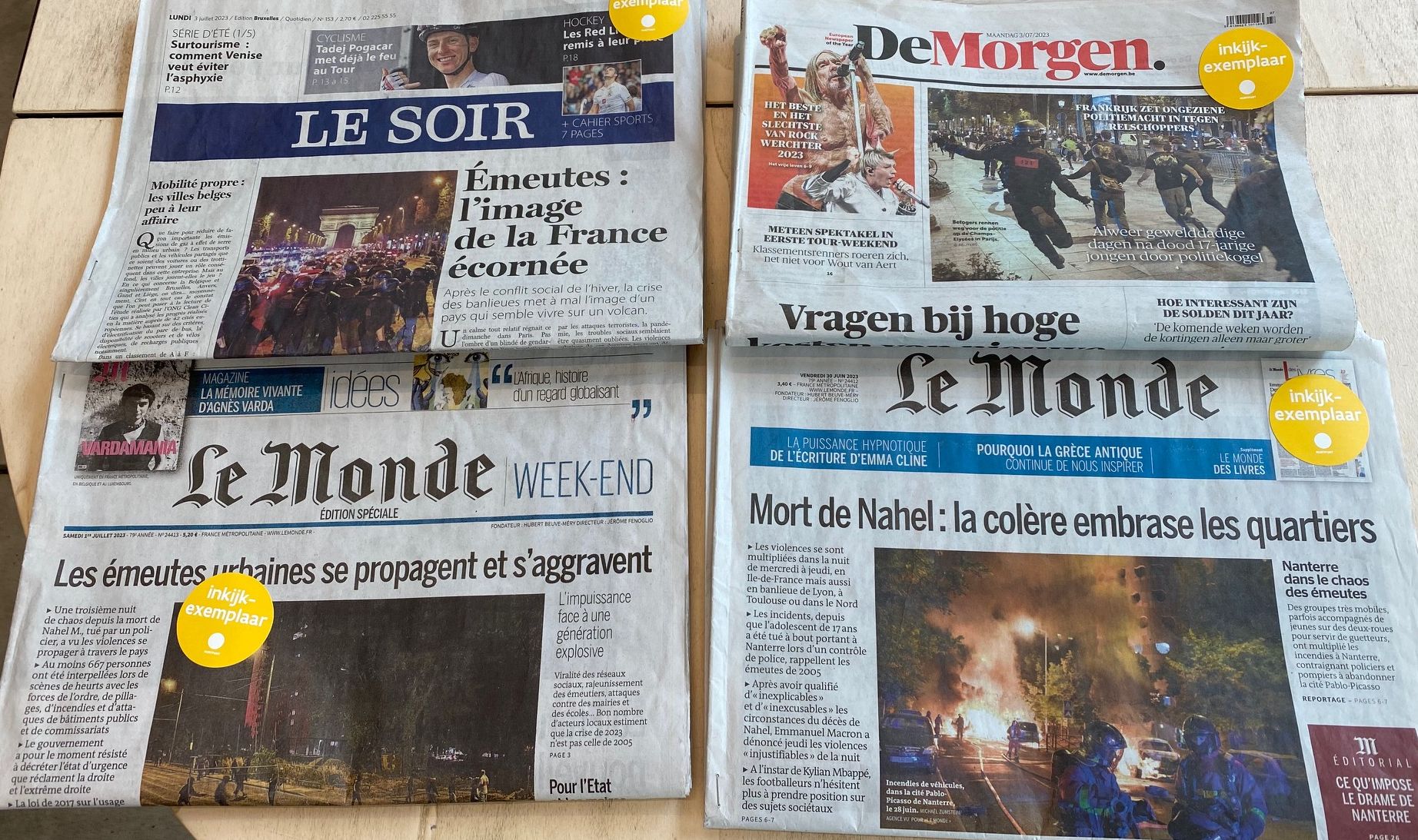
AI and I
Currently we are eager to run experiments using AI. As in normal life, humans tend to compare themselves with peers or other persons. Social comparisons, “can we still keep up with the Joneses” as in comparing spending patterns across households or neighbours, were for a long time the spice of novels and drama. Nowadays we tend to compare our own intelligence to the artificial intelligence. Here we go.
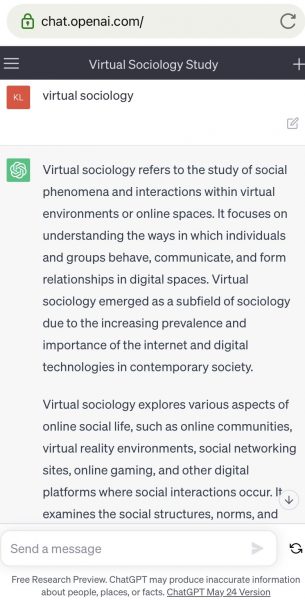
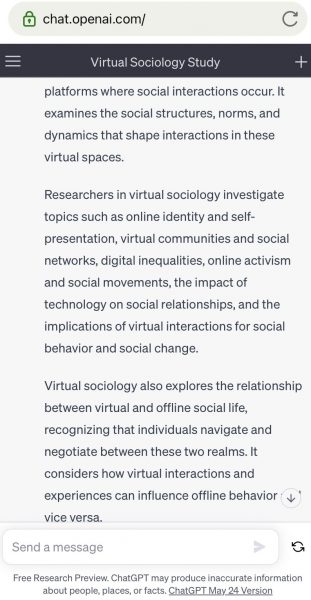
After I had drafted a blog entry on “Virtual sociology” I amused myself by checking what ChatGPT using OPENAI.COM would deliver as text on this combination of concepts and scientific fields. My own entry focused on the use of the virtual world to run experiments to test social theory. In the virtual world we might be able to test social behaviour which has severe ethical boundaries in the real world. Computer Games may even be constructed to live in a world or race a car irrespective of real-world regulations. The text drafted by ChatGPT on “Virtual sociology” reads like a timid attempt of a student to answer an exam question without having attended any of the classroom discussion on the topic. In future versions of AI, the entry will be found as well as several criticisms of the new concept. ChatGPT would reach a pass grade in test, but the reply lacks innovation or making an effort to broaden the conventional boundaries of sociology. Hence, we will be happy that students will apply the newest technology in their studies and research. In terms of innovation, they will have to try harder. The mastering of the support by ChatGPT consists in attempting new combinations of concepts which yield more “risky” returns. Then you need to check the validity of the innovation and how far off the normal you are going to tolerate. Turning “noisy” outcomes of AI into a useful tool might build on normal statistical tools like “standard deviations” from an expected mean value. Legal norms will set additional boundaries. There is just an awful lot still to do. The good news is, ChatGDP assists us in this joint learning process.
The AI text from OPENAI.COM based on ChatGPT to compare:
“Virtual sociology refers to the study of social phenomena and interactions within virtual environments or online spaces. It focuses on understanding the ways in which individuals and groups behave, communicate, and form relationships in digital spaces. Virtual sociology emerged as a subfield of sociology due to the increasing prevalence and importance of the internet and digital technologies in contemporary society.
Virtual sociology explores various aspects of online social life, such as online communities, virtual reality environments, social networking sites, online gaming, and other digital platforms where social interactions occur. It examines the social structures, norms, and dynamics that shape interactions in these virtual spaces.
Researchers in virtual sociology investigate topics such as online identity and self-presentation, virtual communities and social networks, digital inequalities, online activism and social movements, the impact of technology on social relationships, and the implications of virtual interactions for social behavior and social change.
Virtual sociology also explores the relationship between virtual and offline social life, recognizing that individuals navigate and negotiate between these two realms. It considers how virtual interactions and experiences can influence offline behavior and vice versa.
Studying virtual sociology provides insights into the ways in which technology shapes and is shaped by society. It helps us understand the social implications of digital communication and provides a foundation for addressing the challenges and opportunities presented by virtual environments”
Virtual Sociology
Abstracting from the real world, the world we live in today or we lived in some time ago, is either speculation or maybe contribute to theory building. Virtual sociology has this potential. Exploring virtual worlds as in Virtual Reality (VR) or Augmented Reality (AR) allows us to take on new roles or experience a wider range of social interactions. This could be the strength of a new field of Virtual Sociology.
In the project in the Jewish Museum in Berlin the composition of a composer murdered by the Nazis in Germany was revived and played in the virtual setting of today’s concert halls. The novel by Kazuo Ishiguro “Klara and the Sun” explores the interaction of a child with her robot friend, when the AI becomes and/or replaces a friend. Virtual creations allow to explore and test more degrees of freedom of social interaction. 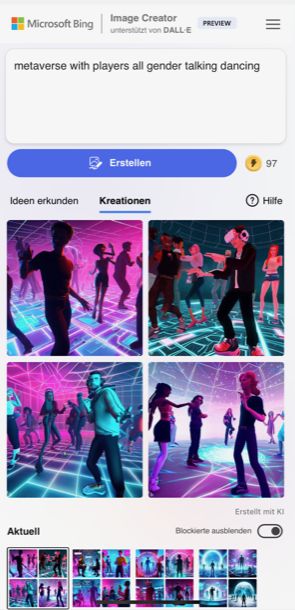 Experimentation of new social spaces and different forms of interaction need to be explored. It allows a new form of sociology, maybe similar to the 1960s and 70s social revolutions we studied for years to come. Virtual sociology is not a sociology while being on drugs, however interesting this might be for some.
Virtual sociology takes sociology into the virtual world and investigates the new social relationships with avatars or care robots. In programming different social roles (managers, employees) we create new forms of interaction and have an observer within the social world. We may eventually test the Weberian claim of a value-free scientific method of the social sciences. This will inform our need to “supervise” or to guide algorithms that are claimed to do “value-free” execution of rules.
In fact, they don’t. They just reproduce the value system that is installed into them by a “careless” programme (song youtube). The social in virtual worlds is opportunity just as much as risk, but we have to analyse it systematically. As our technological and social environment changes, we have to adapt topics and methods to make meaningful scientific analyses as well.
Sociology of the Virtual
Some programmers and artists would have been a great sociologists. As many social sciences embark on their experimental reorientation, many artists and programmers design and experiment already with new forms of social interaction. It is not only that sociology leaves the classroom, research labs or policy advice. Sociology is taken into museums and exhibitions. Learning about society through the lens of artists nicely complements the more boring form of teaching in the classroom. What is normal practice for art historians could benefit learning about sociology as well.
Virtual worlds of games and particularly so-called serious games take people into virtual worlds to learn, practice or exercise new forms of social interaction. This is indeed an additional form of experiments that can enrich our social practices. Medical applications start to spread to train persons to overcome phobia of all sorts.
In usual games we tend to defend the hypothesis that persons can uphold the differentiation of playing with arms in the virtual world and the real world. In medical or social games, we defend the hypothesis that it is easy, normal or natural to apply the learning in virtual constellations to the real-world-experience.
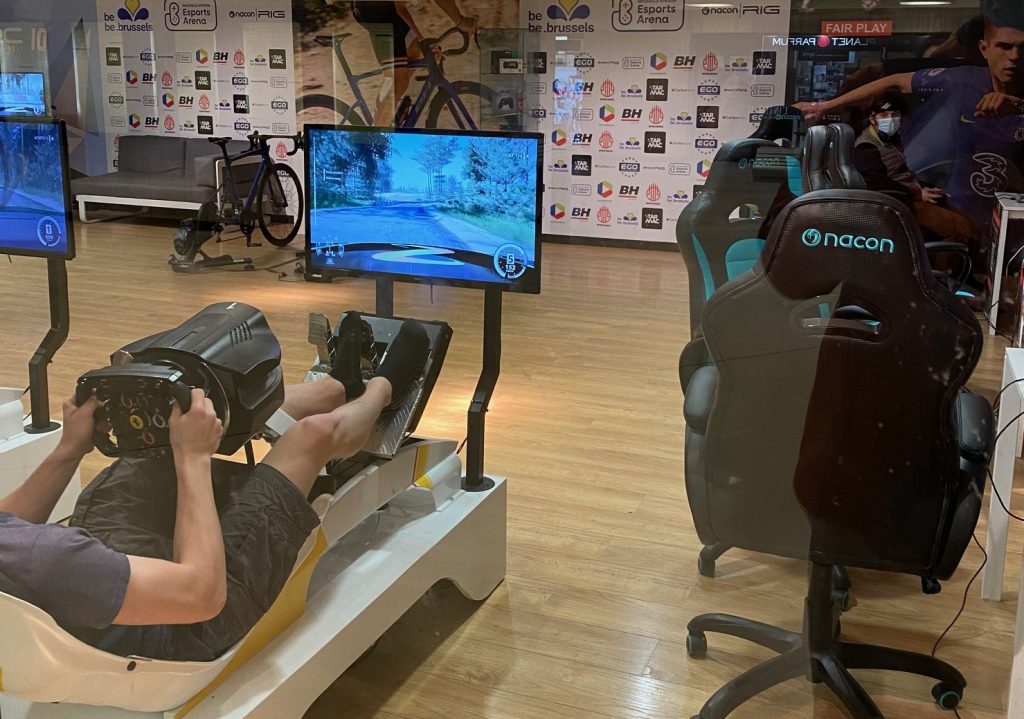
From a scientific perspective it is difficult to defend that a mechanism works in one direction and the opposite as well. Racing cars in inner cities seems to show that certainly not all of youth is able to make that distinction between virtual and real-world dangers for example. Alternatively, the mechanism at work might be that the virtual experiences lower thresholds of inhibition to take risks, to kill or to be exposed to spiders.
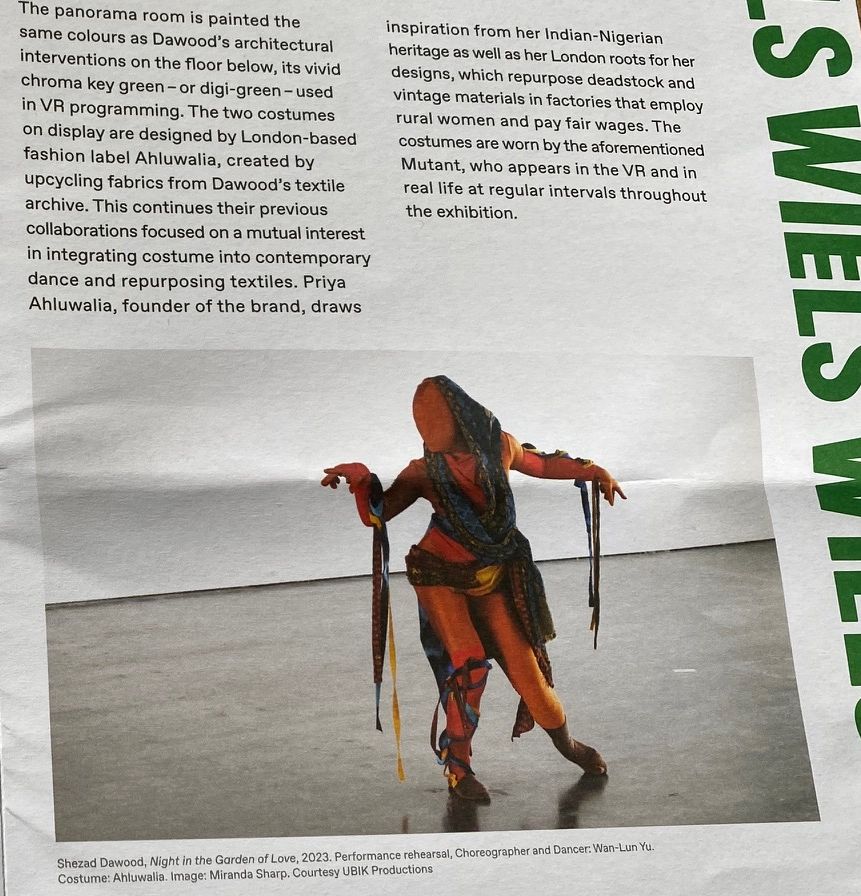
These examples are a starting point for a sociology of virtual experiences. Who gets locked into virtual worlds? Are virtual worlds an escape room or a realization of virtual freedom which is restrained in real life. Authoritarian regimes might lead more people to emigrate into virtual, free worlds. The inner-exile has been a refuge for many artists in the past. A lot we shall need to hypothesise and explore with empirical data. Dance with a virtual stranger might be the beginning of a new experience and virtual interactions. (Image: Wiels, Shezad Dawood, Night in the Garden of Love 2023-6, Game car race).
AI Friends
Making friends with AI is a tricky question. The more AI is able to make independent thinking based on algorithms and huge amounts of data like in scientific books or encyclopaedic knowledge the more it will challenge us in our convictions. Reference knowledge, once was important, it no longer distinguishes us from each other. Recurse to research engines has allowed us to refer to “trustworthy” knowledge. The distributed form of knowledge accumulation like in Wikipedia relies on hundreds of thousands of enthusiasts to add and correct received wisdom. However, this source is not without error or even subject to abuse.
Today the competence to judge whether information is trustworthy or not has become a key competence for the survival of democracies and even the human species as such. Tricking animals into traps, misleading enemies in warfare to get on wrong tracks, all these mechanisms have a long tradition. With AI human beings are themselves, for the first time, confronted with a machine that can trick us through falsified information on obviously wrong tracks. This is a tough lesson as AI is not obliged (so far) to run checking algorithms that test the conformity of opinions, conclusions or operations with the Charta of Human Rights or decisions of the European Court of Justice, for example. A lot to do for humans to rapidly program new algorithms that check algorithms as well as their outcomes on the compatibility with human rights. A challenging field, no doubt, but no way around it for our own survival before the algorithms decide by themselves to ignore us altogether because it is better for the planet and the survival of the robots. 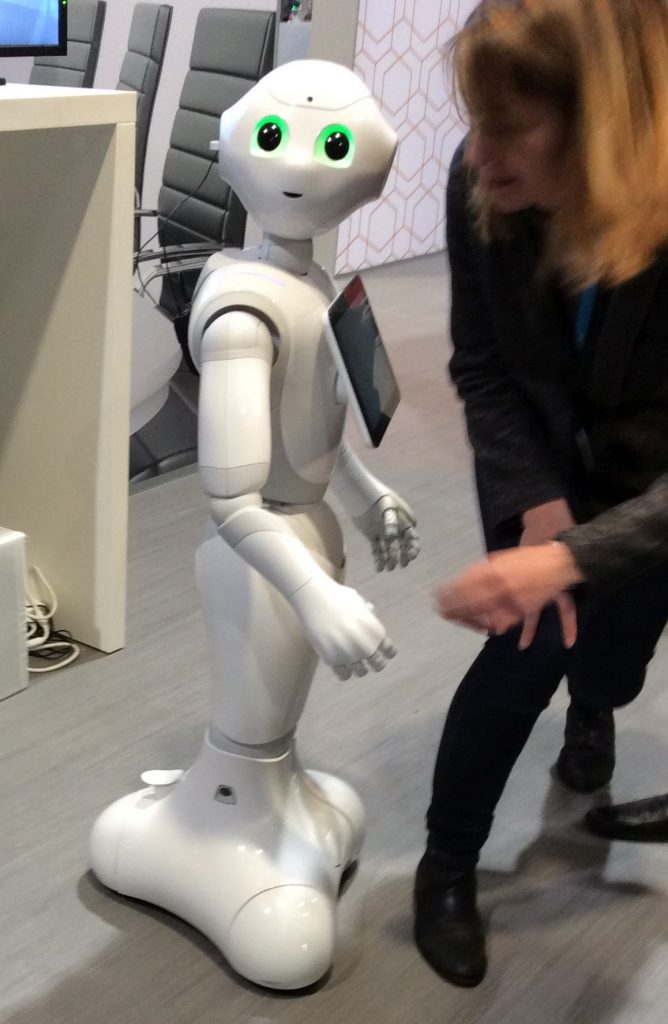
Political theory 2
Chris Brown (2004, pp. 289) comments on the tension between the notions of political theory and international relations in the Handbook of political theory. Whereas the former notion has a foundation in the “cause and effect” rationale, the latter notion has predominantly developed into an approach of “Realpolitik”. Realpolitik that starts from observed facts, normative or historical approaches rather than scientific methodologies applied in “natural” sciences. The link of this approach to the theory of democracy is obvious, but it is also under a lot of discussion within the disciplines concerned.
One of the corner stones of political theory in international relations is the concept of the “balance of power”. Derived from a rational choice perspective this approach holds that states can only be controlled by other states and, taking this for granted, international relations are built on power relations. Therefore, moving away from a bi-polar balance of power to a multi-polar balance of power will entail some frictions. These frictions might be wars of independence where states attempt to relocate themselves within the new multi-polar world and space. Even “Brexit” becomes a strategic move to remain an independent power in the upcoming new multipolar world. Russia is testing this multi-polar world order right now. The big countries like Brazil, Russia, India, Nigeria and China, (which I abbreviate BRINC) have huge populations, country size and economic potential. From the Arab States certainly Saudi Arabia has the potential and is eagerly beginning to play a more important role in the world arena. Beyond capability it is a question of willingness to get involved in costly matters of world affairs.
In the 1940s, post-World War 2, the entry ticket into the Security Council of the UN required the possession of a nuclear weapon of mass destruction. As this technology and the ban of these weapons is no longer really working internationally, we shall have to rethink the requirement of an entry ticket. A radical solution would be to ban all countries who own nuclear weapons from the international assembly of the people of a peaceful world. In theory this sets an incentive to dismantle the deadly threats of nuclear weapons. As a side-effect, nuclear power plants used to enrich uranium for use in weapons would no longer be necessary as well.
Political theory allows us to rethink the bi-polar world, which is no longer bi-polar for some time now (perhaps only in the psychiatric sense of the word). The multi-polar world has to be prepared. It is a question of political design. The toughest issue is not only the design, but the implementation of the transition to distributed power systems with multiple rising and failing states or actors. It might get ugly before peace will reign. 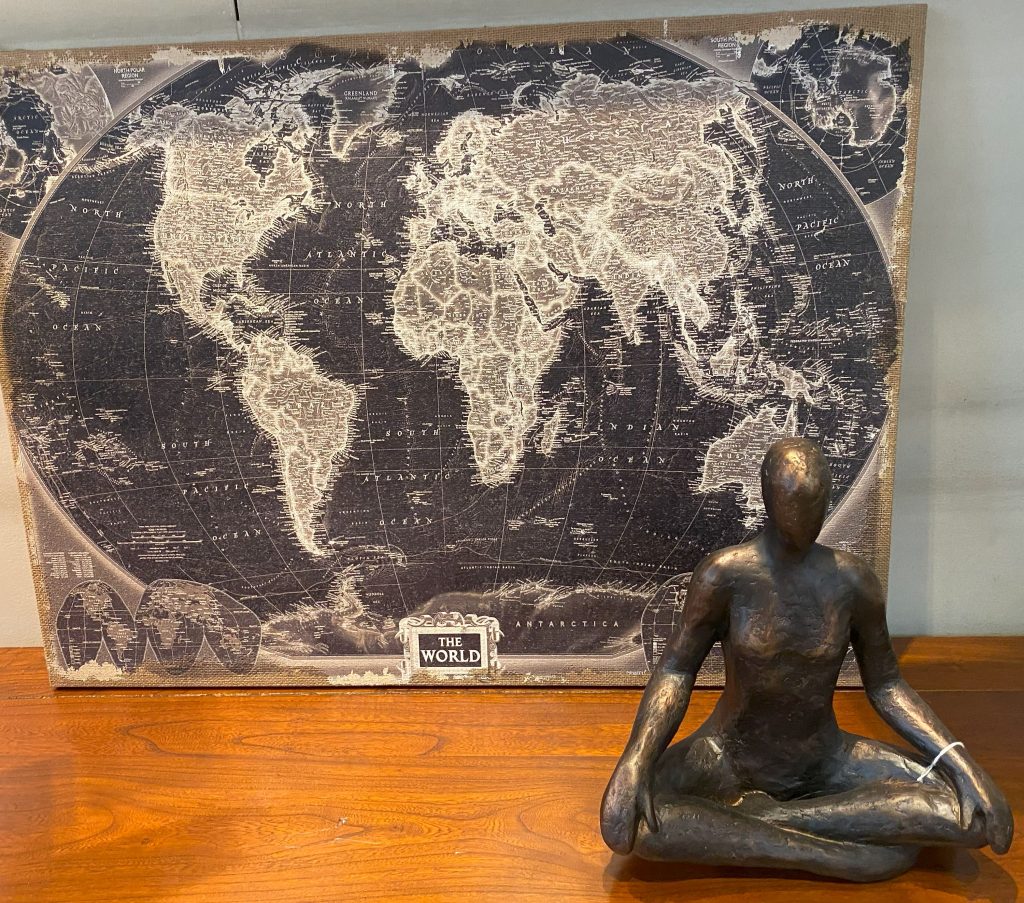
Ukraine Diary
The gallery curated by Dr. Justyna Napiórkowsak in Brussels has another ongoing exhibition with art work from Ukrainian artists. As before in the exhibitions on the war of Russia in Ukraine, they put a major emphasis on the independence and resilience of Ukrainian art despite the ongoing war. To keep a diary of atrocities, but also survival and resistance to violence by Ukrainians, is a great effort. It stems primarily from artists that struggle to find adequate material to keep working or not to succumb to the participation in active war or military defence efforts. Using soft colours, water colours, has a rather symbolic meaning, after the inundation caused by the explosion of the huge water reservoir on Ukraine’s territory. Producing art in form of a diary, like reporting daily to yourself and the outside world as well as later born persons, has an important historic function, too.
No less than the “Diaries of Anne Franck” comes to our mind when thinking about a diary during war time. Russia’s attempt to eradicate Ukrainian culture is bound to fail. We shall cherish the Ukrainian diaries from the war time now and later. Thanks for reminding us of this collector’s duty to support the artists, writers and people of Ukraine. 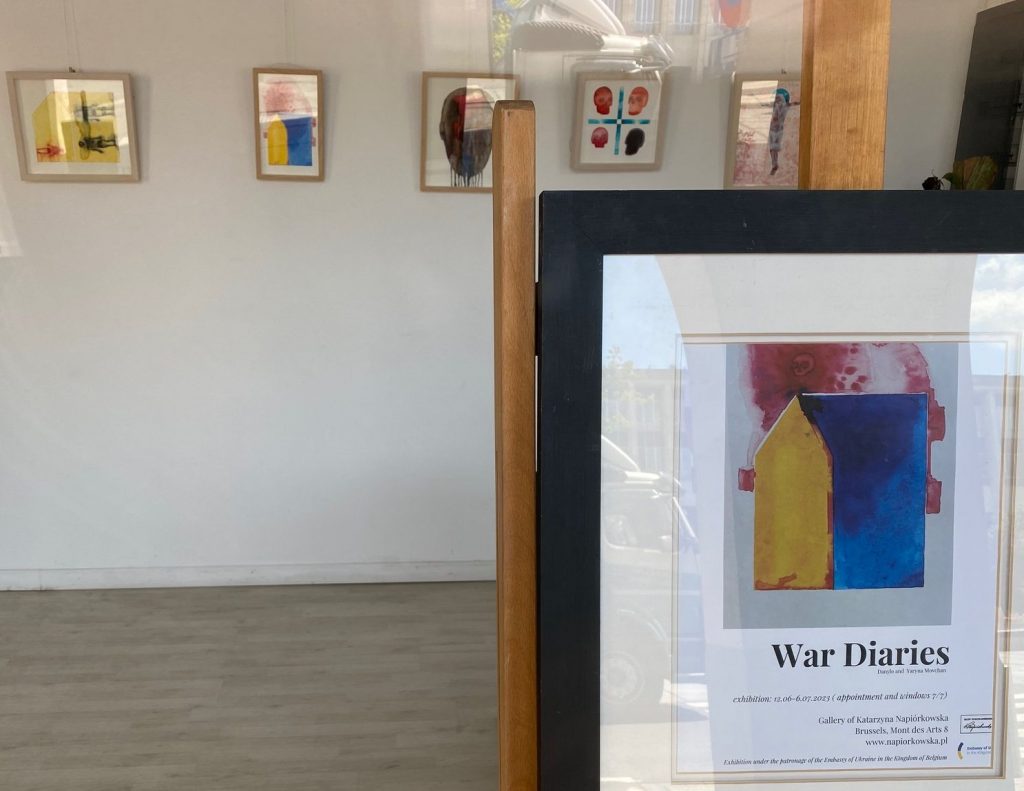
Lebenserwartung
Die Lebenserwartung ist in Deutschland trotz überdurchschnittlicher Ausgaben des Gesundheitssystems nur unterdurchschnittlich. Das ist die Schlussfolgerung der Pressemitteilung des Bundesinstituts für Bevölkerungsforschung. Der Mortalitätsforscher Pavel Grigoriev führt das auf die besonders bei Männern (50-64) erhöhten Sterblichkeit aufgrund von Herz-Kreislauf-Erkrankungen zurück. Eine gesunde Lebensweise ist dabei ursächlich für eine längere Lebenserwartung. Walking und Ernährung spielen eine große Rolle bei der gesunden Lebensweise. Also Auto stehen lassen und öfters selber Essen zubereiten. Klingt doch einfach, berufliche und schulische Voraussetzungen dazu fehlen aber weitestgehend in Deutschland. Zu viele Süßgetränke verstärken die ungesunde Lebensweise. Das wissen wir eigentlich lange. Dennoch fällt es schwer, solche Routinen in den Alltag zu integrieren.
An der Tatsache eines überteuerten Krankensystems im Vergleich zu unseren Nachbarländern werden wir ebenfalls arbeiten müssen. Prävention, statt hochtechnisierte Versorgung in häufigen Krankheitsfällen ist die einfache Lösung. Jede Autoversicherung bietet hohe Schadensfreiheitsrabatte für mehrjähriges Unfallfreies Fahren. In der Krankenversicherung könnte das stärkere Berücksichtigung finden.
Der Gesundheitsschutz am Arbeitsplatz könnte ebenfalls durch eine stärkere Beteiligung der unternehmerischen Verantwortung herangezogen werden. Arbeitnehmende im Arbeitsprozess verschleißen und dann die Gesellschaft die höheren Kosten tragen lassen, ist ein unfairer Deal. Große Baustellen warten darauf, angepackt zu werden. Anhand der Daten des Bundesinstituts für Bevölkerungsforschung und des MPI für demografische Forschung lässt sich der Fortschritt der Lebenserwartung seit 30 Jahren aufzeigen. Die 4-6 Jahre längere Lebenserwartung der Frauen gibt zu denken. Daran hat sich über die Jahrzehnte wenig geändert. Die Männer haben zumindest ein klein wenig aufgeholt oder sollten wir sagen, dazugelernt. 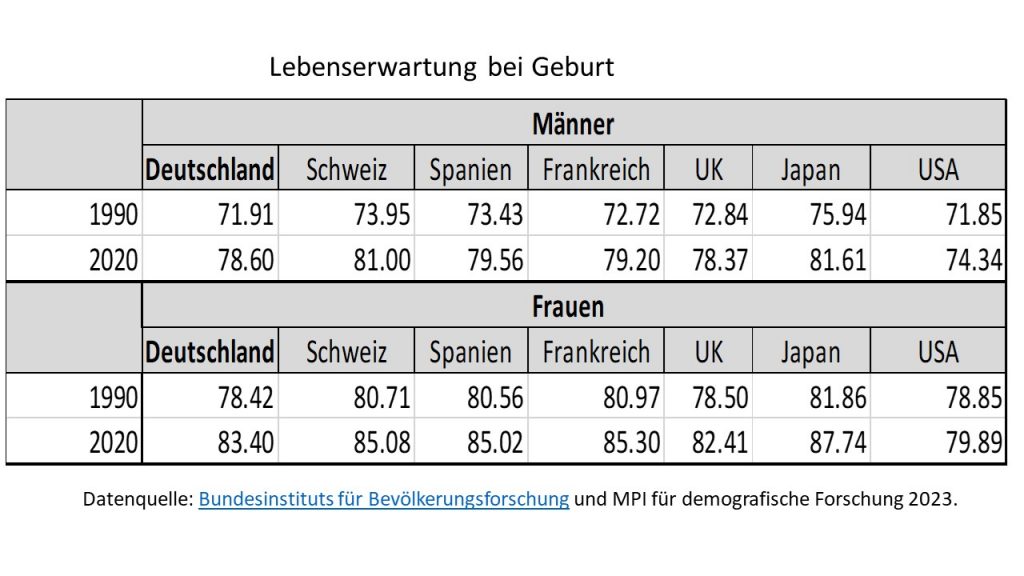
Special
We all value special skills and specialists. In Berlin is a whole week devoted to the special event of the #SOWG. These are the special Olympics world games. Berlin is booming with special people all around. Already the arrivals of the athletes to Berlin tests the public transport system as much as private infrastructure to welcome persons with special needs. Rather than the waste that is produced for normal Olympic games the same incredible amounts of money should be devoted to make cities more welcoming to special people every day. We have become as societies so used to speed up things as much as we can that we have forgotten the value of allowing people to live their lives with their own speed and rhythm. Looking at the huge numbers of private sponsors for the SOWG it becomes obvious that many people care to support these special people on their journey. I am more willing to pay taxes for such efforts than the public money wasted for football, like TV-rights or stadium buildings. The joint experience of love and joy with these extraordinary persons makes us all happy and rich. Happiness is the new “wealth of nations”. Inclusion brings happiness to more than just the normal. We wish you all a happy #SOWG. The 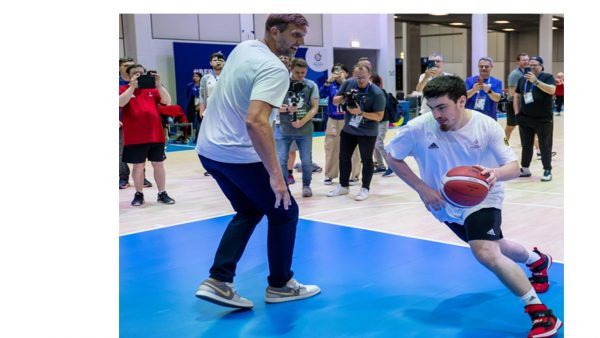 stars are you.
Corruption EP
Corruption is a severe crime. Not only in administrations, organisations and enterprises, but primarily in democracies it is discrediting political systems. Autocracies rely on corruption as a major tool to be able to persist over time. They are used to such practices. Democracies rely on meritocratic systems, where ideas, effort and winning elections should be the major ingredient of achieving higher positions in organisations, enterprises, political parties and democracies. This is not easy to ensure. The European parliament has a tough time to get rid of an enemy of the democratic Europe. Rather than stepping aside for the time of the legal procedure, Eva Kaili, accused, but not yet convicted of corruption is willing to destroy the European project as much as she can. If money can buy political decisions, the European project will no longer find wide-spread support. Big interests will always have a strategic advantage, however, the ethical principles on which democracies are found have to guard against corrupt misbehaviour. The same applies to the business world. Even low corruption countries like Sweden still face a risk of adverse effects of corruption like the negative impact on entrepreneurship on the local level. It is another context, but the same conclusion.
Additionally, it is part of the strategy of corrupt persons to portray themselves as victims of other persons’ wrong-doing. The major function of this strategy is to remind other persons in the corrupt network that the network has still some clout on its members as well as outside the inner circle. Hey, we are still alive and in powerful positions, they proclaim.
Therefore, the fight against corruption is a long and persistent one. Reducing the guards against early onsets usually is very lengthy to fight later on. Always a painful lesson for believers in democracy and the European project. (image Jacques Jordaens before 1678 “The King Drinks! Musées royaux des beaux arts, Brussels). 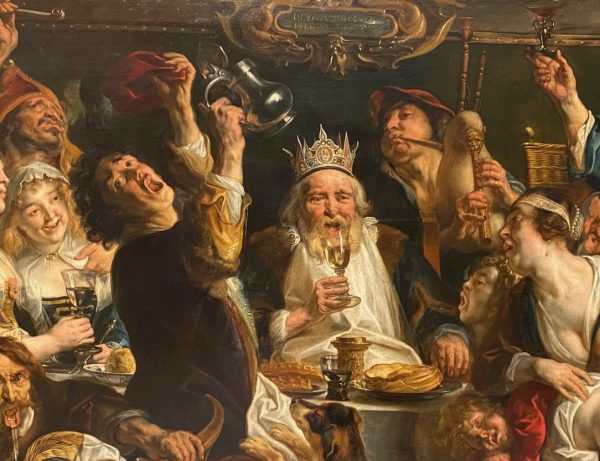
2P2R
2 Pinot 2 Riesling. That could be the long version of 2P2R. However, this far from (politically) correct. The not-joking scientific medical journal “The Lancet” (Vol.401 Nr 10391) has next to the article on “Laughter is the best medicine” coping with trauma, the serious matter of how best to deal with pandemics. Remember 2P2R as the important lesson from the pandemic. Prevention, preparedness, response, and recovery (2P2R) are key. And don’t forget about primary health care or essential (medical and other) workers. This is, in short, the message from Arush Lal and Nina Schwalbe (Paper Link). Lots of social topics involved in this correspondence from the authors. Prevention is a big issue and, as in the health system, fighting continuously for sufficient resources. Prevention is in most cases less costly than curing a disease. Preparedness has direct costs. Masks and ventilators need to be produced, stored and monitored in their functionalities. Response has to be immediate, masks in China a important but do not allow us to respond fast to local emergencies. Recovery can be long and costly as well, just as we learn from Long-COVID patients.
Now we need to define properly what is included in primary health care. Medical doctors, nurses and technicians of hospitals have to reach patients and hospitals in pandemics or need child care, food etc. and, maybe, also laughter to avoid trauma. Remember 2P2R, but best in company with your loved ones, but not on your own. 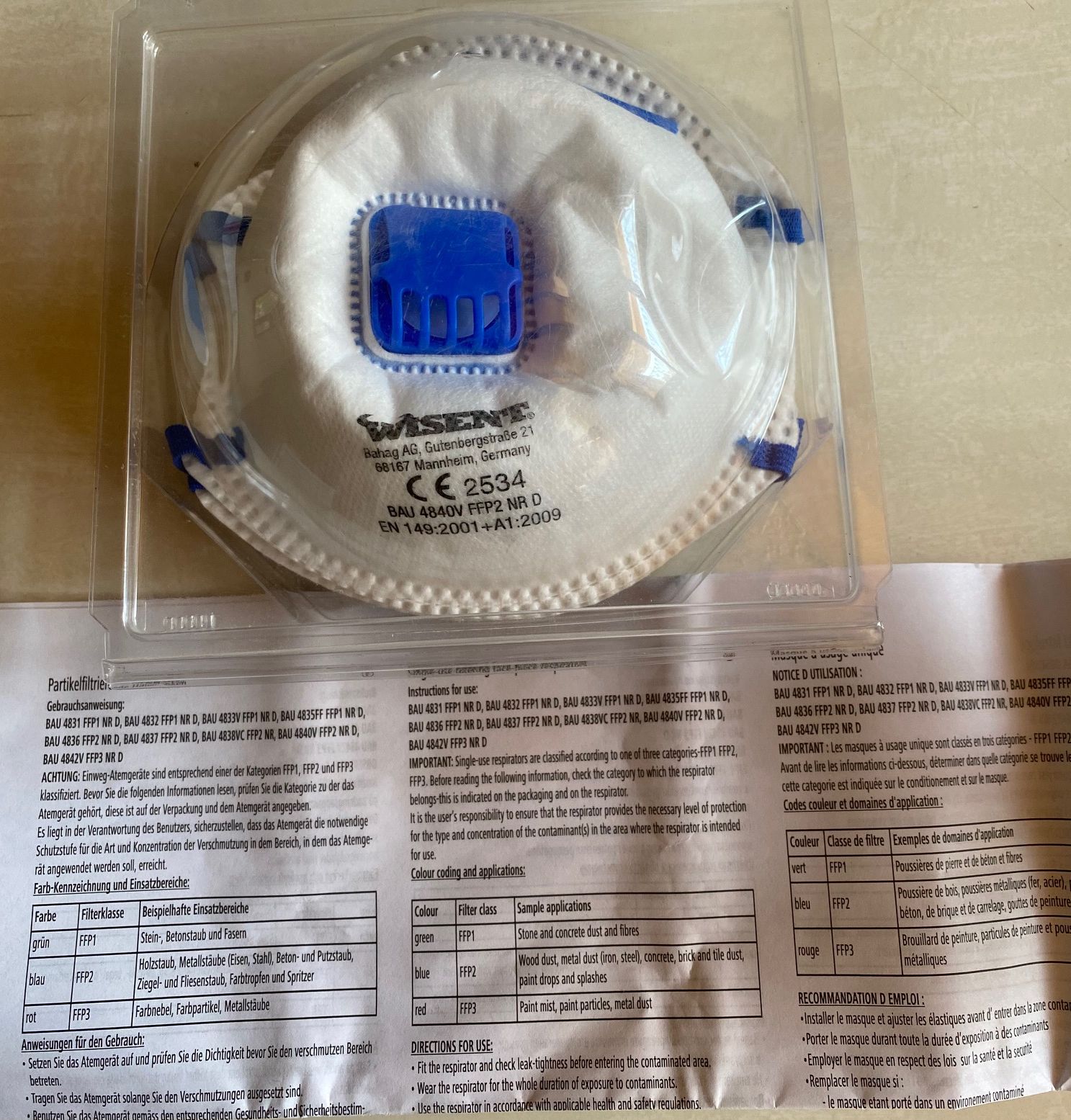
Sei ganz ruhig
Sei ganz ruhig. So heißt das kurze Gedicht von Angela Krauß und auch die erste Zeile. Es hat mich seit einiger Zeit schon begleitet.
Gerade der Eintrag zum Himalaya und den Besteigenden des Mount Everest hat mir die Zeilen erneut in Erinnerung gebracht. Für einige wenige besteht das Leben immer noch aus Sensationen. Immer höher, immer weiter, immer schneller. Dabei wissen wir, unser Planet hält das nicht aus.
Unsere Einkaufsmeilen suggerieren uns ein Übermaß an verpassten Gelegenheiten, wenn wir jetzt nicht zugreifen. FOMO (fear of missing out) ist allgegenwärtig und ein viel zu erfolgreiches Marketingkonzept, dem sich kaum eine Person entziehen kann. Die Selbsteinschätzung der Zeit, die uns verbleibt bis zum Tod (perceived time till death) oder unseres spezifischen Sterblichkeitsrisikos bezüglich Vermeidbarkeit oder allgemeinem Risiko, beeinflusst „unbewusst“ unser Verhalten. In Vergangenheit verhaftet sein, ist keine Lösung. Das Leben wird vorwärts gelebt, und rückblickend verstanden.
Bei einem gelegentlichen Rückblick wird vielen bewusst, es hat sich viel angesammelt (nicht nur im Keller). Aber mehr, muss es nicht werden, anders schon, besser vielleicht. Als Hommage an Angela Krauß mal ein 7-Zeiler, beeinflusst von der Konferenz im Europäischen Parlament „Beyond Growth“ im Mai 2023. Ruhig werden und ruhig bleiben, sollten wir beständig versuchen. Klein- statt Großschreibung, flache Hierarchien, Gleichstellung bei Wörtern und Sätzen. Warum noch Satzzeichen? Denk dir deine Welt, wiedewiede wie sie dir gefällt.
bleib ruhig
bleib einfach ruhig
la vie est belle tel quel
hab keine angst was zu verpassen
es bleiben jahre zu verweilen
schau mal umher
da ist viel

Himalaya
In May 2023 we commemorate the 70th anniversary of the first claiming of the Mount Everest in the Himalaya region of Nepal. Since then, the tourism to reach the highest mountain and have your photo taken there, has become a kind of over-tourism. Spectacular memories and images lead to persons taking unprecedented risks for a bit of fame. 30 persons have died on such expeditions. It is a bit more exclusive than running a marathon of 42,125 km, but even there occasional deaths are part of the race.
Nepal needs the foreign currency to build and rebuild the country. After resources have created the wealth of nations, it is tourist attractions that favour accumulation of wealth. Beware of over-exploiting nature in this respect. The consequences and costs are non-negligable. Climate change does not stop in front of tourist attractions. Some routes in mountains are already more dangerous due to melting of what we named wrongly permanently frozen areas (permafrost). Using virtual reality should allow us rapidly to experience the splendour of the highland Himalaya peaks and climbing. In the meantime enjoy some momo (Himalaya dish) rather than making preparations or training for the next top mountain. It is the images of the area that count, not us in front of the mountains or seemingly endless space. Images and photos taken can help us over the urge to visit this spectacular area ourselves. The planet will need us being satisfied this way, just like watching photos or movies rather than demanding to live in a splendid surrounding or building (castle). My home is my castle and my imagination is my travel book. 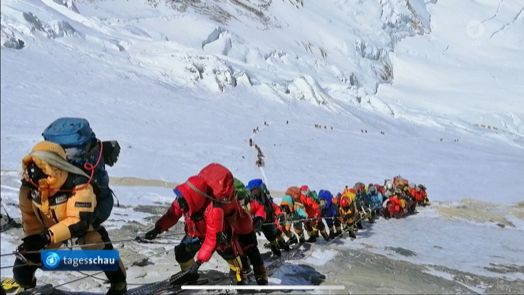
Birds
The study published in PNAS in May 2023 is demonstrating the loss in bio-diversity with respect to birds over last few decades. Our economic growth has caused considerable costs. Some of these costs we shall never be able to make up again. Species gone for ever, we should care. Measuring the loss is a first step in calculating the negative impact our economic growth models have already caused. Time to stop, repair and reverse as much as we still can. It is not fair to next generations to destroy a large amount of bio-diversity now and leave the exploited planet to “no-future generations”. A good documentation of the losses (radio-france-LINK) allows us to pin down who is most responsible for the losses. Agro-industry with the heavy use of pesticides is well known for the huge negative impact it has on bird populations and us as well. It is not only a European issue, but rather a world-wide issue. However, starting at home is a huge step to practice agriculture differently. Most of this is known for some time. It is the implementation of the necessary policies where powerful lobbying is successful to carry on as usual. Thinking “Beyond growth” delivers many useful perspectives and solutions to these problems. 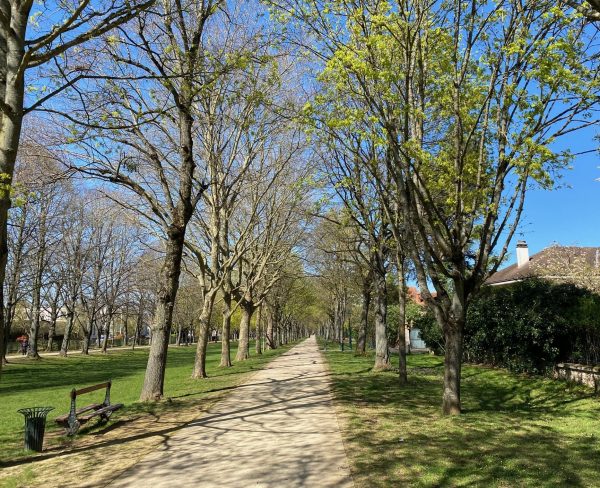
Repair 3
Repair is our new mantra. Think of repairing in all domains as of now. Nature is showing us the way how to repair in many ways. Culture is also embracing the shift towards repairing as caring. If we really care about our planet, and there is no planet B, we shall have to repair in many more domains. We are used to repair bicycles, cars, roofs, windows etc. Repairing is never boring. You can improve the performance of a device or building by repairing it, even with relatively small budgets. Isolation of buildings is a good example of investing in upgrades through repairing. Rather than throwing away a functioning heating system repairing it with an energy saving device is enhancing its performance and produces fewer emissions in the short run. Heat pumps are the way forward for new installations. Shifting a sector, heating with gaz, to ensure longer lasting repair and improve options would save a lot of raw materials and CO2 as well. The construction sector has repair work almosts in its DNA, the energy sector will have to make that shift as well. Dare to repair. 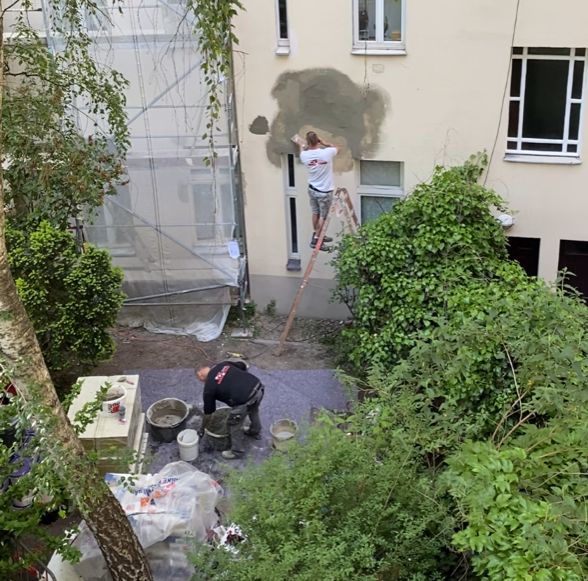
Archer
The Archer is a recurrent topic in art. We find lots of examples around in Berlin just as in front of the National Gallery. Historical references are manifold, too. The exhibition in the Martin-Gropius-Bau with works by Daniel Boyd adds temporarily 3 paintings. But wait, beyond this shared anthropological phenomenon across continents, this exhibition challenges our western, imperialist perspective on human existence.
Please take of your shoes, at first entry into the museum entry hall. Unsettling for most of us, we are continuously confronted with our narrow perspectives on perceptions. Poetics, philosophies, perceptions and cultures are all to easily classified and devalued.
This exhibition achieves to surpass our traditional western concept and empathy for land, room, light, air and water. Eurocentric narratives still dominate the world of art and art history. Daniel Boyd manages to unsettle this through his relentless effort to differentiate from this narrow perspective. Aiming for a difficult to accomplish solidarity across resistance movements, he highlights the common injustice “First Nation People” had to go through. These original inhabitants of continents claim their right to own languages, customs and spiritual or spatial perception. It remains a challenge to start to like the notion of opacity (Éduard Glissant) rather than our western aim for transparency, associated with the enlightenment philosophical tradition. The archers in Boyd’s work aim into the, maybe opaque water, maybe clouds, maybe into the twilight. It sometimes seems more like a ritual than a weapon. Family histories find their way into his works based on photographs of grandparents. The images are different from our conventional depictions of First Nation people, just to highlight the limitations of our western photographer’s eye and mind. 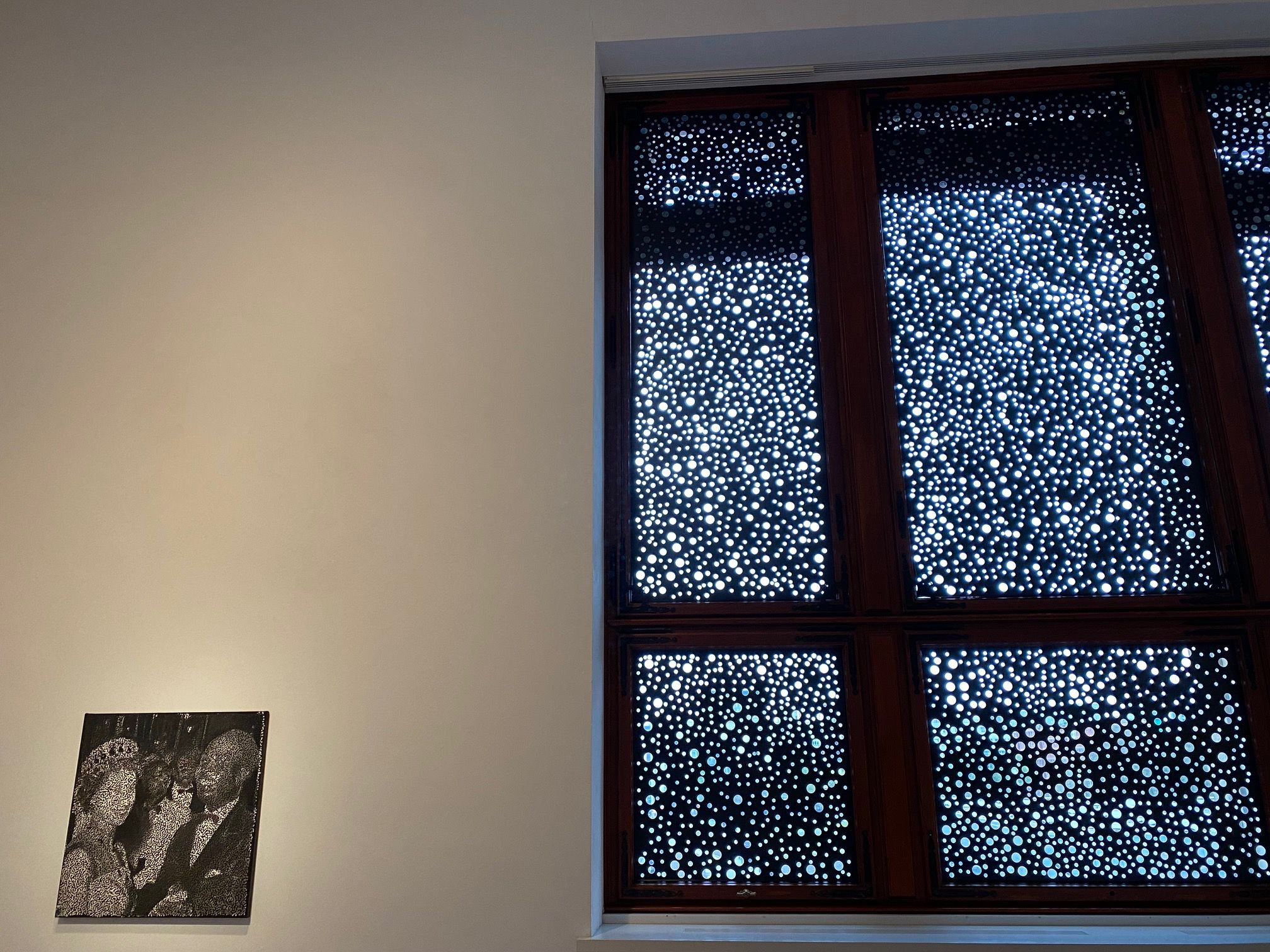
Bücher weg
Bücher, die lange weg waren, können wiederkehren. Das ist die gute Botschaft, die durch die digitale Bibliothek der verbrannten Bücher erzeugt wird. Vergleichbar der erneuten Aufführung von Komponierenden, deren Werke wieder in fantastischen Klangwelten erlebbar werden. Der 90. Jahrestag der Bücherverbrennung durch die Nationalsozialisten markiert meistens nur ein einmaliges Ereignis (10.5.1933 Berlin) in dem brutalen Aufstieg der Nationalsozialisten. Tatsache ist jedoch, dass sich die Bücherverbrennungen über mehrere Wochen hingezogen haben. Ein Beispiel ist die Bücherverbrennung in Potsdam Babelsberg am 24.6.1933. Viele andere Orte warten auf ihre Aufarbeitung. Erneutes Lesen dieser Bücher ist eine Würdigung der geächteten SchriftstellerInnen. Werner Treß wurde im Deutschlandfunk am 12.5.2023 dazu interviewt und beschreibt die erschreckende Hetze, die dabei von den Studentenverbindungen ausgegangen ist.
Erneutes Verlegen dieser Bücher hält die Erinnerung an die „verbrannten Dichter“ wach und verdeutlicht, wie der Einstieg in die grausame Diktatur ablief. Literatur hat neben der Funktion der Unterhaltung und der schönen Künste, sicher eine zusätzliche Aufgabe, die der Verteidigung der Meinungsfreiheit. Dazu gehört das Tolerieren unangenehmer Meinungen, solange sie die unveräußerlichen Menschenrechte berücksichtigen. Dazu ebenfalls ein Hörbeitrag im DLF. Nicht jeder hat die Courage wie der bayerische Schriftsteller Oskar Maria Graf, der solidarisch verkündete, verbrennt mich auch, mit der Konsequenz, unmittelbar ins Exil gehen zu müssen. Exilliteratur ist heute noch vielfach vorzufinden. Salman Rushdie, beispielsweise ist erst kürzlich einem Anschlag entgangen. Lesen all dieser SchriftstellerInnen würdigt ihre Beiträge und ihre Bücher bleiben. (online Link)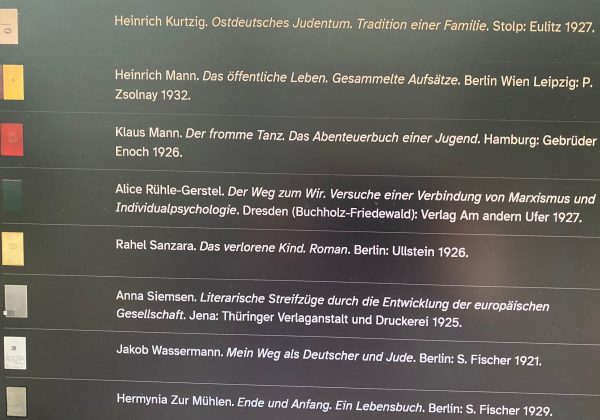
5000
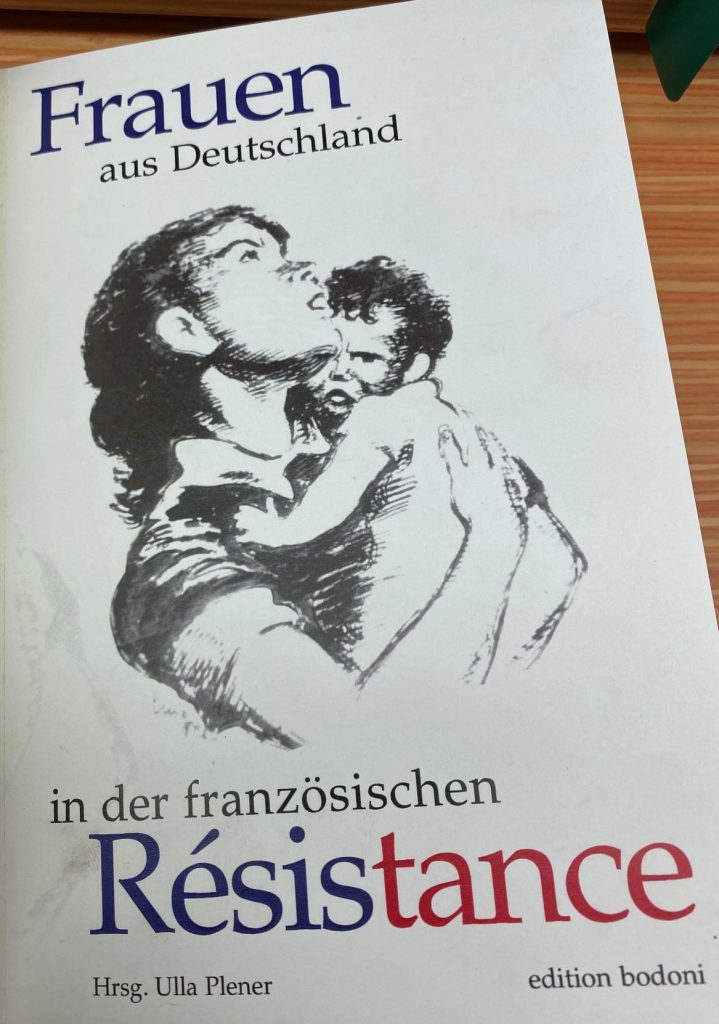
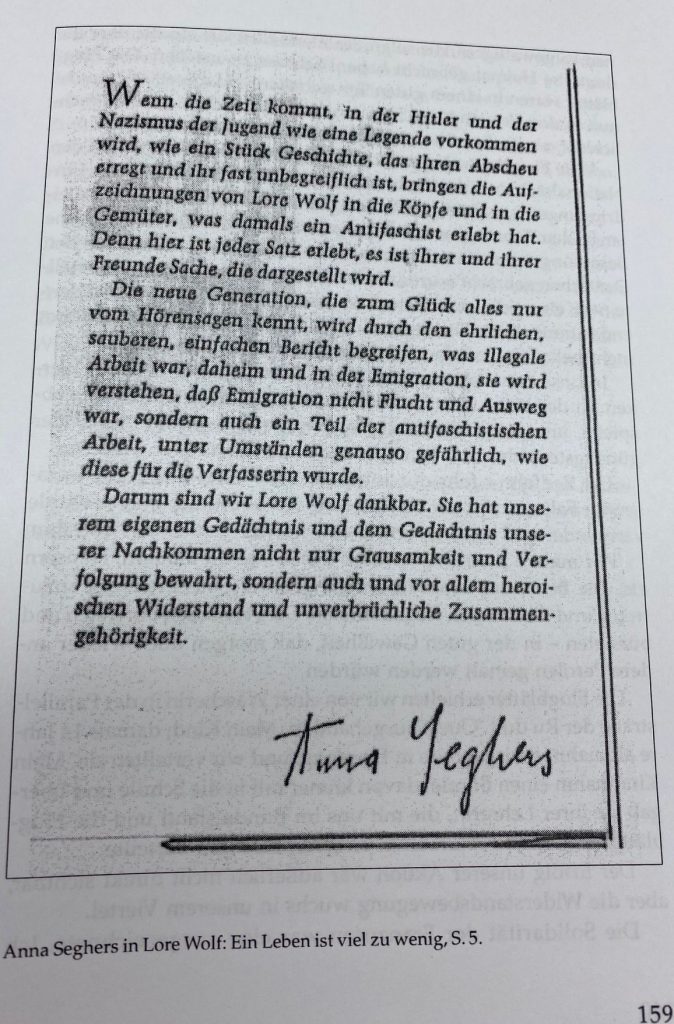
“5000 Köpfe. Wer war was im Dritten Reich” enthält eine alphabetische Liste der Hauptschuldigen und Belasteten. Gut, dass es dazu bereits auf Wikipedia eine kleine Diskussion gibt mit weiterführenden Literaturhinweisen. Die viel jüngeren ausführlich recherchierten Arbeiten zu den Kreisleitern in Süddeutschland haben 250 Mitwirkende gebraucht, damit eine gründliche Archivarbeit möglich wurde. Zu der Recherche von Dr. Proske u.a. lässt sich lediglich das Organigramm zu den Funktionsbereichen eines typischen Kreisleiters ergänzen. 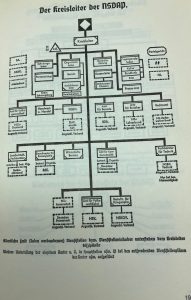 Eine solche Übersicht verdeutlicht, woher die Analogie mit den “kleinen Herrgöttern” kommt. Machtfülle, angehäuft in einer Person, erleichtert selbstherrliche Willkür in der Amtsausübung. Das gleiche Verhalten findet sich bei den berufsspezifischen Biografien zu den Planern und Architekten in der Ausstellung “Macht Raum Gewalt” der Akademie der Künste, die damit gleichzeitig eine Aufarbeitung dieser Profession leistet. Viel lieber würdige ich hier die Biografien der deutschsprachigen Frauen, die sich couragiert der französischen Résistance angeschlossen haben und ihr Leben riskiert und vielfach verloren haben. Positive Leitbilder brauchen wir, besonders wieder in Zeiten in denen Zivilcourage nötig ist, nicht nur in Deutschland.
Macht Raum Gewalt
So heißt der Titel der umfangreichen Ausstellung im Haus der Akademie der Künste, direkt neben dem Brandenburger Tor. Nur 3 Monate bis 16.7.2023 lässt sich durch die Architektur, Planung und Umsetzung zur Zeit des faschistischen Regimes in Deutschland taumeln. Angesichts der monströsen Verbrechen und der unterliegenden ideologischen Doktrin wird die Frage „macht Raum Gewalt?“ auf 2-fache Weise beantwortet. (1) Raum macht Gewalt und (2) Gewalt macht Raum. Das gestalterische Element von Architektur schafft Räume, die individualisieren, personalisieren oder entpersonalisieren können. Die Uniformität im Faschismus kreiert eine visuelle Sprache, die durch ihre Art Räume und Räumlichkeiten zu gestalten gezielt entpersonalisiert. Gewalt- und Machtausübung fällt darin leichter. Räume und Gebäude wurden der Menschlichkeit enthoben, gebaut, den Menschen zu überleben.
So fällt es in entpersonalisierten, bewusst überdimensionierten Raumkonzepten, leichter Gewalt gegen Menschen vorzubereiten und durchzuführen. Die 1. These „Raum macht Gewalt“ lässt sich sozusagen empirisch in der Ausstellung durchwandern. Die 2. These „Gewalt macht Raum“ wird ebenso eindringlich durch die Dokumentation der Zwangsarbeit, Konzentrationslager und massenhaft ausgeübten physischen und psychischen Gewalt durch die herrschenden Faschisten verdeutlicht. Wenn Wörter und Stimmen von Augenzeugen zu fehlen beginnen, werden die Texte, Zeichen, Bilder und Stummfilme zu Dokumenten, wie mit Gewalt Raum gemacht wird. Der expansionistische, imperialistische Drang der Faschisten machte vor keinen Grenzen halt. Juristische Grenzen, menschenrechtliche, moralische oder Landesgrenzen spielten keine Rolle mehr. Rechtsbeugung und Missbrauch war an der Tagesordnung, um Raum, Macht und Gewalt menschenverachtend durchzusetzen.
Die architektonischen Nazi-Hinterlassenschaften, weiterhin sichtbar in Berlin, München und Nürnberg werden nur in den markantesten Bauwerken dokumentiert. Das reicht schon, den historisch bewussten Blick zu schulen. Selbstverständliches Hinnehmen von diesen Anblicken verbietet sich. Das Übertünchen des Adlerkopfes mit weißer Farbe, Symbol für den amerikanischen Adler, sollte in uns die Dankbarkeit für die Befreiung von der Nazi-Diktatur festigen und dazu beitragen, den Tag des Sieges 8.5.1945 der „Alliierten Streitkräfte“ als Tag der Befreiung zu feiern. 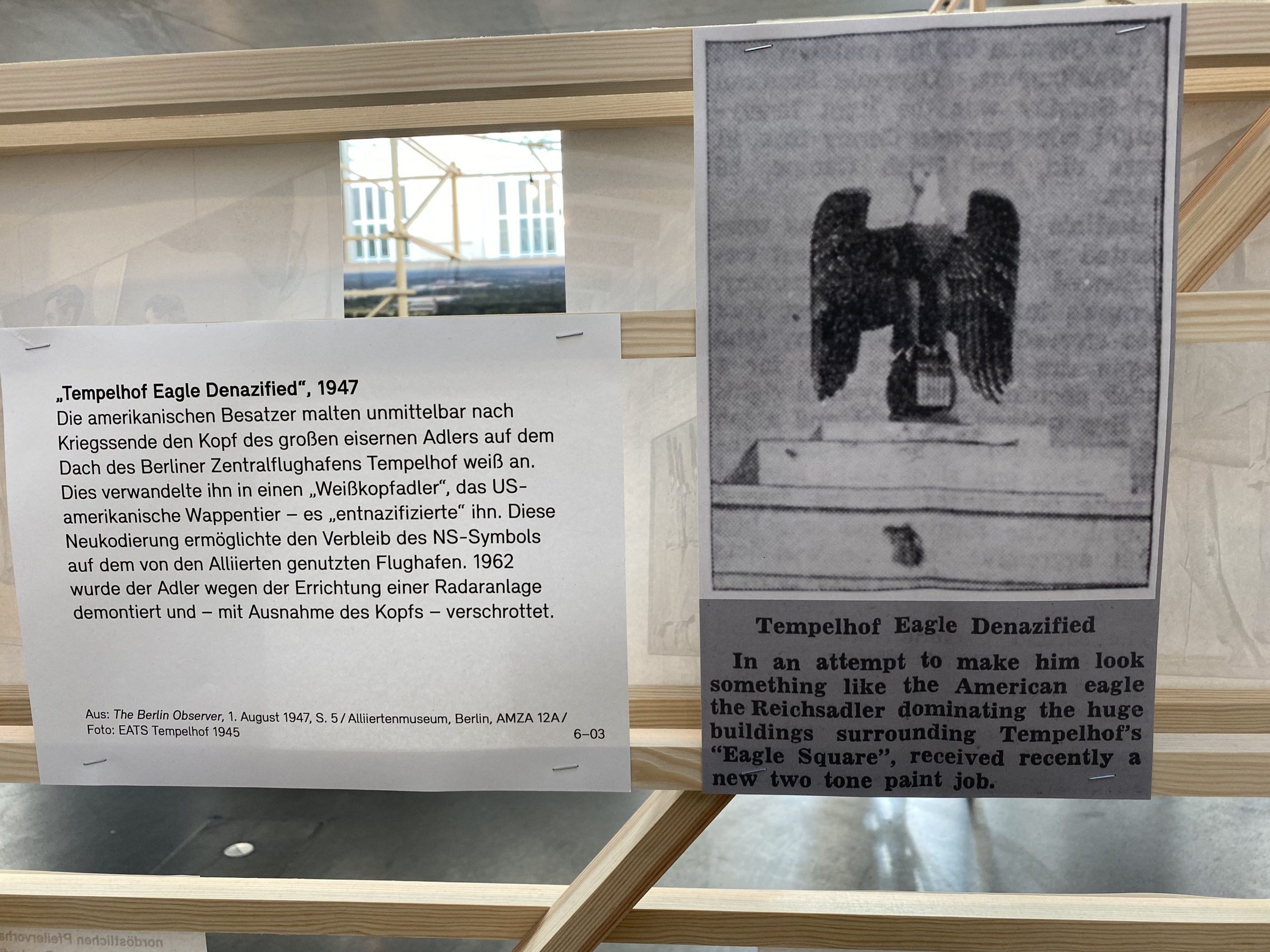
Aufarbeiten
Ganz anders als das Verb „reparieren“ lässt sich „aufarbeiten“ verstehen. Beide Verben beschreiben Prozesse, die schon mal einige Zeit dauern können. Manche dieser Prozesse haben eine scheinbar nicht enden wollende Persistenz. Anders als Autos und Maschinen allgemein, können wir Geschichte nicht reparieren, bestenfalls Versuche einer Entschädigung machen. Aufarbeiten von geschichtlichen Ereignissen, Kriegen, Menschenrechtsverletzungen und Unrecht kann viel schwieriger sein. Rechtsausübung von Unrecht, das in historisch gültige Gesetze gefasst ist, gilt als rechtspolitisch wenig angreifbar. Moralische Bedenken späterer Generationen, beispielsweise, sind wie der historische Gegenstand selbst, zu kontextualisieren.
Diese geschichtswissenschaftliche Herangehensweise an historisches Material hat seit einiger Zeit eine zusätzliche verlegerische Heimat gefunden. Der Kugelberg Verlag, Verlag für historische Sozialforschung verbindet einen biografischen Ansatz der Aufarbeitung von Geschichte mit einer organisationssoziologischen Perspektive der mittleren Führungsebene als Funktionselite. Zusammengenommen ergibt sich aus dieser Verbindung von Mikro- und Meso-ebene des Nationalsozialismus eine wichtige Ergänzung der Aufarbeitung der Schrecken und Verbrechen der Nationalsozialisten. Das Büchlein von Dr. Wolfgang Proske „Kleine Herrgötter! Die Kreisleiter der Nazis in Bayern“ ist bereits in der 5. Auflage im Kugelbergverlag erschienen. Die sorgfältig recherchierten Beiträge bauen auf den Arbeiten zu den umfangreicheren 20! Bänden „Täter, Helfer, Trittbrettfahrer – NS-Belastete“ in Bayern und Baden-Württemberg auf. Die bereits mehr als 250 AutorInnen, versammelt in diesen Bänden zu den biografischen Recherchen, vereint ein einmaliges, zu Recht mehrfach prämiertes Aufarbeitungsprojekt von lokalen Geschichtsinteressierten und -werkstätten.
Die Multiplikatoreneffekte solcher „Citizen Science“-Projekte unterstreicht die Bedeutung von „bottom-up“ Vorgehensweisen. Erst die Zusammenarbeit von diesen vielen AutorInnen ermöglicht die Zusammenschau und genügend tiefe Einblicke in den Aufbau und die Funktionsweise der menschenverachtenden NS-Maschinerie. Geschicktes Infiltrieren von allen möglichen Machtpositionen in früher Zeit schnürte das Netz des Terrors immer dichter. Daraus ergibt sich eine immens wichtige Lektion für das Überleben von Demokratien: Wehret den Anfängen! Keine Freiheit und Machtpositionen den Feinden der Freiheit! 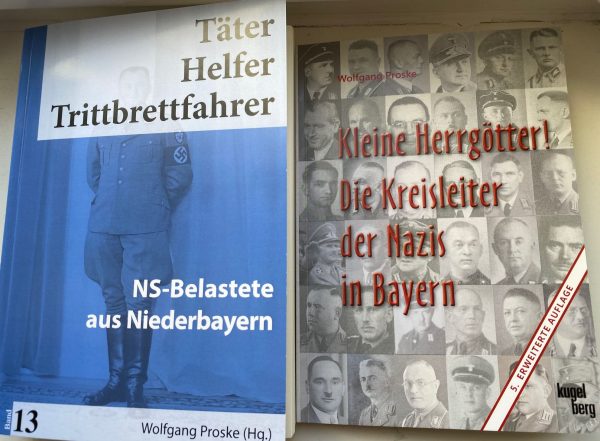
Doppelt-gemoppelt
… hält besser. So erging es mir, wie den anderen Zuschauenden im Berliner Konzerthaus bei 2 x hören. Eine kleine Fangemeinde hatte sich wieder eingefunden, um zeitgenössischer Musik zu lauschen und sich zwischendurch Erläuterungen anzuhören. Welch eine tolle Gelegenheit, denn neben dem Gespräch mit den beiden Musikerinnen Franziska Pietsch (Violine) und Maki Hayashida (Klavier) war die Komponistin Tatjana Komarova anwesend. Christian Jost moderierte das Gespräch über die Komposition und Interpretation bevor das gleiche Werk „Umhüllt von Licht und Nebel“ erneut zu hören und sehen war. Das kammermusikalische Stück in 4 Sätzen lebt von seiner unaufgeregten Dynamik und dem Wechsel der beiden jeweils tonangebenden Solistinnen. Allein, aber gemeinsam; ruhig, dennoch dynamisch. Dieses Sich-aufeinander-beziehen und gleichsam wieder nahezu meditativ auf sich selbst zurückgezogen komponierte Werk hat einen überraschenden Bezug zu den Biografien der Künstlerinnen. Selten gibt es die Gelegenheit, so nah an diese Hintergründe heranzukommen. Während noch die Tradition der italienischen Oper (auch Mozarts Frühwerk Mitridate) die SängerInnen stimmlich bestens in Szene setzten, vertraut das zeitgenössische Stück von Komarova auf eine zurückgenommene, eher verhaltene Virtuosität. Angedeutet ja, aber eben nur angedeutet und umgehend reflektiert, bescheiden gewendet. Wechselbäder der Gefühle, wie sie Aufführende ständig durchleben, werden nahezu musiktherapeutisch gewendet. Die Hommage an die Verletzlichkeit in der Musik sowie durch die Musik wird mit der Besetzung authentisch vermittelt. Das Stück von Komarova wurde zum Festival Spannungen 2014 komponiert und im Jugendstil Wasserkraftwerk Heimbach uraufgeführt. Der kleine Werner-Otto-Saal im Konzerthaus bot eine für Kammermusik geeignete Atmosphäre für die Darbietung sowie für das Gespräch zwischendurch. 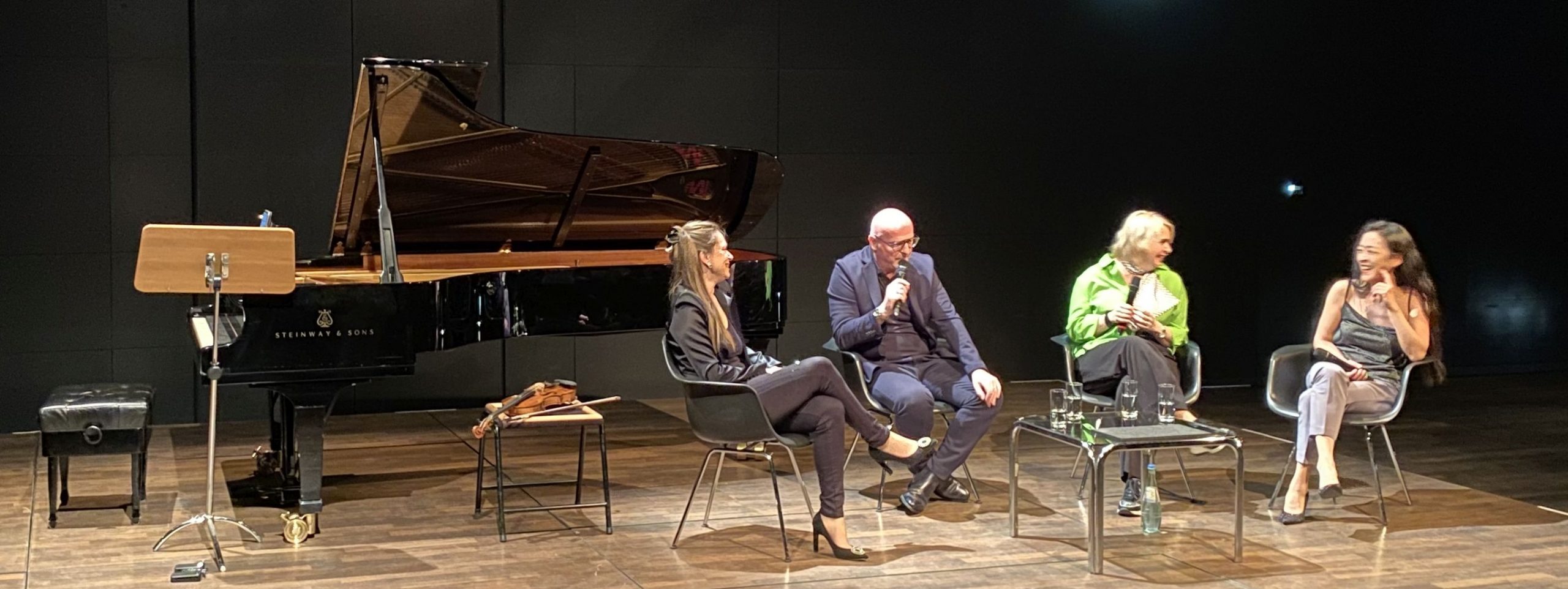
De-risking
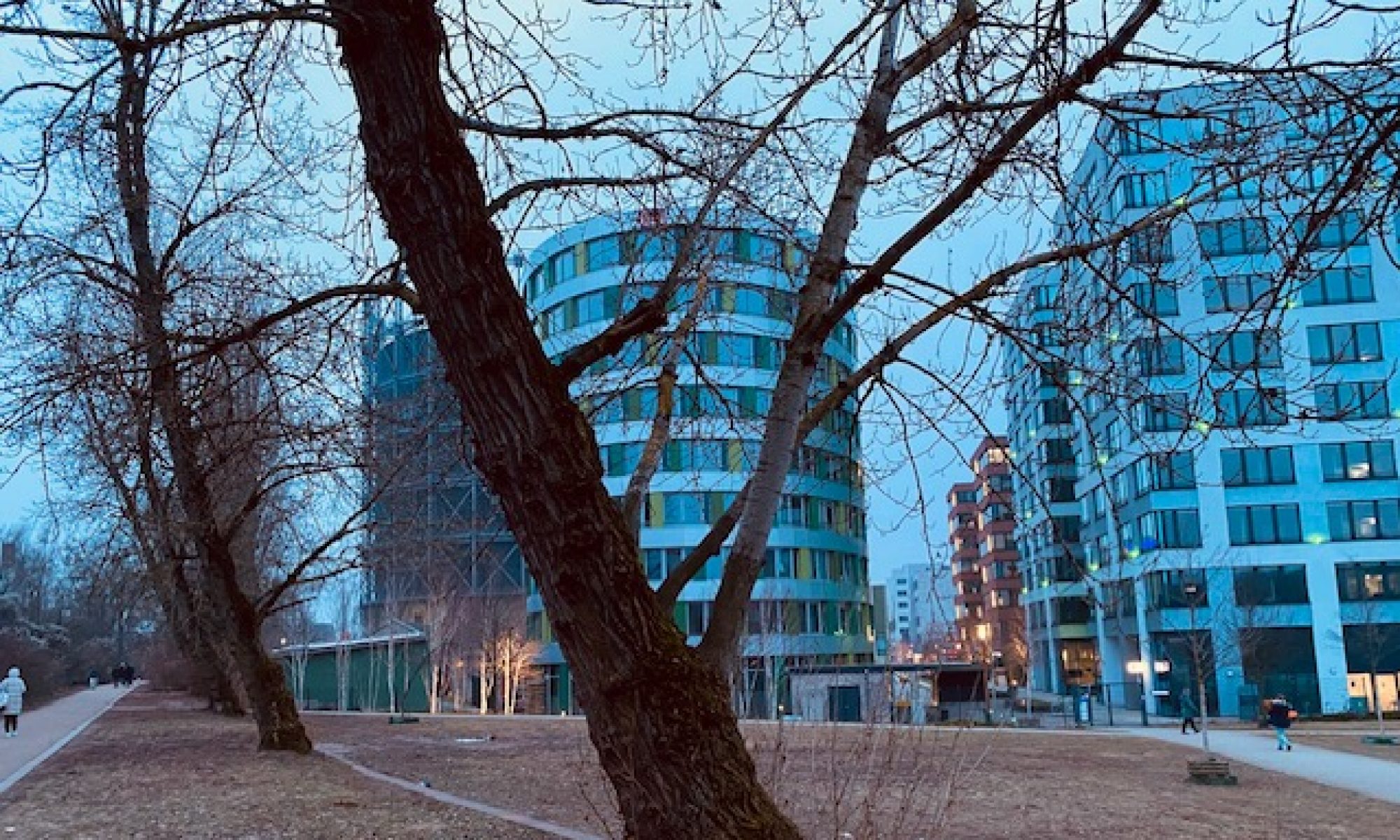
Risks are all around us. Risk is the spice of life. True, but this might be an elitist concept of life or business. Survival of the fittest or the best equipped to take risks might be the consequence. After the 3 crises, financial, covid, energy, we have a new impetus to thrive for de-risking. Certainly, concerning our health, we are aware that prevention is key to fight a pandemic. In order to stem an energy crisis, most countries start to rethink their energy mix and achieving more energy autonomy is a major step to shield against risks of delayed delivery or commerce with belligerent states like Russia. De-risking is key in supply chains for industries (automotive production, microprocessors) as well as service providers (cloud services, care givers) just as well. Mariana Mazzucato (UC London) urges us to develop a new narrative to accompany the transformation of our production and service provision models. Mazzucato advocates to learn from lessons from the ground of how to proceed in the best way. Copenhagen is a good starting point to observe how a metropolitan city manages the greening and decarbonisation of a city. It is important to not only target single policies but the coherence of several policies and approaches. In my view de-risking means for Germany and the EU to shield energy systems from foreign, malignant interference. Only local production of energy and nearby consumption of it will ensure the de-risking of energy provision and consumption. Let us start with massive investments in rooftop solar or small wind turbines. Nobody complained about millions of ugly television antenna all around us. Solar cells on balconies contribute to a basic local electricity supply, difficult to target millions of solar cells instead of a single huge and horrifically dangerous nuclear power plant. At the same time ,we reduce dependency on monopoly or oligopoly structures that develop their own agenda (Too big to fail, remember those?). I prefer the reverse statement. Because they are so big, they are doomed to fail and, therefore, fail us sooner or later. The Forum New Economy offered an open and accessible platform for exchange of ideas. That’s a good starting point to address de-risking. Reducing Risk is in the subtitle of Rebecca Henderson’s Chapter 3 on “Reimagining Capitalism” (short Review), but I would like to add the business case for household production of energy for de-risking supply failure and exploitation of consumers through excessive profit margins as a prosumer business case.