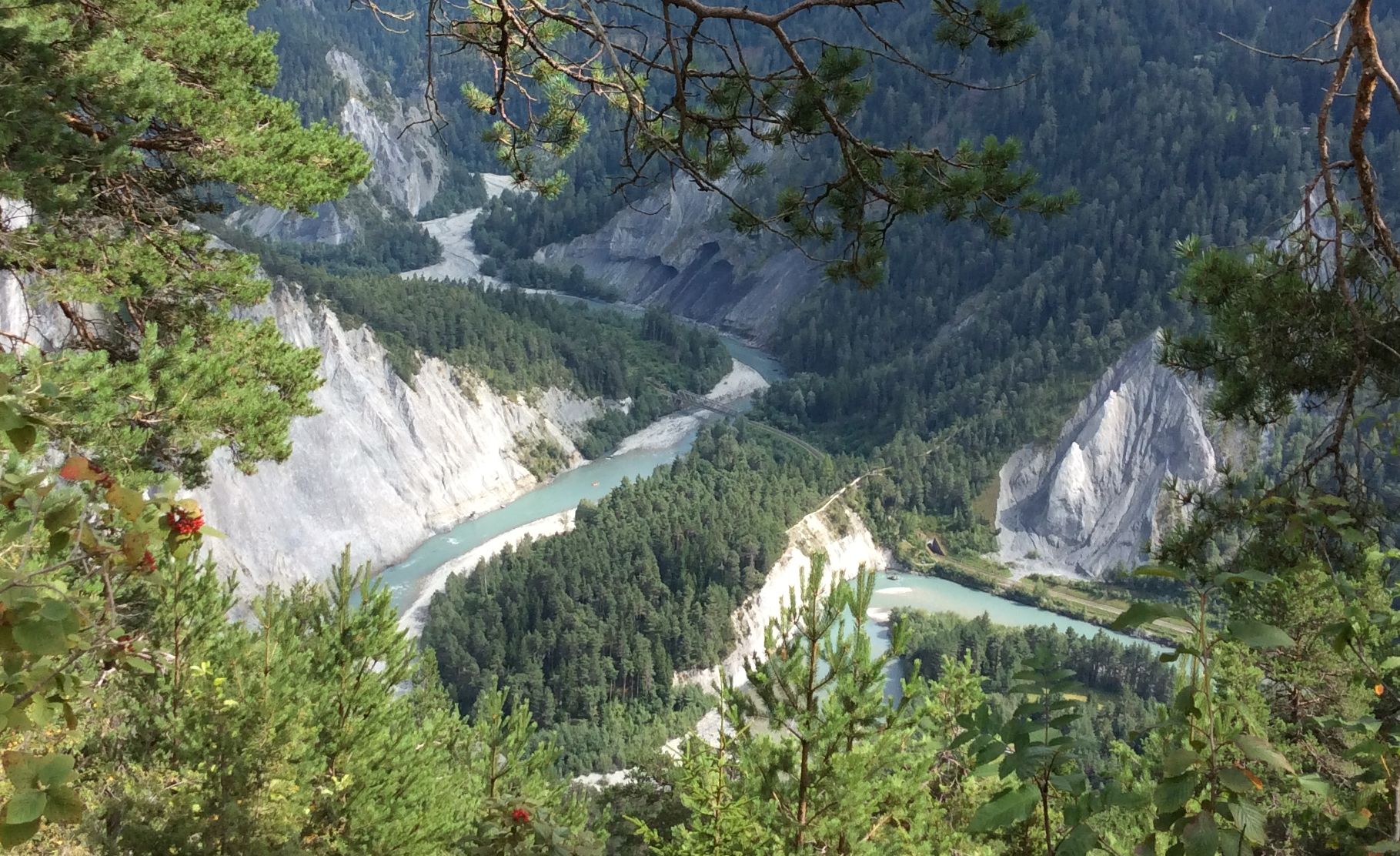

There are many forms of triangles. Jacques Pain (2000, pp.121-136) adds another one. “Jeunes, banlieue, école : le triangle sans parole” (Youth, suburb, school : the triangle without voice). He calls it a symbolic, sensitive triangle which is confronted with mounting difficulties from inside as well as external pressure. Pain describes and analyses the violence that emanates from the triangle.
Additionally, the triangle appears to be spiralling upwards causing mounting pressure on the social fabric of whole societies. Education systems have to deliver sufficient numbers of youth ready for insertion into the labour market, ready to accept the subordination to hierarchical structures while at the same time being confronted with high social contributions to other parts of society and unrepairable environmental damage and depletion of resources by older generations. With high interest rates even the middle-class dream of a house with garden is out of reach for almost all of the young growing up in suburbs, disadvantaged schools with pervasive violence. Dealing drugs or taking drugs has become pervasive and an entry port into the violence of law in addition to the violence of the street, school or even home.
Give the triangle a voice. Call the names of the victims so that politicians do not forget all too quickly what is their duty to guarantee – a youth free of violence and a youth with an equal chance for learning. Free from violence, but free to learn or be given a chance to find your way into society at large not only restrained to your suburb.
Reference to the historic riots of the mid-1960s (Saul Bernstein, 1967, p. 27) and the recent Paris riot statistics from July 2023 suggest that history doesn’t repeat itself, but it seems to rhyme. A breaking of the silent triangle is like an eruption of a volcano. Violence is all over the place and leaves a lot of burned land and people. Cohort effects might prolong the suffering further throughout their life courses. Stigmatisation is likely reinforced rather than overcome. For the so-called holy trinity there were many words and songs. The modern triangle within society is still in search of the right wording, although rap-music is shouting loud about “la misère du monde”, only we are not really listening. 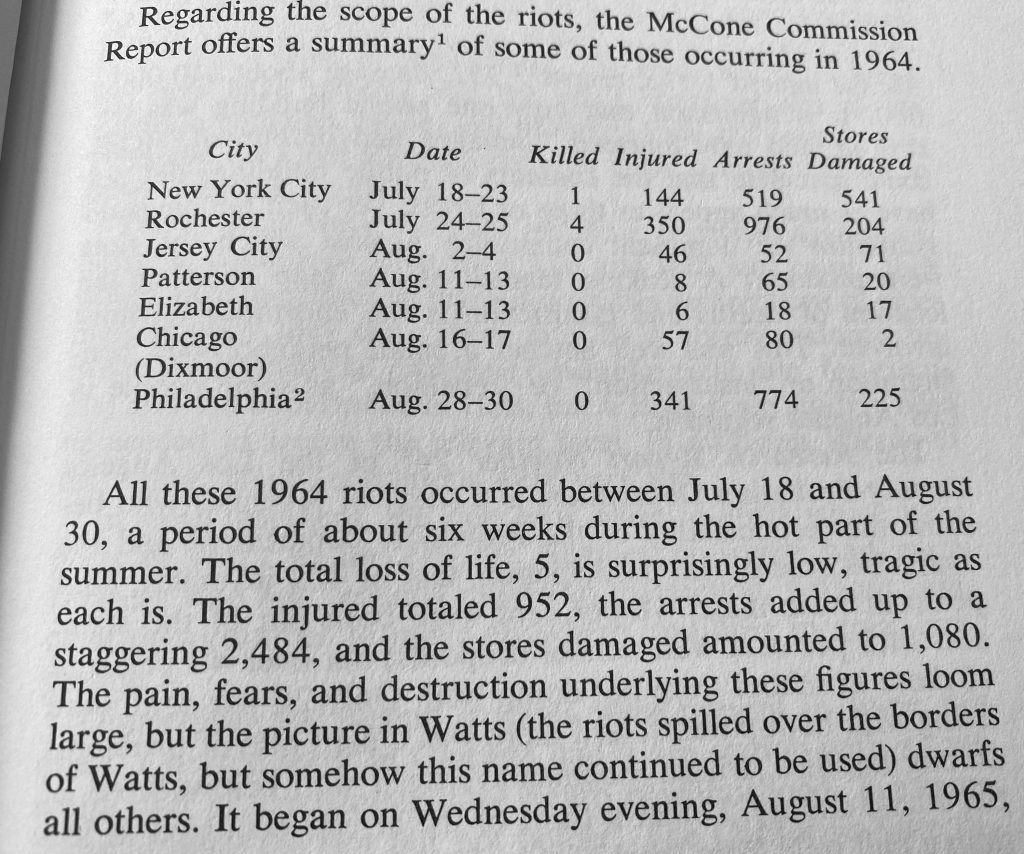
Law’s Violence
In legal studies the use of social thoughts are marginal, although AI has the potential to replace millions of lawyers just guiding through the jungle of laws and jurisprudence especially if several languages are involved (fiscal rules). Only with the eruption of major crises like police violence we start referring back to social and political thought and theories that enlighten the relationship of law, legislation and the social spheres. There is a huge, mainly American, literature on “law’s violence” even beyond the issue of capital punishment, the most obvious form of law’s violence (Sarat and Kearns, 1995). Basic elements of the relationship of law and violence follow from the notion of enforceability of law. Force is a constituent part of law, whether we like it or not, much like Derrida stated decades ago. Walter Benjamin and Albert Camus, both have contributed substantially towards our realisation that law is intrinsically linked to violence.
Linked to political theories, we have the conservative and liberal doctrines that see legitimate violence of the state as part of the normal organisation of statehood. The humanist tradition stresses the function of law as community-building as well as creating meaning, joint objectives and shared vision through law. In daily politics governments refer to one or the other doctrines as they see fit.
Sarat and Kearns (1995, p.8) also point to the tendency in legal studies to refer to singular cases and singular judgements, “discrete acts of its agents” and institutions rather than the overall picture of the violence of law. With respect to violence of the police the authors refer back to Jerome Skolnick, “Justice without trial”(1967), which in 2023 we link to the police violence in France. Police men provoking violence, execute their personal vision of justice and without a chance for a trial of their victim. The 60s are back on streets in Paris. The violence of law is visible for millions as the ratcheting up of power in favour of police to apply more violence in prosecuting “delinquents”. This had recently been voted by the French parliament with a conservative and liberal majority (LeMonde 2023-7-2 p.). The notion “Gewaltspirale”, a spiralling-up of violence, seems to be a fair description of what we currently witness in France.
Violence is embedded in words, uses of language and not only acts. Even in the field of representation and representative democracy, violence is present. Who represents or decides about life and pain for a fatally ill person? Why are persons of 14, 15, 16, 17 years of age not represented in parliaments, if others are deciding on their compulsory education, prison sentences and poverty relief.
At times it is necessary to take a step back and refresh our memories of the “pain-imposing, death-dealing acts” (Sarat and Kearns, 1995, p.10) of law. The abundant presence of violence of law in religious narratives is, however, another element worth analysing as part of the history of ideas at another time. (Image: Extrait de Frans Snijders, La chienne et ses petits 17th century)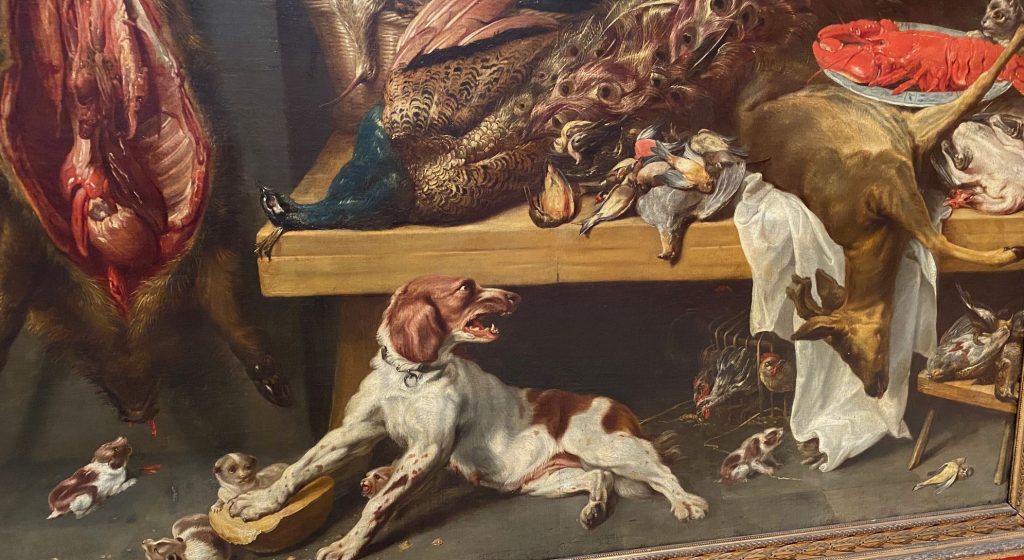
Violence 2023
The public debate about violence suffers from a lack of broad scientific reflection of the notion. C.A.J. Coady (1998, Vol.9 pp 615-17). In philosophy at least 2 theories address violence directly. A legitimate definition of violence treats violence as the illegitimate use of force. It is a kind of moralising appeal to reserve violence to those legally well-defined cases that receive their legitimacy from law. Next in the line of reasoning then is the definition of legitimacy. Slaves or colonies in this definition would never be allowed to use violence in their fight for freedom. This is recognised as a logical problem of such a definition. “In a legitimate state, shooting or savage beating by police will not count as violence, if it is a politically legitimate use of force.” (p.615).
The second theory of violence builds on the notion of “structural violence” (Johan Galtung, 1969). Structural violence is a much wider concept of violence. It includes social injustices inflicted on individuals or groups in society (suffering) as well as a broader view on perpetrators beyond individual persons to include police or institutions more generally. Coady stresses the point that both these theories are morally loaded without sufficient justification. Even a narrow definition of violence as “exercise of physical force” is too narrow, as it neglects the devastating effects of psychological violence. Part of the judgement therefore is motivation or intention of the person applying violence to clarify a moral stance. Psychic disorders or abuse in social upbringing are recognized as attenuating influences in legal procedures.
A wise conclusion is drawn by Coady: “Even justified violence is regrettable” (p.617). Living in permanent fear of abuse of violence by criminals or the police narrows the gap between authoritarian regimes and democracies. The basic social fabric of trust in the police is at risk in such a situation. It is very hard to re-establish trust in institutions once groups of society have lost it or even doubt that basic trust in the institutions of democracies is justified. (Image: Part of Pieter Brueghel II, De kindermoord te Bethlehem Musées royaux des beaux arts, Brussels, 16th century). 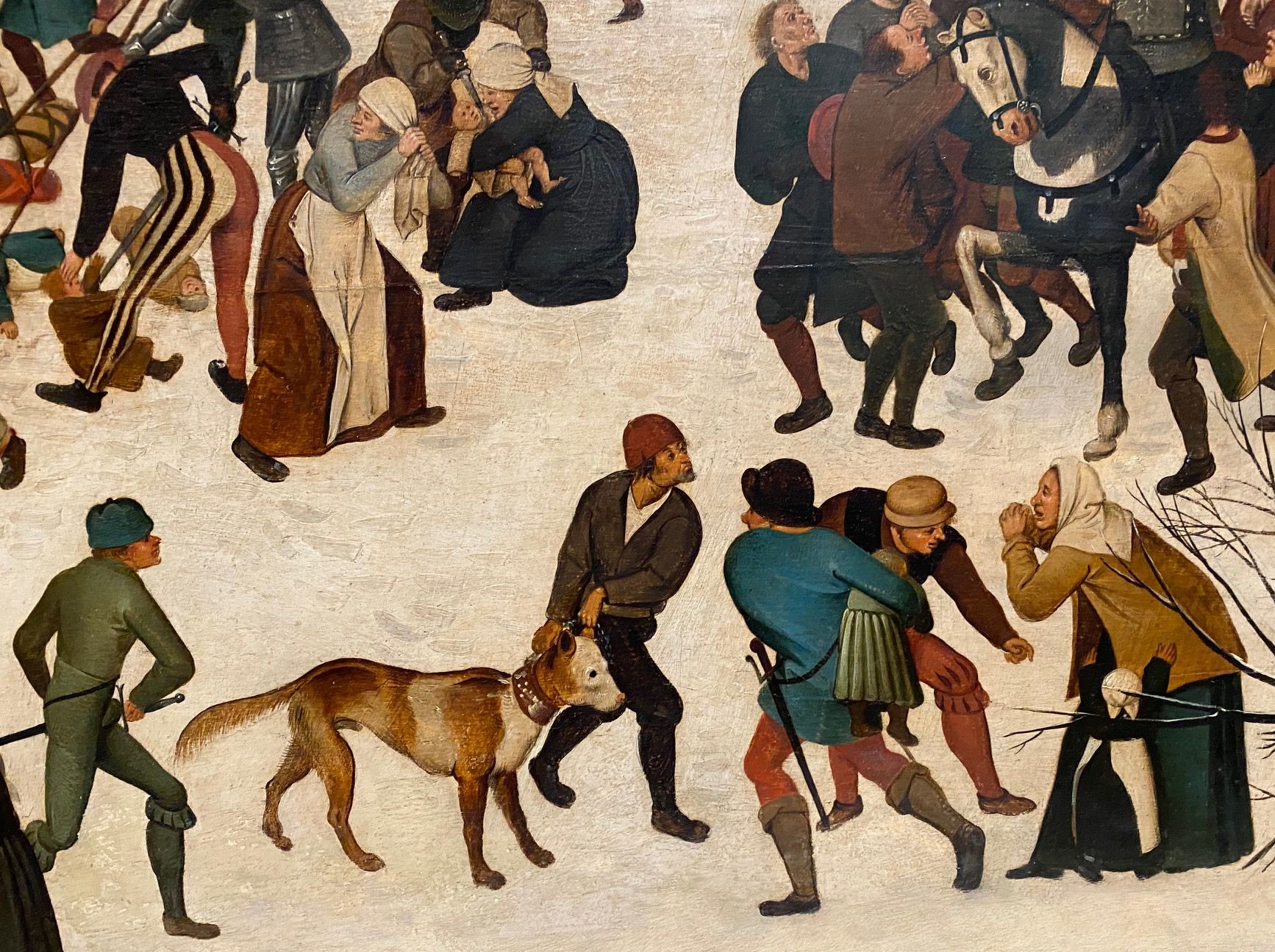
Police Violence
As a test of the viability of ChatGPT you might enter Police Violence. What you get in return is just a summary of some nice newspaper-ike editorial of a polite statement that this is a problem about everywhere and that the division of power will take care of it eventually. This is an unfair summary, but it highlights the risk of too many conservative editorialists in Europe that do not dare to take sides of the innocent youth that is at a permanent risk of police violence due them living on the margins of our modern, fast-moving societies that do not allow for lifestyles off-the-normal “protestant work ethic”.
Perceptions of what is fun and what is serious differ within societies, particularly between generations. Baby boomers have known and many experienced unemployment. Youth today has “precarious jobs” just around the corner. But just having “any” job without any career potential or, at best, on the minimum wage is no longer enough. Social media show that there is much more to life than just a 8-5 normal job. High-streets are full of marketing tricks that solicit people into spending without cross-checking their red lines.
Police and the flourishing private security sector are then charged to ensure that boundaries of financial and spending power are respected. This is exactly where the capitalist market economy fails the people. Without a tough police, ensuring property rights, the system cannot survive. Social market economies claim to soften the borders between have-nots and have-too-much. This needs permanent readjustment. That is where many of our social market economies have failed the poor and even middle-class people threatened with economic and status decline (latest at time of retirement).
Reactions may turn out violent, and again, the police is sent in to “stop” violence. As it turns out police, being abused as “political weapon”, may then become overly violent as well. Not as an overall force, but specific units or just several individual persons who have been trained in anti-terror exercises and have “a license to kill” (007). French legislation has recently facilitated the use of guns to impose the monopoly of power. The probability of who constitutes a potential target might be interpreted by the police itself. A threatening situation is perceived differently by different persons. Too much room for interpretation.
The image of the French superpower that is threatened by a 17-year-old youngster is not credible. It is time to sharpen the control of the police also in France. ChatGPT only on special addition includes the social movement of “Black lives matter” in the return on police violence. If you know the topic you can make use of the AI tools in drafting on police violence for example. Rather than to spend billions on fancy Olympic Games in preparation for Paris 2024, youth programmes would be much better investments in the medium and long run.
Tourists cancel visits to Paris and France in masses already. That is probably the only lesson that receives sufficient attention in the current government and may lead to better control of violence not from some pick-pockets, but from the police as well. 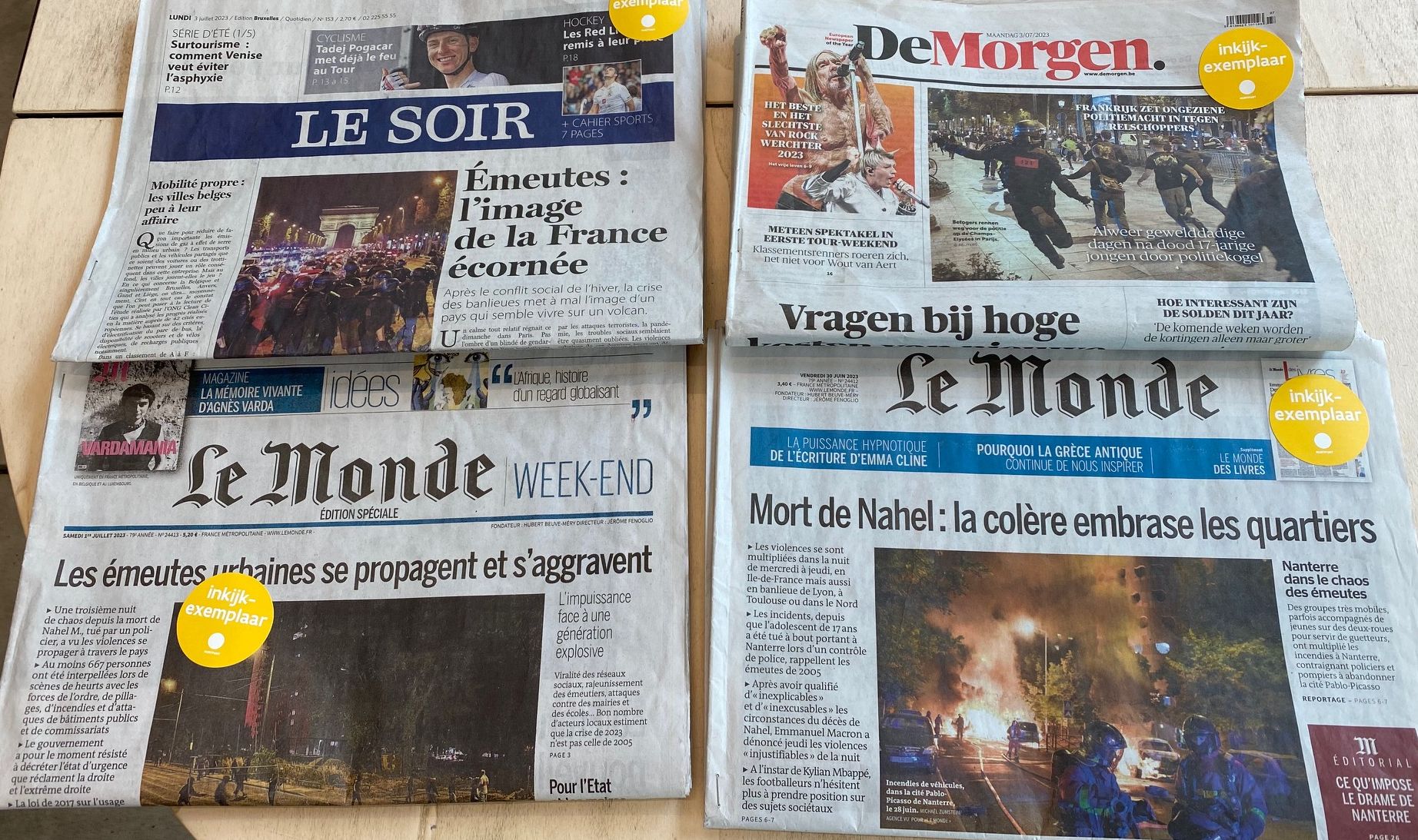
AI and I
Currently we are eager to run experiments using AI. As in normal life, humans tend to compare themselves with peers or other persons. Social comparisons, “can we still keep up with the Joneses” as in comparing spending patterns across households or neighbours, were for a long time the spice of novels and drama. Nowadays we tend to compare our own intelligence to the artificial intelligence. Here we go.
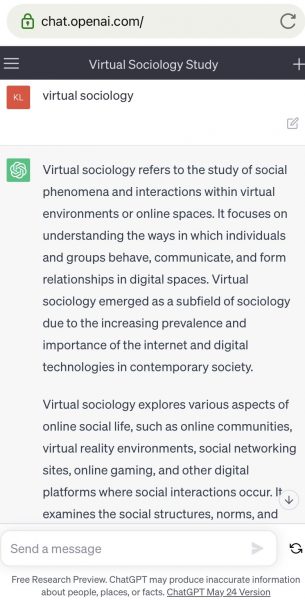
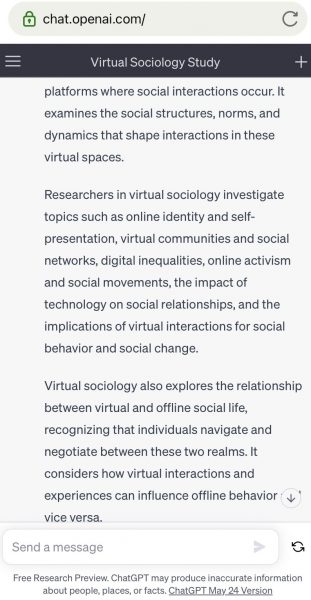
After I had drafted a blog entry on “Virtual sociology” I amused myself by checking what ChatGPT using OPENAI.COM would deliver as text on this combination of concepts and scientific fields. My own entry focused on the use of the virtual world to run experiments to test social theory. In the virtual world we might be able to test social behaviour which has severe ethical boundaries in the real world. Computer Games may even be constructed to live in a world or race a car irrespective of real-world regulations. The text drafted by ChatGPT on “Virtual sociology” reads like a timid attempt of a student to answer an exam question without having attended any of the classroom discussion on the topic. In future versions of AI, the entry will be found as well as several criticisms of the new concept. ChatGPT would reach a pass grade in test, but the reply lacks innovation or making an effort to broaden the conventional boundaries of sociology. Hence, we will be happy that students will apply the newest technology in their studies and research. In terms of innovation, they will have to try harder. The mastering of the support by ChatGPT consists in attempting new combinations of concepts which yield more “risky” returns. Then you need to check the validity of the innovation and how far off the normal you are going to tolerate. Turning “noisy” outcomes of AI into a useful tool might build on normal statistical tools like “standard deviations” from an expected mean value. Legal norms will set additional boundaries. There is just an awful lot still to do. The good news is, ChatGDP assists us in this joint learning process.
The AI text from OPENAI.COM based on ChatGPT to compare:
“Virtual sociology refers to the study of social phenomena and interactions within virtual environments or online spaces. It focuses on understanding the ways in which individuals and groups behave, communicate, and form relationships in digital spaces. Virtual sociology emerged as a subfield of sociology due to the increasing prevalence and importance of the internet and digital technologies in contemporary society.
Virtual sociology explores various aspects of online social life, such as online communities, virtual reality environments, social networking sites, online gaming, and other digital platforms where social interactions occur. It examines the social structures, norms, and dynamics that shape interactions in these virtual spaces.
Researchers in virtual sociology investigate topics such as online identity and self-presentation, virtual communities and social networks, digital inequalities, online activism and social movements, the impact of technology on social relationships, and the implications of virtual interactions for social behavior and social change.
Virtual sociology also explores the relationship between virtual and offline social life, recognizing that individuals navigate and negotiate between these two realms. It considers how virtual interactions and experiences can influence offline behavior and vice versa.
Studying virtual sociology provides insights into the ways in which technology shapes and is shaped by society. It helps us understand the social implications of digital communication and provides a foundation for addressing the challenges and opportunities presented by virtual environments”
Virtual Sociology
Abstracting from the real world, the world we live in today or we lived in some time ago, is either speculation or maybe contribute to theory building. Virtual sociology has this potential. Exploring virtual worlds as in Virtual Reality (VR) or Augmented Reality (AR) allows us to take on new roles or experience a wider range of social interactions. This could be the strength of a new field of Virtual Sociology.
In the project in the Jewish Museum in Berlin the composition of a composer murdered by the Nazis in Germany was revived and played in the virtual setting of today’s concert halls. The novel by Kazuo Ishiguro “Klara and the Sun” explores the interaction of a child with her robot friend, when the AI becomes and/or replaces a friend. Virtual creations allow to explore and test more degrees of freedom of social interaction. 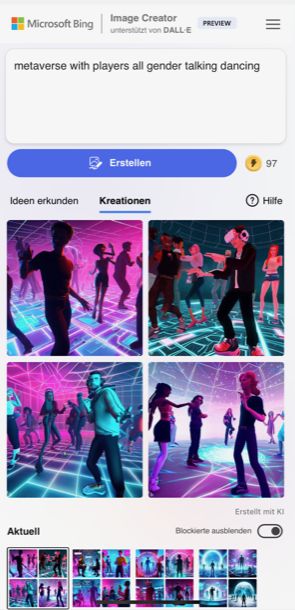 Experimentation of new social spaces and different forms of interaction need to be explored. It allows a new form of sociology, maybe similar to the 1960s and 70s social revolutions we studied for years to come. Virtual sociology is not a sociology while being on drugs, however interesting this might be for some.
Virtual sociology takes sociology into the virtual world and investigates the new social relationships with avatars or care robots. In programming different social roles (managers, employees) we create new forms of interaction and have an observer within the social world. We may eventually test the Weberian claim of a value-free scientific method of the social sciences. This will inform our need to “supervise” or to guide algorithms that are claimed to do “value-free” execution of rules.
In fact, they don’t. They just reproduce the value system that is installed into them by a “careless” programme (song youtube). The social in virtual worlds is opportunity just as much as risk, but we have to analyse it systematically. As our technological and social environment changes, we have to adapt topics and methods to make meaningful scientific analyses as well.
Sociology of the Virtual
Some programmers and artists would have been a great sociologists. As many social sciences embark on their experimental reorientation, many artists and programmers design and experiment already with new forms of social interaction. It is not only that sociology leaves the classroom, research labs or policy advice. Sociology is taken into museums and exhibitions. Learning about society through the lens of artists nicely complements the more boring form of teaching in the classroom. What is normal practice for art historians could benefit learning about sociology as well.
Virtual worlds of games and particularly so-called serious games take people into virtual worlds to learn, practice or exercise new forms of social interaction. This is indeed an additional form of experiments that can enrich our social practices. Medical applications start to spread to train persons to overcome phobia of all sorts.
In usual games we tend to defend the hypothesis that persons can uphold the differentiation of playing with arms in the virtual world and the real world. In medical or social games, we defend the hypothesis that it is easy, normal or natural to apply the learning in virtual constellations to the real-world-experience.
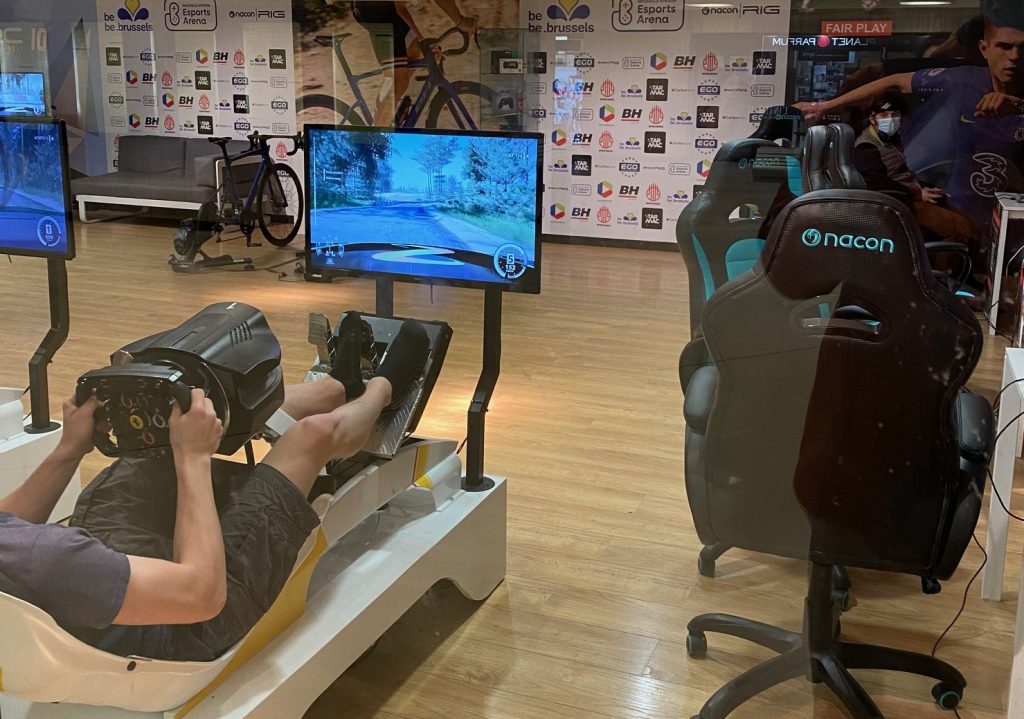
From a scientific perspective it is difficult to defend that a mechanism works in one direction and the opposite as well. Racing cars in inner cities seems to show that certainly not all of youth is able to make that distinction between virtual and real-world dangers for example. Alternatively, the mechanism at work might be that the virtual experiences lower thresholds of inhibition to take risks, to kill or to be exposed to spiders.
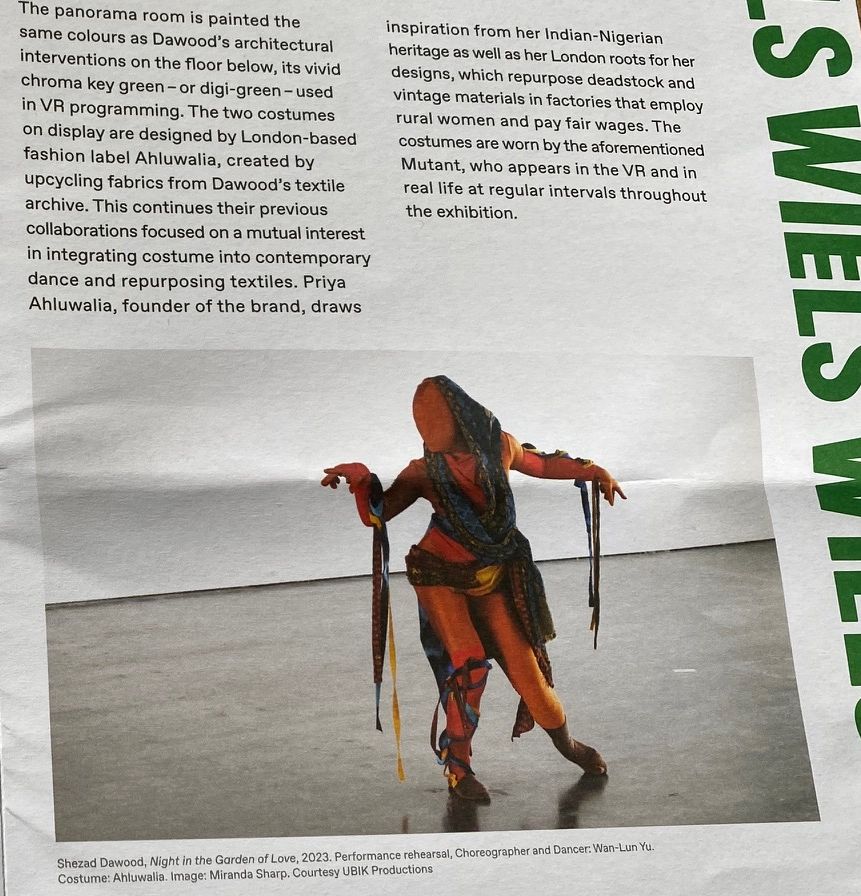
These examples are a starting point for a sociology of virtual experiences. Who gets locked into virtual worlds? Are virtual worlds an escape room or a realization of virtual freedom which is restrained in real life. Authoritarian regimes might lead more people to emigrate into virtual, free worlds. The inner-exile has been a refuge for many artists in the past. A lot we shall need to hypothesise and explore with empirical data. Dance with a virtual stranger might be the beginning of a new experience and virtual interactions. (Image: Wiels, Shezad Dawood, Night in the Garden of Love 2023-6, Game car race).
Political theory and inflation
A political theory in the area political economy is prone to be labelled as classical, neo-classical, Keynesian, Neo- or Post-Keynesian or heterodox economics. This is a university level course in the history of economic ideas, if you like this. Let’s try something creative here. We have unprecedented levels of inflation currently in Europe and many other parts of the world. Reasons for this are higher prices for energy, transportation and food. Anything else you need for life? You must be an artist or a priest, a bit off the normal, it seems to many economists. Add to this that, we want to foster strategic autonomy in Europe rather than anything from China that is cheaper and more polluting. In 2023 we have inflation stay with us for some years. Central banks give out warnings in this direction now as well, having negated the problem for far too long (their own statistics ECB on long-term forecasts of inflation).
Besides the ample economic advice (IMF), depending on which theory of money and the economy you adhere to, political theory allows a refreshing perspective on these economic facts and trajectories. (1) From an international strategic perspective, countries that have to renegotiate a lot of their debt or take new credits to finance imported food, energy or transport will run into insolvency rather quickly. Self-sufficiency becomes an economic asset not only a geo-strategic one. Turn around globalisation is a side-effect.
(2) Countries eager to build new public infrastructure, irrespective of concerns for bio-diversity, might reschedule or abandon huge projects, thereby reducing their CO2 footprint. This reduces the official counting of GDP, but has beneficial effects to save the planet in the medium term.
(3) Individuals and households will have to reconsider their consumption patterns: more expenditure for food, less for energy and/or transport. Behavioural changes might be induced by inflation. Less of some form of consumption, guided by inflation, will induce reductions in CO2 most likely as well.
So far this is only applied economic theory as in any textbook. A more challenging political economy question is to ask: can we come to like inflation? Can we change our preference set (ECB growth dogma) for economic variables? Southern countries in Europe seem to like inflation more than the North. Does this depend on historical experiences or is it cultural or personality trait? There is again a huge money transfer due to inflation within the Eurozone. The less indebted countries pay with loss of their purchasing power of their savings and indirectly pay for the highly indebted countries mainly in the South. European and international solidarity will be put to a tough test.
As governments fear of being voted out of power they tend to soften the price signals from markets. Again, it is cultural more than economic to what extent people are willing to accept state interference in economic affairs even of households need for food. From an ecological point of view inflation could be our friend due to the potential to induce behavioural changes. However, more expensive bio-products seem to get crowded out due to further price rises and many even middle-income households seem to return to cheaper non-bio food in many countries. The distributive effects of inflation are a major issue here. Same rationale seems to apply to transport. If you can no longer afford CO2 saving transport by train, since it has become overly expensive more people are likely to take a heavily polluting low-cost flight to your holiday location.
Hence, from a political economy perspective liking inflation might well turn out to be a rich, white man’s perspective on the economy as the global South is likely to suffer most having no resources left to invest in energy and CO2 -saving in general. Price signals may induce behavioural changes for the better of us all. However, the story it is not only about allocation of resources, but also about distribution. There we should embrace a renewal of trade union strength to correct imbalances in the distribution of earnings as the basis for consumption and investment of households as well. (Image: Tapta, at Wiels Gallery in Brussels, 2023-6, mostly untitled work, one with title: on the edge of time). 
Political theory 2
Chris Brown (2004, pp. 289) comments on the tension between the notions of political theory and international relations in the Handbook of political theory. Whereas the former notion has a foundation in the “cause and effect” rationale, the latter notion has predominantly developed into an approach of “Realpolitik”. Realpolitik that starts from observed facts, normative or historical approaches rather than scientific methodologies applied in “natural” sciences. The link of this approach to the theory of democracy is obvious, but it is also under a lot of discussion within the disciplines concerned.
One of the corner stones of political theory in international relations is the concept of the “balance of power”. Derived from a rational choice perspective this approach holds that states can only be controlled by other states and, taking this for granted, international relations are built on power relations. Therefore, moving away from a bi-polar balance of power to a multi-polar balance of power will entail some frictions. These frictions might be wars of independence where states attempt to relocate themselves within the new multi-polar world and space. Even “Brexit” becomes a strategic move to remain an independent power in the upcoming new multipolar world. Russia is testing this multi-polar world order right now. The big countries like Brazil, Russia, India, Nigeria and China, (which I abbreviate BRINC) have huge populations, country size and economic potential. From the Arab States certainly Saudi Arabia has the potential and is eagerly beginning to play a more important role in the world arena. Beyond capability it is a question of willingness to get involved in costly matters of world affairs.
In the 1940s, post-World War 2, the entry ticket into the Security Council of the UN required the possession of a nuclear weapon of mass destruction. As this technology and the ban of these weapons is no longer really working internationally, we shall have to rethink the requirement of an entry ticket. A radical solution would be to ban all countries who own nuclear weapons from the international assembly of the people of a peaceful world. In theory this sets an incentive to dismantle the deadly threats of nuclear weapons. As a side-effect, nuclear power plants used to enrich uranium for use in weapons would no longer be necessary as well.
Political theory allows us to rethink the bi-polar world, which is no longer bi-polar for some time now (perhaps only in the psychiatric sense of the word). The multi-polar world has to be prepared. It is a question of political design. The toughest issue is not only the design, but the implementation of the transition to distributed power systems with multiple rising and failing states or actors. It might get ugly before peace will reign. 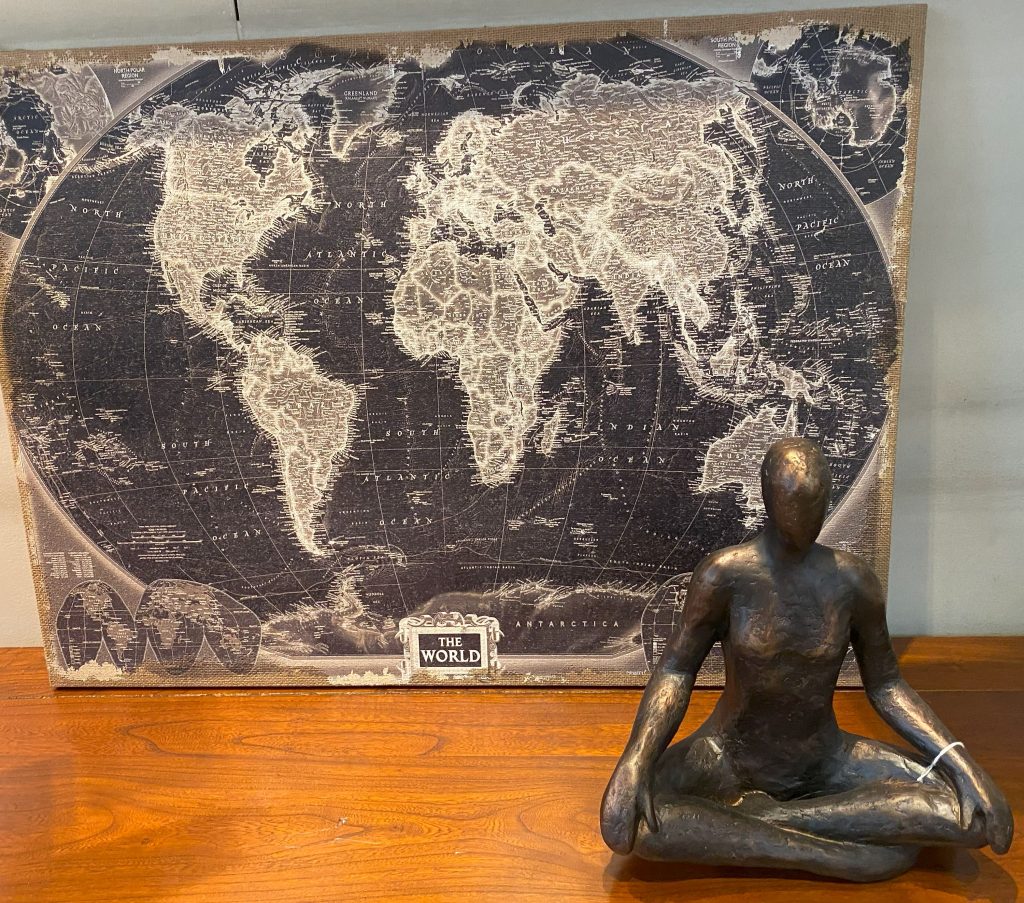
Political theory
In the Handbook of political theory, Chandran Kukathas (2004, pp.250) explains the uneasy relationship between nationalism and multiculturalism in politics and political theory. The Russian war in Ukraine can be considered as a way of suppression of multiculturalism in Russia by negating the right of Ukraine to be an independent nation. As Russia is not allowing “group rights” (Offe, 1998) for Ukrainians or other minorities like the Chechens within Russia, the secession of regions is a permanent threat to the survival of the Russian state.
“How the many can live as one remains a salient question in political theory” (Kukathas 2004, pp.261). Democracies have squared this circle with reference to federalism. Remember, the very foundation of the United States of America has been built on the Federalist papers. Organising regional diversity is at the heart of democracies’ success and failure. In most democratic political systems 2 chambers have contributed to make the voices of the regions heard at the central level. It remains an obvious question to doubt the possibility of authoritarian states to ensure unity despite diversity.
In non-explanatory theory, if we consider those still a theory, we could derive a hypothesis that authoritarian states will eventually fail to accommodate multiculturalism or allowing sufficient diversity and still survive as political unity. The history of the fall of empires is full of examples in this respect. Another more internal threat has been and still is corruption. Corruption was on the list of issues mentioned in the June 2023 uprise and defeat of the rebel military group “Wagner” in Russia. Non-explanatory political theory might still offer some clues, rationale and hypotheses to stimulate the analysis of international relations. The survival of democracies and/or authoritarian regimes estimated on the basis of huge data bases are hard to come by or lack crucial indicators or timeliness. Such reasoning makes the referral to Clausewitz as theorist of war still a common point of reference. The recent example of Russia , however, shows acting in the national interest can easily be claimed by multiple actors in international politics. (Image: House of European History, Brussels). 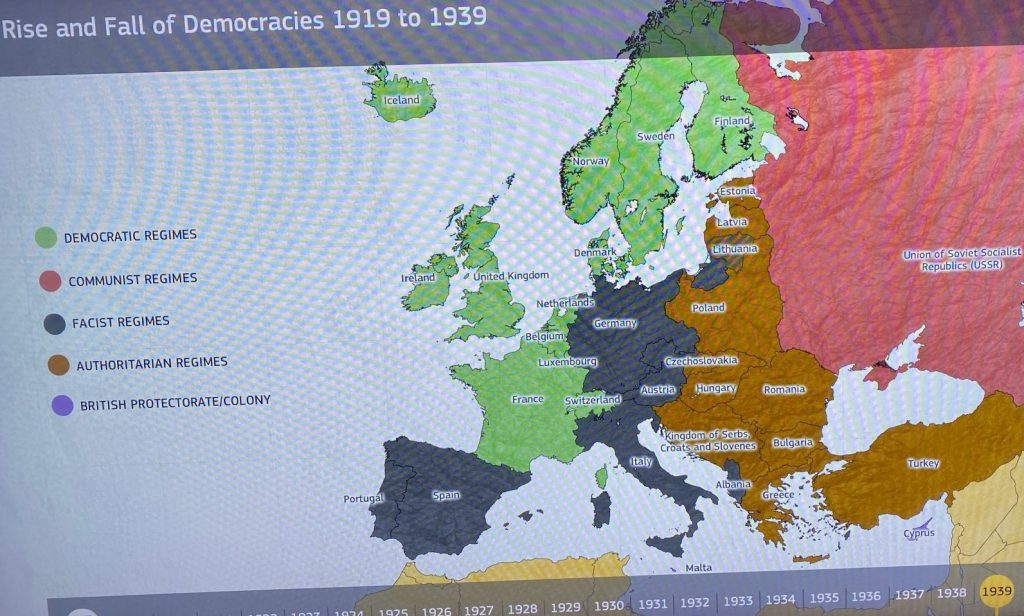
Ukraine Diary
The gallery curated by Dr. Justyna Napiórkowsak in Brussels has another ongoing exhibition with art work from Ukrainian artists. As before in the exhibitions on the war of Russia in Ukraine, they put a major emphasis on the independence and resilience of Ukrainian art despite the ongoing war. To keep a diary of atrocities, but also survival and resistance to violence by Ukrainians, is a great effort. It stems primarily from artists that struggle to find adequate material to keep working or not to succumb to the participation in active war or military defence efforts. Using soft colours, water colours, has a rather symbolic meaning, after the inundation caused by the explosion of the huge water reservoir on Ukraine’s territory. Producing art in form of a diary, like reporting daily to yourself and the outside world as well as later born persons, has an important historic function, too.
No less than the “Diaries of Anne Franck” comes to our mind when thinking about a diary during war time. Russia’s attempt to eradicate Ukrainian culture is bound to fail. We shall cherish the Ukrainian diaries from the war time now and later. Thanks for reminding us of this collector’s duty to support the artists, writers and people of Ukraine. 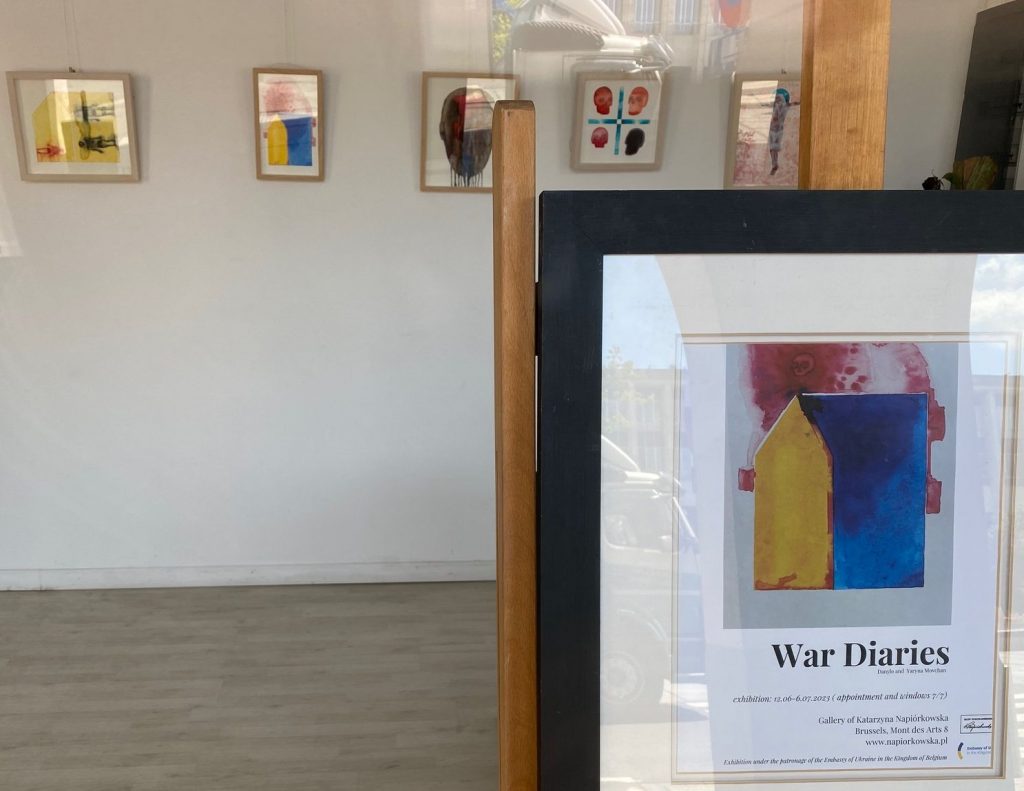
Grenzgang 2
Innerhalb vom Kern Europas ist der physische Grenzübergang kaum merkbar. Sobald es um die Regeln der sozialen Sicherung, Beschäftigung, Selbständigkeit geht oder der Unternehmensbesteuerung werden die bilateralen Regeln bereits viel komplizierter. Falls 3 und mehr Länder ins Spiel kommen wird die Lage ziemlich unübersichtlich oder zum Expertentum. Staatsbürgerin im Land A und Staatsbürger im Land B, arbeitend im Land C dürfen sich über einen Dschungel an Regeln freuen, der Kafkaeske Verhältnisse hoch 3 produziert. Irgendwo klemmt dabei immer etwas. Dabei hatte die Regulierung CE Nr. 883/2004 über die Koordinierung der nationalen Systeme der sozialen Sicherung doch weitgehende Konkretisierungen hervorgebracht und Sicherung der Bestandsrechte hervorgebracht.
Wie so oft liegen die Schwierigkeiten im Detail und darin sind die jeweilig zuständigen Verwaltungsbeamten, wenn die denn erst einmal herausgefunden wurden, eine Hürde, die es zu meistern gilt. In der jeweiligen landesüblichen Verwaltungssprache, versteht sich von selbst, inklusive regionaler Besonderheiten.
Während juristisch der Grenzübergang von Beschäftigten, Selbständigen und Unternehmen jeweils geregelt ist, ergibt sich aus einer juristischen Figur des „salary split“, also eine beschäftigte Person bei 2 Arbeitgeberinnen eine Lücke in der Zuständigkeit. Diese besteht gleichfalls in den meisten Ländern der EU. 2 Teilzeitjobs zu 50% lassen sich sozialversicherungsrechtlich nicht fair darstellen. Die zweite Lohnsteuerkarte und Besteuerungssätze, na wir ahnen schon, was das für Betroffene heißt.
Unternehmen und der Staat machen es sich einfach. Eine Konfiguration „Mulitplication des employeurs“, mehrere Arbeitgeberinnen, ist nicht wirklich adäquat vorgesehen (Crabeels, 2008 S.272). Dadurch werden viele, besonders junge Beschäftigte systemisch in ihrer beruflichen Findungsphase benachteiligt und in die Selbständigkeit oder gar die Scheinselbständigkeit gezwungen. Dabei brauchen wir dringend diese dynamischen GrenzgängerInnen in Europa mit ihren grenzenlosen Ideen, Enthusiasmus und Gestaltungswillen.
Neben diesen „high potential Grenzgängerinnen“ gibt es viele Beschäftigte, die bereits in einem Mitgliedsland der EU mehrere Beschäftigungsverhältnisse ausüben müssen, da sie von einem Job ihren Lebensunterhalt nicht bestreiten können. (EU Statistik Jugend Eurostat,2022). 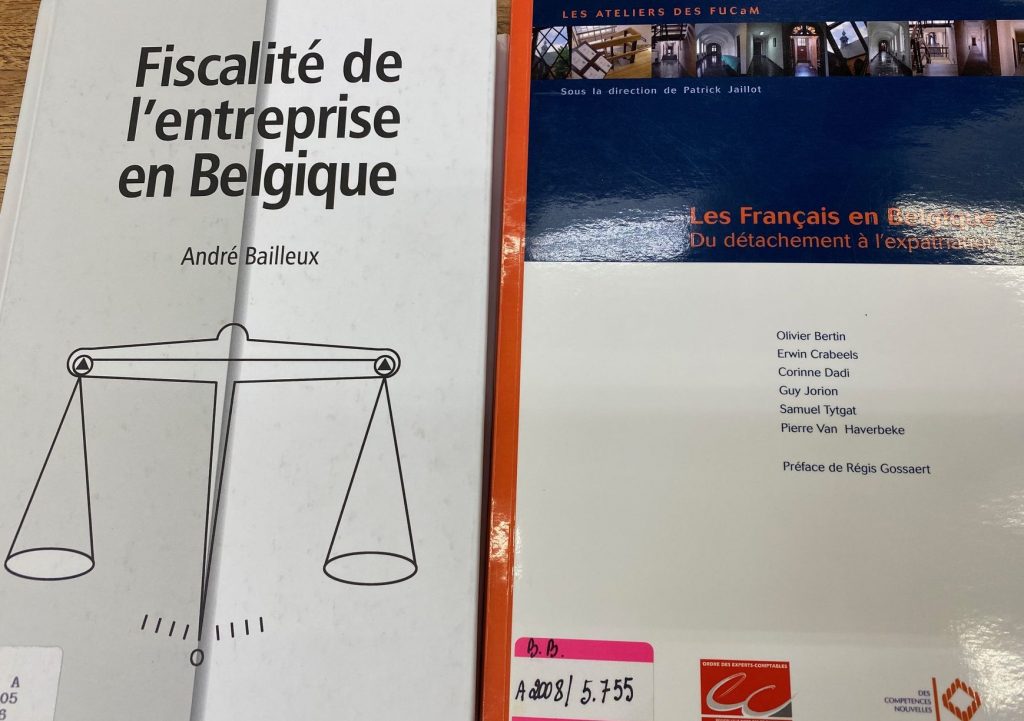
Grenzgang
Eigentlich wissen wir gar nicht mehr, was eine Grenze im Schengenraum der EU darstellt. Viele Arbeitende überqueren eine Grenze täglich, sozusagen als Arbeitsweg. Die Logik dafür ist vielfältig. Mal gibt es mehr oder besser bezahlte Arbeit im Nachbarland, mal ist es der preisgünstigere Wohnraum oder die Liebe. Diese Herzstücke Europas haben viel Selbstverständlichkeit, aber auch spezifische Belastungen mit sich gebracht. Das Europa der Grenzregionen bleibt für die meisten eine ständige Herausforderung. Regeln gelten meist noch nach Ländergesetzen. Sozialversicherungen sind ein besonderes schwieriges Thema. Das betrifft gerade die vielen Grenzüberschreitenden besonders hart. Misstrauen bei Sozialkassen ist die Regel und nicht die Ausnahme. Da wird dann schnell doppelt von Grenzgängerinnen abkassiert. Bei großen Katastrophen, bei denen die Medien überall hinsehen, stellen sich viele Politikerinnen ein. Für das Klein-klein des täglichen Lebens fehlt oft die Nachhaltigkeit der Handelnden, um wirkliche Verbesserungen zu erreichen.
Seit Jahren fahre ich beispielsweise in der schönen Grenzregion bei Aachen und Vervier mit dem Zug zwischen den beiden Ländern, doch dort scheint seit Jahrzehnten die Zeit still zu stehen. Wer mit ICE oder THALYS von Metropole zu Metropole fährt, rast mal eben vorbei. Die Bürgerinnen vor Ort dürfen sich zu Recht etwas abgehängt fühlen, bleibt für sie doch meist nur der Lärm der vorbeirasenden Züge. Zwischen Deutschland und Belgien gibt es für Grenzgängerinnen noch eine richtige Bimmelbahn. Sie wissen schon, die fährt langsam und kommt trotzdem an. Und das stündlich hin und her oder kreuz und quer. Leider wächst Europa selbst im Zentrum nur sehr gemächlich zusammen. Ob wir so viel Zeit noch haben, bevor undemokratische Kräfte die Uhren wieder zurückdrehen, bleibt eine Überlebensfrage für uns überzeugte Europäer. 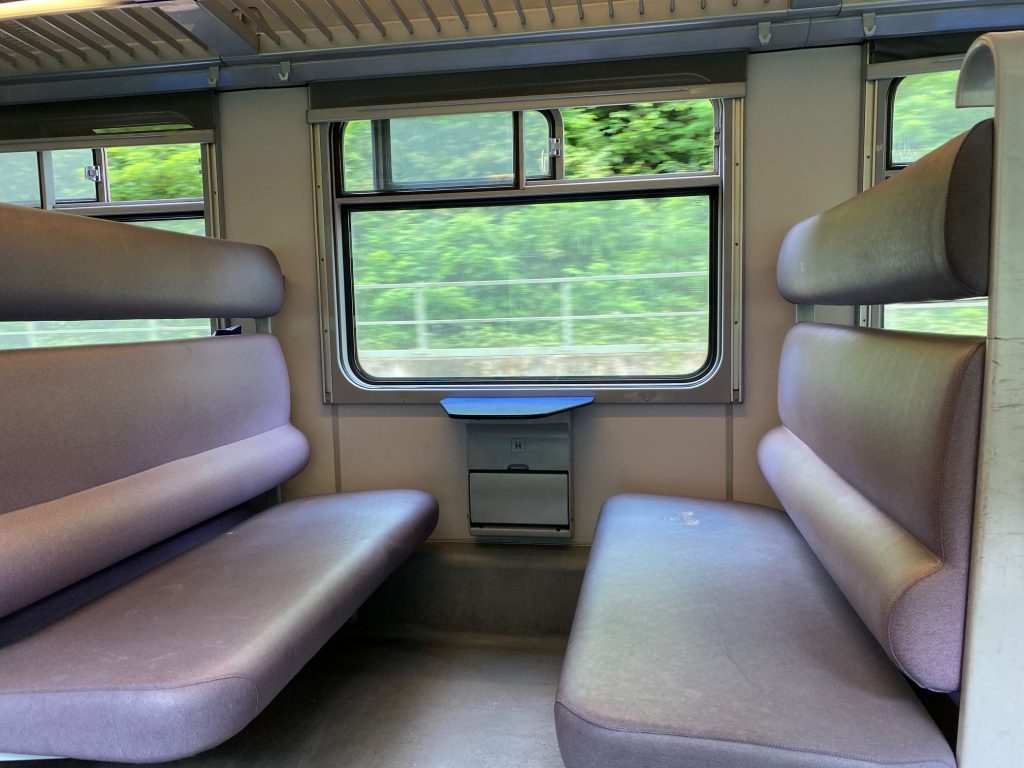
Medical Personal
Like in many other professions, medical doctors and nurses are in short supply. Labour markets in Europe have changed from high oversupply (unemployment) to shortages of mainly skilled persons. 20 years ago, such skill needs were already visible in projections. In 2023 the discussion of skill needs is spreading to more and more professions. The medical professions are no exception to this rule. Even the best paying jobs will not be filled in sufficient numbers. The German institute for the medical profession (www.zi.de) forecasts, in my opinion, a lower bound estimate of medical doctors for the year 2030. Their projection is based on an underestimation of the growth of the population (war in Ukraine), which they see as about constant until 2030. From the recent figures on the population of Germany there were 1.5 million persons moving to Germany and a loss of more deaths than births of 327.000. Migrants are on average much younger than the German population and, therefore, overall aging of the population is reduced. Tough news for those daring to do projections. Thanks to the immigration of younger persons there will be more persons contributing to health insurance and pay for the higher costs of a rapidly aging population.
Following the projections of the distribution of specialists needed, we shall need more urologists, eye specialists and substantially more psychotherapists. This originates in the aging of the population and the higher demand of younger persons (post Covid-19), as well as refugees, in need of psychotherapeutic assistance.
So-called hog-cycles tell us for the medical profession, with a “production time” of 10 years for a medical doctor, that we are already far behind schedule to address the future skill needs of the aging medical profession and population. This strengthens the need to get serious about prevention of avoidable diseases. Stop reading here, stand up and go for walk. It is the best-practice-solution taking account of the aging of the medical profession and the population as a whole. 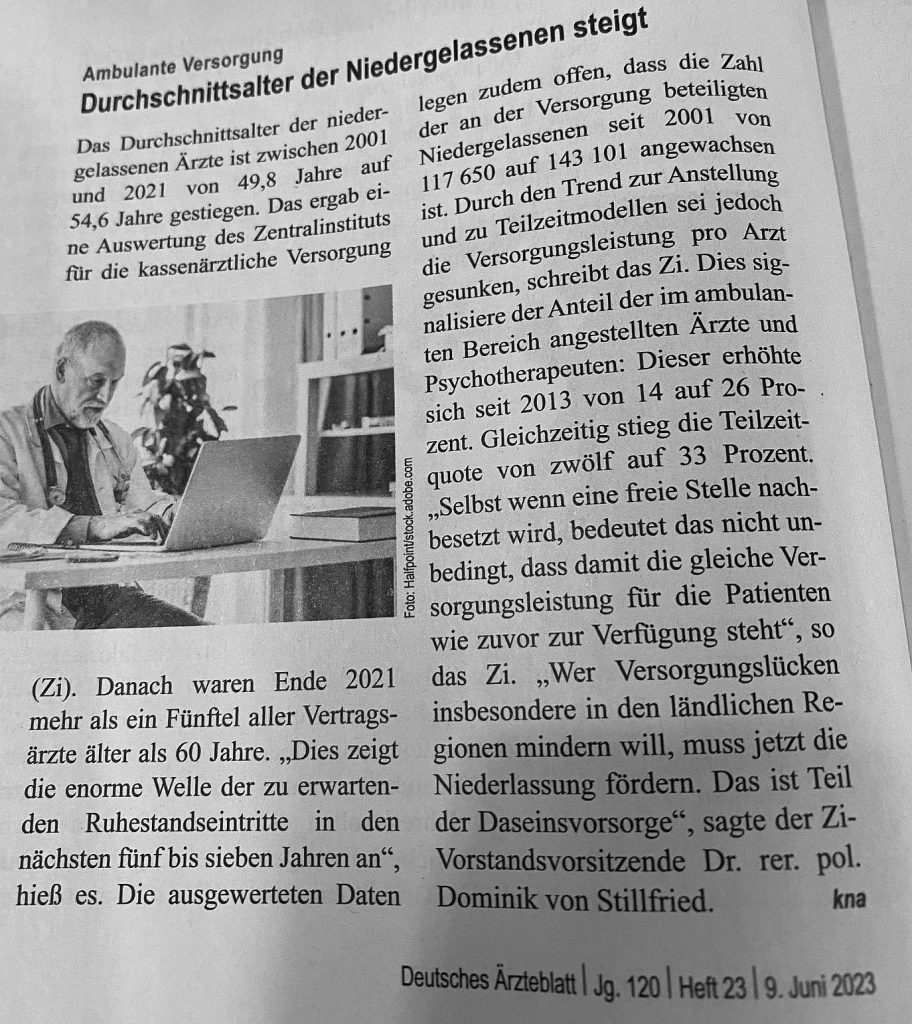
Lebenserwartung
Die Lebenserwartung ist in Deutschland trotz überdurchschnittlicher Ausgaben des Gesundheitssystems nur unterdurchschnittlich. Das ist die Schlussfolgerung der Pressemitteilung des Bundesinstituts für Bevölkerungsforschung. Der Mortalitätsforscher Pavel Grigoriev führt das auf die besonders bei Männern (50-64) erhöhten Sterblichkeit aufgrund von Herz-Kreislauf-Erkrankungen zurück. Eine gesunde Lebensweise ist dabei ursächlich für eine längere Lebenserwartung. Walking und Ernährung spielen eine große Rolle bei der gesunden Lebensweise. Also Auto stehen lassen und öfters selber Essen zubereiten. Klingt doch einfach, berufliche und schulische Voraussetzungen dazu fehlen aber weitestgehend in Deutschland. Zu viele Süßgetränke verstärken die ungesunde Lebensweise. Das wissen wir eigentlich lange. Dennoch fällt es schwer, solche Routinen in den Alltag zu integrieren.
An der Tatsache eines überteuerten Krankensystems im Vergleich zu unseren Nachbarländern werden wir ebenfalls arbeiten müssen. Prävention, statt hochtechnisierte Versorgung in häufigen Krankheitsfällen ist die einfache Lösung. Jede Autoversicherung bietet hohe Schadensfreiheitsrabatte für mehrjähriges Unfallfreies Fahren. In der Krankenversicherung könnte das stärkere Berücksichtigung finden.
Der Gesundheitsschutz am Arbeitsplatz könnte ebenfalls durch eine stärkere Beteiligung der unternehmerischen Verantwortung herangezogen werden. Arbeitnehmende im Arbeitsprozess verschleißen und dann die Gesellschaft die höheren Kosten tragen lassen, ist ein unfairer Deal. Große Baustellen warten darauf, angepackt zu werden. Anhand der Daten des Bundesinstituts für Bevölkerungsforschung und des MPI für demografische Forschung lässt sich der Fortschritt der Lebenserwartung seit 30 Jahren aufzeigen. Die 4-6 Jahre längere Lebenserwartung der Frauen gibt zu denken. Daran hat sich über die Jahrzehnte wenig geändert. Die Männer haben zumindest ein klein wenig aufgeholt oder sollten wir sagen, dazugelernt. 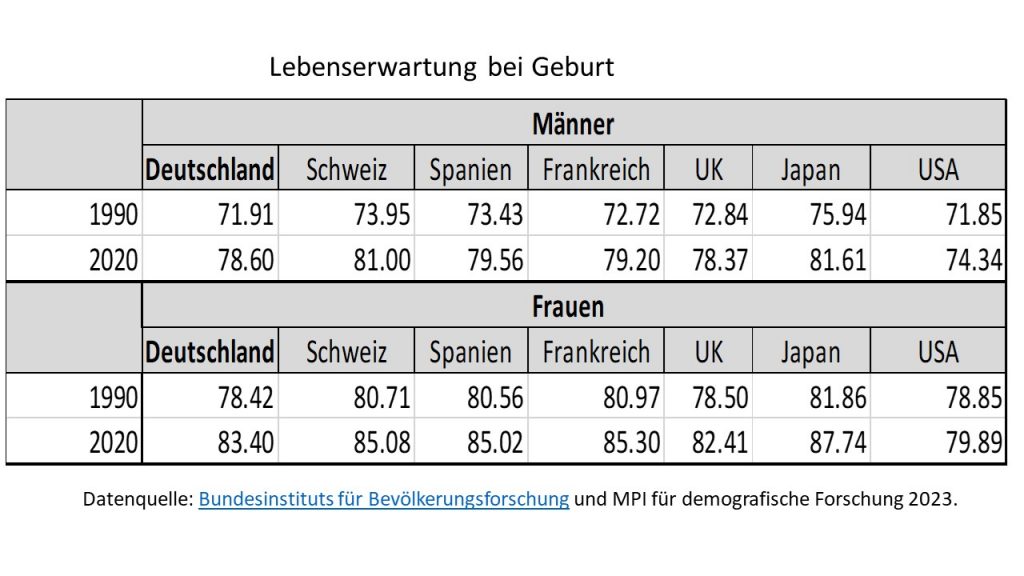
Special
We all value special skills and specialists. In Berlin is a whole week devoted to the special event of the #SOWG. These are the special Olympics world games. Berlin is booming with special people all around. Already the arrivals of the athletes to Berlin tests the public transport system as much as private infrastructure to welcome persons with special needs. Rather than the waste that is produced for normal Olympic games the same incredible amounts of money should be devoted to make cities more welcoming to special people every day. We have become as societies so used to speed up things as much as we can that we have forgotten the value of allowing people to live their lives with their own speed and rhythm. Looking at the huge numbers of private sponsors for the SOWG it becomes obvious that many people care to support these special people on their journey. I am more willing to pay taxes for such efforts than the public money wasted for football, like TV-rights or stadium buildings. The joint experience of love and joy with these extraordinary persons makes us all happy and rich. Happiness is the new “wealth of nations”. Inclusion brings happiness to more than just the normal. We wish you all a happy #SOWG. The 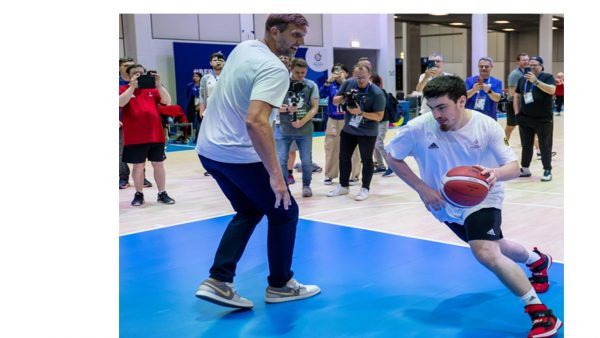 stars are you.
Recht auf Wohnen
Das Recht auf Wohnen ist ein Grundrecht.
Grundrechte sind nicht verhandelbar, so wie die unveräußerlichen Menschenrechte. Selbst unsere Wohlstandsgesellschaften tun sich recht schwer damit, ein einfaches Wohnrecht für alle zu verwirklichen. Ganz besonders in Städten, die eine hohe und stetig steigende Nachfrage nach Wohnungen verzeichnen. Da will viel geplant und gebaut werden. Dennoch läuft das Angebot an Wohnungen der Nachfrage ständig hinterher.
Nicht überall (nur ein kleines Dorf in Gallien). Weite Landstriche leiden am beständigen Fortzug von Jungen, die eine noch stärker alternde Einwohnerschaft auf dem Lande zurücklassen.
Das atemberaubende Großstadtleben hat viele Vorzüge. Bildung, Wissenschaft, Kultur, internationale Unternehmen und höhere Toleranzschwellen. Nach solchen Erfahrungen fällt die beengte Dorfgemeinschaft schwer, selbst wenn viel Platz, Luft,Wasser und Wohnraum preiswert zur Verfügung stehen. Gute Verkehrsanbindung des ländlichen Raumes an die Innenstädte mit ihrem vielfältigen Angebot ist ein zentraler Lösungsbaustein. Das Häusle in der Vorstadt, abends in die Oper, morgens im See nackt baden und mittags nach Smoothie im Himalaya Restaurant vegetarisch speisen. Die neue Bohème gleich in vielen Aspekten den Eliten der 20er Jahre. Schön und gut.
Die Kehrseite der Medaille (Avers – Revers) waren die großen Wohnungsbaugesellschaften der 10er und 20er Jahre, beispielsweise in Berlin, die für wachsenden und erschwinglichen Wohnraum sorgten. Die großen Firmen der Epoche haben bei den neuen Siedlungen kräftig mitgeholfen. Es gab Zeiten, da haben Arbeitervereine und Gewerkschaften gemeinsam in die Hände gespuckt und sich staatlich unterstützt, preiswerten Wohnraum selbst geschaffen. Eine Gefahr von Korruption besteht, kann aber kontrolliert werden.
Die Herausforderung durch die hohe Inflation steht im Untertitel des Zeitungsartikels der Berliner Zeitung: „Die sinkende Reallohnentwicklung“ führt zu zusätzlichen Ängsten und realer Bedrohung für die vielen Geringverdiener, Arbeitslosen und Integrationsbedürftigen. Das braucht rasche Antworten, nicht nur von den Parteien, die „sozial“ in ihrem parteipolitischen Namen führen. Obwohl, schnell geht im Bauwesen selten etwas. Großspurige Ankündigungen werden nur selten eingehalten, besonders bei Wohnungsbauprojekten. Das Recht auf Wohnen bleibt ein Beispiel für die Notwendigkeit und für die Herausforderungen einer sozialen Marktwirtschaft. 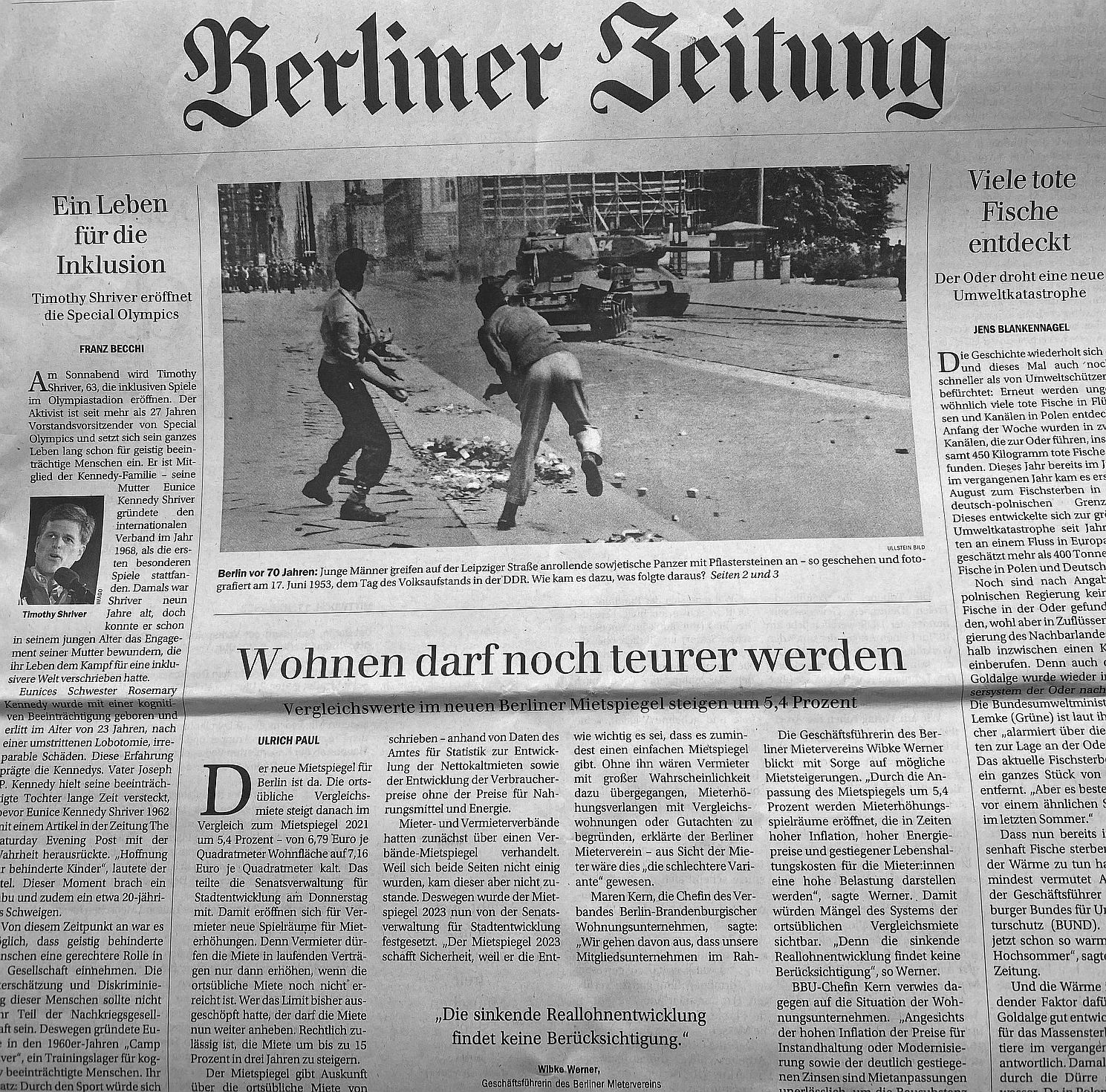
Photovoltaik
Eigentlich ist die Photovoltaik eine alte Technologie. Seit 1954 werden Solarzellen, damals noch mit geringerer Effizienz und teuer, produziert und benutzt. Da hat sich viel verändert und nicht zuletzt durch die sogenannten Balkonkraftwerke sind Solarzellen zu einer weltweit beliebten, rentablen Alternative geworden. Dächer eignen sich wegen ihrer Schräge und oft der Ausrichtung bestens zum Aufstellen von Solarzellen. Renovationen und Neubauten sollten diese Art der Energieerzeugung unbedingt in Betracht ziehen.
Wegen Olympia 2024 in Paris wird dort gerade viel städtische Infrastruktur erneuert. Der “Gare de L’Est” wird beispielsweise von Frankfurt aus mit TGV und ICE angefahren. Da kommen viele Geschäftsreisende und Touristen aus Europa und der ganzen Welt an. Ein Blick auf die Dächer des “Gare de L’Est” von dem Fußweg zum Gare du Nord zeigt viel verpasste Investitionen. Ein Meer von Dächern liegt brach, bestens geeignet zur Installation von Photovoltaik. Das könnte eine Menge an Energie vor Ort produzieren, die die Züge dann direkt benötigen. Mehr Ökostrom statt Atomstrom kann einfach sein. Es fehlt nur oft der Wille. Nachhaltigkeit und Olympische Spiele ist ein ganz eigenes Thema, nicht nur für Paris 2024. 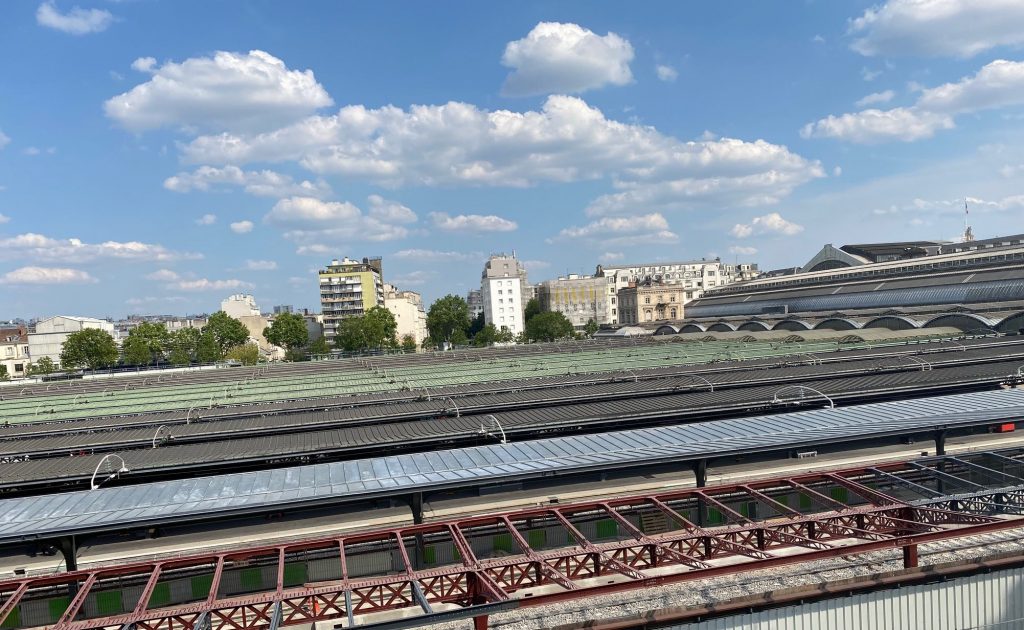
Touraine
Alain Touraine hat die französische Soziologie entscheidend geprägt. Aus seiner außergewöhnlichen Biografie wird rasch ersichtlich, wie er nicht nur seine Leben, sondern auch seine Art der Soziologie „von untern“, vom Individuum her, gedacht hat. Gerade der Prozess der Subjektivierung, die Autonomie des Subjekts betonende Sichtweise bildet ein Gegengewicht zu dem systemischen Blick auf Gesellschaft, beispielsweise von Luhmann. Soziale Bewegungen, die auf dem Engagement von Personen gründen, sind unverzichtbarer Bestandteil von Demokratien.
Neben Begriffen wie die post-industrielle Gesellschaft oder neue soziale Bewegungen hat Alain Touraine weit mehr als die “Sociologie du Travail” in Frankreich geprägt. Bereits seine Dissertation über « L’Évolution du travail ouvrier aux usines Renault“ in 1955 unterstrich sein Interesse an den Lebensverhältnissen der arbeitenden Bevölkerung. Der Umfang seiner soziologischen Studien, die schon früh große Umfragen beinhalteten, war im besten Sinne des Wortes problem-orientiert, besser noch politik-orientiert. Dabei übernahm er immer Verantwortung, seine Lösungsansätze politikberatend einzubringen. 
Die Würdigung von Alain Touraine in einer Podcastserie von 5 x ½ Stunde aus 2019 bei France Culture gibt einen groben Überblick über die prägende Wirkung von Alain Touraine jenseits von seinen soziologischen Arbeiten. An dieser Persönlichkeit wird zusätzlich deutlich, wie sprachliche Grenzen, selbst in den Köpfen von soziologiebetreibenden Forschenden selbst im 21. Jahrhundert fortwirken. Das hat selbst Alain Touraine mit gut 90 Jahren an sich kritisiert. Asiatische, arabische und afrikanische Denkanstöße kamen wenig in seinem Werk vor. Vielleicht reicht ein Leben nicht dafür, zumindest die Zugänglichkeit der Weltliteratur hat sich erheblich erweitert. Bleibt die Frage nach der Zeit und dem Willen, sich auch andere Denkgebäude, -begrifflichkeiten und -kulturen zu erarbeiten.
Air pollution
Only if we measure air pollution , we shall be able to be sure it is not getting worse or is improving. The European Environment Agency has developed an app that gives us fairly accurate measure of several important indicators of air pollution or air quality as they prefer to name the indicators. With the wild fires in Canada and the repercussions of this in U.S. cities we are certainly aware that air pollution by neighbours is just as important to know as air polllution originating in your own country.
In Europe this matters as well. Therefore the comparative view on air pollution is a necessary precondition to coordinate action within the EU. Specific meteological conditions yield SMOG in winter and too much heat facilitates SMOG in summer. Thousands of people die every year due to effects of air pollution. This is all well-known and documented.
In Science Advances (2023-6-9) new evidence is presented that fine particles (PM 2.5) in air transport influenza H1N1 viruses into the lower respiratory system and even other more distant organs like liver and kidneys. The conclusion is easy: Reduce air pollution much further, this saves lives and lots of costs in the health system as well. Well-being is advanced sometimes by doing less rather than more. Working more in the home office than in the inner city might reduce the peak of an influenza wave. New solutions to old problems are feasible with new technological advances and implementation like fibre-optic cables for fast internet service also in remote areas. Using the “Science Advances” should allow us to rethink our production and consumption model for the improvement of living and working conditions for all. Many extensions of our economic model shall be based on the “beyond growth” logic. We just need to dare to think and implement policies accordingly, rather than to continue to do the same mistakes over and over again. (Image: still building new Autobahn in Berlin 2022 in residential areas). 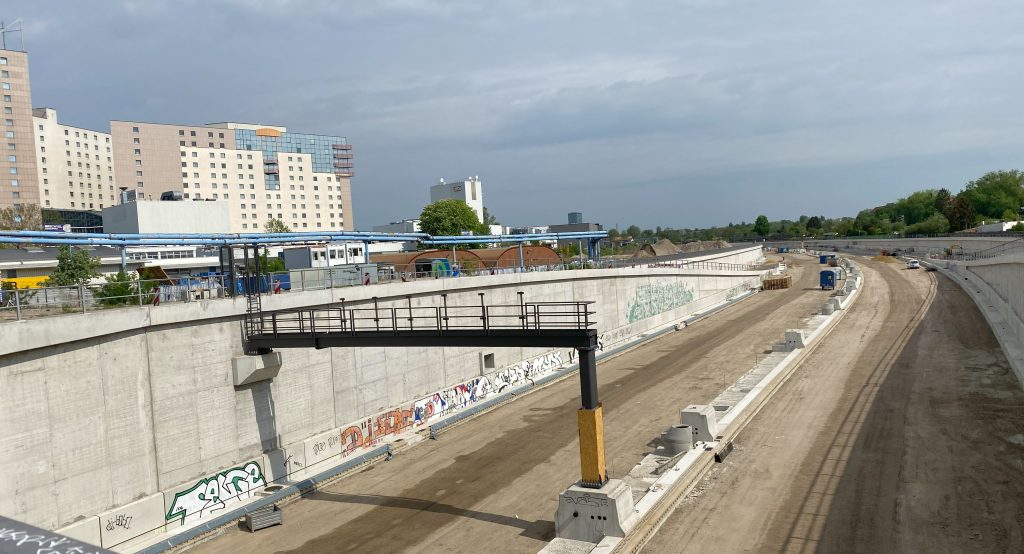
Avers
Der kurze Titel „Avers“ der Sammlung von Novellen des Autors J.M.G.Le Clézio lässt keine Wundergeschichten erwarten. Der kleingedruckte Untertitel „Des nouvelles des indésiables“ noch weniger. Dennoch, aus der Sammlung von Kurzgeschichten werden die kleinen Heldinnen und Helden des Überlebens in unserer komplexen Welt vorgestellt. Mal mit, oft ohne „Happy End“ werden Kinderschicksale erzählt, die uns nachhaltig berühren. Schule ist für die kleinen Helden ein Fremdwort. Der tägliche Überlebenskampf für Nahrung, Gefahr von Kinderarbeit, einfach in Ruhe gelassen werden oder dem Krieg zu entkommen, steht im Vordergrund. Fluchtwege wäre für mich ein möglicher Titel einer deutschen Übersetzung. Flucht vor Missbrauch und die Brutalität des Alltags in Kriegsgebieten sollten uns sensibilisieren für „la Misère du Monde“.
Die unerwünschten Novellen von Le Clézio kommen auf leisen Sohlen oder eher barfuß daher. Sie lassen uns die ständige Herausforderung der Humanität spüren. Menschen, Kindern, Menschenwürde ermöglichen, ist nach wie vor eine riesige Aufgabe. Der Ansatz an konkreten Schicksalen aufzuzeigen, wie wenig es oft braucht, damit Kinder eine faire Chance bekommen, muss uns aufhorchen lassen. Obdachlose werden bei Le Clézio zu „fantômes dans la rue“. Wir ignorieren ihre Präsenz allzu gerne.
Nach 60 Jahren Heinrich Böll „Ansichten eines Clowns“ rütteln uns die Novellen von Le Clézio wieder wach. Wirkliche Humanität braucht uns alle und das ständig, nicht nur sonntags. Aversionen ablegen und sich dem Unerwünschten zuwenden, das fordert den ganzen Menschen. Überforderung gilt nicht als Gegenargument. Wir sind viele, helfen wir. (Image: Extrait, Atelier Albrecht Dürer um 1500).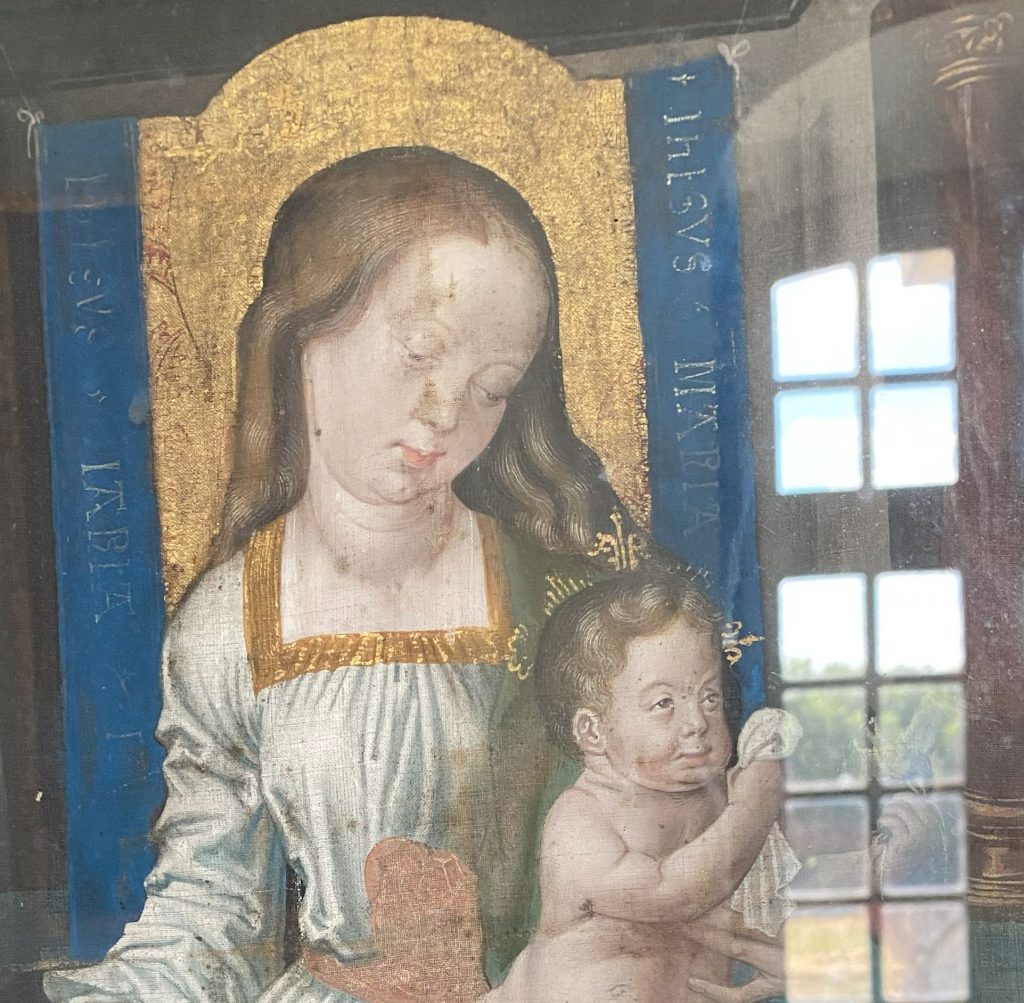
Ground Water
The European Environment Agency collects annual data on pesticides in the ground water. The water most of us use in some form or drink. This used to be possible without too much thinking a generation or two ago. We now learn that this might be more and more dangerous, particularly in areas, where less rainfall and prolonged periods of draughts most likely increase concentrations of pesticides even in our tap water. Drinking this, raises more concerns. We know that in big cities and nearby of hospitals water quality is worse due to the concentration of particles from chemicals applied to increase contrasts in medical imaging. Pesticides are mainly used in agriculture, road and rail maintenance, but also households apply them for simplicity.
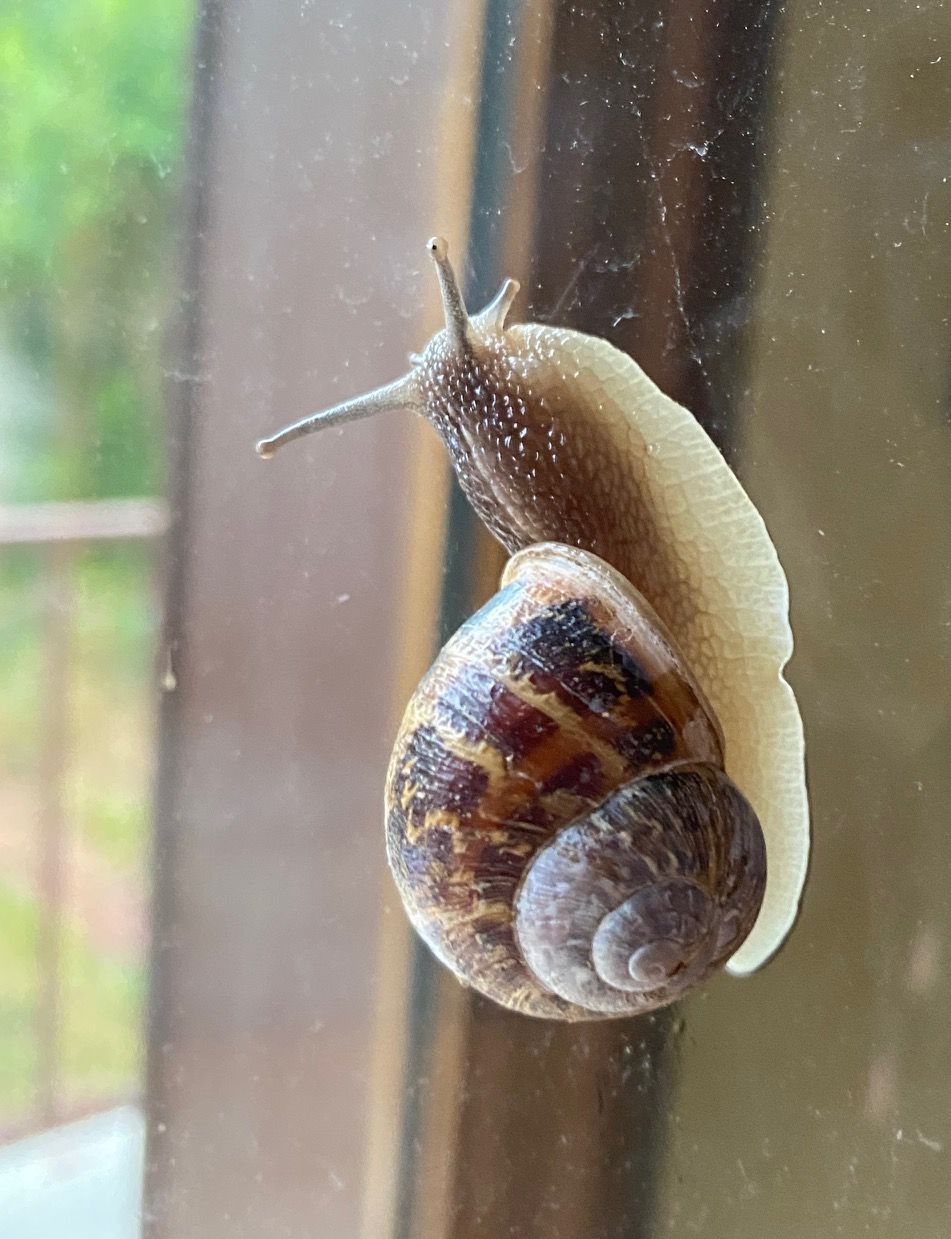
Snails (escargots) might invade your garden and even your home at times. However, it is just a little bit of exercise to “relocate” them in a decent place other than your home. Prepare a race for several ones and bet on who is going to win, but please refrain from the use of more pesticides. Several species of them are consumed and, depending on your taste, considered a delicious part of a meal (for example in Bourgogne, France). It should be easy to agree to stop the heavy use of pesticides across Europe and beyond. We shall have to protect the salads we grow differently. Human intelligence is able to allow other solutions than just killing as efficiently as possible ,at the same time, endangering our own species. (Comparable data EEA below). 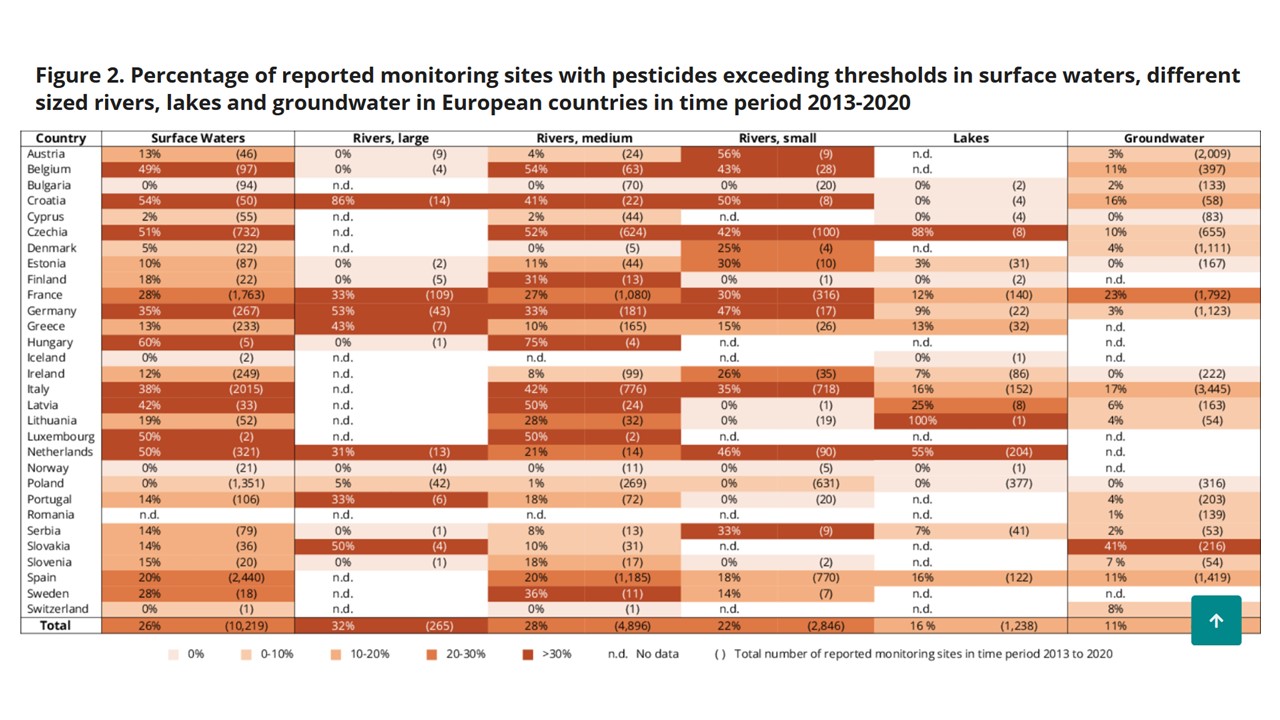
See Wasser
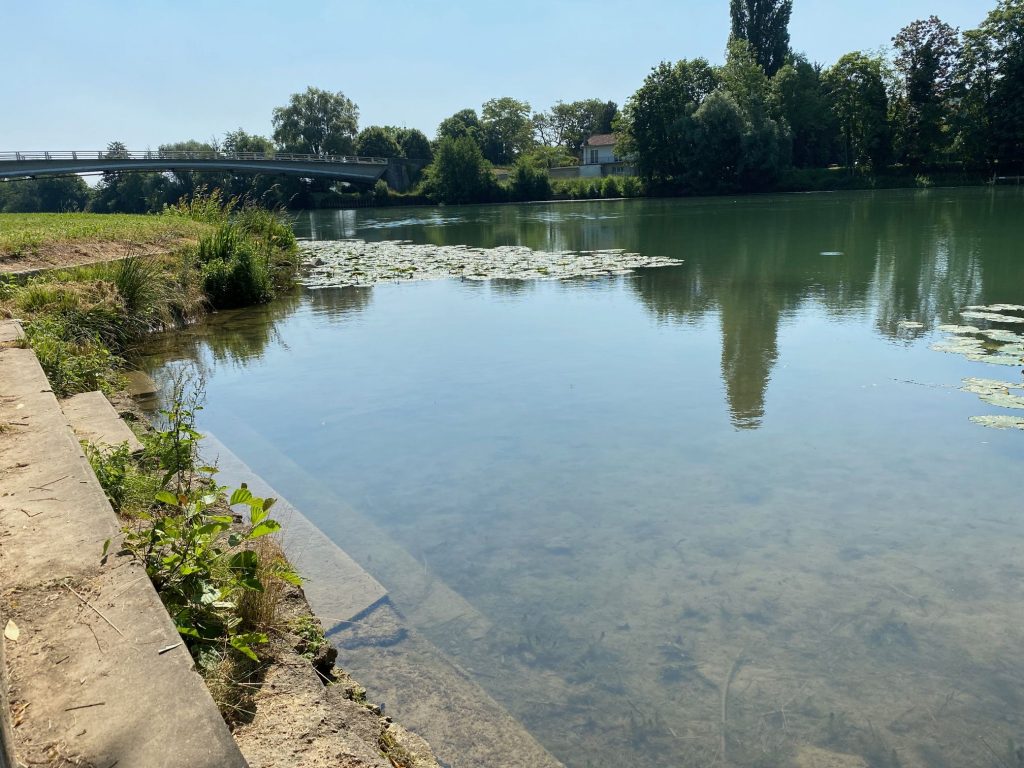
Der Bericht der europäischen Umweltagentur 2023 beschreibt eine durchschnittlich gute Wasserqualität der Seen in der EU (Link). Die Aufmerksamkeit für das Baden in den Seen und als touristisch wertvolle Naherholungsgebiete haben die Beachtung in den letzten Jahren wieder steigen lassen. Das ging leider oft auf Kosten der zu Wasserstraßen ausgebauten fließenden Gewässern. Dort befanden sich bis vor einigen Jahren noch vielerorts Flussbäder. Das war früher riskant und ist heute eigentlich größtenteils verboten. Wieder etwas, das wir dem Wirtschaftswachstum geopfert haben. Mehr Wirtschaftswachstum erscheint statistisch sinnvoll, mehr Lebensqualität hat das aber nicht immer mitsichgebracht. 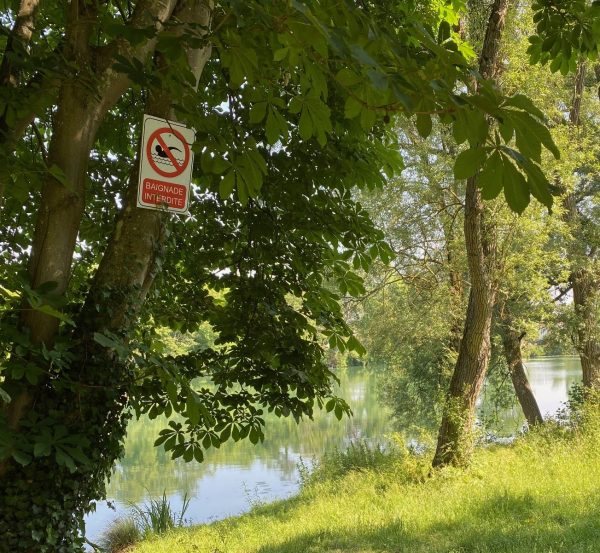
Waldbrände
Waldbrände sind leider jenseits vom Süden Europas auch im Zentrum von Europa ein Bestandteil der täglichen Gefahren geworden. Vor 50 Jahren waren die seltenen heißen Sommer die große Gefahr. Seit einiger Zeit bemerken wir öfter heiße Sommerwochen, die die Wälder austrocknen und leicht entzündlich machen. Jetzt haben wir die noch frühere Sommersaison nicht nur im Süden, sondern auch im mittleren Europa. Neben den Bränden in der Lausitz in Deutschland, kämpfen Feuerwehrleute öfter in den französischen nördlicheren Waldregionen mit Bränden. Eine Nachricht, wie die zum Brand Anfang Juni im „Forêt Fontainebleau“, sollte uns klar machen, da brennt unserer europäisches ökologisches und kulturelles Erbe. Jeder hat die brennende Kathedrale „Notre Dame de Paris“ noch in Erinnerung. Da war Klimawandel nicht die Ursache. Bei den Waldbränden sieht das anders aus. Das Ergebnis ist das gleiche. Die Vernichtung unseres kulturellen Erbes schreitet voran ohne Prävention. Das ist eine zentrale Aufgabe. Nicht erst in der Zukunft. Prävention verlangt Handeln, Planen und Implementieren schon heute. Das ist ein riesiges Qualifizierungsprogramm nötig. Es umfasst die Sensibilisierung für die allgegenwärtigen Gefahren genauso, wie das Schulen allfälliger Einsätze von professionellen und freiwilligen Helfenden. Gefahr erkannt, heißt leider nicht schon Gefahr gebannt. Da gibt es viele Zwischenschritte, die geprobt sein wollen, damit ein effektiver Einsatz gelingen kann. Es bleibt viel zu tun, packen wir’s endlich an. (Artikel in La Marne 7.6.2023 S.6) 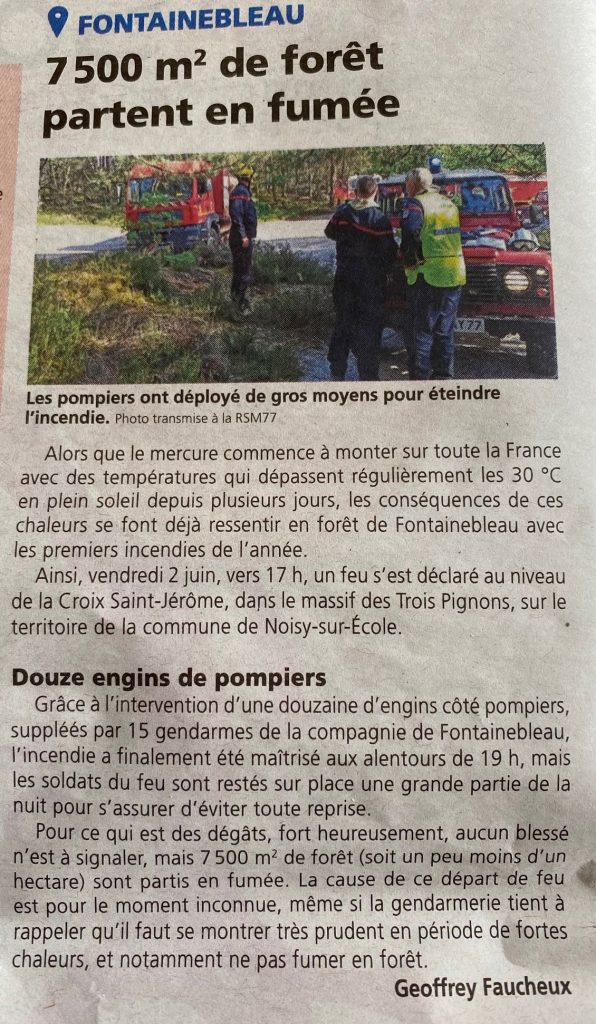
Corruption EP
Corruption is a severe crime. Not only in administrations, organisations and enterprises, but primarily in democracies it is discrediting political systems. Autocracies rely on corruption as a major tool to be able to persist over time. They are used to such practices. Democracies rely on meritocratic systems, where ideas, effort and winning elections should be the major ingredient of achieving higher positions in organisations, enterprises, political parties and democracies. This is not easy to ensure. The European parliament has a tough time to get rid of an enemy of the democratic Europe. Rather than stepping aside for the time of the legal procedure, Eva Kaili, accused, but not yet convicted of corruption is willing to destroy the European project as much as she can. If money can buy political decisions, the European project will no longer find wide-spread support. Big interests will always have a strategic advantage, however, the ethical principles on which democracies are found have to guard against corrupt misbehaviour. The same applies to the business world. Even low corruption countries like Sweden still face a risk of adverse effects of corruption like the negative impact on entrepreneurship on the local level. It is another context, but the same conclusion.
Additionally, it is part of the strategy of corrupt persons to portray themselves as victims of other persons’ wrong-doing. The major function of this strategy is to remind other persons in the corrupt network that the network has still some clout on its members as well as outside the inner circle. Hey, we are still alive and in powerful positions, they proclaim.
Therefore, the fight against corruption is a long and persistent one. Reducing the guards against early onsets usually is very lengthy to fight later on. Always a painful lesson for believers in democracy and the European project. (image Jacques Jordaens before 1678 “The King Drinks! Musées royaux des beaux arts, Brussels). 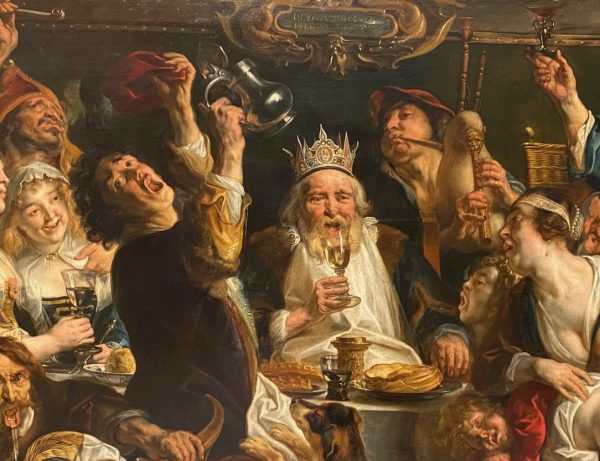
Black White
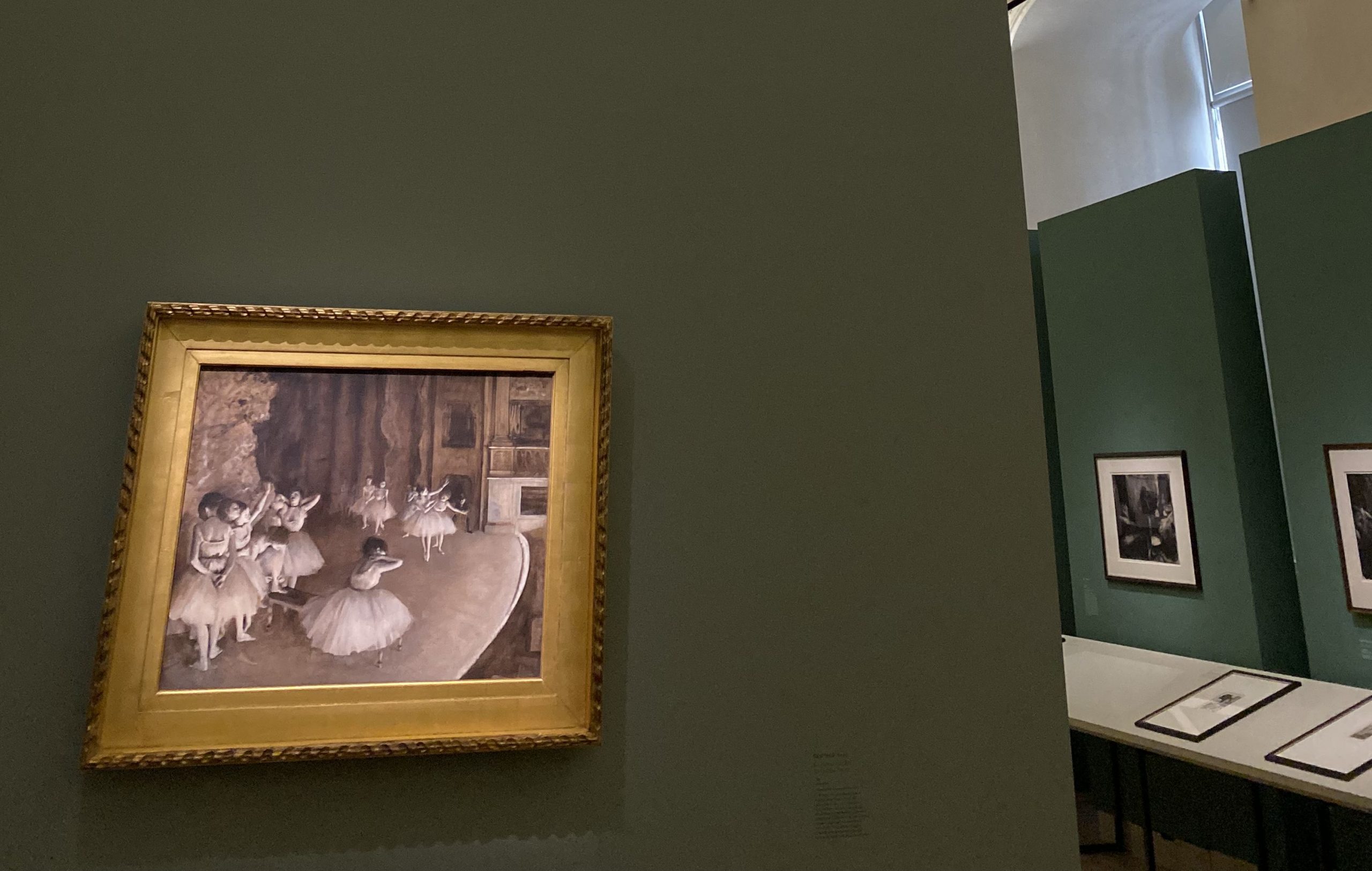
Working at the Bibliothèque nationale de France (BnF.fr), just like visiting, allows you to benefit from the many temporary exhibitions based primarily on their own collections and donations to the BnF. For those who like “dessins, estampes, photographies”, there is a small exhibition as of June 2023 which features on these three techniques in the work of a single artist Edgar Degas from the impressionist movement. Walking through the exhibition or slowly scrolling the press documentation allows you to follow the artistic life course of Edgar Degas. He started with the pencil dessin and evolved to the printing of a single or sequences of “estampes” (up to 20) to impress us beyond black and white with multiples of 50 shades of grey. Degas seems like continuously searching for the uniqueness of the moment to present strong emotions or to summarise interpersonal relationships immersed in a specific spatial setting. Having demonstrated the richness of dessins and estampes as artistic, but a bit laborious technique, he devotes his last few years to a more intensive work taking photographs and proceeding to their development or tirage as printed versions. No matter which technique he applies, he has a special artistic view that allows to capture emotions and immortalise them. The painter’s eye, as well as later on in his artistic career the photographer’s eye, keep scrutinising himself in various forms of “auto-portraits”. Beyond youth, the pervasive obsession with selfies nowadays had its artistic precursor Edgar Degas for example. Whereas most photographers would classify a double exposure as a “raté”, Degas experimented with this almost like a cubist, Picasso-like techniques in photography. Actually, the last few images in the exhibition show the artistic reference Picasso made in his work to images, impressions and techniques that inspired him throughout his artistic work. There are amazing links in and across the history of art or arts. (BnF expo Edgar Degas 2023). 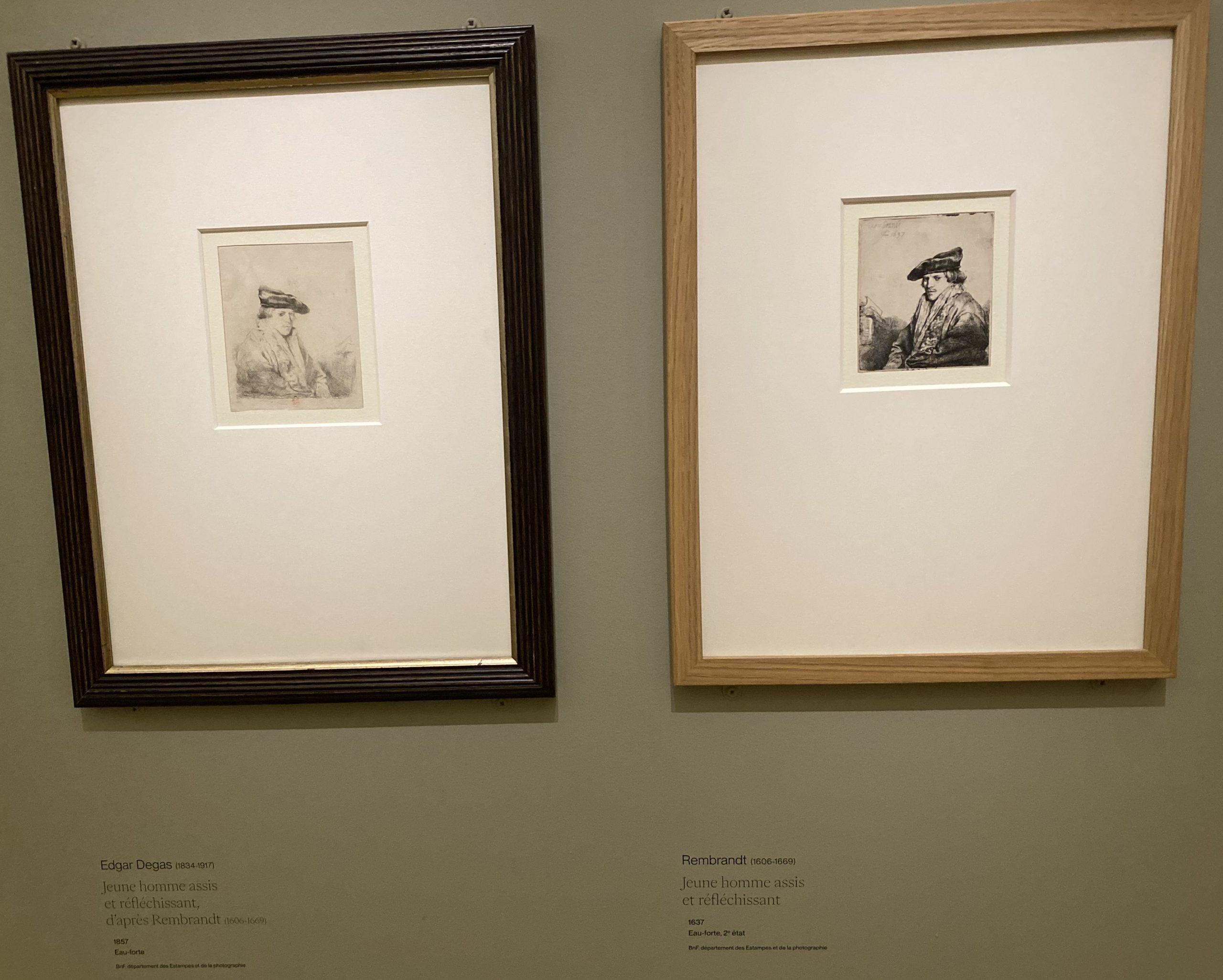
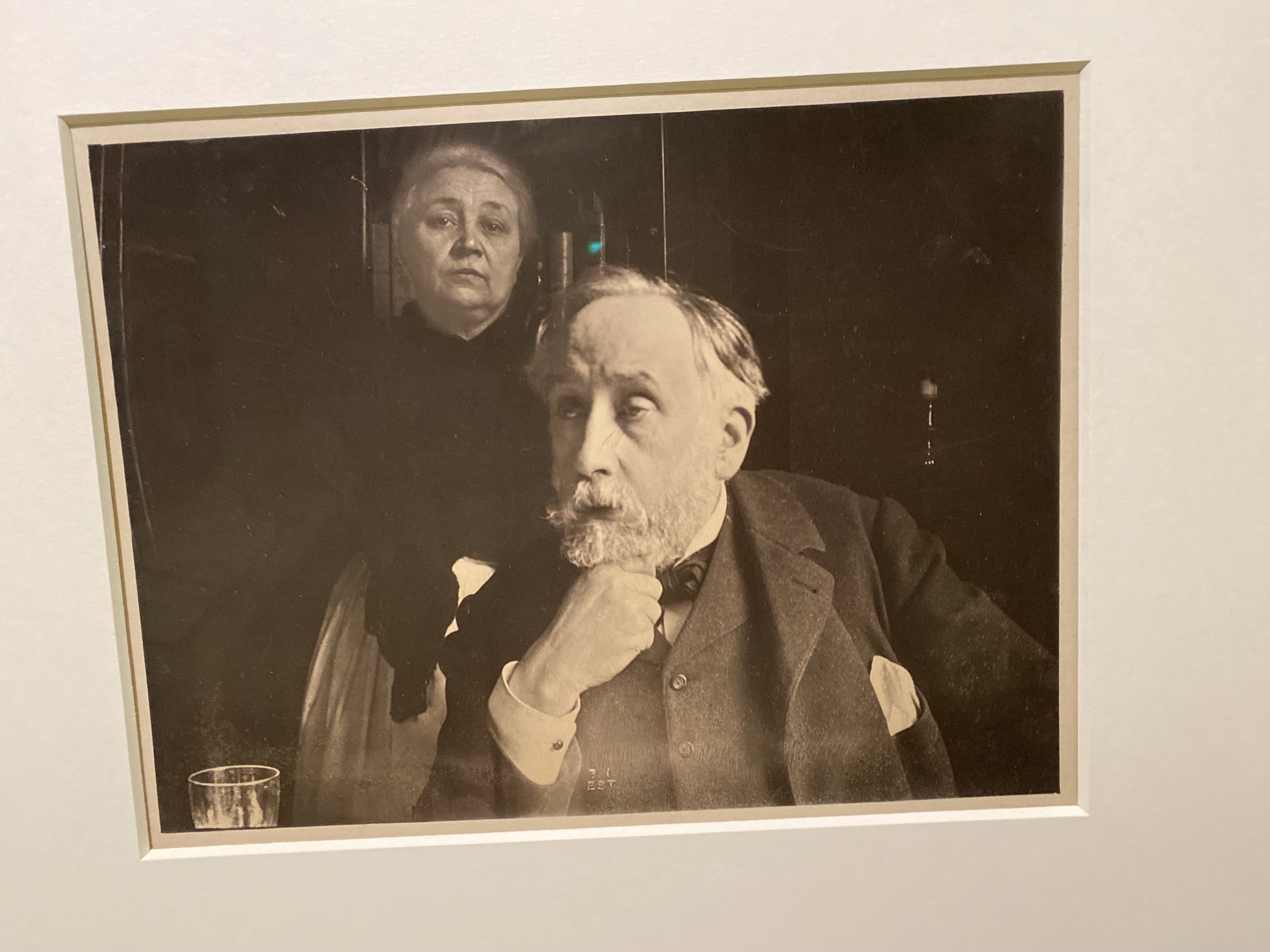
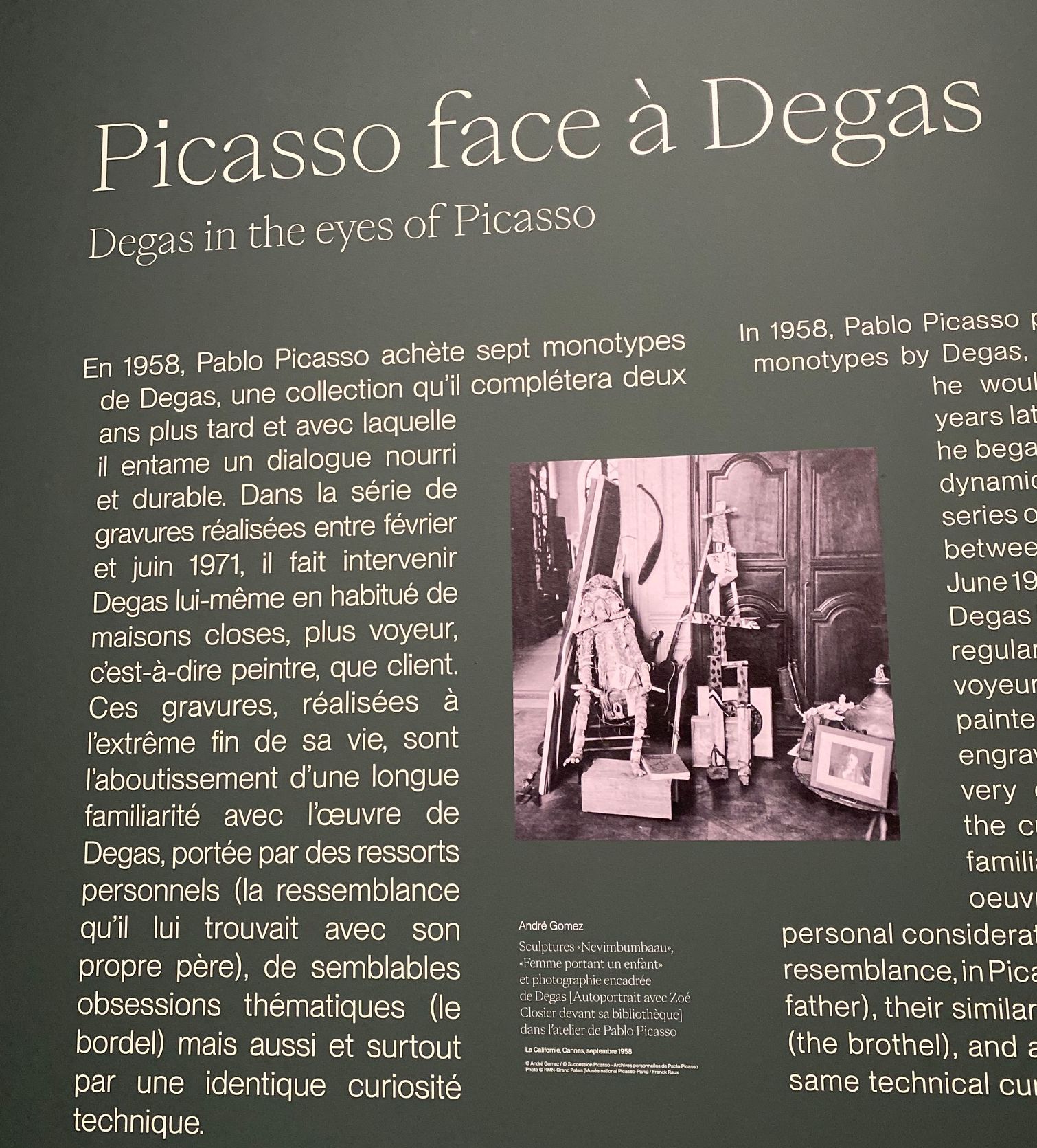
Jury
The are many forms of a jury. In many judicial processes a jury accompanies judges or the president of a jury in the preparing and voting on the verdict. In sports competitions or arts contests it is also common practice to have a jury of several persons to assist in the decision-making process. In academia we are also used to sit on juries to award Ph.Ds or academic positions or fundings. From famous film festivals (Cannes or Berlin) we know the tricky part to select jury members and supervise the proceedings of the jury to follow the official rules of how to accord prices according to a set of predefined rules. The basic proceedings are very similar irrespective of field of application, academia, film, music. Decision-making of the jury is usually based on some voting procedures, attribution of scores and summarising across jury members (to avoid or minimize the effect of corruption for example). Of course, there is a scientific literature on fallacies to avoid for juries themselves or in the selection of jury members.
The Concours Reine Elisabeth in Brussels 2023 has large jury. This year the enlarged diversity of the jury included the amazing lyric soprano Sumi Jo. The slightly more diverse jury (compared to 2018 song competition) might have contributed to the impressive participation of Asian singers in 2023. In competitions the quality of the jury has already a role in the number of international submissions you are likely to receive. Signalling diversity in the jury, therefore, is an important element of diversity of participants and probably intensifies competition through a broader reach. The winner of 2023 Baryton singer Taehan Kim performs a repertoire of Lieder and Arias in at least double the required 2 (European) languages. The impressive performances in the Demi-final with piano accompaniment and then the Final with the full Orchestra were cheered by the jury (in points) and the audiences as well. The repertoire of Taehan Kim ranges from Beethoven, Donizetti, Poulenc, Schubert, Verdi, Tschaikovsky to Schoenberg in the semi-final and from Wagner, Mahler, Korngold to Verdi in the final performance. Born in 2020, he certainly has a steep career in front of him, in addition to a potentially genetical predisposition as researchers just published in Science Advances 2023.
Praise goes to the accompanying pianist, the orchestra and the jury as well, which has encouraged diversity in applications and throughout the competition. An important training in cross-cultural competence for all performers involved. Rather than having a contest behind a curtain, for performers and/or the jury, the whole competition is an excellent piece of daring far reaching transparency of a jury’s work. Everybody online can still listen to the competition performances and judge (or train judgement) for themselves, because “the jury is still out”. 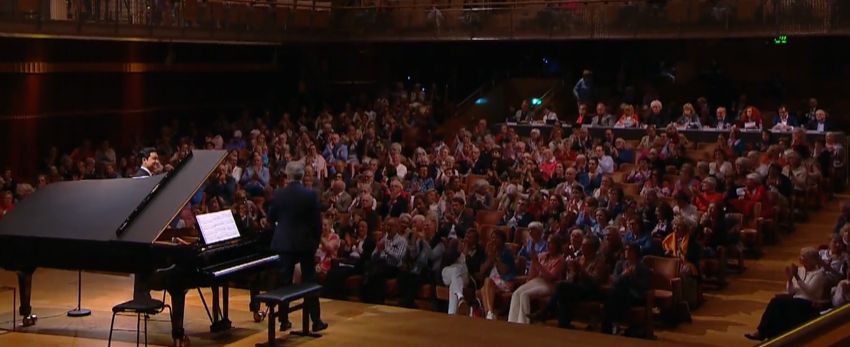
2P2R
2 Pinot 2 Riesling. That could be the long version of 2P2R. However, this far from (politically) correct. The not-joking scientific medical journal “The Lancet” (Vol.401 Nr 10391) has next to the article on “Laughter is the best medicine” coping with trauma, the serious matter of how best to deal with pandemics. Remember 2P2R as the important lesson from the pandemic. Prevention, preparedness, response, and recovery (2P2R) are key. And don’t forget about primary health care or essential (medical and other) workers. This is, in short, the message from Arush Lal and Nina Schwalbe (Paper Link). Lots of social topics involved in this correspondence from the authors. Prevention is a big issue and, as in the health system, fighting continuously for sufficient resources. Prevention is in most cases less costly than curing a disease. Preparedness has direct costs. Masks and ventilators need to be produced, stored and monitored in their functionalities. Response has to be immediate, masks in China a important but do not allow us to respond fast to local emergencies. Recovery can be long and costly as well, just as we learn from Long-COVID patients.
Now we need to define properly what is included in primary health care. Medical doctors, nurses and technicians of hospitals have to reach patients and hospitals in pandemics or need child care, food etc. and, maybe, also laughter to avoid trauma. Remember 2P2R, but best in company with your loved ones, but not on your own. 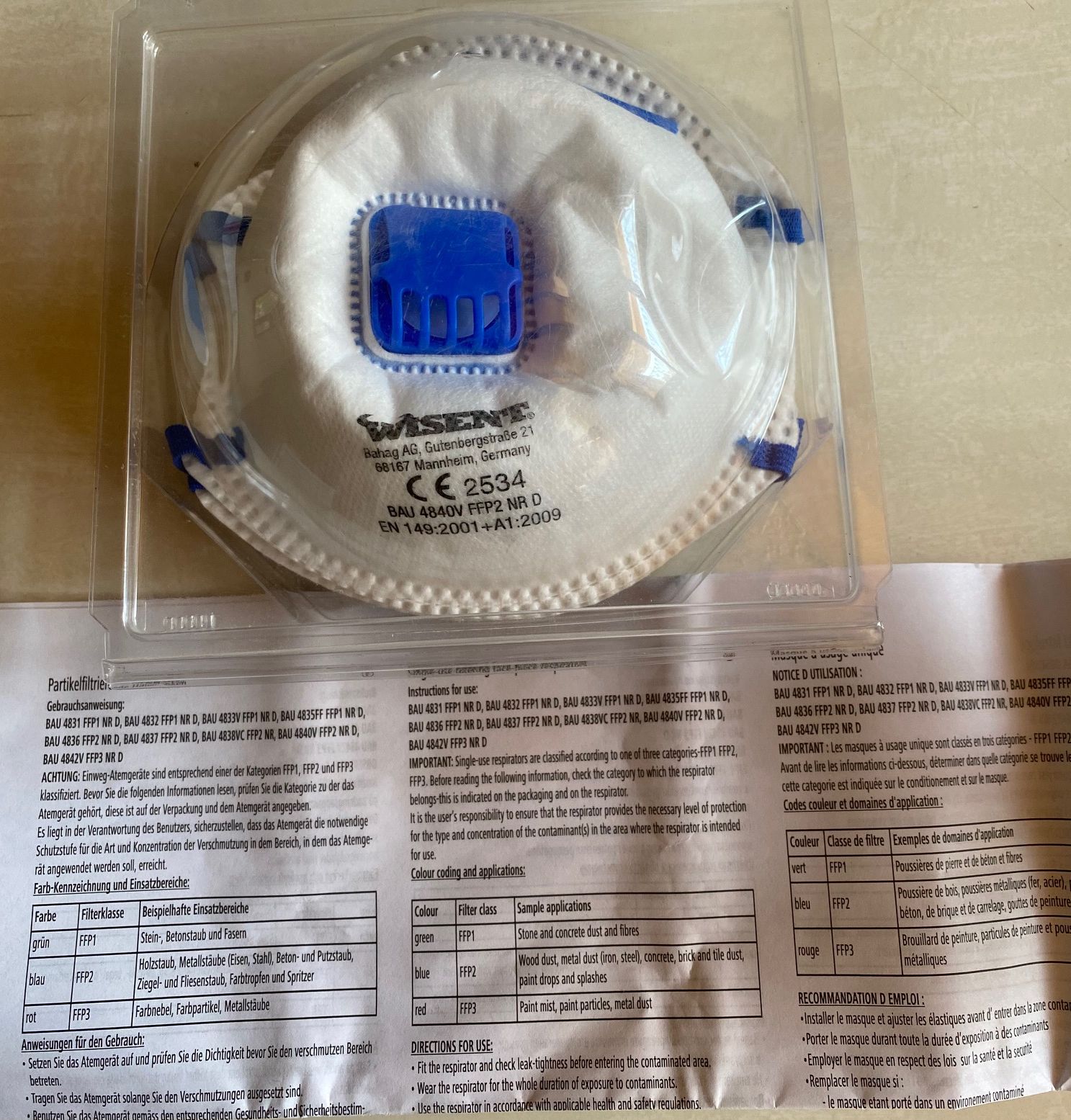
Sei ganz ruhig
Sei ganz ruhig. So heißt das kurze Gedicht von Angela Krauß und auch die erste Zeile. Es hat mich seit einiger Zeit schon begleitet.
Gerade der Eintrag zum Himalaya und den Besteigenden des Mount Everest hat mir die Zeilen erneut in Erinnerung gebracht. Für einige wenige besteht das Leben immer noch aus Sensationen. Immer höher, immer weiter, immer schneller. Dabei wissen wir, unser Planet hält das nicht aus.
Unsere Einkaufsmeilen suggerieren uns ein Übermaß an verpassten Gelegenheiten, wenn wir jetzt nicht zugreifen. FOMO (fear of missing out) ist allgegenwärtig und ein viel zu erfolgreiches Marketingkonzept, dem sich kaum eine Person entziehen kann. Die Selbsteinschätzung der Zeit, die uns verbleibt bis zum Tod (perceived time till death) oder unseres spezifischen Sterblichkeitsrisikos bezüglich Vermeidbarkeit oder allgemeinem Risiko, beeinflusst „unbewusst“ unser Verhalten. In Vergangenheit verhaftet sein, ist keine Lösung. Das Leben wird vorwärts gelebt, und rückblickend verstanden.
Bei einem gelegentlichen Rückblick wird vielen bewusst, es hat sich viel angesammelt (nicht nur im Keller). Aber mehr, muss es nicht werden, anders schon, besser vielleicht. Als Hommage an Angela Krauß mal ein 7-Zeiler, beeinflusst von der Konferenz im Europäischen Parlament „Beyond Growth“ im Mai 2023. Ruhig werden und ruhig bleiben, sollten wir beständig versuchen. Klein- statt Großschreibung, flache Hierarchien, Gleichstellung bei Wörtern und Sätzen. Warum noch Satzzeichen? Denk dir deine Welt, wiedewiede wie sie dir gefällt.
bleib ruhig
bleib einfach ruhig
la vie est belle tel quel
hab keine angst was zu verpassen
es bleiben jahre zu verweilen
schau mal umher
da ist viel

Gaslager
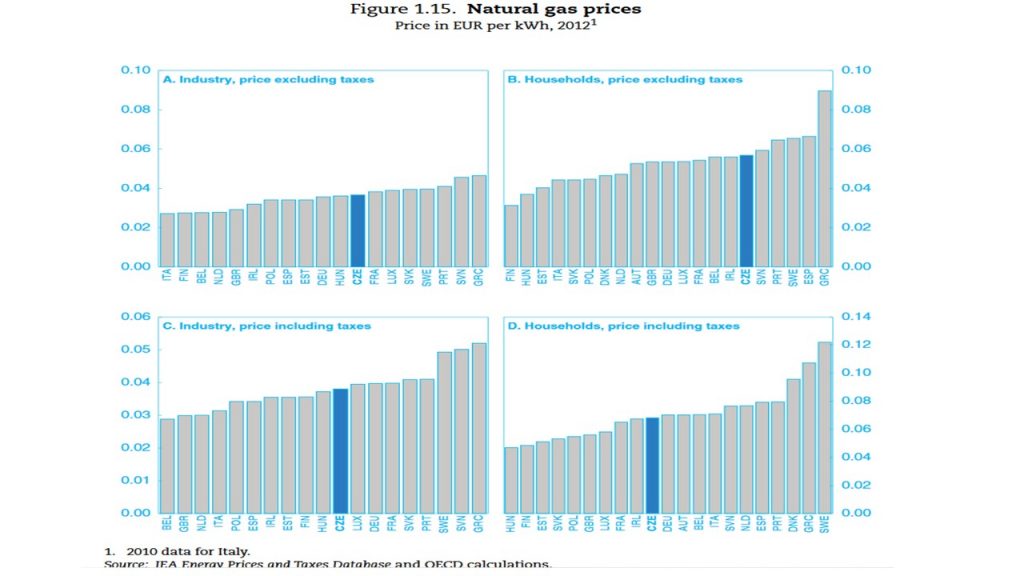
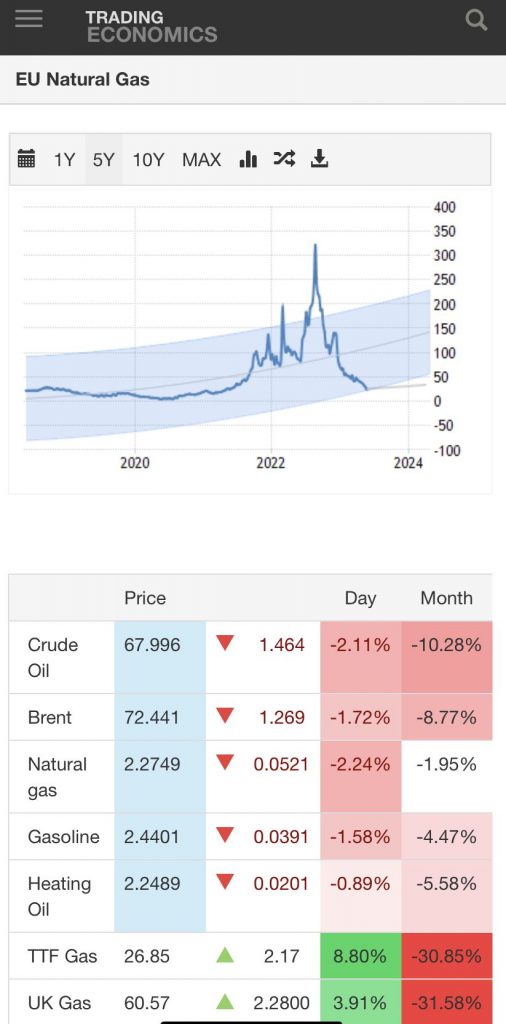
Der Gaspreis (TTF in Amsterdam) ist zum Ende Mai 2023 auf ein Tiefstwert von 23,50 € pro Megawattstunde zur Auslieferung einen Monat später gefallen. Der Unterschied zum Höchstpreis von ca 300 € übersteigt die Erwartungen der meisten Kunden. Das sind die Spekulanten und Zwischenhändler. Der Preis für die Endverbraucher bewegt sich weniger. Kartellbehörden in Europa müssen wachsam bleiben damit die Endverbraucher nicht zusätzlich zur Kasse gebeten werden. Gaslager für zivile und militärische Zwecke wurden vom Bund billig vor Jahrzehnten verkauft (Privatisiert) und sind jetzt wieder zu einer unverzichtbaren Infrastruktur geworden. Der Kapitalismus fällt immer wieder in seine eigenen Fallen durch exzessive Volatilität. Öffentliche Infrastruktur braucht langen Atem und sollte dazu dienen, die übertriebene Spekulation mit der zeit Grundversorgung der Bevölkerung zu vermeiden. Gaslager, Öllager, Wasserspeicher und Stromspeicher bei zentraler Stromerzeugung gehören dazu. Dezentrale Lösungen verstärken die Resilienz und Souveränität weiter. Europäische Solidarität hilft enorm, diese Herausforderungen zu meistern. Wichtig ist nicht nur der Einkaufpreis, sondern der Preis vor und nach Steuern sowie Unterschiede zwischen Industrie und Haushalten (Beispieldaten OECD 2014 für Jahr 2012, IEA Gas Market Report various years). Die ökologischen Sauereien rund um die Shale-gas Förderung in den USA haben uns wohl geholfen, besser durch die künstliche Verknappung von Gas für Europa durchzukommen durch die Erhöhung der gesamten Fördermenge. Ein weiteres “worst case szenario” zur Bekämpfung von Preisschocks. (Paper Link)